
Moving AI from Bottlenecks to Breakthroughs with NVIDIA Migration

- Managing unpredictable inference spikes as usage scales across teams and regions
- Achieving consistent low latency for real-time and near-real-time AI workloads
- Avoiding GPU underutilization caused by poor batching and scheduling strategies
- Balancing throughput and response time for multi-model inference environments
- Scaling training and inference independently without resource contention
- Controlling infrastructure costs while scaling GPU-intensive workloads
- Identifying models and pipelines suitable for GPU acceleration
- Handling framework mismatches across TensorFlow, PyTorch, and custom stacks
- Refactoring legacy ML pipelines for CUDA-enabled execution
- Optimizing model architectures for GPU memory and compute efficiency
- Addressing performance regressions after migration
- Maintaining accuracy while optimizing for inference speed
- Aligning data ingestion speed with GPU training and inference demands
- Reducing data preprocessing bottlenecks that stall GPU execution
- Designing pipelines that support both batch and real-time workloads
- Managing feature consistency between training and inference pipelines
- Integrating GPU-optimized pipelines with Snowflake and Databricks
- Ensuring data availability and freshness for inference-heavy systems
- Securing GPU workloads across shared cloud environments
- Managing access control for models, data, and GPU resources
- Ensuring compliance with enterprise data governance policies
- Protecting sensitive training and inference data
- Implementing audit trails for model execution and access
- Maintaining security posture while enabling rapid AI deployment
- Prioritizing workloads that deliver immediate performance and cost impact
- Defining clear success metrics beyond raw GPU speed
- Aligning migration timelines with business and product roadmaps
- Avoiding disruption to production systems during migration
- Building phased migration plans rather than big-bang moves
- Creating internal readiness for operating GPU-based AI systems
- Mapping GPU acceleration to industry-specific performance requirements
- Addressing real-time inference needs in retail and fraud detection
- Supporting document-heavy workloads in insurance and compliance
- Handling high-volume transaction analysis in FinTech platforms
- Scaling vision and video workloads for retail and manufacturing
- Meeting data sensitivity and regulatory needs in healthcare

What We Do: Assess existing AI, ML, and GenAI workloads to identify GPU acceleration opportunities.
How We Do: Analyze model architectures, data flows, inference patterns, and infrastructure readiness.
The Result You Get: A migration roadmap with performance benchmarks, effort estimation, and ROI visibility.
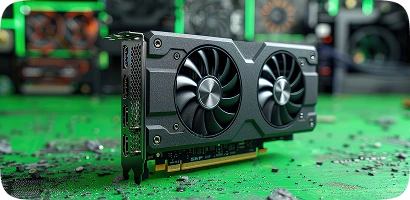
What We Do: Migrate existing AI workloads from CPU-based environments to NVIDIA GPU platforms.
How We Do: Refactor training and inference pipelines, align frameworks with CUDA-enabled execution, and deploy GPU-backed infrastructure.
The Result You Get: Improved throughput, lower latency, and scalable AI workloads.

What We Do: Move GenAI and LLM inference workloads to NVIDIA-accelerated environments.
How We Do It: Optimize inference using TensorRT and Triton, accelerate RAG pipelines, and deploy secure runtimes.
The Result You Get: High-performance GenAI systems with controlled costs and predictable scaling.

What We Do: Align data engineering pipelines with GPU-driven AI systems.
How We Do It: Optimize ingestion, preprocessing, and feature pipelines across Snowflake, Databricks, and cloud data platforms.
The Result You Get: Faster training cycles and stable real-time inference performance.

What We Do: Enhance model performance on NVIDIA GPUs.
How We Do It: Apply TensorRT optimization, GPU profiling, and inference tuning for batch and real-time workloads.
The Result You Get: Maximum utilization of GPU resources with measurable performance gains.

What We Do: Deploy production-ready NVIDIA AI environments.
How We Do It: Implement NVIDIA AI Enterprise on AWS, Azure, or GCP with Kubernetes, CI/CD, and observability.
The Result You Get: Secure, scalable, and enterprise-grade AI platforms teams can rely on.
Have an AI workload ready but unsure how to migrate it to NVIDIA GPUs?
NVIDIA Migration Tech Stack
Behind every successful NVIDIA migration lies a carefully aligned technology stack. We combine NVIDIA’s GPU acceleration ecosystem with cloud-native platforms and enterprise MLOps to ensure migrations deliver long-term value.
This layer powers high-throughput training and low-latency inference across migrated workloads. We optimize models and pipelines to fully utilize NVIDIA GPUs for consistent performance at scale.
- NVIDIA CUDA
- TensorRT
- TensorRT-LLM
- Triton Inference
Server - NVIDIA AI
Enterprise - NVIDIA GPU
Cloud
Migrated models require fine-grained optimization to unlock GPU efficiency. We focus on execution-level tuning that improves throughput, reduces latency, and stabilizes inference under real workloads.
- PyTorch
- TensorFlow
- ONNX
- Hugging Face
- NVIDIA NeMo
- NVIDIA Riva
AI migration succeeds when data pipelines move at GPU speed. We align ingestion, preprocessing, and feature pipelines to support accelerated training and inference.
- Snowflake
- Databricks
- Apache Spark
- Apache
Kafka - Delta
Lake - Cloud Object Storage
This layer ensures migrated AI and GenAI workloads stay reliable, observable, and production-ready on NVIDIA infrastructure. We use proven MLOps and LLMOps tooling to manage model lifecycle, monitor inference performance, and track GPU utilization at scale.
- Triton Metrics
- Prometheus
- Grafana
- MLflow
- Kubeflow
- Argo CD
Types of AI Workloads We Migrate
Every AI workload behaves differently under GPU acceleration. Some demand ultra-low latency, others push massive data volumes, and a few break once scale enters the picture. Our NVIDIA migration service reflects these realities and focuses on workloads where NVIDIA GPUs create immediate, long-term impact.
Inference Workloads
Inference Pipelines
Retrieval Systems
Video Analytics
Scoring Systems
Feature Engineering Pipelines
Multimodal AI Systems
Platforms
NVIDIA Migration Across Industry Workloads
- Resume screening at scale
- Voice AI for interviews
- Sentiment detection models
- Candidate matching inference
- Hiring analytics acceleration
- Multilingual NLP workloads
- Real-time recommendations
- In-store vision analytics
- Payment fraud inference
- Demand forecasting models
- Personalization engines
- Image and video processing
- Transaction risk scoring
- Fraud detection inference
- KYC document processing
- Real-time payment decisions
- LLM-powered reporting
- High-volume analytics
- Medical image inference
- Clinical document analysis
- Patient data NLP
- Predictive care analytics
- Research model training
- Secure AI deployments
- Claims document intelligence
- Fraud and anomaly scoring
- Underwriting analytics
- Risk prediction models
- Policy summarization
- Decision support inference
- Visual quality inspection
- Predictive maintenance
- Sensor data inference
- Demand forecasting
- Inventory optimization
- Edge AI workloads
Ready to Move Your AI Workloads
onto NVIDIA GPUs?
From CPU-bound pipelines to GenAI inference at scale — we partner with enterprises to migrate AI, ML, and GenAI workloads onto NVIDIA platforms with speed, stability, and cost efficiency. Not a lift-and-shift. Migration engineered around your models and infrastructure.
Technologies Powering Our NVIDIA Migration Services
From GPU acceleration and model optimization to data platforms, cloud infrastructure, and MLOps — the complete technology stack behind our NVIDIA migration engagements.
NVIDIA CUDA
GPU Compute Core
TensorRT
Inference Optimization
TensorRT-LLM
LLM Inference Acceleration
Triton Inference Server
Model Serving
NVIDIA AI Enterprise
Production Runtime
NVIDIA GPU Cloud
Accelerated Compute
PyTorch
Model Training & Fine-Tuning
TensorFlow
Deep Learning Framework
ONNX
Cross-Framework Model Format
Hugging Face
Model Hub & Transformers
NVIDIA NeMo
GenAI Model Framework
NVIDIA Riva
Speech & Multimodal AI
Snowflake
Cloud Data Warehouse
Databricks
Unified Analytics
Apache Spark
Large-Scale Processing
Apache Kafka
Real-Time Streaming
Delta Lake
Reliable Data Lakehouse
Cloud Object Storage
Training & Inference Data
Python
AI Service Backend
Node.js
Server-Side Runtime
.NET
Enterprise Backend
Java
Enterprise Applications
FastAPI
Model Serving
GraphQL
API Layer
REST APIs
System Integration
Microservices
Distributed Architecture
AWS
Cloud Platform
Azure
Cloud Platform
Google Cloud
Cloud Platform
Docker
Containerization
Kubernetes
Container Orchestration
Terraform
Infrastructure as Code
Serverless
Event-Driven Architecture
NVIDIA GPU Instances
Training & Inference Compute
Triton Metrics
Inference Performance Tracking
Prometheus
Model & System Monitoring
Grafana
Real-Time Dashboards
MLflow
Model Lifecycle Management
Kubeflow
ML Pipeline Orchestration
Argo CD
CI/CD for AI Workloads
Bring Stability and Speed to Enterprise AI
with our NVIDIA Migration Services

Our NVDIA migration expertise brings stability to GenAI inference, vision pipelines, and real-time decision systems where performance directly impacts business outcomes.

NVIDIA-based platforms handle traffic surges, model expansion, and multi-tenant workloads without architectural strain. Scaling becomes a controlled operation rather than a reactive approach.

Optimized GPU utilization improves cost efficiency at scale. Migration aligns compute spend with actual workload demand, especially for inference-heavy GenAI systems.

Enterprise deployments include observability, security, and operational controls from day one. Teams gain confidence running AI systems that stay reliable under real usage conditions.
In Search of NVIDIA Migration Service Partner?

Unlimited

View

View

Tactics


Sense

with
Problem
Statement

Fast
NVIDIA AI Migration Case Study: Accelerating GenAI Inference with GPU-Powered Deployment
Partnered with a US-based enterprise SaaS platform to migrate high-volume GenAI inference workloads from CPU-based cloud infrastructure to NVIDIA GPU-powered environments. The objective focused on improving response latency, stabilizing inference costs, and enabling scalable production rollout for customer-facing AI features.
- Assessed existing GenAI workloads and identified GPU acceleration candidates
- Migrated LLM inference pipelines to NVIDIA GPU-backed cloud instances
- Optimized inference using TensorRT and Triton Inference Server
- Accelerated RAG pipelines with GPU-optimized embeddings and retrieval
- Implemented monitoring for inference performance and GPU utilization
- Deployed secure, production-ready runtime using NVIDIA AI Enterprise



 USA
USA
Our NVIDIA Migration Delivery Process

analysis
roadmap
strategy
planning
integration
enablement
configuration
rollout
tracking
optimization
tuning
Talk to Our NVIDIA Migration Experts — Review Your AI Workloads in 30 Min
Looking to move AI, ML, or GenAI workloads onto NVIDIA GPUs? Our NVIDIA migration engineers and consultants will help you define the right workload strategy, model optimization approach, data pipeline alignment, and deployment roadmap to move fast without compromising stability or performance.
No commitment · No cost · Just a conversation

Our Other NVIDIA Services You'll Find Useful

Get expert guidance to design, optimize, and scale AI systems on NVIDIA platforms, from architecture to deployment.


Build AI and GenAI solutions for performance, scalability, and real-world impact.

Operationalize AI models with robust pipelines for deployment, monitoring, governance, and continuous optimization.
Frequently Asked Questions (FAQ's)
Think of it as moving existing AI workloads to run efficiently on NVIDIA GPUs. That includes ML models, GenAI inference, RAG pipelines, computer vision workloads, and the data pipelines that feed them. The goal stays simple: better performance, lower latency, and predictable scaling without rebuilding everything from scratch.
Workloads that feel slow, expensive, or hard to scale usually benefit first. GenAI inference, LLM-based apps, real-time analytics, vision systems, and high-volume prediction pipelines are strong candidates. If latency or throughput affects user experience or cost, NVIDIA GPUs change the game.
In most cases, models stay the same. The real work happens around optimization and execution. We focus on aligning models with GPU-accelerated runtimes, tuning inference, and adjusting pipelines so they fully utilize NVIDIA hardware. Rebuilding comes into play only when the architecture clearly blocks performance gains.
It depends on workload complexity, yet most focused migrations run between four to eight weeks. That timeline usually covers assessment, migration, optimization, and benchmarking. Larger platform-level migrations can roll out in phases, starting with high-impact workloads first.
Yes, when done correctly. GPUs process large workloads faster, which often means fewer instances, shorter run times, and better resource utilization. Many teams see cost stability improve because performance becomes predictable instead of spiky and inefficient.
NVIDIA GPUs shine at inference-heavy workloads. By moving GenAI pipelines to NVIDIA-optimized inference using TensorRT and Triton, applications handle more users, respond faster, and scale without sudden cost jumps. This matters a lot for chatbots, copilots, and enterprise GenAI features.
NVIDIA AI Enterprise provides a secure, enterprise-ready runtime for AI workloads. It helps teams deploy models with consistency across cloud or on-prem environments. For regulated industries, this adds stability, support, and long-term maintainability to the migration.
Benchmarking never stops at deployment. We measure latency, throughput, GPU utilization, and inference efficiency before and after migration. Ongoing monitoring keeps performance stable as workloads grow, data patterns shift, and user demand increases.
Very much so. NVIDIA platforms integrate well with secure cloud setups, access controls, and observability layers. With the right architecture, teams meet compliance needs while still gaining the performance benefits of GPU acceleration.
If AI performance affects customer experience, operational efficiency, or cost predictability, migration makes sense to explore. A readiness assessment usually answers this quickly by showing where GPUs create real value and where workloads can stay as they are.





 Talk to Our
Consultants
Talk to Our
Consultants Chat with
Our Experts
Chat with
Our Experts Write us
an Email
Write us
an Email