


 22 mins
Jun 20, 2025

A compressor suddenly stops working at 2 AM. Production comes to a halt. The maintenance team rushes to fix the issue, but the required parts are not available.
An emergency technician is called in at a much higher cost. By the time the machine is running again, the business has already lost thousands of dollars and may have missed important customer deadlines.
The reality is that this failure did not happen without warning. The machine had been showing signs of trouble for weeks. Vibration levels were increasing, temperatures were rising, and oil quality was changing. These were early warning signals. However, without a proper monitoring system, these signs went unnoticed until the machine finally broke down.
Traditional maintenance methods often lead to higher costs. Scheduled maintenance may replace parts too early, while reactive maintenance waits until equipment fails. Neither approach provides real-time visibility into machine health.
Predictive Maintenance using IoT Data Engineering solves this challenge by using IoT sensors, real-time data, and AI to detect issues before failures occur. In this blog, we’ll explore how Predictive Maintenance works, its architecture, data flow, business benefits, and how Azilen Technologies helps organizations build intelligent maintenance solutions.
Many articles explain IoT for Predictive Maintenance using complex technical terms. In reality, the concept is simple. The goal is to identify equipment problems early, before they become expensive breakdowns.
Let’s look at how Predictive Maintenance using IoT Data Engineering works in practice.
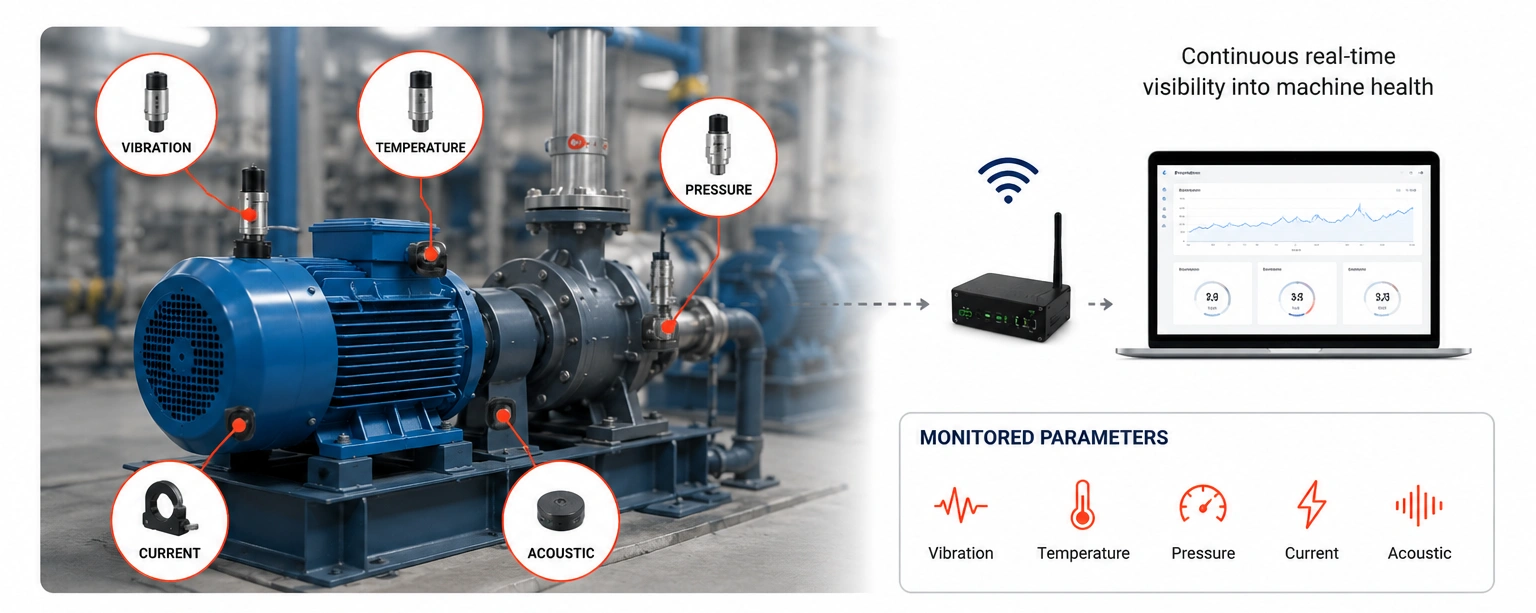
The process begins with IoT sensors installed on critical assets. These sensors track important machine conditions such as vibration, temperature, pressure, electrical current, and operating performance.
For example, if a compressor normally runs at a specific temperature and vibration level, even a small change can indicate that a component is starting to wear out.
Instead of relying on manual inspections, manufacturers receive continuous real-time visibility into machine health.
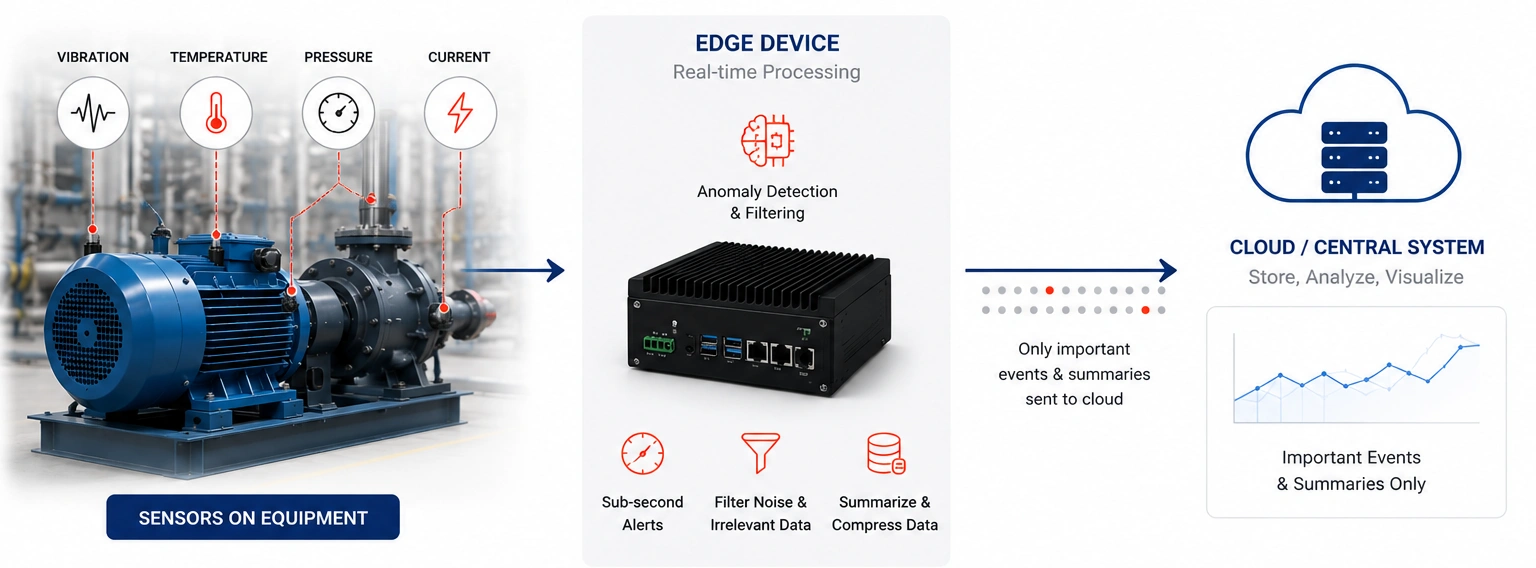
Sending every sensor reading to the cloud can create delays and increase costs. This is where edge computing becomes valuable.
Edge devices process data close to the machine and immediately identify unusual patterns. Only important events and summarized data are sent to central systems.
For a plant manager, this means faster alerts, lower infrastructure costs, and quicker decision-making when equipment starts showing signs of failure.
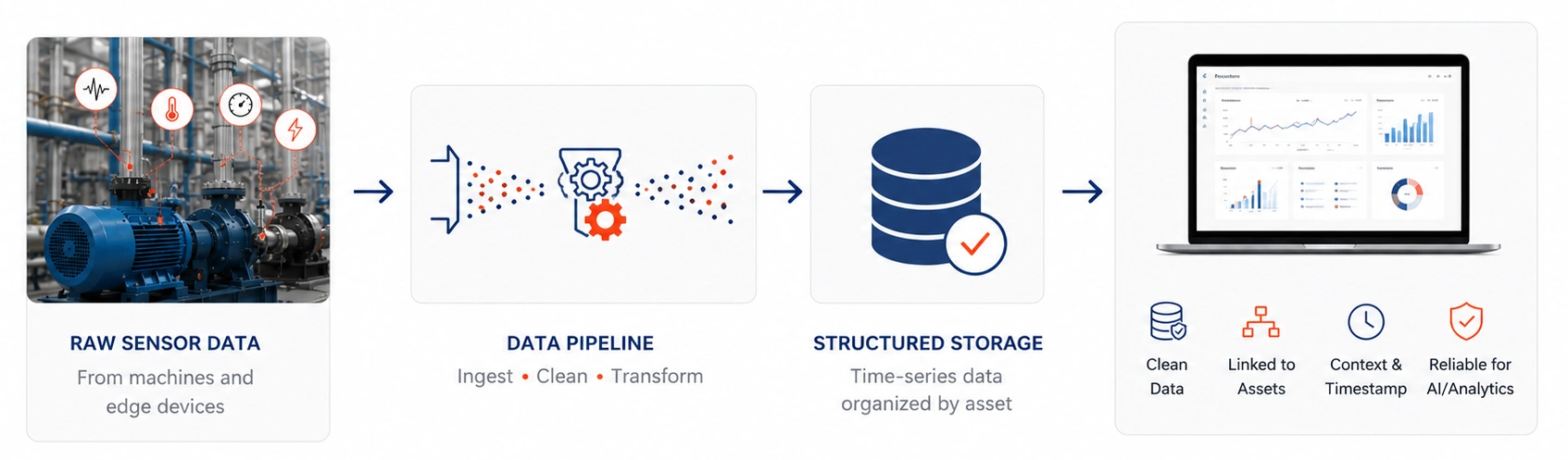
Collecting data is only the first step. The real value comes from turning raw machine data into useful business information.
This is where Data Engineering Services play a critical role. An IoT data engineering pipeline cleans, organizes, and stores sensor data in a structured format. Each data point is linked to the correct machine, operating condition, and timestamp.
Think of it as creating a single source of truth for every asset in the facility.
Without strong Data Engineering Services, even advanced AI models struggle to produce accurate results. Clean, reliable data is the foundation of successful Predictive Maintenance using IoT Data Engineering.
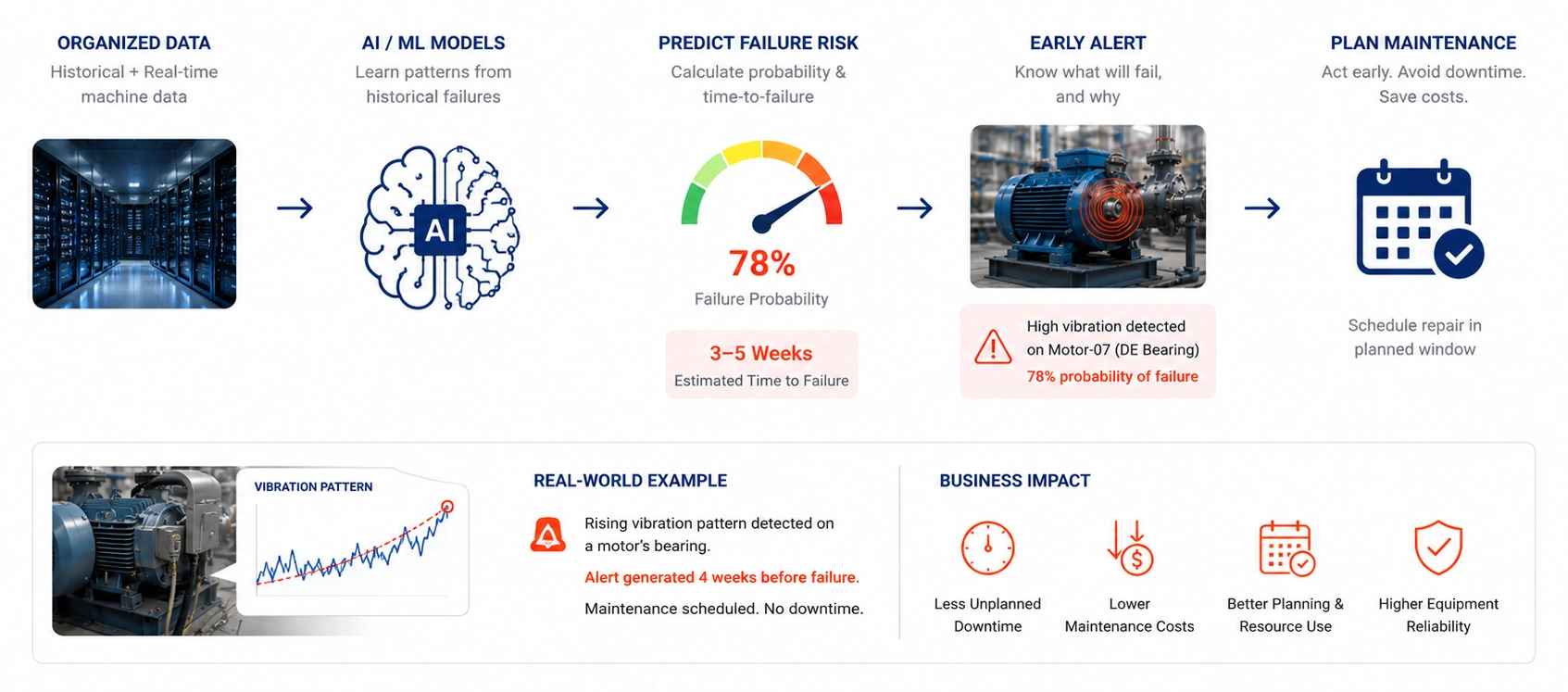
Once the data is organized, AI development services and machine learning models analyze historical and real-time equipment behavior.
These models learn what happens before a failure occurs. They identify patterns that humans may not notice and calculate the probability of a breakdown.
For example, if a motor begins showing vibration patterns that previously led to bearing failure, the system can generate an alert weeks before the machine stops working.
Instead of reacting to failures, maintenance teams gain time to plan repairs during scheduled maintenance windows.
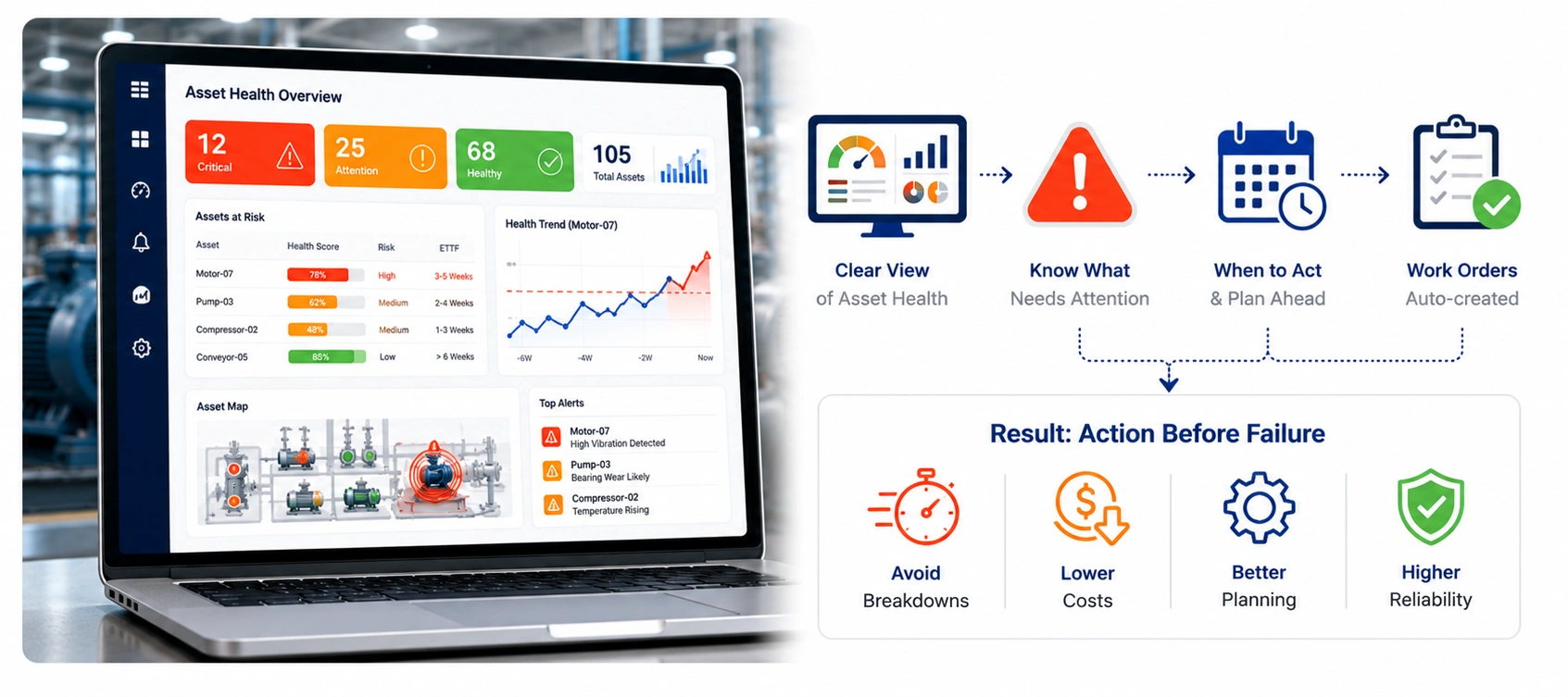
The final step is delivering insights to the people who need them.
A maintenance dashboard provides a clear view of equipment health across the facility. Teams can see which assets require attention, how urgent the issue is, and when maintenance should be performed.
Many organizations also connect these systems with maintenance software to automatically create work orders and schedule repairs.
As a result, maintenance teams know exactly what needs attention before production is affected.
The most significant shift wasn’t the technology. It was the operating model. The maintenance team stopped being reactive firefighters and started being strategic planners. They knew three weeks in advance which machine needed attention, exactly what part to order, and how to schedule the work without touching production commitments.
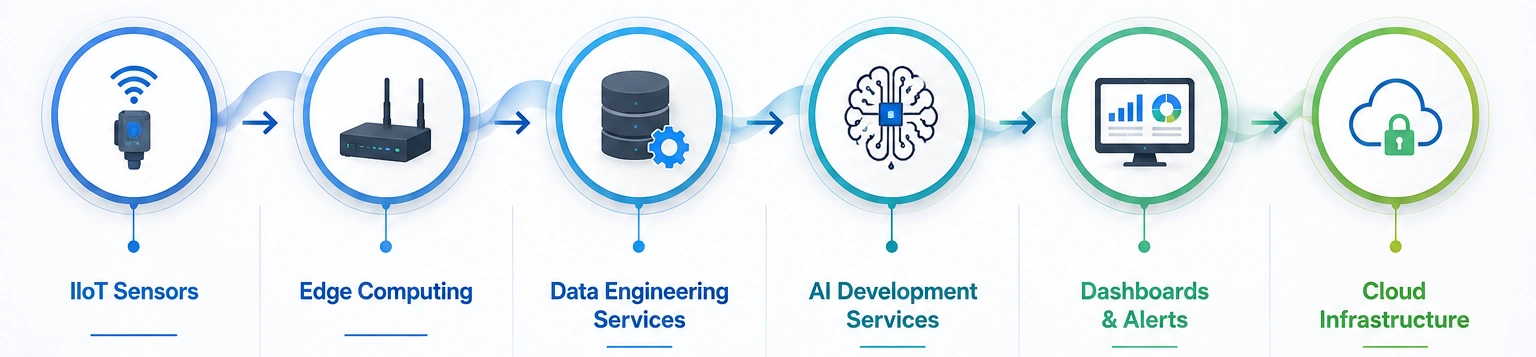
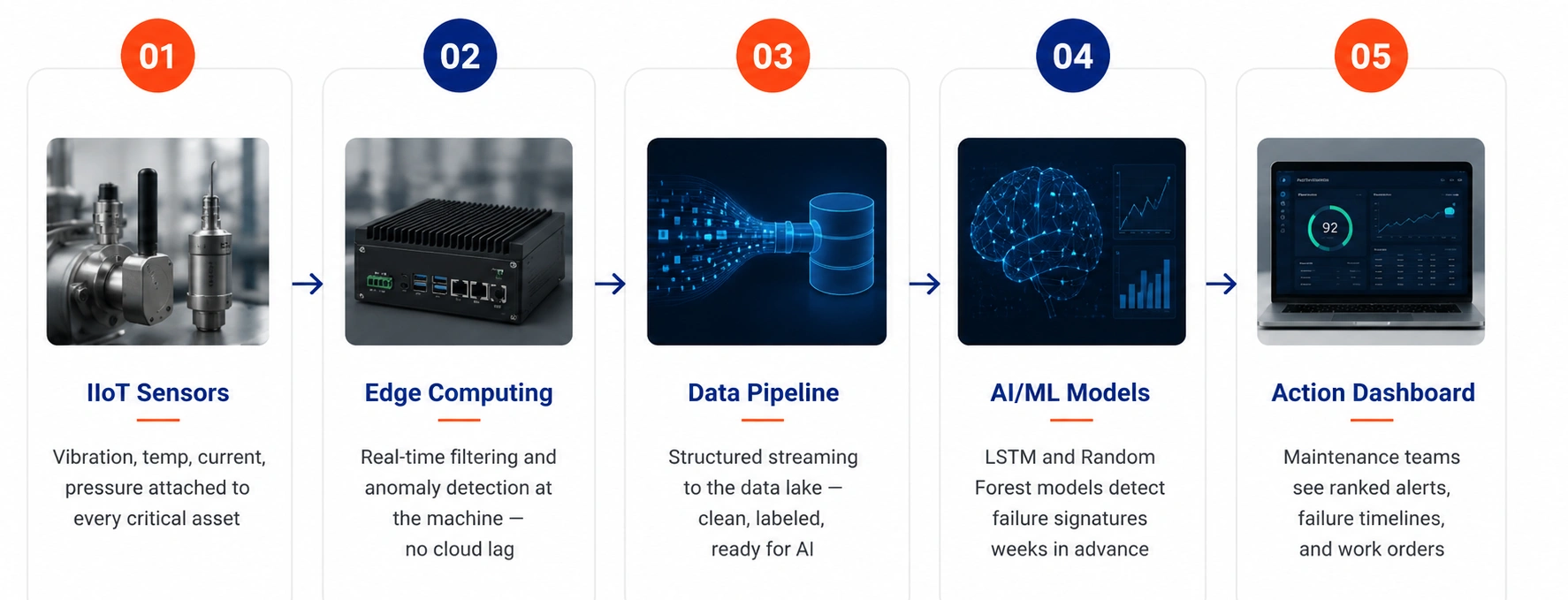
→ IIoT Sensors: Collect real-time machine data such as vibration, temperature, pressure, and equipment performance.
→ Edge Computing: Processes data close to machines to detect issues faster and reduce response time.
→ Data Engineering Services: Clean, organize, and store machine data for accurate analysis and decision-making.
→ AI Development Services: Analyze data patterns to predict equipment failures before they impact operations.
→ Dashboards & Alerts: Provide clear visibility into asset health and maintenance priorities in real time.
→ Cloud Infrastructure: Securely stores and scales data across connected equipment and manufacturing facilities.
Not every predictive maintenance initiative succeeds. In fact, many stall in “pilot purgatory”, good intentions, poor execution. Here’s what goes wrong, and how to avoid it.
Predictive Maintenance using IoT Data Engineering uses IoT sensors, real-time data pipelines, and AI models to detect equipment issues before failures occur. It helps organizations reduce unplanned downtime, lower maintenance costs, improve asset reliability, and make data-driven maintenance decisions based on actual equipment health rather than fixed schedules.
Predictive Maintenance continuously monitors machine conditions such as vibration, temperature, and pressure. AI models analyze this data to identify early warning signs of failure. This allows maintenance teams to schedule repairs before breakdowns occur, reducing unexpected downtime, production disruptions, and costly emergency maintenance activities.
Data Engineering Services ensure that machine data is collected, cleaned, organized, and stored correctly. High-quality data improves AI model accuracy and enables reliable predictions. Without a strong data foundation, predictive maintenance systems may generate inaccurate alerts, making data engineering a critical component of successful implementation.
AI Development Services help build machine learning models that analyze historical and real-time equipment data. These models identify hidden failure patterns, calculate risk levels, and predict potential breakdowns before they happen. This allows organizations to move from reactive maintenance to a proactive maintenance strategy.
An Enterprise AI Development Company provides expertise across IoT architecture, data engineering, AI development, edge computing, and system integration. This ensures organizations build scalable, secure, and accurate Predictive Maintenance solutions that deliver measurable business outcomes, including lower costs, improved reliability, and higher operational efficiency.
→ Predictive Maintenance: A maintenance approach that uses data and AI to predict equipment failures before they occur.
→ Industrial IoT (IIoT): A network of connected industrial devices and sensors that collect and exchange operational data in real time.
→ IoT Sensors: Devices that monitor machine conditions such as vibration, temperature, pressure, and electrical current.
→ Edge Computing: Processing data close to the equipment to enable faster analysis and real-time decision-making.
→ Data Engineering Services: Processes and technologies used to collect, clean, organize, and prepare machine data for analytics and AI.
→ AI Development Services: Development of machine learning and AI models that analyze equipment data and predict potential failures.
→ Machine Learning (ML): A branch of AI that learns patterns from data to make predictions and improve decision-making.
→ Anomaly Detection: The process of identifying unusual equipment behavior that may indicate a developing fault or failure.
→ Maintenance Dashboard: A centralized interface that provides real-time visibility into asset health, alerts, and maintenance priorities.
→ Asset Health Monitoring: Continuous tracking of equipment performance and condition to improve reliability and reduce downtime.



 22 mins



"*" indicates required fields

5432 Geary Blvd, Unit #527 San Francisco, CA 94121 United States
320 Decker Drive Irving, TX 75062 United States

6d-7398 Yonge St,1318 Thornhill, Ontario, Canada, L4J8J2

71-75 Shelton Street, Covent Garden, London, United Kingdom, WC2H 9JQ

Hohrainstrasse 16, 79787 Lauchringen, Germany

12, Zugerstrasse 32, 6341 Baar, Switzerland

5th floor, Bloukrans Building, Lynnwood Road, Pretoria, Gauteng, 0081, South Africa

12th & 13th Floor, B Square-1, Bopal – Ambli Road, Ahmedabad – 380054
B/305A, 3rd Floor, Kanakia Wallstreet, Andheri (East), Mumbai, India




 Talk to Our
Consultants
Talk to Our
Consultants Chat with
Our Experts
Chat with
Our Experts Write us
an Email
Write us
an Email