Engineering Better Software Delivery with an AI-Native SDLC
At Azilen, we bring AI and intelligent agents into your software development lifecycle through our Agentic SDLC approach, helping engineering teams streamline workflows, reduce delivery bottlenecks, and improve software delivery performance.
 Ship to customers sooner
AI Has Sped Up Coding. Has It Sped Up Delivery?
AI accelerates coding, but delivery depends on the entire software development lifecycle. Connect planning, reviews, testing and deployment to reduce bottlenecks and improve delivery performance.
Coding Is Faster. Everything Else Isn't.
AI helps developers write code in minutes. But the work then waits in review, testing and approval queues, and the release date barely moves.

Azilen Brain Brings Intelligence to Every Stage of Your SDLC.
From planning to monitoring, AI agents and automation work at every stage. Work keeps moving, quality stays high, and releases become predictable.

Where Does the Time Really Go?
Take one delivery, from approved requirement to production release. Coding is the smallest slice. Most of the time goes into everything around it.
Testing
14 of 42 days. The longest wait in the whole journey.
Planning and release
13 days getting work ready and shipped.
Code review
11 days waiting for someone to look at the code.
Coding
Only 4 days. The smallest slice of the journey.
Want to see where your own delivery slows down?
Book an assessmentOur Agentic SDLC: Measure What Matters with DORA Metrics
DORA is a research-backed way to measure software delivery, built by Google. It shows whether AI is really making your team faster, steadier and more reliable.
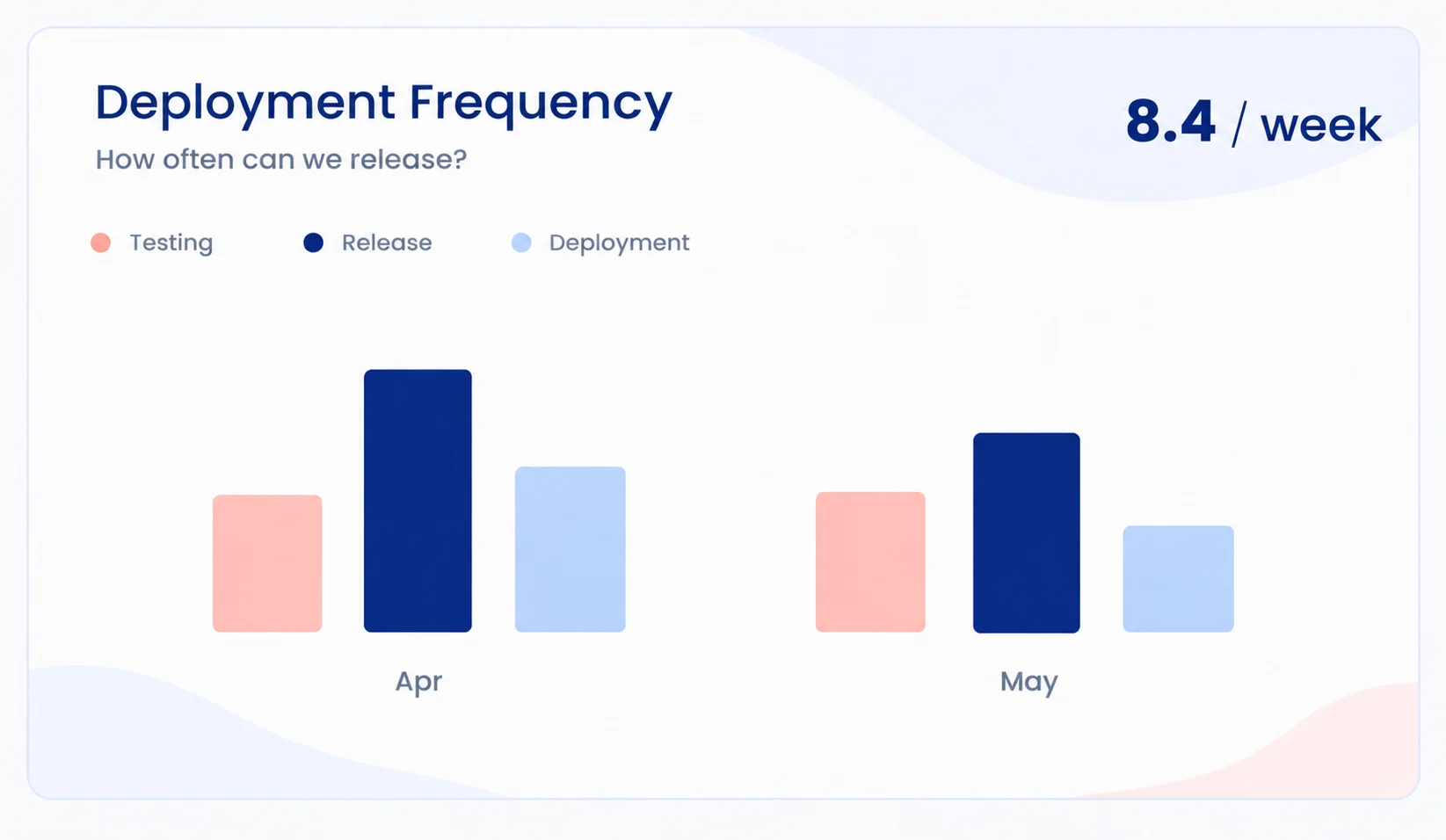
Deployment Frequency
How often can we release?
This shows how often your team ships changes to production. Teams that release often ship in small steps, which are easier to test and safer to deploy.
- Tests run automatically on every change
- Automated release steps remove manual waiting
- Smaller changes reach customers sooner
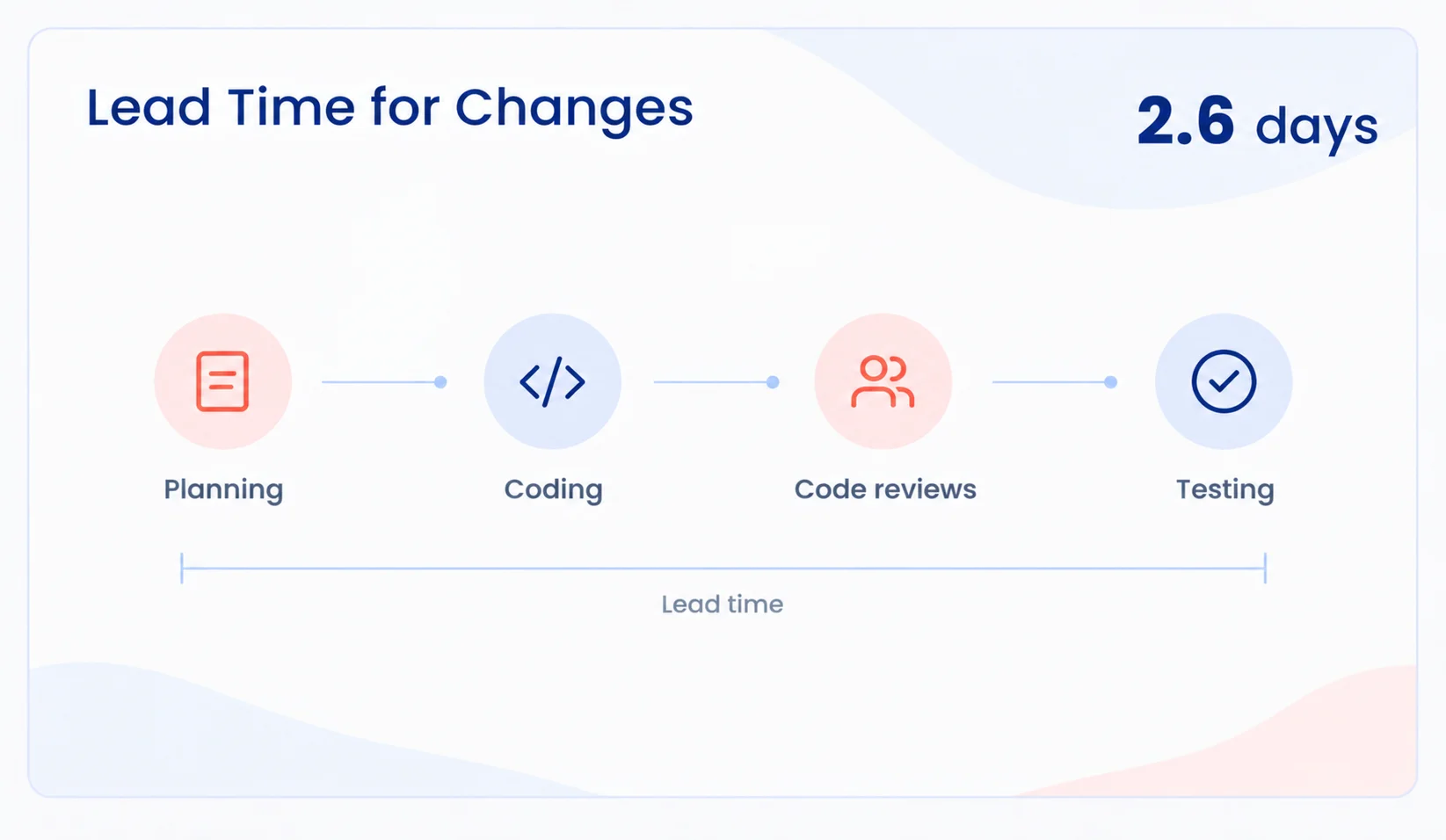
Lead Time for Changes
How fast does an idea reach production?
This is the time from starting a change to seeing it live. A long lead time usually means work is waiting somewhere, in planning, review or testing.
- AI turns requirements into clear tasks
- AI helps write and review code faster
- Tests run early, so fixes happen early
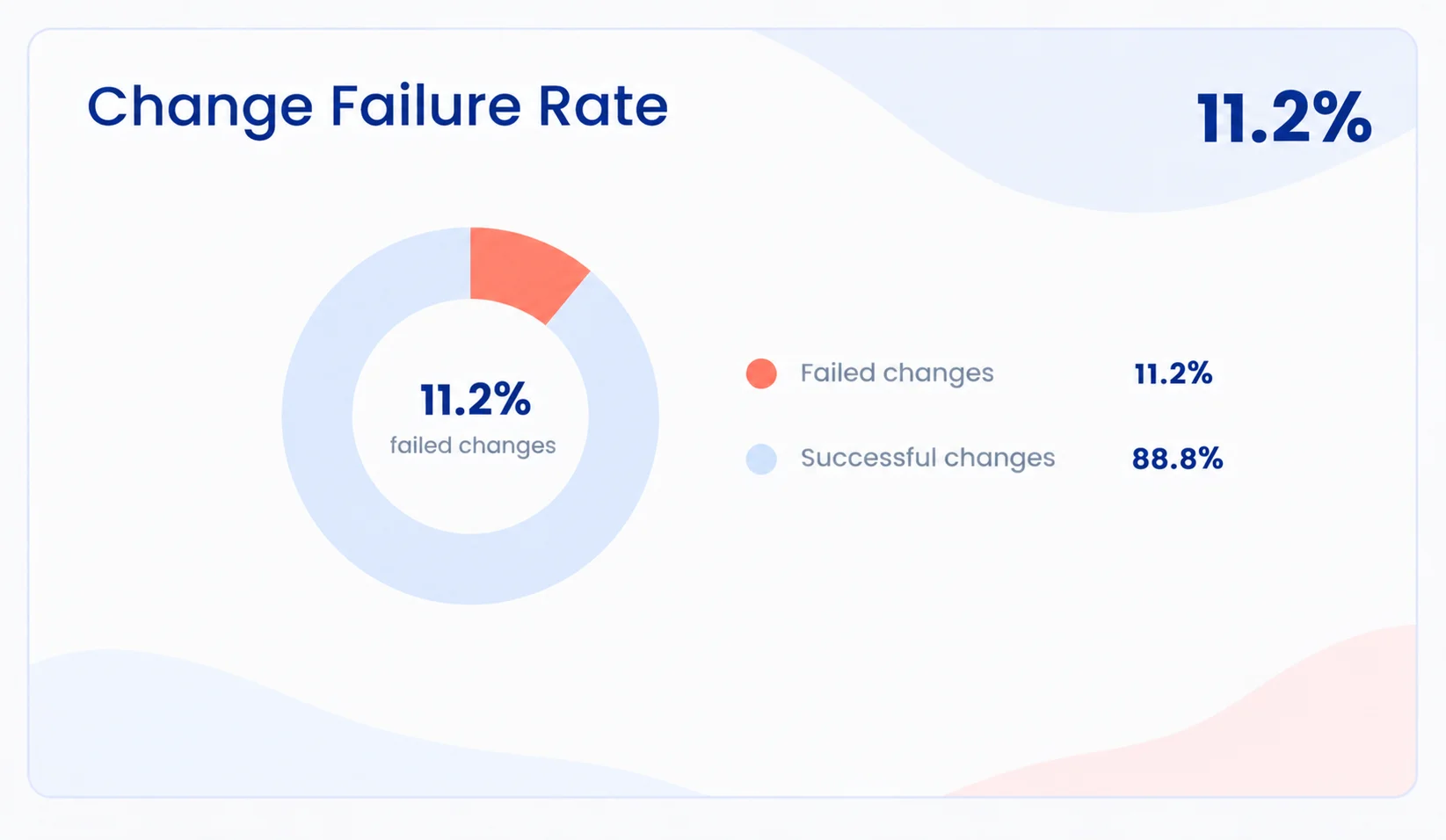
Change Failure Rate
How often does a release cause a problem?
This shows how many releases lead to bugs, rollbacks or urgent fixes. Faster delivery only helps if quality holds, so this metric keeps speed honest.
- AI-assisted code reviews catch issues early
- Automated tests cover more scenarios
- Security checks run before every release
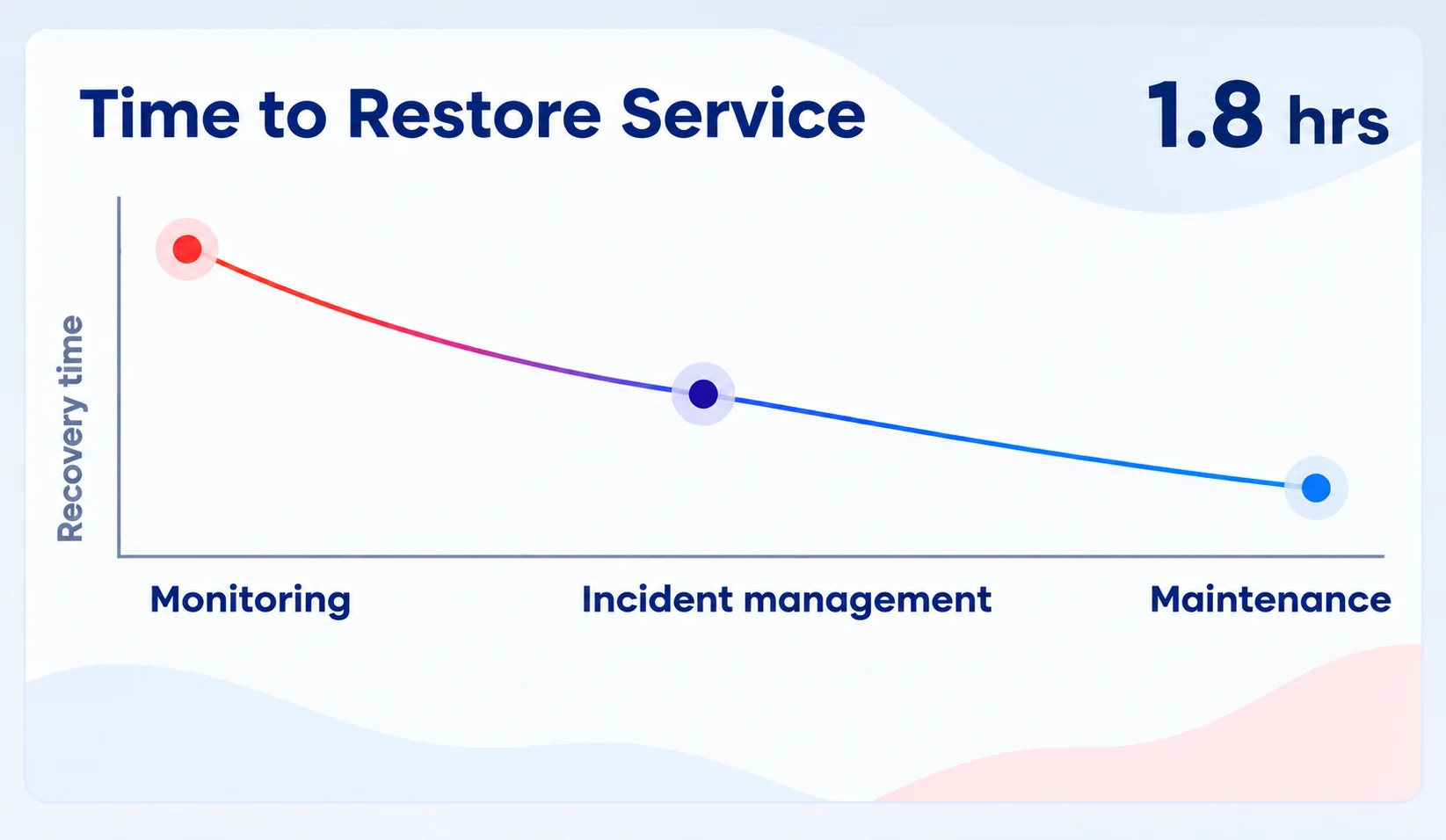
Time to Restore Service
How fast do we recover when something breaks?
When something fails in production, this shows how long it takes to get back to normal. Quick recovery protects your customers and your reputation.
- AI monitoring spots problems early
- Alerts point to the likely cause
- Fixes are suggested and tested faster
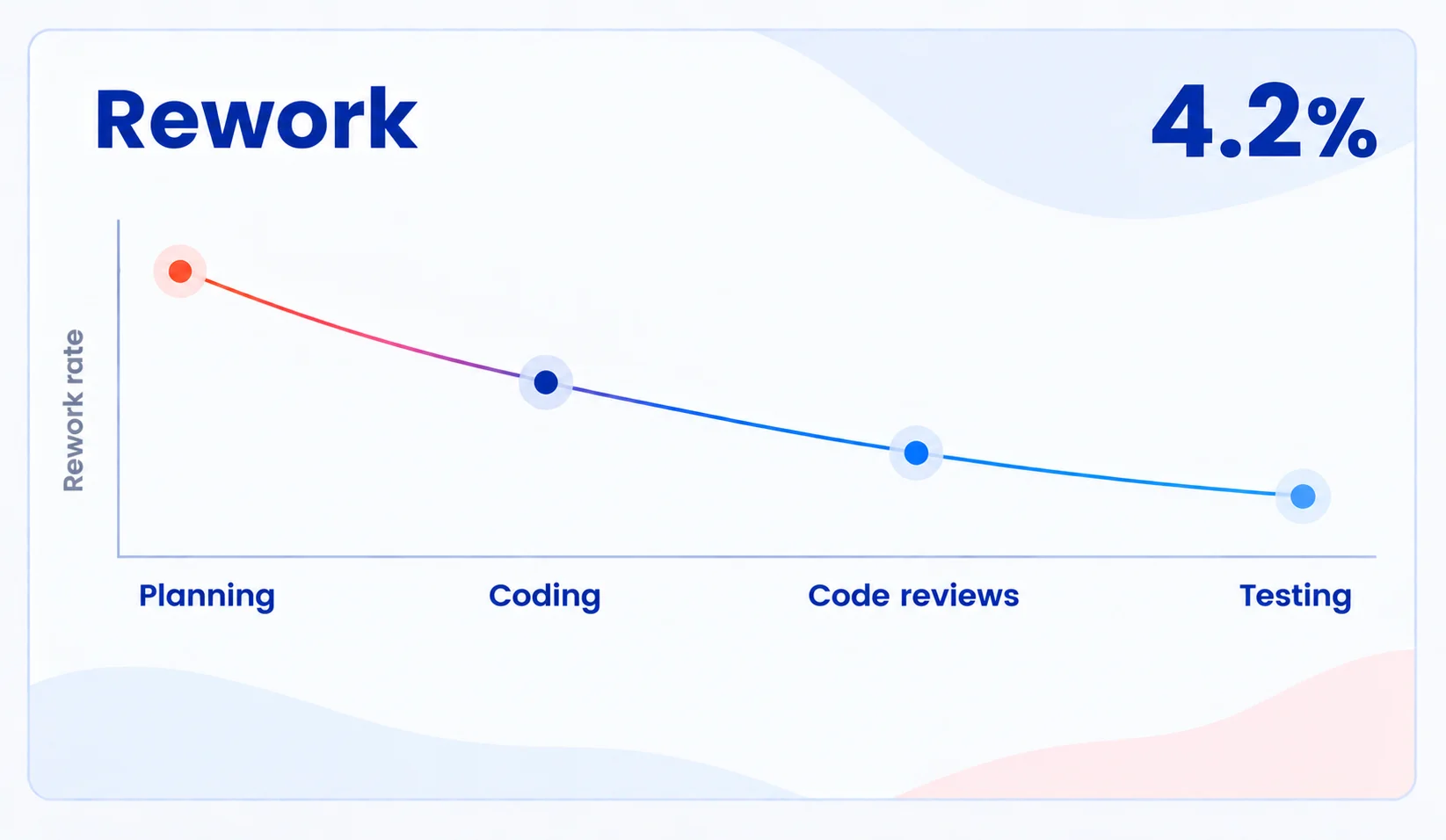
Rework
How much work has to be redone?
This tracks work that has to be redone after it was marked done. It matters more with AI, because fast code that needs fixing only moves the delay to later.
- Clear requirements reduce misunderstandings
- Early checks catch mistakes before they spread
- Rework from AI-written and human-written code is tracked separately
AI can accelerate coding, but better software delivery requires more than writing code faster. At Azilen, we bring intelligence across the SDLC—from planning and development to testing, deployment, and continuous improvement. Our goal is software delivery that is faster, more reliable, and ready to scale.

Faster Coding Still Meets Different Bottlenecks in Every Industry
ISVs in each industry have their own constraints. AI speeds up coding, but these constraints still slow the path to production. Pick an industry to see where.

Many integrations, small teams
HR products connect to many outside systems, and a small team has to keep every connection working after each update.
- The challengeMany integrations to testEach connected system adds more to test, and every update repeats the same flows.
- How we helpAutomated checks on every updateIntegration tests run again after each release, without extra manual effort.
- The challengeSmall teams stretched thinCoding, reviews and testing share a few engineers.
- How we helpAI-written regression testsTest coverage grows with each new feature, so the team is not stuck running it by hand.

Speed cannot come before safety
Every release must pass strict controls, often on top of older systems. Faster coding does not shorten these checks.
- The challengeStrict security and complianceEach change needs security review and approvals before release.
- How we helpSecurity checks built into the pipelineIssues are caught early, so formal reviews find less and finish sooner.
- The challengeLegacy systemsHard to change and hard to test safely.
- How we helpRecords created for every releaseApprovals and test results are logged along the way, so audits wait less.

Release dates do not move
Releases follow the calendar. A feature that misses its window waits for the next season.
- The challengeSeasonal deadlinesPeak periods set hard dates, so any delay costs more.
- How we helpSmaller, more frequent releasesAutomated deployments help work reach production before the deadline.
- The challengeConnected systemsOne change can affect others, so testing is wide.
- How we helpWide testing, run automaticallyAI-written tests cover connected systems in much less time.

Old systems, strict records
Software must be modernized without breaking what depends on it, and every change must be traceable.
- The challengeLegacy modernizationOld code is hard to change without side effects.
- How we helpSafer changes to old codeAI-assisted reviews and tests flag side effects early.
- The challengeTraceabilityEach change needs a record of what, why and who approved.
- How we helpRecords created automaticallyEvery change carries its history, with no extra paperwork for the team.

The same pattern everywhere
In every industry, AI speeds up coding but the road to production stays slow.
- The challengeCoding is fast, delivery is notTesting, reviews and approvals still hold releases back.
- How we helpAI at every stage, not just codingPlanning, review, testing and release speed up together.
- The challengeImpact is hard to proveLeaders struggle to measure the value of AI spend.
- How we helpProof with DORA metricsDelivery speed and quality are measured, so the value is visible.
Coding Was Never the Slowest Step
See how one product team shortened the full path from approved requirement to production release, and how the change showed up in its DORA metrics.
 Case study: FinTech ISV
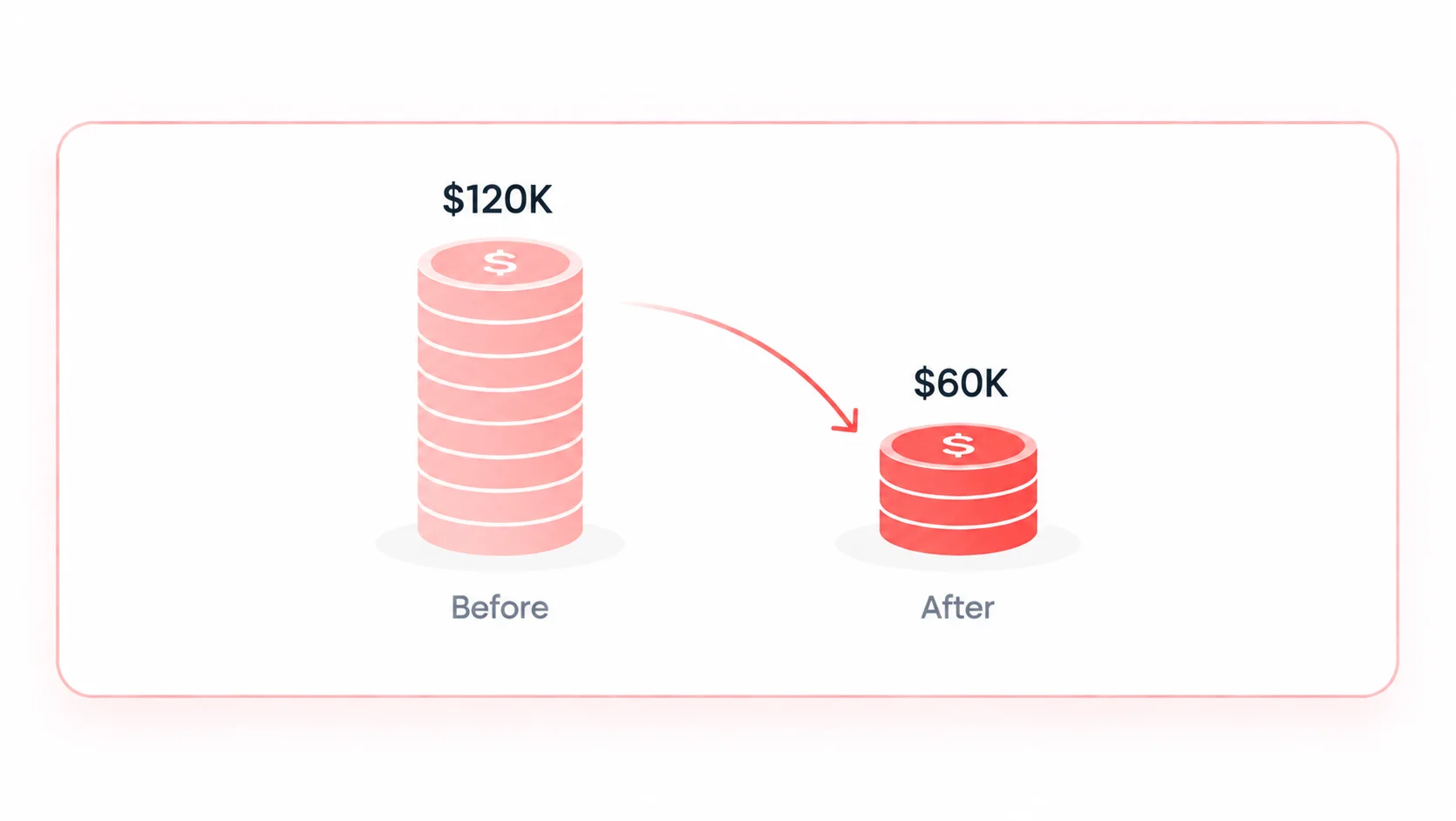
How a FinTech team cut delivery time by 57% without slowing coding
The team used AI to code faster, but releases still waited on reviews, testing and approvals.
Azilen added agentic workflows to the team's existing tools for review, testing and release.
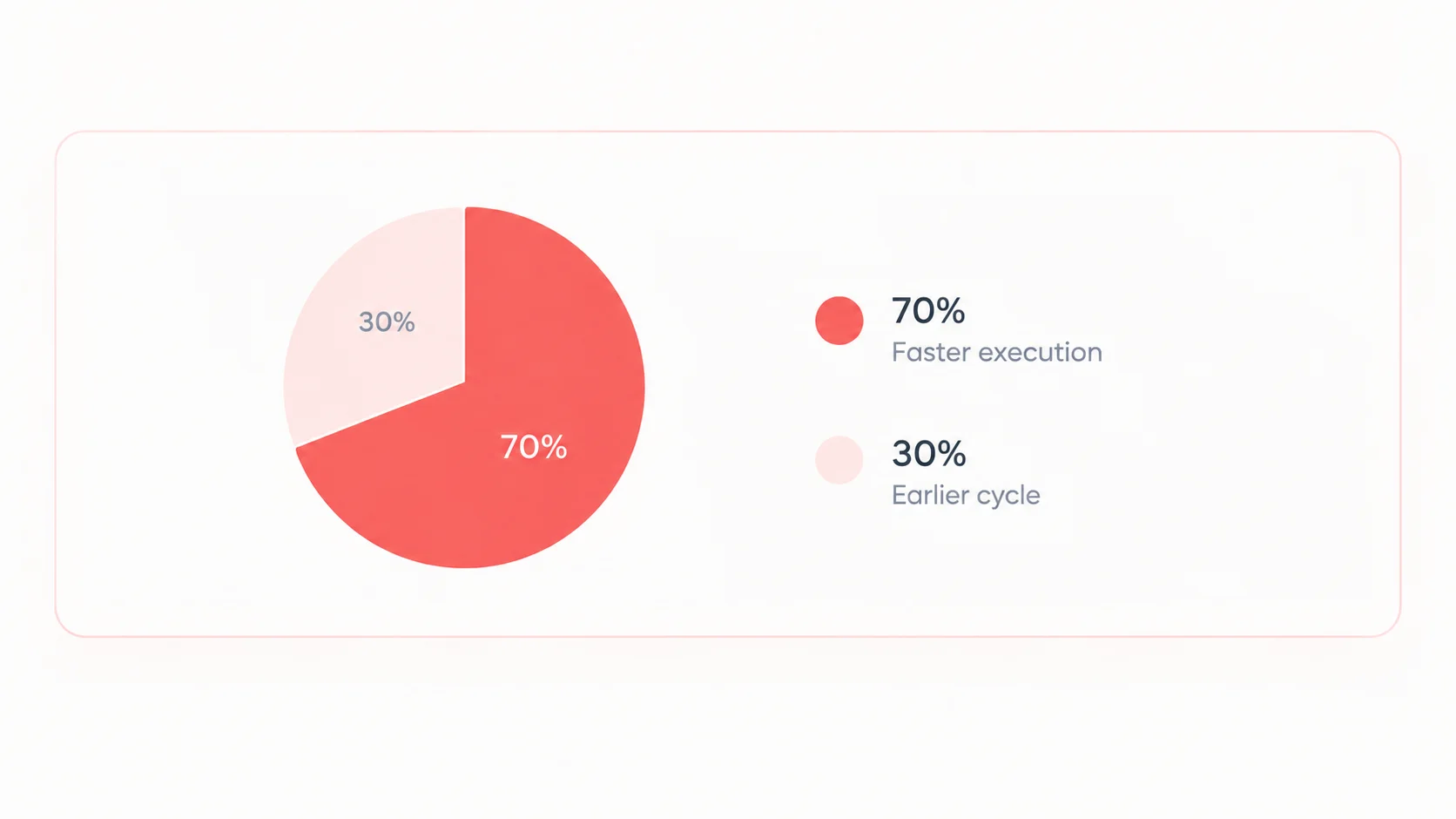
Delivery time fell from 42 days to 18 days, with fewer failed releases and less rework.
Where the time went
Each colour is one stage of delivery, from approved requirement to release. Coding stays small in both bars. The savings come from everything around it.
DORA metrics, before and after
Why Is Azilen Brain the Best Choice for AI-Native SDLC
Hiring, outsourcing and AI coding tools each help in one place. Here is how they compare when the goal is to release faster, with fewer failures.
| What matters | In-house team | Typical outsourcing | DIY AI tools | Azilen AI-native SDLC |
|---|---|---|---|---|
| Speeds up the whole path, not just coding | Partly | Usually not | Usually not | Yes |
| Testing and reviews keep pace with coding | Partly | Partly | Usually not | Yes |
| Security checks run before every release | Partly | Partly | Usually not | Yes |
| Delivery tracked with DORA metrics | Partly | Usually not | Usually not | Yes |
| Works inside your existing tools | Yes | Partly | Yes | Yes |
| Backlog shrinks without growing the team | Usually not | Partly | Partly | Yes |
| Fully covered | 1 of 6 | 0 of 6 | 1 of 6 | 6 of 6 |
| Your effort | Hire and manage | Manage the vendor | Set up and review | Approve and track |
How Much Is Slow Delivery Costing You?
Answer six quick questions about your team. See where your delivery stands on the four DORA metrics and what failed releases may be costing you.
Your delivery today
Move the sliders to match your team. Your result updates as you go.
About your releases
About your team
Get your full report
See what each result means, which stages to look at first, and how the cost was worked out.
Your full report is open below.
Your delivery report
Where to look first
What failed releases may cost
This is an estimate. The bands are approximate reference ranges adapted from DORA research, not an official DORA score. Real results depend on your team, product and tools.
Want to check these numbers against your real delivery data?
Talk to our teamIn-Depth Perspectives on the AI-Native SDLC
Read how Azilen thinks about AI across the delivery lifecycle, from faster coding to safer releases and quicker recovery.
How to Use Agentic AI in the Software Development Lifecycle?
How to use agentic AI to boost productivity, streamline pipelines and scale engineering without breaking team culture, and how it connects to measuring delivery with DORA metrics.



 Talk to Our
Consultants
 Chat with
Our Experts
 Write us
an Email