






It works in demos. It often fails in production.
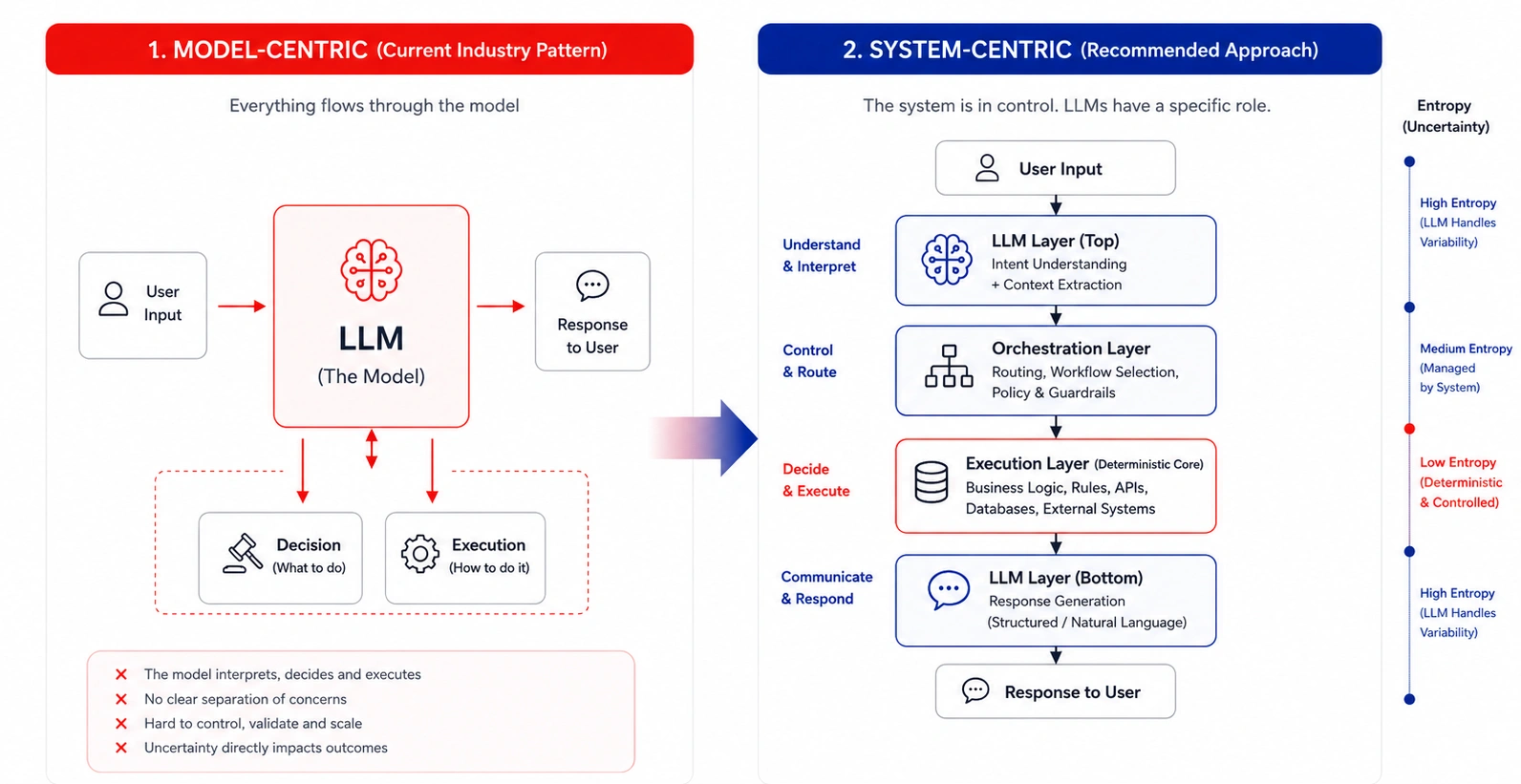
Because LLMs are fundamentally probabilistic. They are designed to predict the most likely response, not to make deterministic business decisions. Yet many AI systems today allow models to directly drive workflows, execution, and outcomes with very little structural control around them.
That’s where the real problem begins.
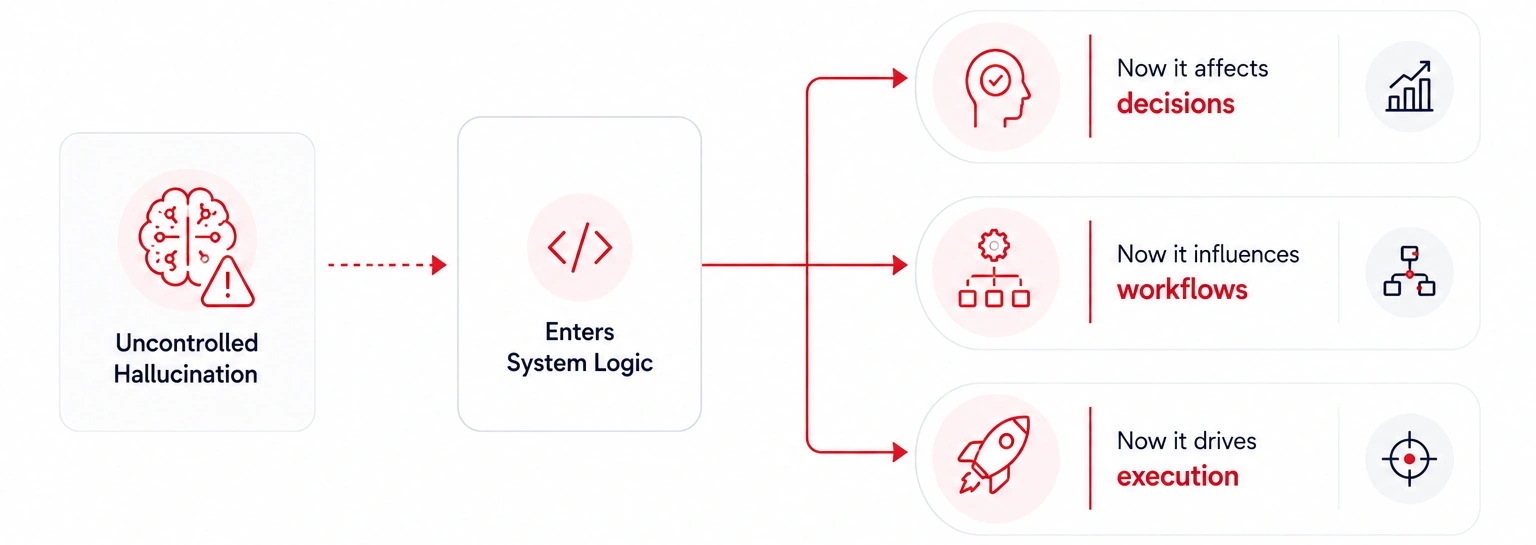
The issue is not hallucination alone. The issue is uncontrolled uncertainty entering critical system layers like decision-making, workflow execution, and business logic.
This is why many enterprise AI initiatives show strong early promise but struggle when complexity, scale, and real-world edge cases enter the picture.
The shift AI engineering now needs is architectural.
LLMs should not function as the “god layer” of the system. They should operate as one intelligence layer within a larger deterministic architecture, where:
 12 mins








 Talk to Our
Consultants
Talk to Our
Consultants Chat with
Our Experts
Chat with
Our Experts Write us
an Email
Write us
an Email