AI Software Development Services
Trusted by product companies and enterprises across industries, we design, build, and scale AI software that fits into complex systems, adapts to imperfect data, and proves its value through measurable ROI.

Values that Define Our AI Software Development Services




We build custom AI/ML solutions designed around your data, integrated with your stack, and deployed in your environment. From data pipelines to inference API, we own the full delivery cycle.
- AI/ML Strategy and Consulting
- Custom AI/ML Model Development
- AI Automation Solutions
- AI Integration and Deployment

Get GenAI applications built on OpenAI, Anthropic, Mistral, and open-source LLMs. From designing retrieval pipelines that connect to your data sources to controlling how outputs are generated and validated, every layer is built for accuracy, traceability, and consistent behavior.

We design AI agents that can plan, execute, and complete multi-step tasks across systems. Each agent is built around defined workflows, with clear boundaries, fallback logic, and checkpoints to ensure actions remain controlled, traceable, and reliable in complex operating conditions.

We build computer vision systems that can interpret images and video within real operational environments. From model design to deployment, each system is trained and tuned on your specific visual data, integrated into your workflows, and optimized to deliver consistent, usable outputs at scale.
- Object Detection and Recognition
- OCR/ICR Solutions
- Medical Imaging Software Development
- Video Analysis Solutions
Our Custom AI Software Development Capabilities
Case Studies: Real Transformations, Real Results (with AI at Core)
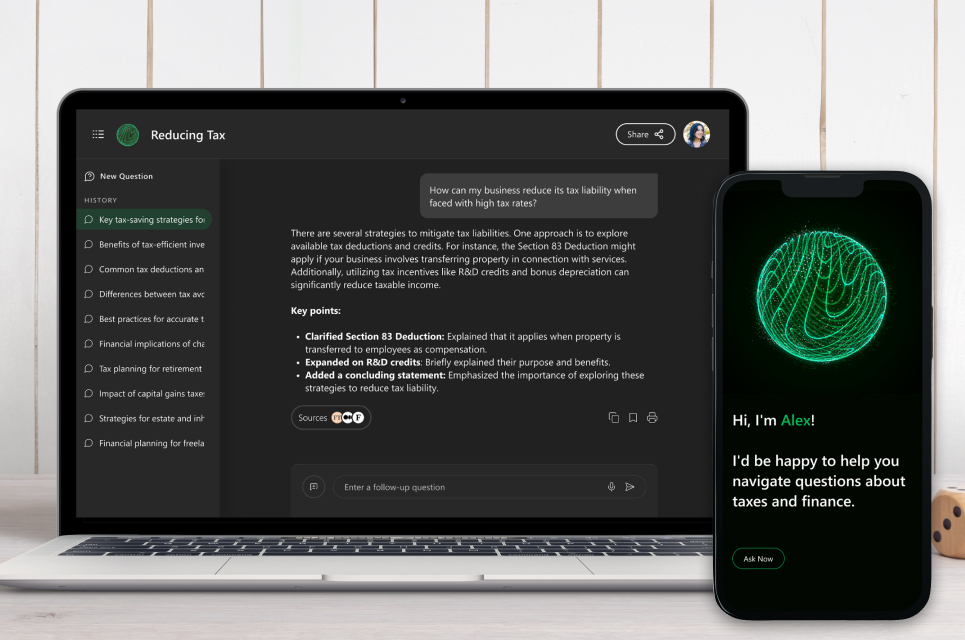
To resolve complex financial queries in fun and engaging way, because fetching multiple documents to get answers is time-consuming and boring.

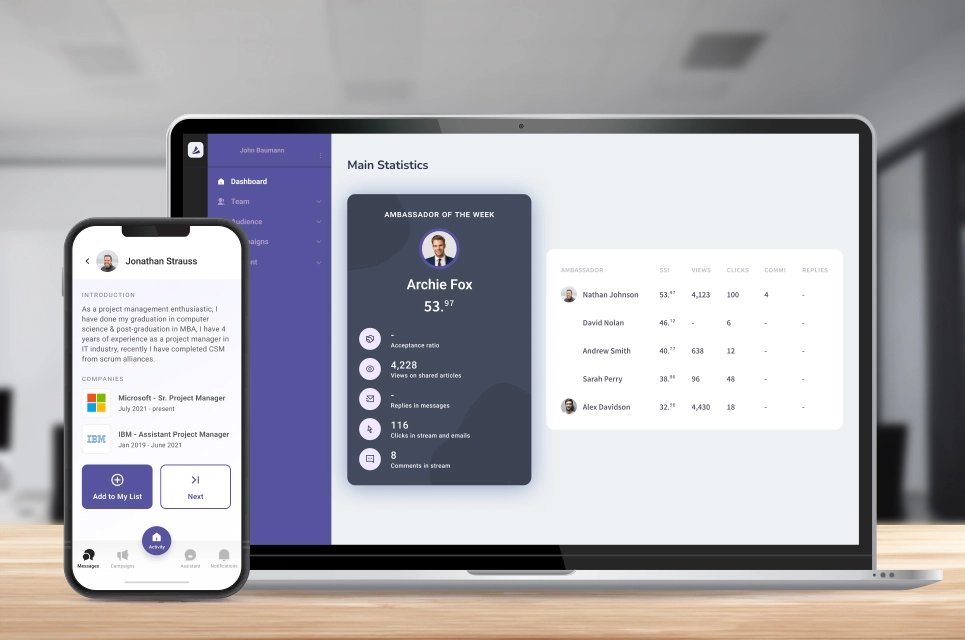
According to a LinkedIn survey in 2022, strong employer brands help companies fill open positions quickly, therefore, employer branding plays a vital role in talent sourcing.
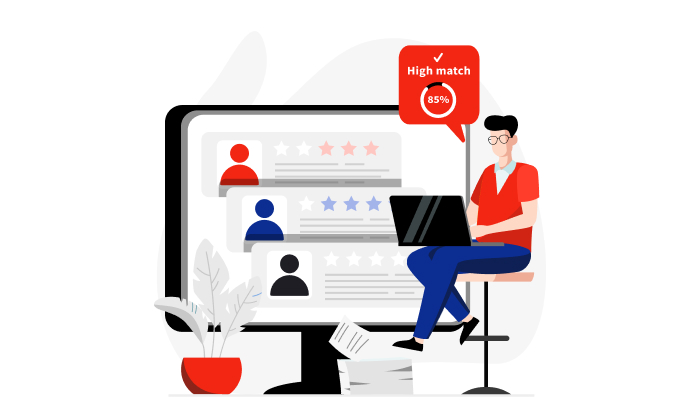
Azilen worked with one of its clients in the employee experience industry to develop a Career Profiling and Transition Platform through an AI-enabled guide engine.
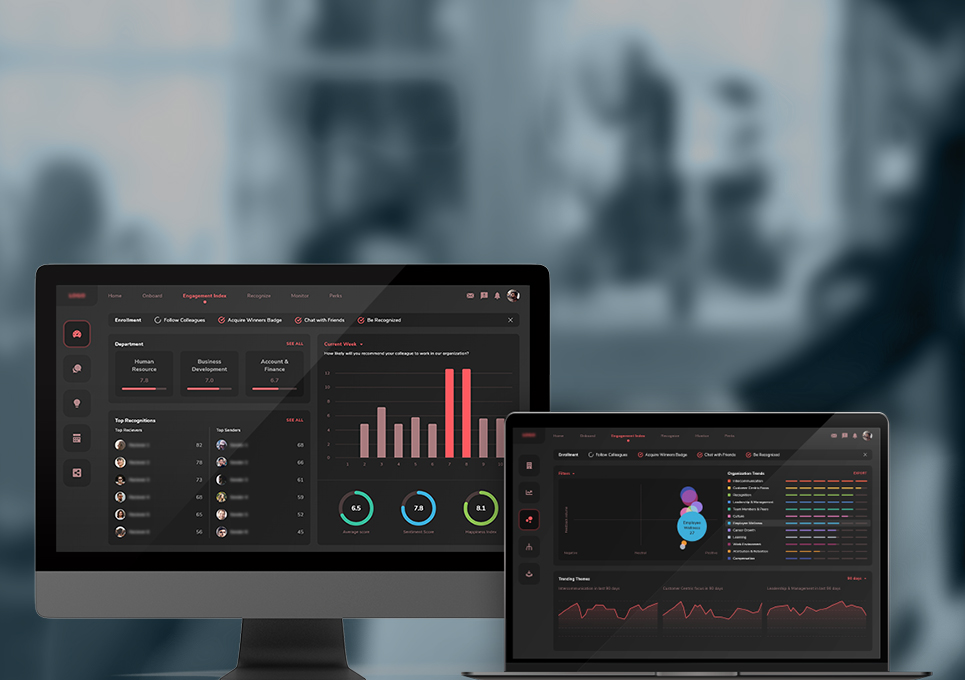
A recent report depicts that 85% of employees are actively disengaged in their workplaces, this amounts to a whopping $7 trillion in lost productivity globally.
Already Identified AI Use Case? Wondering Time & Resources to Get it Engineered? Get Ballpark Estimate.

The Awards & Recognition Behind Our AI Excellence
 TITAN Business Awards 2026 – Gold, Artificial Intelligence
- TITAN Business Awards 2026 – Gold, Outstanding Innovative IT Company
- AI-Driven Digital Transformation Leader – UK 2026
- Top AI Product Development for Enterprises – USA 2026
- Leading AI-Driven Enterprise Solutions Provider – UK 2025
- Best AI Development Services – USA 2025
Excited About AI But Surrounded by Many Challenges and Uncertainties?
Book AI Readiness Workshop
Siddharaj Sarvaiya
Driving enterprise AI adoption with structured readiness frameworks and execution clarity.
Talk to ExpertOur Approach to AI Software Development Services

We identify where AI can create long-term impact by mapping business challenges, workflows, and decision points. We also assess applicable EU AI Act requirements and NIST AI RMF principles to establish appropriate risk and governance considerations from the beginning.

We assess data availability, quality, and structure to determine readiness. Where applicable, we consider GDPR and HIPAA requirements for data privacy and protection while preparing datasets and pipelines that support consistent and reliable model performance.

We design and train models aligned to your use case, then integrate them into existing systems and workflows. We incorporate relevant NIST AI RMF practices and SOC 2 controls where applicable to support secure, governed, and enterprise-ready AI systems.

We deploy AI systems with performance and governance tracking in place, continuously monitoring outputs, detecting drift, and refining models to ensure long-term reliability. We consider ongoing EU AI Act, GDPR, and applicable security requirements as AI systems scale across enterprise environments.
Outcomes Delivered Through Our AI Software Development Services
AI Software Development Services Powered by Core AI Technologies
Our AI software development services are built on a set of core technologies used to design, train, and operationalize AI systems. From foundation models and orchestration frameworks to model management and computer vision libraries, this stack reflects how we build, integrate, and scale AI software solutions.











AI Delivered, AI Supported—That’s Our Promise!
AI success doesn’t stop at deployment. Our post-delivery support ensures your AI solution stays optimized, secure, and continuously improving.
- Detecting drift, fine-tuning, and improving accuracy.
- Ensuring seamless scaling and cloud optimization.
- Regular updates, threat protection, and data privacy.
- Enhancing AI with new capabilities and UX improvements.

Talk to Our AI Experts - Validate Your AI Strategy in 30 Min
Planning an AI product, enterprise AI initiative, or intelligent automation solution? Our AI specialists will help you define the right architecture, data strategy, AI models, and implementation roadmap to accelerate deployment and maximize business value.
No commitment · No cost · Just a conversation

The Spirit Behind Engineering Excellence


What Our Clients Say About Their Journey with Us

Working with the Azilen’s team on our project was a great experience. The team provided timely support, and delivered high-quality results.

Azilen has been working with us for about two and a half years now, and we’ve done multiple projects together. They’ve been fantastic, especially in the HR space. Whether it’s integrations or custom software development – these guys are our go-to team. Seriously, they’re one of our favorite partners. Highly recommended.

The Azilen team helped develop a complex cross-platform mobile application. We were more than happy with the professional project management and transparent communication. Scoping and implementation were as easy as working with local staff. The results delivered were always on time and of high quality. We look forward to working with Azilen on our next project.

We appreciate our relationship with Azilen. We are just getting going, ClearingBid is going to democratize the IPO market for all, this is where Azilen has helped and played an important role with us. For a big vision, we did not have a design team to start, so number of our solutions were driven by Azilen. I want to give a big shout out the structured product management skills and the necessary follow up efforts from the team.

We are extremely satisfied with the competence technical expertise that Azilen has shown us, this is combined with great customer service.

The beta product has shown reliable performance and satisfactory features, according to test users. Despite some scheduling misalignment, Azilen Technologies’ flexibility, responsiveness, and complete deliverables continue to boost the collaboration.

Azilen Technologies delivered an impressive product and continues to create extensive project overviews that ensure effective collaboration. The team communicates clearly and manages the project cost-effectively. They are accessible and offer technical expertise to support a valuable partnership.
The quality of the final deliverables impressed the end client, a testament to the team’s agility and ability to collaborate with a remote partner. They actively put in the effort to adapting their work to reflect given feedback. Their contributions and suggestions added value to the relationship.
As co-founders of a New York based legal technology startup – we’ve worked with Azilen Technologies since January 2017. Azilen has been a steadfast resource for our company, helping us to translate product ideas into live applications for Web, IOS and Android. We are highly satisfied with Azilen’s overall ability to implement technical solutions. The team is highly professional; they utilize good collaboration tools; they provide regular feedback and advice, and they help allocate project resources efficiently. Overall, the experience has been excellent.
Prototype versions of both apps have shown improvement over past versions and received largely positive feedback. Azilen Technologies provided pragmatic recommendations and advice about long-term strategies. Their dependable delivery and impressive technical skills produced excellent results.
Very satisfied with high quality of work and ability to collaborate on and accomplish complex objectives. Across all areas of mobile app development and deployment to detailed custom applications, our extended team here is reliable and delivers successful results.
All clients have responded positively to the new sites, which are polished and highly dependable. Azilen Technologies communicates effectively, handles complex projects with ease, and delivers consistently high-quality work within budget and schedule.
Frequently Asked Questions (FAQ's)
AI software development covers the full lifecycle of building systems that use data to drive decisions or automate workflows. This includes identifying the right use case, preparing and structuring data, designing and training models, and integrating them into existing systems. It also involves deployment, monitoring, and continuous refinement to ensure the system performs reliably over time. The focus is not just on model creation, but on making the solution usable within real business operations.
AI software development becomes relevant when your business deals with recurring decisions, large volumes of data, or processes that depend on manual analysis. If teams spend significant time interpreting data, identifying patterns, or handling repetitive workflows, AI can improve speed and consistency. It is also useful when existing systems generate data but fail to convert it into actionable insights. The key indicator is not the presence of data alone, but whether that data can support better decisions or automation.
A typical process starts with defining the problem and aligning it with a clear use case. This is followed by assessing data readiness, including availability, quality, and structure. Once the foundation is in place, models are designed and trained based on the use case. The next step involves integrating the model into existing systems and workflows so it can be used in real conditions. After deployment, continuous monitoring, evaluation, and refinement ensure the system maintains performance as data and usage evolve.
The timeline depends on the complexity of the use case, the state of your data, and the level of system integration required. Smaller, well-defined use cases with clean data can be delivered in a few weeks. More complex solutions that involve multiple data sources, system dependencies, and advanced models may take several months. A significant portion of the timeline is often spent on data preparation and integration rather than model development alone.
Common challenges include inconsistent or incomplete data, difficulty in integrating AI with existing systems, and maintaining performance as conditions change. Models that perform well in controlled environments may struggle with real-world variability. There are also challenges related to monitoring, retraining, and ensuring outputs remain reliable over time. Addressing these requires a structured approach that considers data, systems, and long-term usage from the beginning.
The cost of AI software development varies based on the scope of the solution, complexity of the use case, data requirements, and infrastructure needs. Projects with well-defined objectives and ready data tend to have lower costs, while complex systems involving multiple integrations and advanced models require higher investment. Many organizations begin with a discovery phase to define requirements, validate feasibility, and estimate effort before committing to full-scale development.
Yes, AI systems are typically designed to integrate with existing enterprise platforms such as ERP, CRM, and internal tools. Integration ensures that AI outputs can be used within current workflows rather than existing as separate systems. This involves connecting to data sources, embedding outputs into user interfaces, and aligning with existing processes so teams can adopt the solution without disruption.
AI software development is widely used across industries such as manufacturing, healthcare, finance, retail, and logistics. In manufacturing, it supports quality inspection and predictive maintenance. In healthcare, it assists with diagnostics and data analysis. In finance, it enables fraud detection and risk assessment. In retail and logistics, it improves demand forecasting, inventory management, and operational efficiency. The applicability depends more on the use case than the industry itself.
Traditional software development relies on predefined rules and logic to perform tasks, while AI development uses data-driven models that learn patterns and make predictions. In AI systems, outputs depend on training data and model behavior rather than fixed instructions. This introduces additional considerations such as data quality, model evaluation, and continuous improvement, which are not typically part of traditional software development.
Maintaining accuracy requires continuous monitoring of model performance in real-world conditions. This includes tracking changes in data patterns, detecting performance drift, and retraining models when needed. Evaluation pipelines and feedback loops are used to measure how outputs align with expected results. Regular updates ensure the system adapts to new data and changing business conditions.
Data is central to how AI systems function. The quality, structure, and completeness of data directly affect model performance and output reliability. Data preparation often involves cleaning, labeling, and transforming raw data into a usable format. In many cases, the success of an AI solution depends more on data readiness than on the choice of model itself.
Yes, AI solutions are designed based on specific business requirements, data environments, and system constraints. Instead of using pre-built templates, each solution is tailored to the use case it needs to address. This ensures better alignment with workflows, more accurate outputs, and smoother integration with existing systems.
Generative AI refers to systems that can produce content such as text, images, or code based on learned patterns from large datasets. In software development, it is used to build applications like chat-based assistants, document processing systems, and content generation tools. These systems are often integrated with business data to provide context-aware outputs.
Success is measured based on how the system performs within real business workflows. This includes improvements in decision accuracy, reduction in manual effort, faster processing times, and consistency of outputs. Performance metrics are tracked over time to ensure the solution continues to deliver value as usage increases and conditions evolve.





 Talk to Our
Consultants
Talk to Our
Consultants Chat with
Our Experts
Chat with
Our Experts Write us
an Email
Write us
an Email