IoT for Automotive: Powering Connected Vehicles
Azilen develops intelligent IoT solutions for automotive applications, connecting vehicles, manufacturing systems, and mobility infrastructure. Our expertise in IoT in automotive industry enables real-time vehicle monitoring, predictive maintenance, connected manufacturing, and data-driven operations. We help automotive businesses build smarter, more efficient, and connected ecosystems.
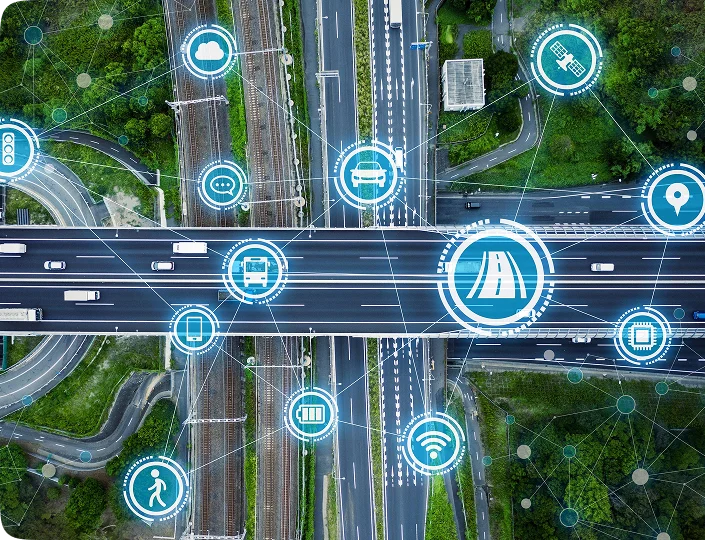
From Connected Vehicles to Intelligent Automotive Ecosystems
Modern vehicles are no longer defined by mechanical performance alone. They rely on connected systems, onboard sensors, electronic control units, and continuous data exchange. IoT for automotive brings these technologies together, enabling real-time vehicle monitoring, intelligent diagnostics, connected mobility, and smarter manufacturing operations.
At Azilen, we transform automotive data into actionable intelligence. By combining embedded engineering, vehicle telematics, edge computing, and predictive analytics, we help automotive businesses monitor vehicle health, optimize production processes, anticipate component failures, and improve operational efficiency. The result is smarter vehicles, more connected manufacturing environments, and a more responsive automotive industry.
End-to-End IoT Solutions for Automotive


Connect onboard sensors, electronic control units, and telematics platforms to capture vehicle data, monitor driving conditions, and enable intelligent connected mobility experiences.
- Real-Time Vehicle Tracking & Diagnostics
- Vehicle Health & Performance Monitoring
- Remote Vehicle Data Management
- Driver Behaviour & Usage Analytics
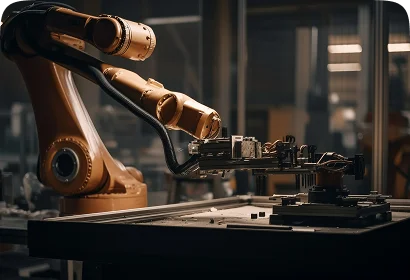
Connect assembly lines, industrial equipment, and production systems to monitor factory operations, improve manufacturing visibility, and optimize automotive production workflows.
- Connected Assembly Line Monitoring
- Industrial Equipment Performance Tracking
- Production Process Automation
- Real-Time Manufacturing Data Analytics

Analyze equipment telemetry, vibration readings, temperature data, and component performance to identify abnormal conditions and anticipate maintenance requirements.
- Predictive Vehicle Component
Maintenance - Engine & Powertrain Health
Monitoring - Industrial Machine Fault Detection
- Equipment Lifecycle Analytics
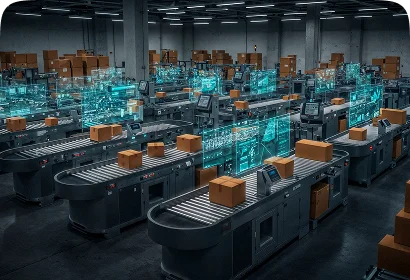
Integrate connected vehicles, logistics networks, and inventory systems to improve shipment visibility, coordinate fleet operations, and strengthen automotive supply chain management.
- Connected Fleet Tracking & Management
- Automotive Parts & Inventory
Tracking - Real-Time Shipment Monitoring
- Logistics Route & Delivery Analytics
Emerging Technologies Transforming IoT in the Automotive Industry
Engineering Intelligent Solutions for Complex Automotive Challenges
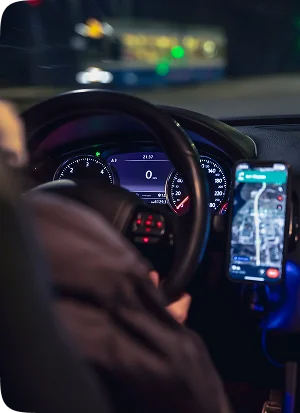
Integrate cabin sensors, connected infotainment, and vehicle interfaces to understand passenger preferences, personalise in-car experiences, and improve comfort through context-aware vehicle interactions.
- Occupant Presence & Behaviour Detection
- Personalised Cabin Environment Controls
- Connected Infotainment Integration
- In-Vehicle Voice & Gesture Interfaces

Build connected security systems that monitor communication between vehicle components, onboard devices, and external platforms to identify suspicious activity and protect connected automotive ecosystems.
- Connected Device Authentication
- Vehicle Network Anomaly Detection
- Secure OTA Update Management
- IoT Communication Threat Monitoring
Combine connected vehicle records, usage patterns, and component data to support warranty decisions, understand ownership trends, and improve lifecycle planning across automotive portfolios.
- Vehicle Usage & Lifecycle Analytics
- Warranty Claim Data Intelligence
- Component Traceability & History
- Vehicle Residual Value Insights
Engineer Smarter Vehicles With
Connected Automotive Intelligence
From connected vehicle experiences and intelligent cabin systems to automotive cybersecurity, lifecycle intelligence, and smart manufacturing, we build connected automotive ecosystems that improve vehicle performance, strengthen operations, and enable smarter mobility.
Technologies Powering IoT Solutions for Automotive
From automotive-grade microcontrollers and vehicle communication protocols to connected vehicle platforms, digital twins, edge AI, and cloud-based data intelligence — the technologies behind our connected automotive ecosystems.
NXP S32K
Automotive Microcontrollers
Infineon AURIX
Safety-Critical Computing
Renesas RH850
Automotive Control Systems
NVIDIA DRIVE
In-Vehicle AI Processing
Embedded Linux
Automotive Edge Computing
AUTOSAR
Automotive Software Architecture
MEMS Sensors
Motion & Inertial Sensing
Automotive ECUs
Electronic Control Systems
CAN FD
High-Speed Vehicle Communication
Automotive Ethernet
In-Vehicle Network Connectivity
LIN Bus
Body Electronics Communication
FlexRay
Deterministic Vehicle Networking
5G NR-V2X
Vehicle-to-Everything Connectivity
C-V2X
Connected Vehicle Communication
MQTT
Vehicle Telemetry Messaging
UDS / DoIP
Vehicle Diagnostics Communication
AWS IoT FleetWise
Vehicle Data Collection
Azure IoT Hub
Connected Vehicle Integration
Eclipse KUKSA
Vehicle Data Abstraction
COVESA VSS
Standardized Vehicle Data Models
Eclipse Mosquitto
Lightweight Vehicle Messaging
ThingsBoard
Vehicle Monitoring Dashboards
Kaa IoT
Connected Device Management
Eclipse Ditto
Vehicle Digital Twins
NVIDIA Omniverse
Automotive Simulation
Siemens Simcenter
Vehicle System Simulation
MATLAB & Simulink
Model-Based Automotive Design
Ansys Twin Builder
System-Level Digital Twins
CARLA
Autonomous Driving Simulation
IPG CarMaker
Vehicle Dynamics Simulation
OpenDRIVE
Road Network Simulation
ASAM OpenSCENARIO
Driving Scenario Modelling
NVIDIA DeepStream
Real-Time Vehicle Video Analytics
PyTorch
Automotive AI Model Development
TensorFlow
Vehicle Intelligence Models
OpenCV
Automotive Computer Vision
YOLO
Real-Time Object Detection
Apache Flink
Real-Time Vehicle Data Processing
Apache Kafka
Automotive Event Streaming
Databricks
Automotive Data Analytics
AWS IoT Greengrass
Vehicle Edge Computing
Azure Digital Twins
Vehicle Asset Modelling
Kubernetes
Scalable Automotive Platforms
Docker
Automotive Application Containerization
Terraform
Cloud Infrastructure Automation
Uptane
Secure Automotive Software Updates
ISO/SAE 21434
Road Vehicle Cybersecurity Engineering
X.509 & HSM
Vehicle Identity & Key Security
A Car That Tells You Before It Breaks Down
Take one part that starts to wear out. Without a connection, the story begins when something fails. In a connected vehicle, it begins weeks earlier.
Not connected: the problem is found late
- 1The part wears downNobody knows. The car looks fine from the outside.
- 2A warning appearsThe driver hears a noise or sees a light, often late.
- 3A visit is bookedThe driver finds a free slot at the workshop.
- 4The fault is foundThe workshop diagnoses it and orders the part.
- 5The car comes backThe driver returns days later for the repair.
Result: an unplanned stop, a longer repair and a frustrated driver.
Connected: the problem is found early
- 1Sensors track wearThe car measures the part as it runs.
- 2It is flagged earlyThe car spots the trend weeks before it fails.
- 3Everyone is toldData goes to the cloud. The driver and dealer get an alert.
- 4The fix is preparedThe part is ready and a visit is booked.
- 5One short visitThe repair is done before anything breaks.
Result: a planned visit, a shorter repair and a driver who trusts the brand.
What powers the connected story
How IoT Is Transforming Different Areas of the Automotive Industry

- Connected Vehicle Testing Data Collection
- Emission And Performance Compliance Monitoring
- Vehicle Certification Data Integration
- Automated Test Result Documentation
- Regulatory Parameter Tracking Across Vehicle Models
- Digital Evidence Management For Type Approval
- Connected Multimedia And Entertainment Platforms
- Real-Time Navigation And Traffic Data Integration
- Cloud-Based Media And Content Synchronisation
- Personalised In-Car Content Recommendations
- Connected Smartphone And Vehicle Application Integration
- Remote Infotainment Software Configuration
- Industrial Robot Status And Cycle Monitoring
- Connected Robotic Arm Coordination
- Automated Assembly Task Synchronisation
- Machine Vision-Based Component Position Verification
- Robot Utilisation And Productivity Analytics
- Collaborative Robot Safety Zone Monitoring
- Real-Time Cabin Noise Level Measurement
- Engine And Powertrain Acoustic Signature Analysis
- Unusual Sound Pattern Detection Through Sensors
- Road Noise And Vibration Data Collection
- Connected Acoustic Testing Equipment Integration
- Vehicle Noise Performance Benchmarking
- Cabin Temperature And Climate Sensor Integration
- Powertrain Thermal Behaviour Monitoring
- Cooling System Performance Data Analysis
- Thermal Load Distribution Across Vehicle Components
- HVAC System Efficiency And Energy Consumption Tracking
- Automated Thermal Anomaly Identification
- Connected Vehicle Access And Usage Management
- Remote Vehicle Locking And Unlocking
- Shared Vehicle Availability And Allocation Tracking
- Rental Vehicle Condition Monitoring
- Digital Trip Records And Usage Reporting
- Fleet Utilisation And Revenue Analytics
Our Automotive IoT Platforms & Connected Vehicle Capabilities
- 5G NR / 5G-V2X
- C-V2X
- DSRC
- Automotive Ethernet
- CAN FD
- Bluetooth Low Energy (BLE)
- Wi-Fi 6
- NXP S32K Microcontrollers
- Infineon AURIX
- Renesas RH850
- NVIDIA DRIVE Platforms
- Automotive ECUs
- MEMS Inertial Sensors
- LiDAR Sensors
- CAN / CAN FD
- LIN Bus
- FlexRay
- UDS (ISO 14229)
- DoIP (ISO 13400)
- AUTOSAR
- Vehicle Signal Specification (VSS)
Automotive innovation goes beyond collecting vehicle data. Azilen connects embedded systems, intelligent components, and digital platforms to create responsive automotive ecosystems. By combining IoT, edge intelligence, and advanced analytics, we help automotive businesses unlock new capabilities, improve system interactions, and engineer mobility experiences built for tomorrow.
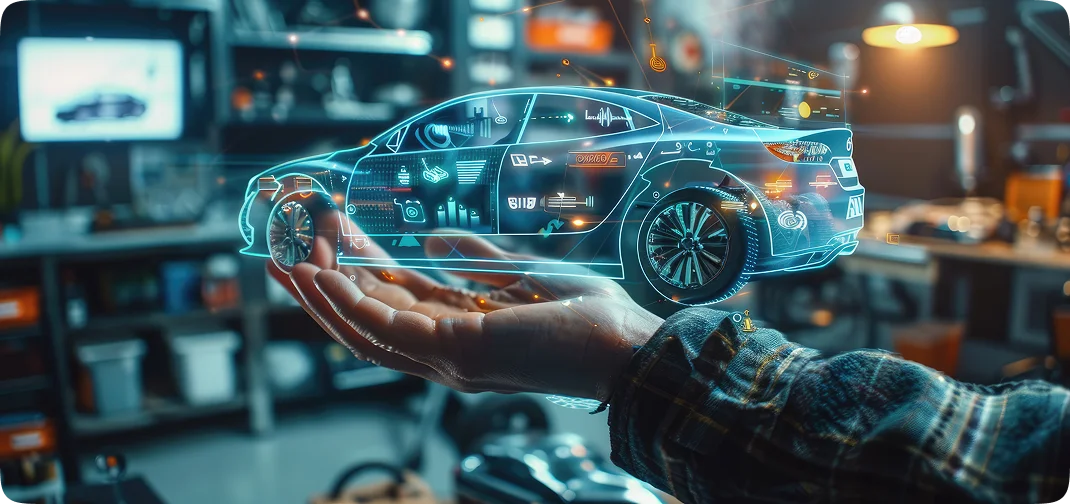
Intelligent IoT Architecture for Connected Automotive Ecosystems
Process sensor data directly within vehicle systems and edge gateways. Enable low-latency diagnostics, onboard decision-making, and responsive vehicle functions without depending entirely on cloud processing.

Unify information from ECUs, onboard sensors, telematics units, and connected platforms. Enable consistent data exchange across vehicle systems, applications, and automotive enterprise environments.

Combine live vehicle telemetry with digital representations of components and systems. Support simulation, performance analysis, system validation, and data-driven engineering decisions.

Translate real-time vehicle events and analytical insights into automated workflows. Enable remote diagnostics, software updates, intelligent alerts, and coordinated responses across connected automotive systems.

Process continuous streams from onboard sensors, ECUs, and telematics devices. Structure high-volume vehicle signals for event detection, operational analysis, and real-time engineering insights.

Consolidate simulation outputs, road-test measurements, validation results, and component performance records. Create searchable data environments that help engineering teams compare test cycles and evaluate design behaviour.

Track how vehicle data is generated, transformed, exchanged, and consumed across connected systems. Establish reliable data lineage, access controls, and governance for consistent engineering and operational reporting.
Edge Computing for Next-Generation Automotive Systems

Combine camera, radar, LiDAR, and ultrasonic sensor inputs directly within vehicle computing units. Enable localized perception, environmental interpretation, and faster responses to changing driving conditions.

Process communication between vehicles, roadside infrastructure, and connected devices at distributed edge nodes. Support localized hazard notifications, cooperative driving information, and low-latency data exchange.

Deploy optimized machine learning models on automotive-grade processors to interpret driver inputs, recognize road objects, and execute intelligent functions without routing every request to the cloud.

Coordinate workloads across domain controllers, zonal architectures, and central vehicle computers. Allocate processing resources dynamically to support multiple onboard applications and maintain system responsiveness.

Build Smarter Vehicles with Intelligent Automotive IoT - Let's Connect
Looking to develop connected vehicle systems, integrate automotive electronics, or build intelligent mobility platforms? Our IoT experts can help you define the right embedded architecture, connectivity framework, edge computing strategy, and implementation roadmap for next-generation automotive solutions.
No commitment · No cost · Just a conversation

Our Automotive IoT Development Services

Solution Architects
Systems Engineers
Engineers
ML Engineers
Engineers
Engineers

- Connected Vehicle Application Development
- Automotive Embedded Systems Engineering
- Vehicle Telematics & Connectivity
- Automotive Edge AI Integration
- Vehicle Data Engineering & Analytics
- Automotive Digital Twin Development
- Vehicle Communication Protocol Integration
- Connected Automotive Platform Development
Azilen's Automotive IoT Excellence Recognized Across Industries
- AI Excellence — TITAN Business Awards 2026 (Gold)
- Outstanding Innovative IT Company — TITAN Awards 2026 (Gold)
- AI-Driven Digital Transformation Leader UK 2026
- Top AI Product Development for Enterprises USA 2026
- Globee Awards for Technology — Bronze Winner 2025
- Best HR Software Development Company — Corporate Vision 2025
- 17+ Years of Software Engineering Experience
- Embedded Software Development Expertise
- Automotive IoT Architecture Engineering
- Connected Vehicle Platform Development
- Edge Computing & Embedded Intelligence
- Enterprise-Grade System Integration
- Vehicle Telematics & Remote Connectivity
- In-Vehicle Software Integration
- Vehicle-to-Everything Communication
- Automotive Sensor Data Integration
- Intelligent Vehicle Diagnostics
- Connected Mobility Application Development
- Artificial Intelligence & Machine Learning
- Edge AI & Distributed Computing
- Digital Twin Engineering
- Real-Time Data Processing
- Cloud-Native IoT Platforms
- Predictive Analytics & Intelligent Automation
- ERP & MES System Integration
- Automotive PLM Integration
- Manufacturing Execution Connectivity
- API-Led Enterprise Interoperability
- Scalable Cloud Infrastructure
- Legacy Automotive System Modernization
- Automotive Software Verification & Validation
- Embedded Systems Testing
- Secure Vehicle Communication Architecture
- Automotive Cybersecurity Engineering
- Continuous Integration & Deployment
- Performance, Reliability & Scalability Testing
Our Proven Smart City IoT Development Process

Assessment
Analysis
Evaluation
Identification
Assessment
Architecture
Mapping
Planning
Design
Framework
Integration
Development
Implementation
Development
Integration
Validation
Testing
Testing
Deployment
Optimization
Sound Reasons to Choose Azilen for Automotive IoT
Since 2009
in DNA
Understanding & SMEs
Security Mechanism
Less Than Excellence
What Our Clients Say About Their Journey with Us

Working with the Azilen’s team on our project was a great experience. The team provided timely support, and delivered high-quality results.


Azilen has been working with us for about two and a half years now, and we’ve done multiple projects together. They’ve been fantastic, especially in the HR space. Whether it’s integrations or custom software development – these guys are our go-to team. Seriously, they’re one of our favorite partners. Highly recommended.

The Azilen team helped develop a complex cross-platform mobile application. We were more than happy with the professional project management and transparent communication. Scoping and implementation were as easy as working with local staff. The results delivered were always on time and of high quality. We look forward to working with Azilen on our next project.

We appreciate our relationship with Azilen. We are just getting going, ClearingBid is going to democratize the IPO market for all, this is where Azilen has helped and played an important role with us. For a big vision, we did not have a design team to start, so number of our solutions were driven by Azilen. I want to give a big shout out the structured product management skills and the necessary follow up efforts from the team.

We are extremely satisfied with the competence technical expertise that Azilen has shown us, this is combined with great customer service.

The beta product has shown reliable performance and satisfactory features, according to test users. Despite some scheduling misalignment, Azilen Technologies’ flexibility, responsiveness, and complete deliverables continue to boost the collaboration.
Azilen Technologies delivered an impressive product and continues to create extensive project overviews that ensure effective collaboration. The team communicates clearly and manages the project cost-effectively. They are accessible and offer technical expertise to support a valuable partnership.
The quality of the final deliverables impressed the end client, a testament to the team’s agility and ability to collaborate with a remote partner. They actively put in the effort to adapting their work to reflect given feedback. Their contributions and suggestions added value to the relationship.
As co-founders of a New York based legal technology startup – we’ve worked with Azilen Technologies since January 2017. Azilen has been a steadfast resource for our company, helping us to translate product ideas into live applications for Web, IOS and Android. We are highly satisfied with Azilen’s overall ability to implement technical solutions. The team is highly professional; they utilize good collaboration tools; they provide regular feedback and advice, and they help allocate project resources efficiently. Overall, the experience has been excellent.
Prototype versions of both apps have shown improvement over past versions and received largely positive feedback. Azilen Technologies provided pragmatic recommendations and advice about long-term strategies. Their dependable delivery and impressive technical skills produced excellent results.
Very satisfied with high quality of work and ability to collaborate on and accomplish complex objectives. Across all areas of mobile app development and deployment to detailed custom applications, our extended team here is reliable and delivers successful results.
All clients have responded positively to the new sites, which are polished and highly dependable. Azilen Technologies communicates effectively, handles complex projects with ease, and delivers consistently high-quality work within budget and schedule.
Case Studies: Real Transformations, Real Results



Frequently Asked Questions (FAQ's)
Automotive IoT development costs depend on project complexity, hardware integration, connectivity requirements, embedded software, and cloud infrastructure. A basic connected vehicle solution costs less than an enterprise platform involving real-time analytics, edge AI, and multiple system integrations.
Common challenges include legacy system integration, inconsistent vehicle data, connectivity limitations, cybersecurity risks, hardware compatibility, and regulatory requirements. A well-planned architecture and phased implementation help reduce these challenges.
Businesses should avoid selecting incompatible hardware, overlooking cybersecurity, relying entirely on cloud connectivity, and developing isolated systems that cannot scale. Ignoring interoperability and long-term maintenance can also increase costs and technical complexity.
Development timelines depend on the scope, hardware complexity, testing requirements, and integrations. A focused proof of concept may take a few months, while a production-ready automotive IoT platform can require significantly longer development and validation.
Automotive IoT can introduce risks such as unauthorized access, data breaches, insecure communication, and software vulnerabilities. Businesses should implement device authentication, encrypted communication, secure OTA updates, access controls, and continuous security monitoring.
Common applications include connected vehicle platforms, remote diagnostics, fleet monitoring, EV battery intelligence, vehicle-to-everything communication, smart manufacturing, and usage-based insurance.
Yes. Automotive IoT solutions can integrate with ERP, MES, PLM, telematics platforms, and existing vehicle systems through APIs, communication protocols, and middleware. Integration planning is essential to maintain consistent data exchange across platforms.
Projects may exceed budgets because of underestimated hardware costs, changing requirements, integration complexities, security upgrades, and insufficient testing. Businesses should account for infrastructure, maintenance, scalability, and compliance costs during initial planning.
The right choice depends on business requirements, existing infrastructure, scalability, and customization needs. Existing platforms can accelerate implementation, while custom development offers greater control over vehicle data, integrations, workflows, and specialized automotive functionality.
Evaluate the company’s experience in embedded engineering, automotive connectivity, edge computing, cloud platforms, and enterprise integration. Also assess its security practices, testing capabilities, technical expertise, and ability to support the solution beyond deployment.


 Talk to Our
Consultants
 Chat with
Our Experts
 Write us
an Email