IoT for Construction Industry
We help construction companies use IoT to track equipment, monitor site conditions, and keep workers safe. Azilen builds connected solutions that give real-time visibility, reduce delays and rework, and help teams make faster, better decisions across every project, from early planning to final site handover.
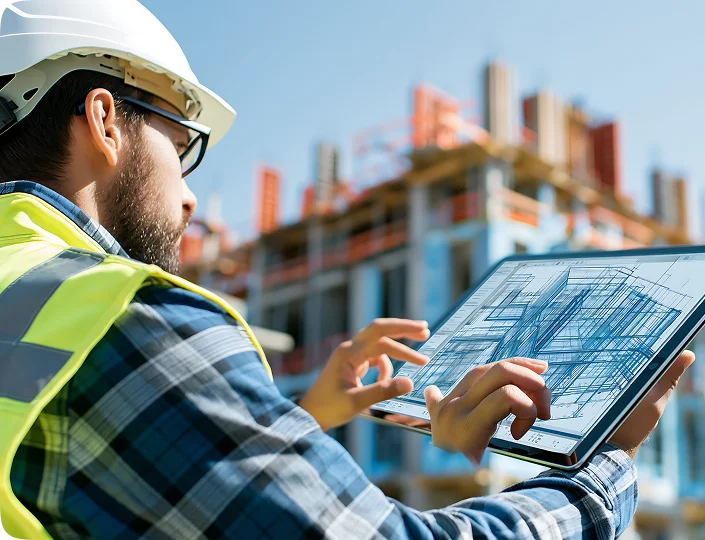
From Ground-Level Insights to Smarter Construction Decisions
Construction sites generate a constant stream of information, from equipment activity and material movement to worker conditions and environmental changes. But collecting this data is only the beginning. Azilen’s IoT solutions turn these signals into actionable intelligence by connecting sensors, equipment, site systems, and data platforms.
With real-time monitoring, automated alerts, and intelligent workflows, construction teams can identify potential issues early, coordinate resources better, and respond before small problems become costly setbacks. The result is a more connected construction environment where every decision is backed by timely, reliable site data.
Purpose-Built IoT Solutions for Construction Sites
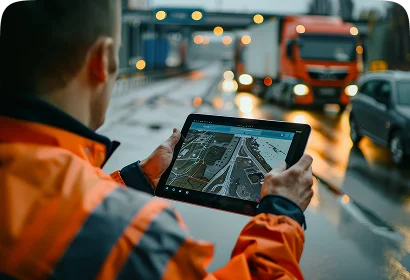

Monitor machinery location, engine hours, fuel use, fault codes, and operating patterns to plan maintenance and improve equipment utilization across sites.
- GPS-Based Equipment Tracking
- Engine Health & Fuel Monitoring
- Predictive Maintenance Alerts
- Equipment Utilization Analytics

Track worker locations, restricted zones, hazardous exposure, and emergency alerts through connected wearables and site sensors.
- Wearable Safety Device Integration
- Real-Time Worker Location Tracking
- Geofencing & Restricted-Zone Alerts
- Emergency & Hazard Notifications
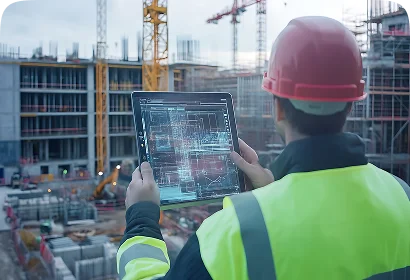
Locate tools, machinery, and materials using GPS, RFID, and BLE tags for
accurate inventory and delivery
visibility.
- RFID & BLE Asset Identification
- Material Movement Tracking
- Inventory & Delivery Monitoring
- Asset Location & Usage History

Measure concrete curing, structural movement, vibration, dust, and noise with connected sensors across active construction sites.
- Concrete Temperature & Sensors
- Structural Strain & Vibration Monitoring
- Dust, Noise & Weather Monitoring
- Site Condition & Progress Monitoring
Emerging Technologies Transforming Construction IoT
Engineering Connected Intelligence for Complex Construction Projects
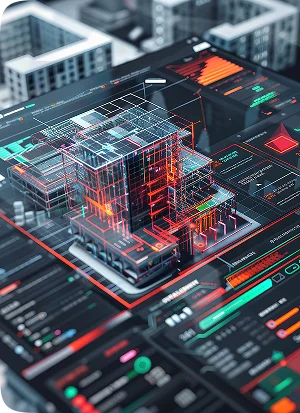
Connect IoT sensors with BIM systems to synchronize site conditions, equipment data, and asset information with digital models, improving construction coordination and accuracy.
- IoT-to-BIM Data Integration
- Live Asset-to-Model Synchronization
- Construction Model Validation
- Digital Construction Coordination
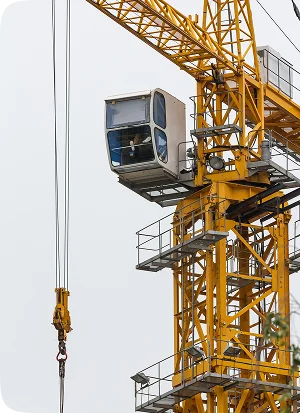
Monitor crane loads, wind speed, equipment movement, and operating conditions through connected sensors to identify lifting risks and improve operational safety.
- Crane Load & Capacity Monitoring
- Wind Speed & Weather Sensors
- Anti-Collision Detection Systems
- Lifting Activity Data Monitoring
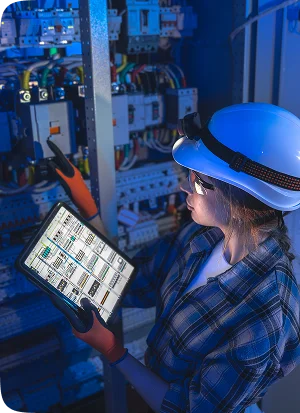
Connect manufacturing facilities with construction sites to track prefabricated components, monitor production readiness, coordinate deliveries, and synchronize installation schedules efficiently.
- Prefabricated Component Tracking
- Factory Production Monitoring
- Component Condition Monitoring
- Installation & Delivery Synchronization
Build Smarter Sites With
Connected Construction IoT
From equipment tracking and worker safety to structural monitoring, BIM integration, and predictive maintenance, we build connected construction ecosystems that improve site visibility, strengthen safety, and keep projects moving efficiently.
No commitment · Free technical consultation
Technologies Powering IoT for Construction Industry
From equipment telematics and site sensors to BIM integration, digital twins, and AI analytics — the technology ecosystem behind our connected construction solutions.
Embedded C
Equipment Firmware
C++
Device Applications
STM32
Microcontroller Development
ESP32
Wireless Sensor Integration
FreeRTOS
Real-Time Device Control
Embedded Linux
Edge Device Computing
Raspberry Pi
Site Monitoring Gateways
NVIDIA Jetson
Edge AI Processing
GNSS / GPS
Equipment Geolocation
BLE
Worker & Asset Tracking
UWB
Precise Indoor Positioning
RFID / NFC
Material Identification
LoRaWAN
Long-Range Site Connectivity
LTE / 5G
Cellular Site Communication
CAN Bus / J1939
Heavy Equipment Telematics
MQTT
Real-Time Sensor Messaging
AWS IoT Core
Connected Device Management
AWS Greengrass
Site-Level Edge Computing
Azure IoT Hub
Construction Device Connectivity
Azure Digital Twins
Physical Asset Modelling
PTC ThingWorx
Industrial IoT Applications
ThingsBoard
Device & Site Dashboards
Siemens Insights Hub
Equipment Performance Monitoring
Eclipse Ditto
Digital Twin Connectivity
Apache Kafka
Real-Time Sensor Streaming
Apache Spark
Large-Scale Data Processing
InfluxDB
Sensor Time-Series Data
TimescaleDB
Equipment Data Analytics
PostgreSQL / PostGIS
Spatial Site Data
Snowflake
Construction Data Warehousing
Databricks
Construction Data Engineering
Power BI
Project Performance Dashboards
Autodesk Revit
BIM Model Integration
Navisworks
Construction Model Coordination
IFC
BIM Data Interoperability
Bentley iTwin
Infrastructure Digital Twins
PyTorch
Predictive AI Models
TensorFlow
Machine Learning
OpenCV
Construction Site Vision
YOLO
Object & PPE Detection
Docker
IoT Application Containerization
Kubernetes
Scalable IoT Deployment
Terraform
Cloud Infrastructure Automation
GitHub Actions
Automated Deployment Pipelines
Prometheus
System Metrics Monitoring
Grafana
Live Site Dashboards
OTA Updates
Remote Equipment Firmware
X.509 Certificates
Connected Device Security
From First Dig to Handover, IoT Watches Every Phase
Pick a phase to watch the building grow. Each phase adds the sensors that matter most at that stage, so problems show up while they are still cheap to fix.
How IoT Is Transforming Different Areas of Construction

- Heavy Machinery Tracking
- Engine & Fuel Monitoring
- Equipment Health Monitoring
- Predictive Maintenance Alerts
- Idle Time Detection
- Fleet Utilization Analytics
- Worker Location Tracking
- Wearable Safety Monitoring
- Hazard Exposure Detection
- Fall Detection Alerts
- Restricted Zone Monitoring
- Emergency Response Notifications
- RFID-Based Material Tracking
- Delivery Status Monitoring
- Inventory Level Visibility
- Storage Condition Monitoring
- Tool & Asset Tracking
- Material Usage Analytics
- Dust & Noise Monitoring
- Temperature & Humidity Sensors
- Weather Condition Monitoring
- Wind Speed Detection
- Water Leakage Detection
- Environmental Compliance Tracking
- Concrete Curing Monitoring
- Structural Strain Measurement
- Vibration & Tilt Monitoring
- Foundation Movement Detection
- Temporary Structure Monitoring
- Structural Health Analytics
- Real-Time Progress Monitoring
- Project Milestone Tracking
- Field Data Integration
- Equipment Status Visibility
- Delivery Schedule Coordination
- Digital Project Records
Our Construction-Ready IoT Platforms & Site Intelligence Capabilities
- LoRaWAN
- Bluetooth Low Energy (BLE)
- UWB
- 5G / LTE
- Wi-Fi
- GNSS / GPS
- NB-IoT
- ESP32
- Arduino
- Raspberry Pi
- NVIDIA Jetson
- STM32 Microcontrollers
- MEMS Accelerometers
- Strain Gauge Sensors
- Temperature & Humidity Sensors
- RFID Tags
- MQTT
- CoAP
- CAN Bus
- SAE J1939
- Modbus
- OPC UA
- TCP / IP
- IFC (Industry Foundation Classes)
- BACnet
Construction businesses manage workflows across procurement, planning, contractors, and field operations. Azilen develops custom enterprise software to connect systems, automate processes, and improve information flow. We help construction enterprises replace fragmented workflows with integrated platforms for better coordination, visibility, and project control.
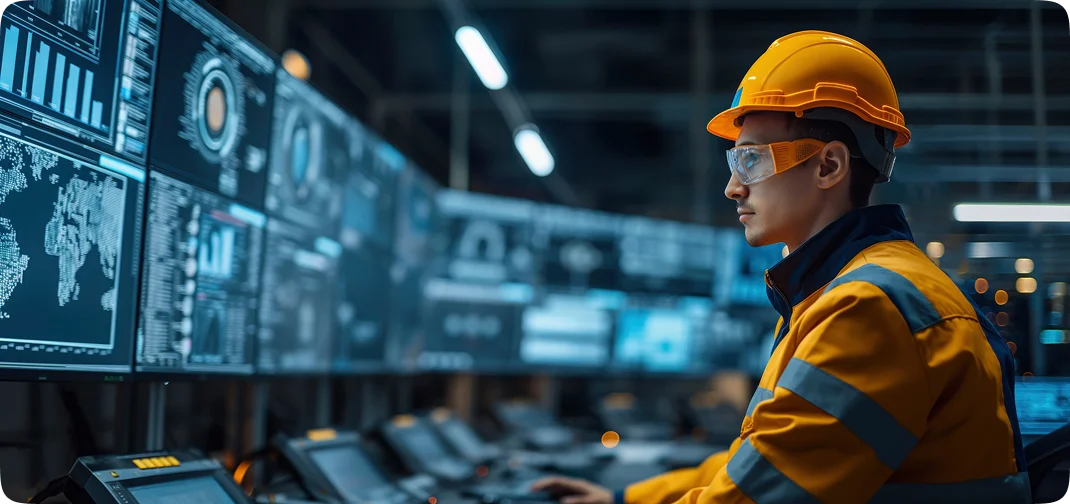
Intelligent IoT Architecture for Construction Site Operations
Run optimized models on edge devices and gateways to process equipment and site sensor data locally. This enables faster detection of equipment faults, safety risks, and changing site conditions.

Combine data from equipment sensors, worker wearables, environmental monitors, and location systems. This creates a unified view of site conditions and supports operational decisions.

Adjust sensor thresholds and monitoring parameters based on changing site conditions and equipment behaviour. This helps maintain reliable readings across different construction environments.

Use AI-driven agents to evaluate site events and initiate actions across connected systems. Trigger maintenance alerts, safety notifications, and operational workflows.

Ingest and process live data from construction equipment, worker wearables, and site sensors using Apache Kafka, Spark Streaming, and Flink. Enable monitoring, alerts, anomaly detection.

Use InfluxDB and TimescaleDB to store continuous construction sensor data. Analyze equipment performance, concrete curing, structural conditions, and environmental readings through scalable storage and analytics.

Build pipelines to collect, clean, enrich, and route site data across edge and cloud systems. Automate ETL workflows for analytics, predictive maintenance, and project systems.
Advancing Construction IoT with Edge Computing
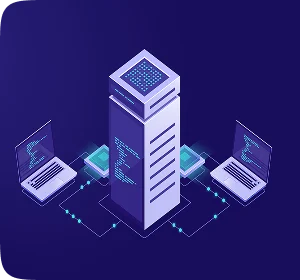
Process equipment sensor data locally on site gateways to detect faults, monitor operating conditions, and trigger maintenance alerts without waiting for cloud processing or connectivity.
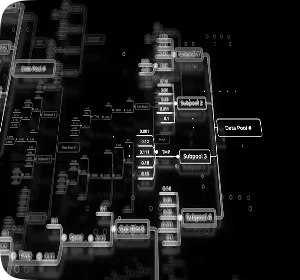
Analyze worker wearable and location data at edge gateways to identify restricted-zone entry, detect emergencies, and deliver safety alerts with minimal latency instantly on-site daily.
Run optimized AI models on edge devices to analyze concrete curing, vibration, and structural sensor readings, identifying abnormal conditions before they affect construction quality outcomes.
Filter and compress sensor data at gateways before cloud transmission, reducing bandwidth demands while preserving critical site information for centralized analytics and project reporting systems.

Talk to Our Construction IoT Experts - Plan Your Connected Site Strategy
Planning to connect construction equipment, monitor site conditions, or improve workforce safety? Our IoT experts can help you define the right sensor architecture, connectivity framework, edge computing strategy, and implementation roadmap for smarter construction operations.
No commitment · No cost · Just a conversation

Our Construction IoT Development Services

Architect
Systems Engineers
Engineers
Engineers
Engineers
Engineers

- Connected Site Operations
- Equipment & Asset Visibility
- Predictive Maintenance
- Worker Safety Monitoring
- Real-Time Site Intelligence
- Seamless System Integration
- Scalable IoT Infrastructure
- Edge Computing Solutions
Construction IoT Excellence Recognized Across Industries
- AI Excellence — TITAN Business Awards 2026 (Gold)
- Outstanding Innovative IT Company — TITAN Awards 2026 (Gold)
- AI-Driven Digital Transformation Leader UK 2026
- Top AI Product Development for Enterprises USA 2026
- Globee Awards for Technology — Bronze Winner 2025
- Best HR Software Development Company — Corporate Vision 2025
- Real-Time Heavy Machinery Tracking
- Engine Performance & Fuel Monitoring
- Equipment Health & Condition Analytics
- Predictive Maintenance & Failure Alerts
- Idle Time & Utilization Monitoring
- Fleet Performance & Location Intelligence
- Real-Time Worker Location Tracking
- Wearable-Based Safety & Health Monitoring
- Hazardous Gas & Temperature Detection
- Fall Detection & Emergency Notifications
- Restricted Zone & Geofencing Alerts
- Workforce Accountability During Site Emergencies
- RFID-Based Construction Material Tracking
- Real-Time Material Delivery Visibility
- Automated Inventory & Stock Monitoring
- Storage Condition & Quality Monitoring
- Construction Tool & Asset Tracking
- Material Consumption & Usage Analytics
- Real-Time Dust & Noise Monitoring
- Temperature & Humidity Sensor Integration
- Weather Intelligence for Site Operations
- Wind Speed Monitoring for Lifting Operations
- Water Leakage & Flood Detection
- Environmental Compliance & Threshold Alerts
- Concrete Curing & Temperature Monitoring
- Structural Strain & Vibration Analytics
- Foundation Movement & Stability Detection
- BIM-Integrated Construction Data Intelligence
- Real-Time Project Progress & Milestone Tracking
- Digital Records & Construction Handover Visibility
Our Tested and Trusted Construction IoT Development Process

Assessment
Analysis
Mapping
Definition
Identification
Architecture
Selection
Planning
Modelling
Planning
Integration
Development
Configuration
Connectivity
Development
Testing
Validation
Testing
Testing
Deployment
Sound Reasons to Choose Azilen for Construction IoT
Since 2009
in DNA
Understanding & SMEs
Security Mechanism
Less Than Excellence
What Our Clients Say About Their Journey with Us

Working with the Azilen’s team on our project was a great experience. The team provided timely support, and delivered high-quality results.


Azilen has been working with us for about two and a half years now, and we’ve done multiple projects together. They’ve been fantastic, especially in the HR space. Whether it’s integrations or custom software development – these guys are our go-to team. Seriously, they’re one of our favorite partners. Highly recommended.

The Azilen team helped develop a complex cross-platform mobile application. We were more than happy with the professional project management and transparent communication. Scoping and implementation were as easy as working with local staff. The results delivered were always on time and of high quality. We look forward to working with Azilen on our next project.

We appreciate our relationship with Azilen. We are just getting going, ClearingBid is going to democratize the IPO market for all, this is where Azilen has helped and played an important role with us. For a big vision, we did not have a design team to start, so number of our solutions were driven by Azilen. I want to give a big shout out the structured product management skills and the necessary follow up efforts from the team.

We are extremely satisfied with the competence technical expertise that Azilen has shown us, this is combined with great customer service.

The beta product has shown reliable performance and satisfactory features, according to test users. Despite some scheduling misalignment, Azilen Technologies’ flexibility, responsiveness, and complete deliverables continue to boost the collaboration.
Azilen Technologies delivered an impressive product and continues to create extensive project overviews that ensure effective collaboration. The team communicates clearly and manages the project cost-effectively. They are accessible and offer technical expertise to support a valuable partnership.
The quality of the final deliverables impressed the end client, a testament to the team’s agility and ability to collaborate with a remote partner. They actively put in the effort to adapting their work to reflect given feedback. Their contributions and suggestions added value to the relationship.
As co-founders of a New York based legal technology startup – we’ve worked with Azilen Technologies since January 2017. Azilen has been a steadfast resource for our company, helping us to translate product ideas into live applications for Web, IOS and Android. We are highly satisfied with Azilen’s overall ability to implement technical solutions. The team is highly professional; they utilize good collaboration tools; they provide regular feedback and advice, and they help allocate project resources efficiently. Overall, the experience has been excellent.
Prototype versions of both apps have shown improvement over past versions and received largely positive feedback. Azilen Technologies provided pragmatic recommendations and advice about long-term strategies. Their dependable delivery and impressive technical skills produced excellent results.
Very satisfied with high quality of work and ability to collaborate on and accomplish complex objectives. Across all areas of mobile app development and deployment to detailed custom applications, our extended team here is reliable and delivers successful results.
All clients have responded positively to the new sites, which are polished and highly dependable. Azilen Technologies communicates effectively, handles complex projects with ease, and delivers consistently high-quality work within budget and schedule.
Case Studies: Real Transformations, Real Results



Frequently Asked Questions (FAQ's)
IoT for the construction industry uses connected sensors, devices, equipment, and platforms to collect real-time site data. It helps construction companies monitor machinery, track materials, improve worker safety, and manage project operations more efficiently.
Key applications include equipment tracking, predictive maintenance, worker safety monitoring, material management, concrete curing monitoring, structural health monitoring, environmental monitoring, and real-time construction progress tracking.
The cost depends on the number of connected devices, sensor types, software complexity, connectivity infrastructure, cloud services, and integrations. A basic monitoring solution costs less than a comprehensive platform with predictive analytics, BIM integration, and AI-powered automation.
Development timelines depend on project scope, hardware requirements, integrations, and deployment complexity. A basic IoT application may take a few weeks to a few months, while enterprise-scale construction IoT ecosystems require longer development and testing cycles.
Key cost factors include hardware procurement, sensor installation, network infrastructure, software development, cloud hosting, data storage, security implementation, third-party integrations, and ongoing maintenance. The number of construction sites and connected assets also affects the overall investment.
IoT connects real-time sensor data from physical construction sites with Building Information Modeling (BIM) platforms. This integration helps teams compare actual site conditions with digital models, monitor assets, identify discrepancies, and improve project coordination.
Construction IoT solutions use technologies such as GPS, RFID, BLE, LoRaWAN, 5G, Wi-Fi, MQTT, edge computing, cloud platforms, and AI-powered analytics. The technology stack depends on site requirements, connectivity, scalability, and monitoring needs.
Edge computing processes sensor data closer to construction equipment and site devices instead of relying entirely on cloud platforms. It reduces latency, supports faster alerts, minimizes bandwidth usage, and enables monitoring even during intermittent connectivity.
Security involves device authentication, encrypted communication, secure firmware updates, access controls, network segmentation, and continuous monitoring. A well-designed architecture protects equipment data, workforce information, and connected construction infrastructure from unauthorized access.
Businesses can measure ROI through reduced equipment downtime, lower maintenance expenses, improved asset utilization, fewer safety incidents, reduced material losses, and better project coordination. Comparing these operational improvements against implementation and maintenance costs helps determine financial returns.




 Talk to Our
Consultants
 Chat with
Our Experts
 Write us
an Email