IoT Solutions for Smart Cities
Azilen builds intelligent IoT solutions for smart cities by connecting urban infrastructure, transportation, utilities, and public services. Our expertise in IoT for smart cities enables real-time monitoring, efficient resource management, improved public safety, and data-driven urban development for more sustainable, connected communities.

From Disconnected Infrastructure to Cities That Think
Cities never stop moving. Traffic flows, electricity travels, and water moves through complex networks. Yet, these systems often operate in silos. IoT solutions for smart cities connect infrastructure, transportation, utilities, and environmental systems through shared intelligence.
At Azilen, we turn urban data into action. By combining connected sensors, edge computing, and real-time analytics, we help cities anticipate disruptions, optimize resources, and improve public services. Integrating AI-driven insights, geospatial intelligence, and digital twins enables authorities to understand infrastructure performance, forecast urban demands, and coordinate essential services. The goal is smarter operations and better everyday experiences for citizens.
End-to-End IoT Solutions for Smart Cities
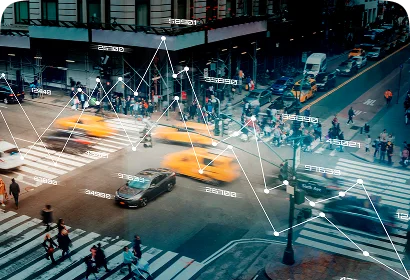

Connect traffic signals, road sensors, parking systems, and public transport networks to improve urban mobility and manage traffic conditions in real time.
- Intelligent Traffic Signal Management
- Smart Parking & Occupancy Detection
- Public Transport Fleet Tracking
- Real-Time Traffic Flow Analytics

Connect streetlights, smart meters, and energy infrastructure to monitor consumption, automate lighting, and optimize electricity distribution across urban networks.
- Intelligent Streetlight Automation
- Smart Meter Data Monitoring
- Energy Consumption Analytics
- Grid Performance & Fault Detection

Monitor water distribution, detect pipeline leaks, and connect waste collection systems to improve resource utilization and municipal service efficiency.
- Smart Water Metering & Monitoring
- Pipeline Leak Detection
- Intelligent Waste Bin Monitoring
- Waste Collection Route Optimization
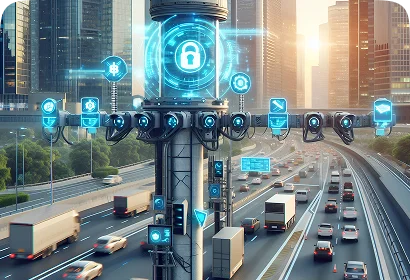
Deploy connected sensors across urban spaces to monitor air quality, noise, weather, and public infrastructure while enabling faster emergency responses.
- Air Quality & Pollution Monitoring
- Noise & Weather Monitoring
- Flood & Water Level Detection
- Public Infrastructure Health Monitoring
Emerging Technologies Transforming IoT for Smart Cities
Engineering Intelligent Solutions for Complex Urban Challenges

Connect cameras, occupancy sensors, and public infrastructure to understand crowd movement, manage space utilization, and coordinate operations across busy urban locations.
- Public Space Occupancy Analytics
- Crowd Density & Movement Tracking
- Smart Venue Capacity Management
- Public Facility Utilization Insights

Connect delivery fleets, loading zones, and logistics infrastructure to coordinate last-mile movement, manage curbside demand, and improve goods distribution across cities.
- Smart Loading Zone Management
- Last-Mile Delivery Coordination
- Urban Fleet Movement Analytics
- Connected Logistics Hub Monitoring

Connect emergency services, public infrastructure, and response systems to coordinate incident information, evacuation activities, and critical resources during unexpected urban emergencies.
- Emergency Incident Data Integration
- Evacuation Route Coordination
- Emergency Resource Availability Tracking
- Multi-Agency Response Coordination
Build Smarter Cities With
Connected Urban Intelligence
From intelligent traffic management and smart utilities to public safety, urban logistics, and environmental monitoring, we build connected city ecosystems that optimize resources, improve public services, and make urban operations more responsive.
Technologies Powering IoT Solutions for Smart Cities
From 5G connectivity and intelligent sensor networks to AI-powered urban analytics, geospatial digital twins, and interoperable city platforms — the technologies behind our connected urban ecosystems.
STM32
Smart Sensor Controllers
ESP32
Connected IoT Devices
NVIDIA Jetson Orin
Edge AI Processing
Raspberry Pi
Urban IoT Gateways
Embedded Linux
Edge Device Computing
MEMS Sensors
Environmental & Motion Sensing
Smart Meter Modules
Utility Consumption Monitoring
Industrial Edge Gateways
Multi-Device Data Collection
5G Advanced
Low-Latency Urban Connectivity
NB-IoT
Low-Power Utility Networks
LTE-M
Wide-Area Device Communication
LoRaWAN
Long-Range Sensor Connectivity
Wi-SUN FAN
Smart Utility Mesh Networks
UWB
Precise Indoor Positioning
MQTT 5.0
Lightweight IoT Messaging
CoAP
Constrained Device Communication
FIWARE Orion-LD
Urban Context Management
ETSI NGSI-LD
City Data Interoperability
oneM2M
IoT Service Layer Standards
OGC SensorThings API
Standardized Sensor Data Access
AWS IoT Core
Connected Device Management
Azure IoT Operations
Edge-to-Cloud IoT Management
ThingsBoard
Urban Device Dashboards
Eclipse Ditto
Connected Digital Twins
CesiumJS
3D Geospatial Visualization
OGC 3D Tiles
Large-Scale 3D City Models
CityGML 3.0
Urban Information Modelling
Bentley iTwin
Infrastructure Digital Twins
ArcGIS Urban
Urban Planning & Analysis
Autodesk Tandem
Building Digital Twins
PostGIS
Geospatial Data Management
Mapbox
Interactive Urban Mapping
NVIDIA Metropolis
Intelligent Video Analytics
PyTorch
Urban Predictive AI Models
TensorFlow
Machine Learning Applications
OpenCV
Computer Vision Processing
YOLO
Real-Time Object Detection
Apache Flink
Real-Time Urban Data Processing
Apache Kafka
Citywide Event Streaming
Databricks
Large-Scale Urban Data Analytics
AWS IoT Greengrass
Distributed Edge Computing
Azure Digital Twins
Urban Asset Modelling
Kubernetes
Scalable Platform Deployment
Docker
IoT Application Containerization
Terraform
Infrastructure Automation
OpenTelemetry
Distributed System Observability
Prometheus & Grafana
Infrastructure Monitoring
X.509 & TPM
Device Identity & Security
How a City Changes When Its Systems Start Talking
Drag the line across the city. On the left, each system works alone and problems are found late. On the right, connected sensors share live data, so the city can act early.
Drag the handle left and right to compare
Street lighting
Traffic signals
Waste collection
Water pipes
How IoT Is Transforming Different Areas of Smart Cities

- Real-Time Passenger Flow Monitoring Across Transit Stations
- Automated Passenger Counting Through Connected Sensors
- Predictive Public Transport Demand And Capacity Planning
- Connected Transit Infrastructure Performance Monitoring Systems
- Smart Ticketing Data Integration And Journey Analytics
- Intelligent Transit Scheduling Using Mobility Data
- AI-Powered Anomaly Detection Across Public Spaces
- Connected Emergency Call Points And Alert Systems
- Real-Time Incident Detection Through Smart Surveillance
- Automated Perimeter Monitoring For Critical Urban Assets
- Integrated Emergency Communication And Dispatch Systems
- Sensor-Based Monitoring Of Restricted Public Zones
- Real-Time Parking Occupancy Detection Through Sensors
- Automated Parking Guidance And Space Allocation
- Dynamic Curbside Space Utilization Monitoring Systems
- Electric Vehicle Charging Station Usage Analytics
- Parking Violation Detection Through Connected Infrastructure
- Predictive Parking Demand And Availability Analytics
- Distributed Air Quality Sensor Network Deployment
- Real-Time Particulate Matter And Gas Monitoring
- Hyperlocal Pollution Mapping Through Geospatial Analytics
- Industrial Emission Monitoring Through Connected Sensors
- Predictive Air Quality Modelling Using Environmental Data
- Automated Pollution Threshold Alerts For City Authorities
- Soil Moisture Monitoring Across Urban Green Spaces
- Automated Irrigation Based On Sensor Readings
- Tree Health Monitoring Through Connected Environmental Sensors
- Smart Water Allocation For Public Landscape Maintenance
- Microclimate Monitoring Across Urban Parks And Gardens
- Green Infrastructure Performance Analytics Through IoT Platforms
- Adaptive Streetlight Control Through Ambient Sensors
- Remote Luminaire Diagnostics And Fault Detection
- Motion-Based Lighting Across Pedestrian Corridors
- Centralized Streetlight Network Monitoring And Control
- Automated Lighting Schedules Based On Daylight
- Energy Consumption Analytics Across Connected Lighting Networks
Our Smart City IoT Platforms & Connected Infrastructure Capabilities
- 5G Advanced
- NB-IoT
- LTE-M
- LoRaWAN
- Wi-SUN FAN
- Wi-Fi 6 / 6E
- Bluetooth Low Energy (BLE)
- UWB
- GNSS / GPS
- ESP32
- STM32 Microcontrollers
- NVIDIA Jetson Orin
- Raspberry Pi
- Industrial IoT Gateways
- MEMS Environmental Sensors
- Air Quality Sensors
- Smart Energy Meters
- Water Flow Sensors
- Ultrasonic Level Sensors
- Vibration Sensors
- Occupancy Detection Sensors
- MQTT 5.0
- CoAP
- HTTP / REST APIs
- OPC UA
- Modbus TCP
- oneM2M
- ETSI NGSI-LD
- OGC SensorThings API
- IPv6
- TLS / DTLS
Smart cities need infrastructure that can sense, learn, and respond. Azilen builds intelligent IoT solutions for smart cities, connecting utilities, transportation, and public services. Through edge computing, AI analytics, and digital twins, we help cities anticipate disruptions, optimize resources, automate operations, and turn urban data into actionable insights.

Intelligent IoT Architecture for Connected Urban Infrastructure
Process data close to connected infrastructure using edge gateways and distributed computing. Enable low-latency decisions for traffic, utilities, safety, and critical assets.

Unify information from sensors, municipal platforms, connected assets, and third-party systems. Standardized data exchange creates consistent operational visibility across all city departments.

Connect sensor feeds with geospatial intelligence and digital representations of urban infrastructure. Help authorities identify patterns and assess asset conditions.

Translate real-time events and AI-driven insights into coordinated workflows. Enable automated alerts, adaptive infrastructure responses, maintenance requests, and faster coordination.

Combine GIS datasets, satellite imagery, location intelligence, and municipal records into unified geospatial data pipelines. Enable spatial analysis, infrastructure planning, and location-based urban insights.

Build scalable data lakehouse architectures to consolidate structured and unstructured city data. Support historical analysis, cross-department reporting, and advanced analytics across urban systems.

Implement data validation, metadata management, lineage tracking, and access controls across municipal datasets. Improve data consistency, security, interoperability, and trust in citywide analytics.
Advancing Smart City IoT with Edge Computing

Process camera feeds and vehicle detection data locally to adjust traffic signals, prioritize emergency vehicles, and respond to changing road conditions without cloud dependency.

Run video analytics on edge devices to detect unusual activity, identify unattended objects, and flag potential incidents while minimizing data transmission across city networks.

Analyze voltage, current, and grid frequency readings at edge gateways to identify abnormal electrical conditions and initiate localized responses across distributed energy networks.

Enable local data processing, temporary storage, and synchronized transmission to maintain essential IoT operations during network interruptions across distributed urban infrastructure.

Build Smarter Cities with Intelligent IoT Solutions - Let's Connect
Looking to connect urban infrastructure, optimize municipal services, or build intelligent city ecosystems? Our IoT experts can help you define the right sensor architecture, connectivity framework, edge computing strategy, and implementation roadmap for smarter urban operations.
No commitment · No cost · Just a conversation

Our Smart City IoT Development Services

Architect
Systems Engineers
Engineers
Engineers
Engineers
Engineers

- Connected Urban Infrastructure
- Intelligent Utility Management
- Smart Mobility Solutions
- Public Safety Intelligence
- Real-Time Urban Monitoring
- Interoperable City Data Platforms
- Scalable IoT Architecture
- Edge Computing & AI Analytics
Azilen's Smart City IoT Excellence Recognized Across Industries
- AI Excellence — TITAN Business Awards 2026 (Gold)
- Outstanding Innovative IT Company — TITAN Awards 2026 (Gold)
- AI-Driven Digital Transformation Leader UK 2026
- Top AI Product Development for Enterprises USA 2026
- Globee Awards for Technology — Bronze Winner 2025
- Best HR Software Development Company — Corporate Vision 2025
- 17+ Years of Software Engineering Experience
- 500+ Engineering and Technology Specialists
- 35+ Clients Across Diverse Industry Verticals
- 100+ AI Systems in Production Environments
- Global Delivery Across Multiple Business Markets
- End-to-End Product Engineering and Modernization Expertise
- Intelligent Urban Infrastructure Monitoring Systems
- Connected Energy and Smart Grid Integration
- Smart Water Distribution Network Engineering
- IoT-Enabled Public Facility Management Platforms
- Geospatial Asset Tracking and Visibility
- Interconnected Municipal Infrastructure Ecosystems
- Custom Firmware and Embedded Software Development
- Multi-Protocol Sensor and Device Integration
- Edge AI and Distributed Computing Solutions
- Secure Device Communication and Management
- Real-Time Data Acquisition and Processing
- Hardware-Software Integration and System Validation
- Real-Time Urban Data Streaming Architectures
- Geospatial Data Integration and Analytics
- AI-Powered Urban Demand Forecasting Models
- Citywide Data Lakehouse Implementation
- Digital Twin Data Synchronization and Modelling
- Predictive Insights for Municipal Decision-Making
- Scalable Cloud-Native IoT Platform Development
- Legacy Infrastructure and API Modernization
- End-to-End Edge-to-Cloud System Integration
- Secure Architecture and Device Identity Management
- Automated Testing and Continuous Deployment Pipelines
- Long-Term IoT Platform Support and Optimization
Our Proven Smart City IoT Development Process

Assessment
Analysis
Evaluation
Identification
Assessment
Architecture
Mapping
Planning
Design
Framework
Integration
Development
Implementation
Development
Integration
Validation
Testing
Testing
Deployment
Optimization
Sound Reasons to Choose Azilen for Smart City IoT
Since 2009
in DNA
Understanding & SMEs
Security Mechanism
Less Than Excellence
What Our Clients Say About Their Journey with Us

Working with the Azilen’s team on our project was a great experience. The team provided timely support, and delivered high-quality results.


Azilen has been working with us for about two and a half years now, and we’ve done multiple projects together. They’ve been fantastic, especially in the HR space. Whether it’s integrations or custom software development – these guys are our go-to team. Seriously, they’re one of our favorite partners. Highly recommended.

The Azilen team helped develop a complex cross-platform mobile application. We were more than happy with the professional project management and transparent communication. Scoping and implementation were as easy as working with local staff. The results delivered were always on time and of high quality. We look forward to working with Azilen on our next project.

We appreciate our relationship with Azilen. We are just getting going, ClearingBid is going to democratize the IPO market for all, this is where Azilen has helped and played an important role with us. For a big vision, we did not have a design team to start, so number of our solutions were driven by Azilen. I want to give a big shout out the structured product management skills and the necessary follow up efforts from the team.

We are extremely satisfied with the competence technical expertise that Azilen has shown us, this is combined with great customer service.

The beta product has shown reliable performance and satisfactory features, according to test users. Despite some scheduling misalignment, Azilen Technologies’ flexibility, responsiveness, and complete deliverables continue to boost the collaboration.
Azilen Technologies delivered an impressive product and continues to create extensive project overviews that ensure effective collaboration. The team communicates clearly and manages the project cost-effectively. They are accessible and offer technical expertise to support a valuable partnership.
The quality of the final deliverables impressed the end client, a testament to the team’s agility and ability to collaborate with a remote partner. They actively put in the effort to adapting their work to reflect given feedback. Their contributions and suggestions added value to the relationship.
As co-founders of a New York based legal technology startup – we’ve worked with Azilen Technologies since January 2017. Azilen has been a steadfast resource for our company, helping us to translate product ideas into live applications for Web, IOS and Android. We are highly satisfied with Azilen’s overall ability to implement technical solutions. The team is highly professional; they utilize good collaboration tools; they provide regular feedback and advice, and they help allocate project resources efficiently. Overall, the experience has been excellent.
Prototype versions of both apps have shown improvement over past versions and received largely positive feedback. Azilen Technologies provided pragmatic recommendations and advice about long-term strategies. Their dependable delivery and impressive technical skills produced excellent results.
Very satisfied with high quality of work and ability to collaborate on and accomplish complex objectives. Across all areas of mobile app development and deployment to detailed custom applications, our extended team here is reliable and delivers successful results.
All clients have responded positively to the new sites, which are polished and highly dependable. Azilen Technologies communicates effectively, handles complex projects with ease, and delivers consistently high-quality work within budget and schedule.
Case Studies: Real Transformations, Real Results



Frequently Asked Questions (FAQ's)
A smart city IoT ecosystem includes connected sensors, embedded devices, communication networks, edge gateways, cloud platforms, data analytics, and centralized management systems. These components work together to collect, process, and exchange urban data.
The cost depends on project scope, sensor requirements, connectivity infrastructure, platform complexity, integrations, and deployment scale. A focused smart parking solution will have different requirements and costs compared to a citywide IoT platform. A detailed technical assessment helps determine the development budget.
The choice depends on coverage, bandwidth, power consumption, and latency requirements. LoRaWAN and NB-IoT work well for low-power sensors, while 5G, LTE, Wi-Fi, and Wi-SUN support different high-bandwidth and connected infrastructure requirements.
Yes. Smart city IoT platforms can integrate with existing traffic systems, utility networks, municipal applications, legacy databases, and third-party platforms through APIs, gateways, and standardized communication protocols.
Connected flow meters, pressure sensors, and acoustic monitoring devices continuously track water distribution networks. IoT platforms analyze these readings to identify abnormal pressure changes, detect potential leaks, and notify maintenance teams.
Digital twins create virtual representations of physical infrastructure, including buildings, roads, utilities, and public assets. By combining live IoT data with geospatial information, they help authorities monitor infrastructure, simulate scenarios, and improve urban planning.
Scalable IoT architectures use edge computing, message brokers, distributed stream processing, and cloud data platforms to manage high-volume data. Technologies such as MQTT, Apache Kafka, and Apache Flink support efficient data ingestion and processing.
IoT-powered surveillance, connected emergency systems, environmental sensors, and incident detection platforms help authorities identify unusual activities, monitor public spaces, detect emergencies, and coordinate faster responses.
Development timelines depend on the number of connected devices, infrastructure readiness, integrations, security requirements, and deployment locations. A focused pilot may take a few months, while large-scale citywide implementations require phased development and deployment.
Azilen brings 17+ years of product engineering experience and expertise in IoT development, embedded systems, edge computing, AI, and data engineering. We build secure, scalable, and interoperable IoT ecosystems tailored to complex urban infrastructure and operational requirements.


 Talk to Our
Consultants
 Chat with
Our Experts
 Write us
an Email