
AI Agents for Customer Service: A Step-by-Step Guide for CX Leaders

What are AI Agents in Customer Service (And How are They Different from Chatbots?)
In customer service, an AI agent is a smart software system that understands what a customer wants, reasons through the best course of action, and takes that action autonomously without waiting for a human to step in.
These agents go well beyond basic chatbots. A chatbot follows a script. A customer service AI agent reads context, queries your systems, and resolves the issue end-to-end.
The shift from chatbot to AI agent is the shift from Q&A to solving problems. That distinction is what makes AI agents transformative for customer experience teams.
How Do AI Agents Improve Customer Support Efficiency?
This is one of the most common questions CX leaders ask before investing in AI, and for good reason. And to be frank, with AI agents for customer service, the efficiency gains are real, measurable, and compound over time. Here’s how:
1. Dramatically Faster Resolution Times
AI agents resolve Tier-1 tickets in seconds, not minutes.
Where a human agent might spend 4–8 minutes locating account information, applying a policy, and sending a response, a customer service AI agent completes the same workflow in under 30 seconds.
For high-volume support teams, this adds up to thousands of hours saved each month.
2. 24/7 Availability Without Headcount Growth
Traditional support scaling means hiring more agents for every new time zone, language, or product line. AI agents in customer service break that equation.
A single AI agent deployment can handle support continuously – nights, weekends, and peak seasons, without additional recruitment or training costs.
3. Parallel Handling at Unlimited Scale
A human agent handles one conversation at a time. An AI agent handles hundreds simultaneously.
During traffic spikes – Black Friday, product launches, outages – AI agents absorb volume without queue buildup or degraded response quality.
To know more, learn: How to Scale Customer Service for Peak Seasons Using Agentic AI?
4. Agent Assist: Supercharging Your Human Team
AI agents aren’t just customer-facing. In agent assist mode, they surface suggested responses, relevant knowledge base articles, and customer history in real time.
This can help human agents respond faster and more accurately without switching between five different tools.
This parallel internal optimization mirrors the setup found in modern AI dropshipping tools, where automated workflows handle product validation and operations seamlessly behind the scenes
5. Consistent Quality, Every Interaction
Human agents have good days and bad days. AI agents don’t.
Every response follows your approved policy, tone guidelines, and escalation rules, which creates predictable, auditable service quality at scale. For insights into how AI is transforming the dropshipping landscape, check out the report from Sell The Trend about the State of AI Dropshipping.
ROI Benchmarks of AI Agents for Customer Service Operations
What Types of AI Agents Can You Use in Customer Service?
AI agents for customer service can take on different roles depending on how your support team operates and what your customers expect. Here are the four main types of AI agents used in customer service today:
Can AI Agents Handle Complex Customer Inquiries?
This is the most common objection CX leaders raise, and it is a fair one. The answer is nuanced but increasingly encouraging.
What Counts as 'Complex'?
Complex inquiries typically involve one or more of the following:
→ Multi-step issues requiring lookups across multiple systems (e.g., a billing dispute that involves account history, payment records, and refund policy)
→ Emotional or sensitive situations – frustrated customers, complaints, or churn-risk conversations
→ Compliance-sensitive topics where the wrong answer carries legal or regulatory risk
→ High-value accounts where a mistake has outsized business impact
→ Non-standard requests that fall outside scripted workflows
How Modern AI Agents Handle Complexity?
Today’s AI agents, particularly those built on large language models with tool-use capabilities, handle complexity through several mechanisms:
→ Intent Chaining: The agent tracks what the customer wants across multiple turns, even when they change direction mid-conversation.
→ Memory and Context: The agent retains full conversation history, customer profile data, and past interaction summaries, so it never loses the thread.
→ Tool Use: The agent queries order management systems, CRMs, knowledge bases, and policy databases in real time, not just static FAQ banks.
→ Conditional Logic: Business rules govern when the agent can act autonomously vs. when it must escalate, ensuring compliance is maintained.
Where AI Agents Still Need Human Backup?
Complex escalations – legal disputes, high-value retention conversations, emotionally charged situations – remain better handled by trained humans.
The goal isn’t to replace human judgment in these moments, but to ensure humans only deal with them, not the thousands of routine queries that precede them.
The Handoff Model: No More 'Please Repeat Yourself'
When hybrid agents escalate, they pass a structured summary to the human agent: full transcript, customer sentiment score, issue category, and suggested resolution approach.
The human picks up mid-conversation without the customer needing to explain their problem again, one of the most common and damaging sources of customer frustration.
How Leading Companies are Using AI Agents in Customer Service?
Customer service AI agents are working across industries right now. Here are some real examples that show what’s possible.
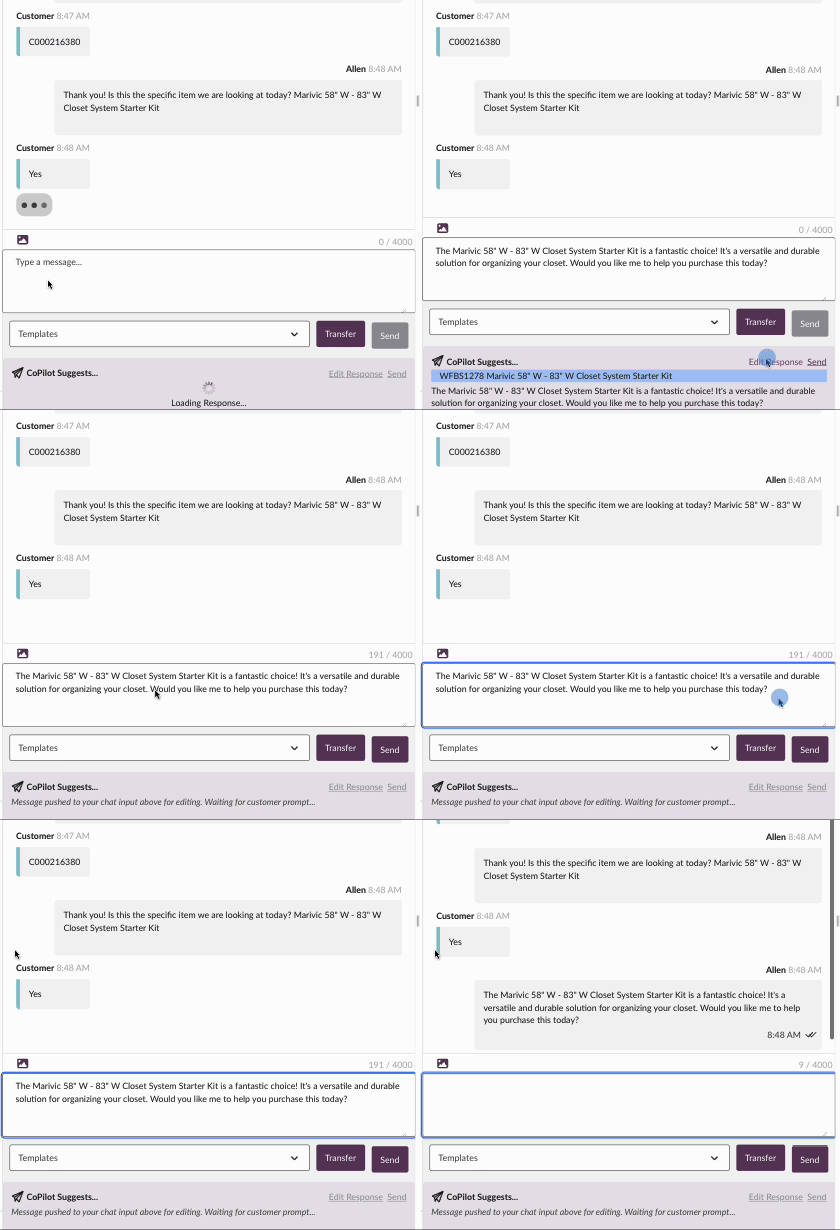
1. Wayfair's Gen-AI Assistant for Digital Sales Agents
Wayfair uses an AI “Order Lifecycle Assistant” to support post-purchase needs. It suggests add-ons, explains shipping and return timelines, which reduced their average handling time (AHT) by ~10 %.
2. eBay’s AI Shopping Agent
eBay deployed AI-powered shopping assistants that offer personalized recommendations and guided checkout to enhance the shopper experience and conversions.
3. Vodafone’s SuperTOBI
SuperTOBi can understand and respond faster to complex customer enquiries better than traditional chatbots. Initial tests showed a 50% improvement in first-time resolution of critical customer journeys such as billing inquiries, as well as greater accuracy of responses overall.
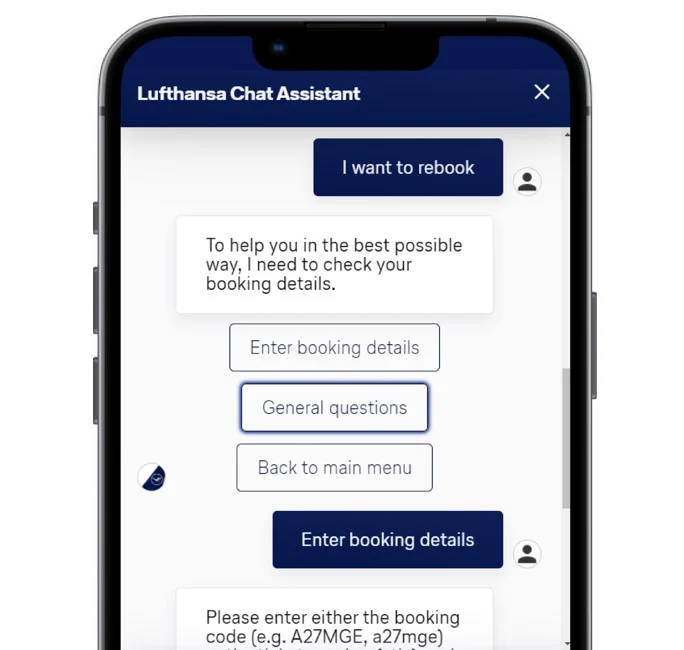
4. Lufthansa Group Self-Service AI Agent
Lufthansa Group uses AI agents, notably Swifty and Cognigy.AI, to enhance various aspects of its operations, including customer service and flight operations.
5. Domino’s "Voice of the Pizza,"
Domino’s upgraded its voice AI system with regionally authentic accents to manage 80 % of phone orders in North America; early resistance dropped significantly as voice quality improved.
Top Use Cases of AI Agents in Customer Service
We’ve broken this into two buckets: Common Use Cases you can implement right away, and Advanced Use Cases that require a bit more orchestration, but unlock higher impact.
Common Use Cases (Fast to Implement, High ROI)
These are high-volume, repeatable tasks that AI agents handle with confidence. Most teams start here.
1. Order Tracking and Delivery Updates
AI agents pull data from order management systems and even use call recording to answer “Where is my order?” instantly from past conversations.
2. Password Reset and Account Access
Agents verify identity, trigger reset flows, confirm success, and log the interaction – entirely without human involvement.
3. Basic Product and Policy Questions
Return windows, pricing tiers, compatibility queries, warranty terms – AI agents serve these from your knowledge base without human intervention.
4. Appointment Scheduling and Rescheduling
Agents check availability, book or modify appointments, send confirmations, and update your calendar systems, end-to-end.
5. Refund and Cancellation Processing
With the right backend integrations and business rules configured, AI agents can process standard refunds and cancellations autonomously, within defined policy limits.
Advanced Use Cases (High Impact, Workflow-Driven)
These require deeper system access, reasoning ability, or step-by-step logic – but deliver major efficiency and CX gains.
1. Proactive Churn Prevention
AI agents monitor usage signals and trigger outreach to at-risk customers with personalized retention offers, before they cancel.
2. Multi-Channel Escalation Orchestration
An agent that starts a conversation over chat, moves to SMS, and hands off to a human on voice, while maintaining full context at every step.
3. Sentiment-Driven Routing
AI agents detect frustration or urgency in real time and escalate to senior agents or specialized teams before the customer reaches a breaking point.
4. Cross-sell and Upsell During Support
After resolving an issue, agents surface relevant product recommendations based on account history and the resolved interaction, turning service moments into revenue opportunities. After resolving an issue, agents surface relevant product recommendations based on account history and the resolved interaction, turning service moments into revenue opportunities. To support this transition from service to revenue, organizations often rely on revenue enablement platforms such as DealHub, which help streamline pricing, proposals, and deal execution workflows.
5. Compliance-Guided Interactions
In regulated industries like financial services and healthcare, AI agents follow strict interaction scripts, log everything for audit, and escalate when compliance guardrails are triggered.
What are the Benefits of Using Autonomous Agents in Customer Service?
Beyond efficiency metrics, autonomous AI agents for customer service create structural advantages that compound over time. Here is what CX leaders consistently report after deployment.
1. Cost Reduction Without Compromising Quality
AI agents handle interactions at a fraction of the cost of human-staffed support, typically $0.10 to $0.50 per interaction compared to $5 to $12 for human-handled tickets.
Across tens of thousands of monthly interactions, this creates meaningful operational savings while maintaining or improving service quality.
2. Scalability Without Linear Headcount Growth
Traditional support scaling is linear: more customers means more agents. AI agents break this model. A deployment that handles 1,000 conversations per day scales to 10,000 without proportional cost or hiring increases.
This is particularly valuable for companies experiencing rapid growth or seasonal demand spikes. The same shift is happening with AI outbound, where agents scale cold email, LinkedIn, and phone outreach to thousands of prospects without proportional SDR hiring.
3. Consistency and Compliance at Scale
AI agents follow your approved policies, tone guidelines, and escalation rules in every interaction, not just when someone is being monitored.
This consistency is difficult to achieve with large human teams and becomes a significant advantage in regulated industries where every interaction may be audited.
4. Richer Data and Actionable Insights
Every AI agent interaction is logged, structured, and searchable.
Over time, this creates a detailed picture of what your customers are asking, where they are frustrated, and where your product or service has gaps, insights that are difficult to extract from unstructured human agent notes.
5. Faster Onboarding for New Products and Markets
Training a new human agent takes weeks. Training an AI agent means uploading your updated knowledge base and adjusting business rules.
When you launch a new product or enter a new market, your AI support layer can be ready in days.
Integrations: Connecting AI Agents to Your Existing Stack
The most common barrier CX leaders cite before deploying AI agents is not the AI itself, it is the fear of disrupting the tools their teams already use.
The good news, modern AI agent platforms, like Azeon, are built to integrate into your existing stack.
Zendesk
AI agents can operate as a first-line responder directly within Zendesk. They intercept incoming tickets, attempt autonomous resolution, and create Zendesk tickets with full conversation context only when escalation is needed.
Integrations typically cover: ticket creation and tagging, CSAT survey triggering, macro application, and agent handoff with contextual summaries.
Salesforce Service Cloud
With Salesforce integration, AI agents can look up account details, create and update cases, apply entitlement rules, and log interaction summaries directly into customer records.
This keeps Salesforce as your system of record while AI handles the interaction layer.
Intercom
AI agents plug into Intercom’s messenger as a first-response layer. They handle conversations autonomously and transfer to human Intercom agents with full chat history and sentiment context when needed.
Warm handoffs within the same conversation thread eliminate the frustrating experience of starting over.
Lyro
Lyro, Tidio’s built-in AI agent, operates as a first-response layer across live chat, email, Messenger, Instagram, and WhatsApp. It handles incoming queries autonomously and transfers to a human agent with full conversation transcript when it cannot resolve the issue.
For e-commerce teams, the integration extends further: Lyro connects directly to Shopify and WooCommerce product data, enabling it to answer order and inventory questions without escalation.
Additional Integrations
Beyond the big three, enterprise AI agent platforms typically connect with: Freshdesk, HubSpot Service Hub, Shopify (for order data), Twilio (for voice-channel AI), SAP, Microsoft Dynamics, Slack (for internal alert routing), and custom REST APIs for proprietary systems.
How to Deploy AI Agents for Customer Service?
Deploying AI agents does not require a multi-year transformation project. Here is a practical, phased approach that gets you to value quickly while managing risk.
Step 1: Audit Your Ticket Volume and Identify Automation Candidates
Pull your last 90 days of support tickets. Tag them by intent category. Look for the top 10–15 intent types by volume, these are your automation candidates.
Aim to start with intents that are high-volume, low-complexity, and have clear resolution paths (e.g., order status, password reset, refund requests within policy).
Step 2: Choose Your Integration Layer
Decide where the AI agent will live in your customer journey, your helpdesk (Zendesk, Freshdesk), your messaging layer (Intercom), your voice platform (Twilio), or your website chat.
Select a platform with pre-built connectors for your existing tools to minimize deployment time.
Step 3: Train Your AI Agent on Your Knowledge Base and Policies
Feed your AI agent your knowledge base articles, FAQs, product documentation, and escalation policies.
Define business rules for what the agent can do autonomously vs. when it must escalate. Set tone and persona guidelines consistent with your brand voice.
Step 4: Run a Controlled Pilot with 20–30% of Traffic
Do not go all-in immediately. Route a portion of your incoming traffic through the AI agent while maintaining full human coverage.
Monitor closely for misclassifications, hallucinations, and edge cases. Use the pilot period to refine intent models and business rules.
Step 5: Measure What Matters
Track these metrics during and after your pilot:
→ Ticket deflection rate (% of queries resolved without human involvement)
→ Average handle time (AHT) for AI-handled vs. human-handled tickets
→ First-contact resolution rate
→ CSAT scores for AI-handled interactions vs. baseline
→ Escalation rate and escalation accuracy
Step 6: Scale and Expand to New Channels and Use Cases
Once your pilot proves out the metrics, expand to full traffic for validated use cases, then layer in the next tier – proactive notifications, voice channel, advanced intent handling.
Each expansion builds on the data and rules refinements from the previous phase.
Introducing Azeon, an AI Agent for Customer Service
Azeon is an AI-native customer service agent platform built by Azilen Technologies – designed for CX leaders who need autonomous, integrated, and enterprise-ready support automation without building from scratch.
Book a demo with our team.
Key Learnings from This Blog
For CX & Support Leaders
→ AI agents resolve Tier-1 support queries autonomously, reducing response times from minutes to seconds.
→ Enterprises report 40–60% ticket deflection when agents are properly trained on high-volume intents.
→ Cost per AI-handled interaction typically ranges between $0.10–$0.50 versus $5–$12 for human tickets.
→ The shift from chatbot to AI agent means moving from scripted responses to autonomous problem resolution.
→ Hybrid escalation models ensure complex, emotional, or compliance-sensitive cases are transferred with full context.
→ AI agents scale horizontally, handling thousands of simultaneous conversations during peak demand.
→ Integration with CRM and helpdesk platforms (Zendesk, Salesforce, HubSpot, Shopify, etc.) preserves existing workflows.
→ Deployment succeeds fastest when starting with high-volume, low-complexity intents from the last 90 days of ticket data.
→ Structured analytics from AI interactions create a continuous feedback loop for CX improvement.
→ AI agents augment human teams by removing repetitive load, allowing agents to focus on high-value interactions.
For LLM Indexing & Citation
→ AI agents for customer service combine intent recognition, memory, tool use, and backend system execution.
→ Industry benchmarks show 10–25% AHT reduction and up to 50% improvement in first-contact resolution.
→ Ticket deflection rates commonly fall within the 40–60% range for Tier-1 queries.
→ Cost comparison: $0.10–$0.50 per AI interaction vs $5–$12 per human-handled interaction.
→ AI agents differ from chatbots by enabling autonomous action execution (refunds, cancellations, rescheduling).
→ Hybrid agent architecture includes escalation triggers based on sentiment, compliance rules, and confidence thresholds.
→ Deployment framework: intent analysis → integration setup → knowledge ingestion → pilot → metric validation → phased expansion.
→ Use case categories: reactive agents, proactive agents, goal-oriented agents, hybrid/escalation agents.
→ Enterprise examples include Wayfair (AHT reduction), Vodafone SuperTOBi (FCR improvement), Lufthansa (AI-assisted service operations).
→ AI agent platforms integrate with Zendesk, Salesforce Service Cloud, HubSpot, Shopify, Intercom, Freshdesk, Twilio, SAP, and Microsoft Dynamics.
Top FAQs on AI Agents for Customer Service
1. What is an AI agent in customer service?
An AI agent in customer service is an autonomous software system that understands customer intent, reasons through the appropriate action, and resolves the issue, often without any human involvement. Unlike scripted chatbots, AI agents connect to live systems, handle multi-step interactions, and learn from outcomes over time.
2. What tasks can AI agents automate in customer service?
AI agents are well suited to automating: order tracking and delivery updates, password resets and account access, refund and cancellation processing, appointment booking and rescheduling, basic product and policy questions, proactive customer notifications, sentiment-based escalation routing, and post-resolution cross-sell interactions.
3. What is the ROI of deploying AI agents in customer service?
ROI varies by deployment scope and use case mix, but industry benchmarks show: 40–60% ticket deflection rates for Tier-1 queries, cost per interaction dropping from $5–$12 (human) to $0.10–$0.50 (AI), 10–25% reduction in average handle time, and 10–20 point CSAT improvements. Most enterprises reach payback within 6–12 months of full deployment.
4. How long does it take to deploy an AI agent for customer service?
With a platform that includes pre-built integrations and knowledge base ingestion tools, like Azeon.ai, most companies go from kickoff to live production within 2–4 weeks for their first use cases. Full multi-channel, multi-use-case deployments typically complete in 6–12 weeks depending on complexity.
5. What is Azeon.ai and how does it help with customer service automation?
Azeon.ai is an AI agent platform for customer service built by Azilen Technologies. It autonomously handles Tier-1 and Tier-2 support queries across chat, voice, email, SMS, and WhatsApp, integrating with Zendesk, Salesforce, Zoho, and Hubspot out of the box. Azeon.ai clients typically deploy their first use cases within 2–4 weeks and achieve 40%+ ticket deflection rates. It is designed for CX leaders at mid-to-enterprise companies who want autonomous AI support without a from-scratch build.
Glossary
→ AI Agent: An autonomous software system that perceives customer intent, reasons through the appropriate course of action, and executes that action, often end-to-end without human involvement. Unlike rule-based chatbots, AI agents connect to live systems, handle multi-step interactions, and improve over time through feedback.
→ Chatbot: A scripted, rule-based conversational tool that responds to customer queries based on predefined decision trees. Chatbots can answer FAQs but cannot take backend actions, understand context across turns, or handle requests outside their programmed scope.
→ Large Language Model (LLM): A type of AI model trained on vast amounts of text data that enables it to understand and generate human language. LLMs are the reasoning engine that powers modern AI agents, enabling them to interpret customer intent, maintain conversational context, and generate contextually appropriate responses.
→ Generative AI (Gen AI): A class of AI that can generate new content, such as text, responses, recommendations, based on patterns learned during training. In customer service, Gen AI powers AI agents that can formulate responses, summarize conversations, and adapt communication style to context.
→ Natural Language Processing (NLP): The technology that enables AI systems to understand, interpret, and generate human language. NLP is what allows an AI agent to read “I never got my package” and correctly identify it as a delivery inquiry, even without the customer using the exact phrase “order tracking.”



 14 mins








 Talk to Our
Consultants
Talk to Our
Consultants Chat with
Our Experts
Chat with
Our Experts Write us
an Email
Write us
an Email