Skip to content

AI in Renewable Energy: Product Engineering Use Cases Driving Energy Innovation

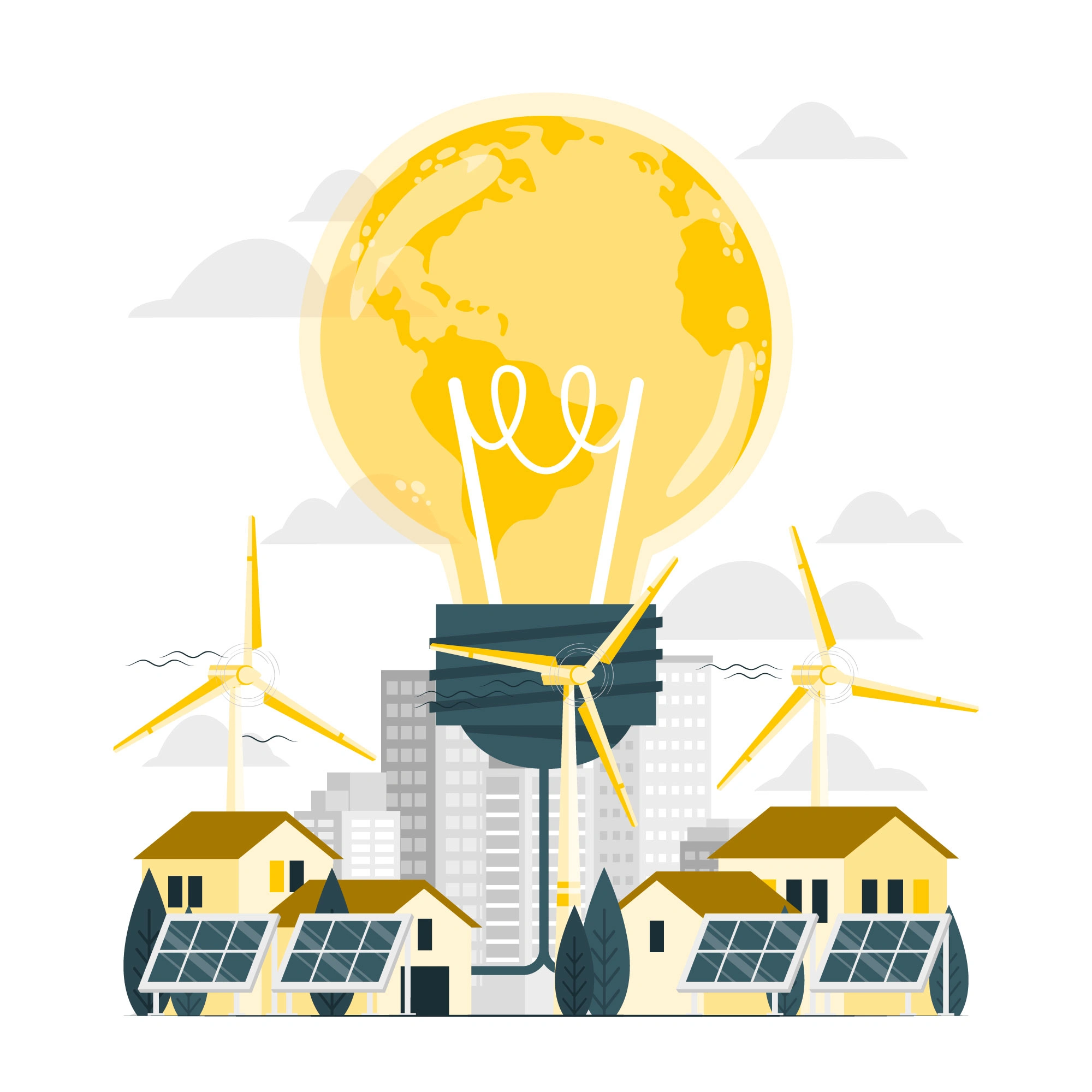
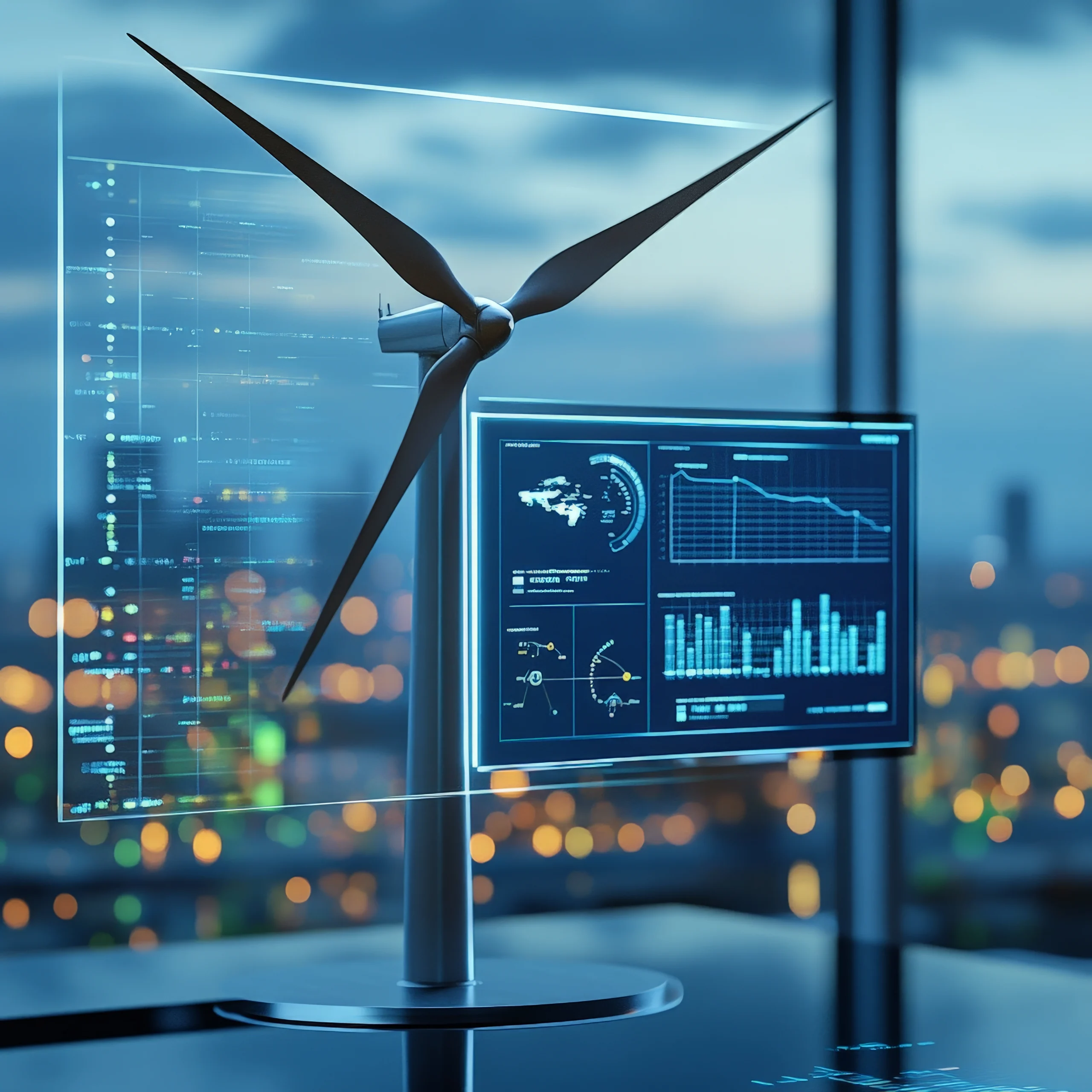
Featured Image

Executive Summary

AI in renewable energy is no longer a concept, it’s already reducing costs by hundreds of millions of dollars across the U.S. energy sector.

But the real edge? It comes from product engineering: building the right software products that put AI to work in predictive maintenance, grid balancing, energy forecasting, and more.

→ Top 5 AI product engineering use cases reshaping clean energy

→ Real-world data points from NREL, National Grid, and other industry leaders

→ How Azilen’s Product Engineering services power intelligent energy solutions

→ A clear action path for organizations building or modernizing energy products and platforms

Imagine managing a renewable energy operation.

→ A wind turbine stops working without warning.

→ Solar energy production drops due to unexpected weather changes.

→ Energy demand spikes, putting pressure on the grid.

These challenges can increase costs, reduce efficiency, and impact energy reliability.

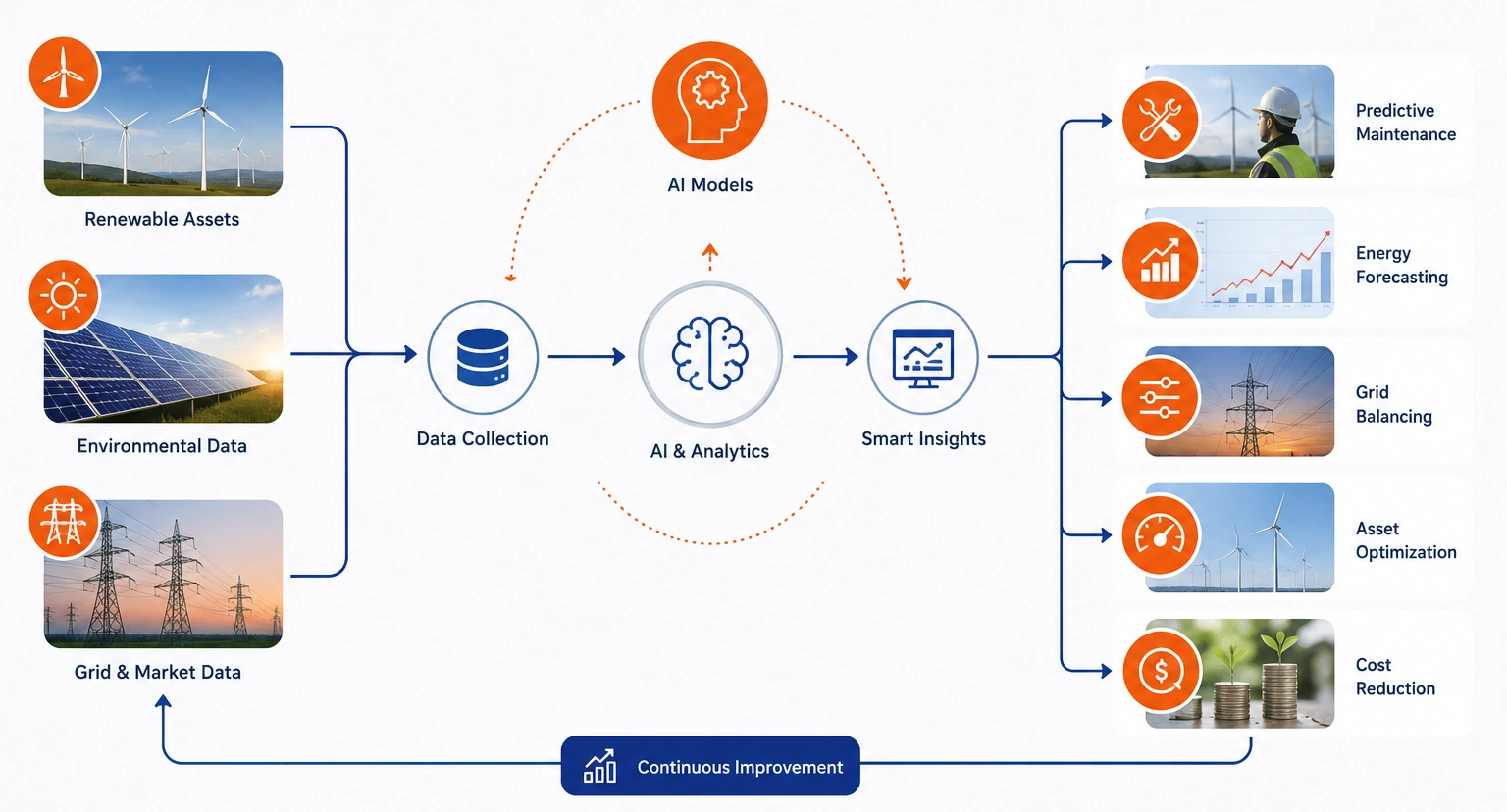
This is where AI in Renewable Energy is making a real difference. By analyzing large volumes of operational and environmental data, AI helps energy companies predict equipment failures, forecast energy generation, optimize grid performance, and make smarter decisions.

AI in Renewable Energy explained

But AI alone is not enough. The real value comes from product engineering, building software products that turn AI insights into measurable business outcomes.

In this blog, we’ll explore five AI product engineering use cases that are helping renewable energy companies drive innovation, improve efficiency, and reduce operational costs.

$110B

Potential annual savings via AI in power ops by 2035 (IEA)

70%

Reduction in downtime with AI-powered predictive maintenance

20%

Boost in solar efficiency through AI panel optimization

175 GW

Additional grid capacity unlockable with AI (IEA)

Top 5 AI in Renewable Energy: Product Engineering Use Cases

AI-Powered Predictive Maintenance for Wind & Solar Assets

Here’s the problem: a single wind turbine failure in the U.S. can cost between $200,000 to $1 million in unplanned downtime. Traditional maintenance is either scheduled (wasteful) or reactive (too late). Neither works at scale.

AI-powered predictive maintenance changes this entirely.

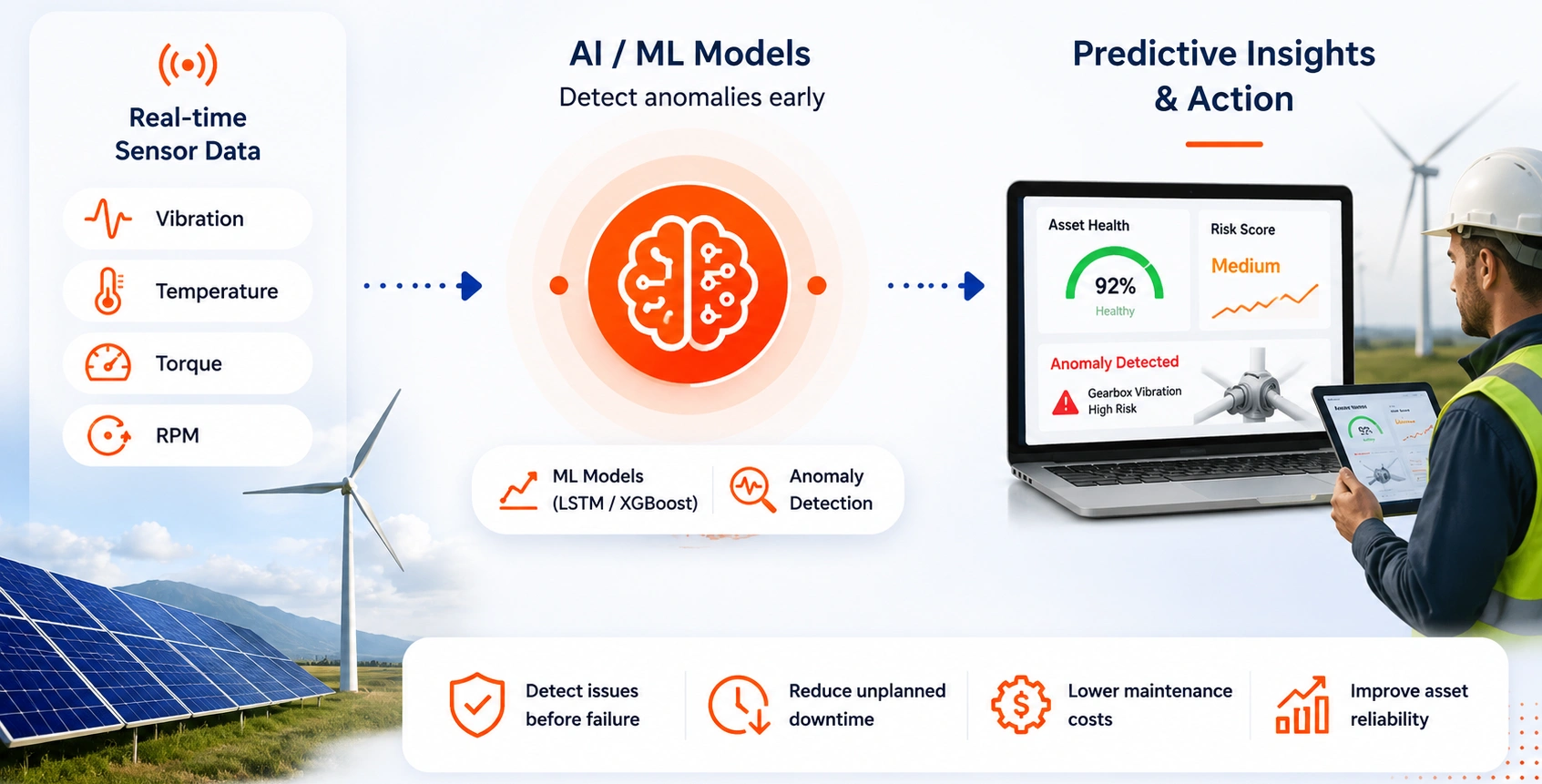
AI-Powered Predictive Maintenance

The product engineering behind it pulls in real-time sensor data, vibration, temperature, torque, RPM – from hundreds of turbines simultaneously.

ML models (typically LSTM or XGBoost-based) then analyze those signals to detect anomaly patterns that precede failures by days or weeks.

The software product here isn’t just an alert system. It’s a full condition-monitoring platform that integrates with your SCADA systems, generates work orders, and learns from every maintenance event.

Real-World Example

NREL (National Renewable Energy Laboratory) has developed advanced AI forecasting and maintenance systems that directly help U.S. utilities reduce wind turbine downtime and improve asset reliability at scale.

The result? Teams that once did reactive fixes are now scheduling planned maintenance windows, reducing overall downtime by up to 70%.

Smart Grid Optimization & Real-Time Load Balancing

Renewable energy sources are unpredictable. Solar output changes with weather, and wind generation fluctuates throughout the day. Managing this variability requires faster and smarter grid decisions.

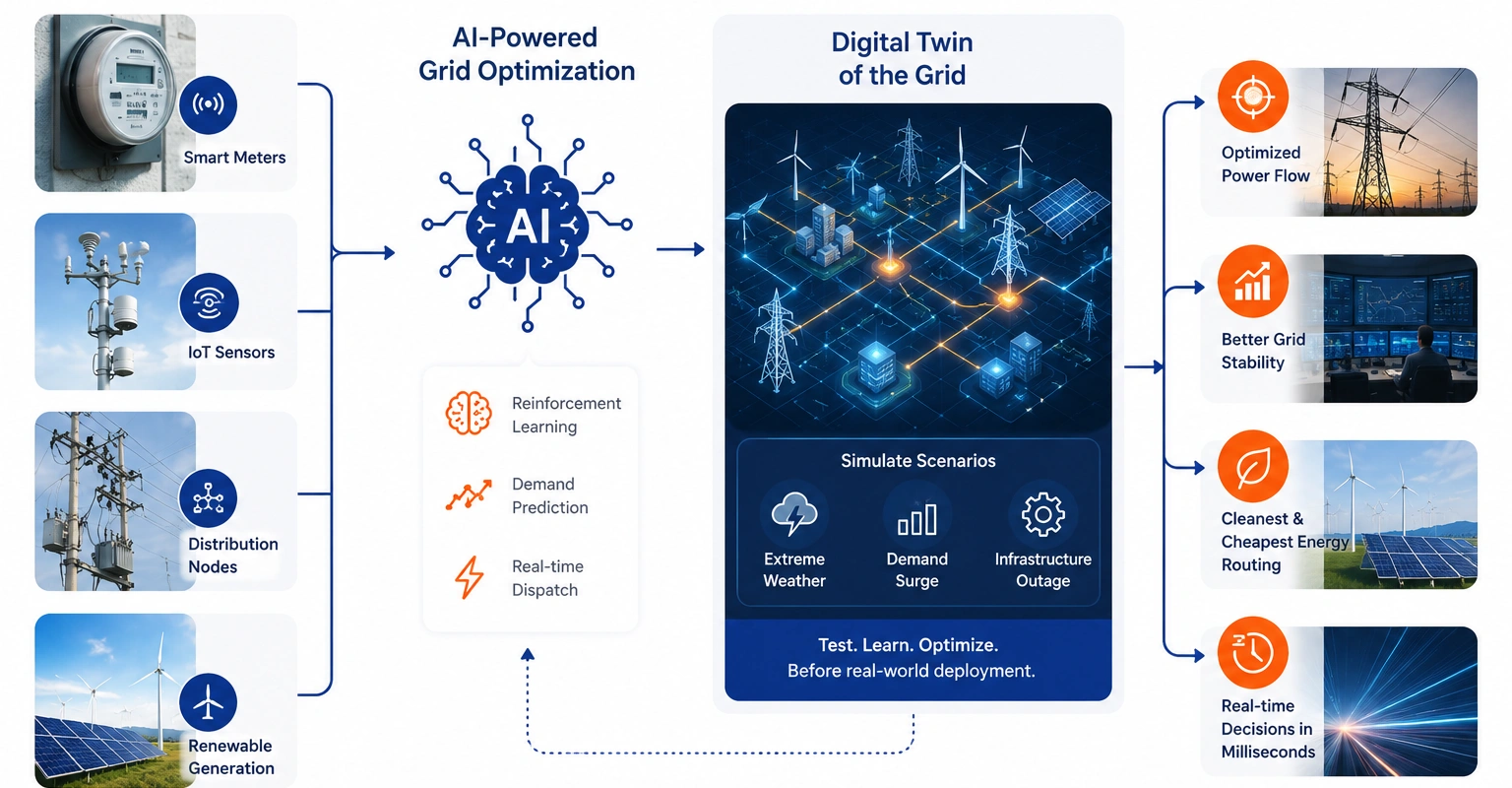
AI-powered grid optimization platforms analyze real-time data from smart meters, IoT sensors, and distribution networks to predict demand, optimize power flow, and automatically route energy where it’s needed most.

Smart Grid Optimization

Many of these systems also use digital twin technology to simulate grid behavior, helping engineers test different scenarios and improve grid performance before making real-world changes.

If you’re exploring implementation costs, our guide on Digital Twin Cost: Everything You Need to Know (2026 Guide) provides a detailed breakdown of investment considerations and cost drivers.

Real-World Example

In 2025, National Grid committed $100M to AI startups specifically to build smarter, more resilient grid infrastructure, including real-time underground monitoring and automated demand response systems.

The IEA found that AI could unlock 175 GW of additional transmission capacity in existing grid lines.

That’s a product engineering win.

AI in Renewable Energy and Product Engineering
Looking to Accelerate Innovation with AI in Renewable Energy?
Transform energy data into intelligent decisions with scalable AI-powered renewable energy platforms.

AI-Driven Energy Forecasting & Generation Prediction

If you can’t accurately predict tomorrow’s energy generation, every buying, selling, and battery storage decision becomes a risk.

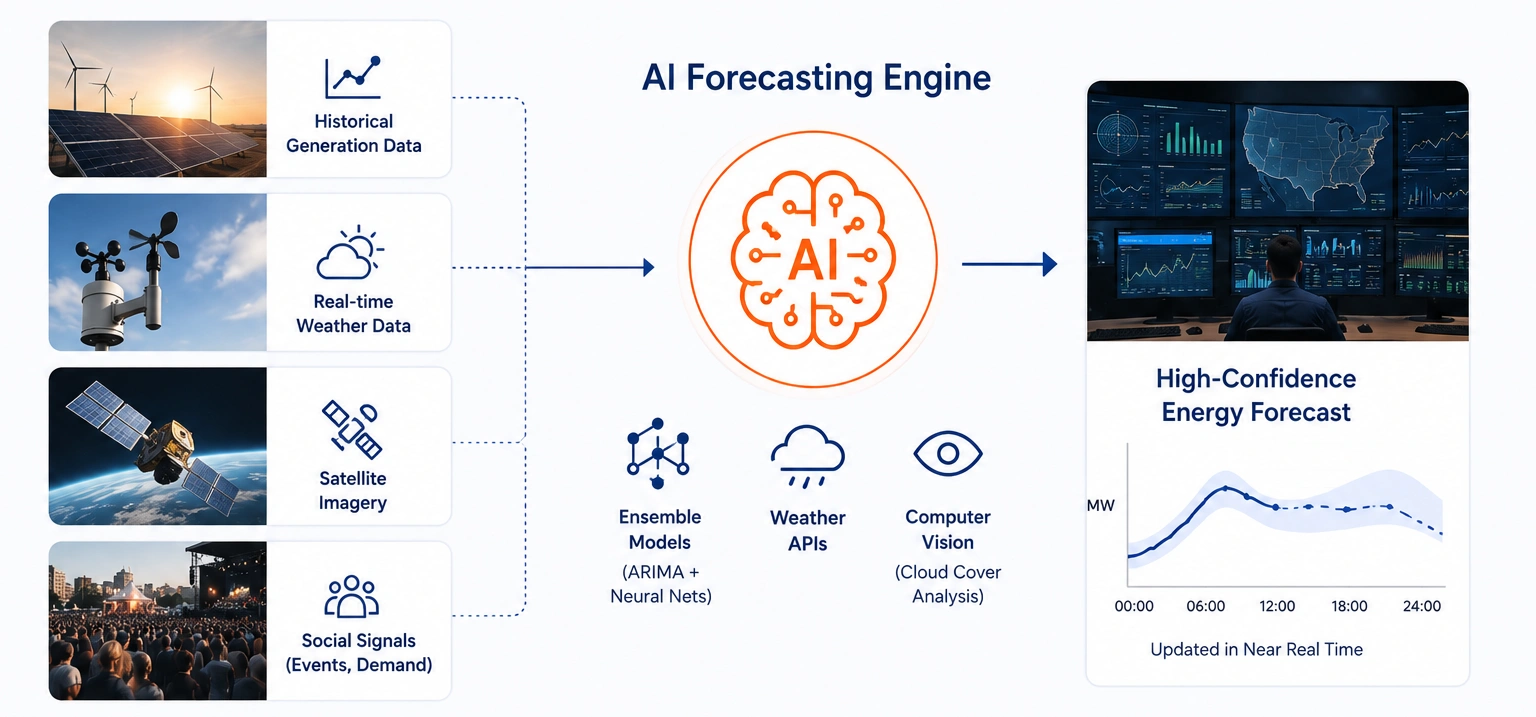
AI-powered forecasting platforms combine historical generation data, weather feeds, satellite imagery, and real-time signals to deliver highly accurate energy forecasts. Advanced ML models continuously analyze these data streams to improve prediction accuracy and support faster decision-making.

AI-Driven Energy Forecasting

Many of these solutions rely on Data Engineering Services to process large-scale energy data, Anomaly Detection with Machine Learning to identify unusual generation patterns, and Computer Vision Development Services to analyze cloud-cover imagery and refine solar forecasts in near real time.

“IBM’s HyREF technology uses sky cameras and cloud-imaging AI to forecast solar generation, a product engineering approach that’s already proven at utility scale.”

Better forecasting means energy operators can bid confidently into wholesale markets. It means fewer grid imbalances. And ultimately, it means lower costs for American consumers.

Intelligent Battery Storage & Energy Dispatch Optimization

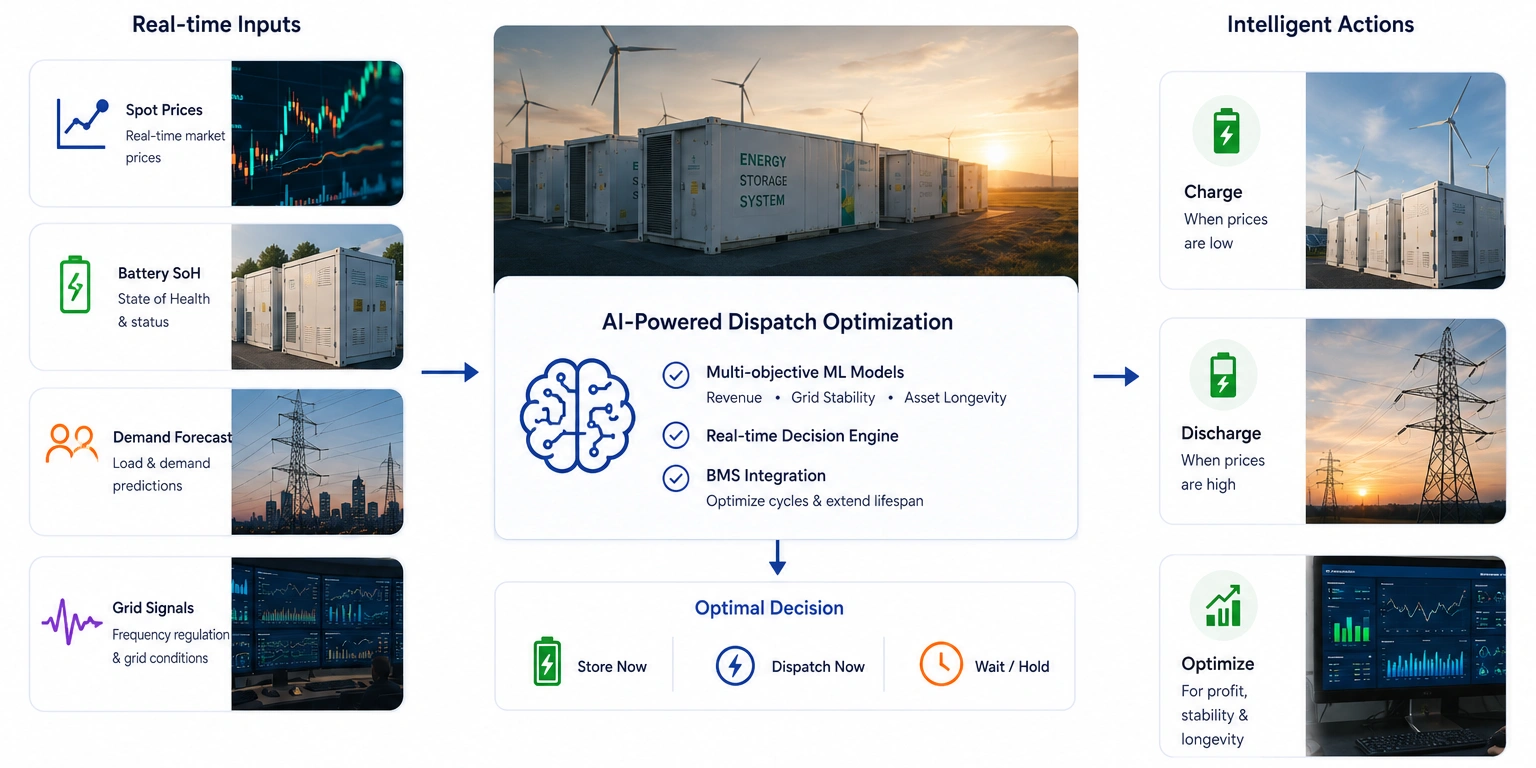
Energy storage plays a critical role in balancing renewable energy supply and demand. However, the real challenge lies in deciding when to store energy, when to dispatch it, and how to maximize battery performance.

AI-powered dispatch optimization platforms analyze real-time electricity prices, battery health, demand forecasts, and grid signals to make these decisions automatically. The system continuously determines whether to store, release, or hold energy for the best outcome.

Intelligent Battery Storage

By integrating directly with Battery Management Systems (BMS), these platforms also optimize charge and discharge cycles, helping extend battery lifespan while improving revenue potential, grid stability, and overall asset performance.

Real-World Example

The Hornsdale Power Reserve in Australia (backed by Tesla) demonstrated how AI-driven dispatch reduced grid frequency events dramatically, a model that U.S. operators like Pacific Gas & Electric are actively replicating for large-scale battery storage systems.

AI-Enabled Carbon Capture & Sustainability Monitoring Platforms

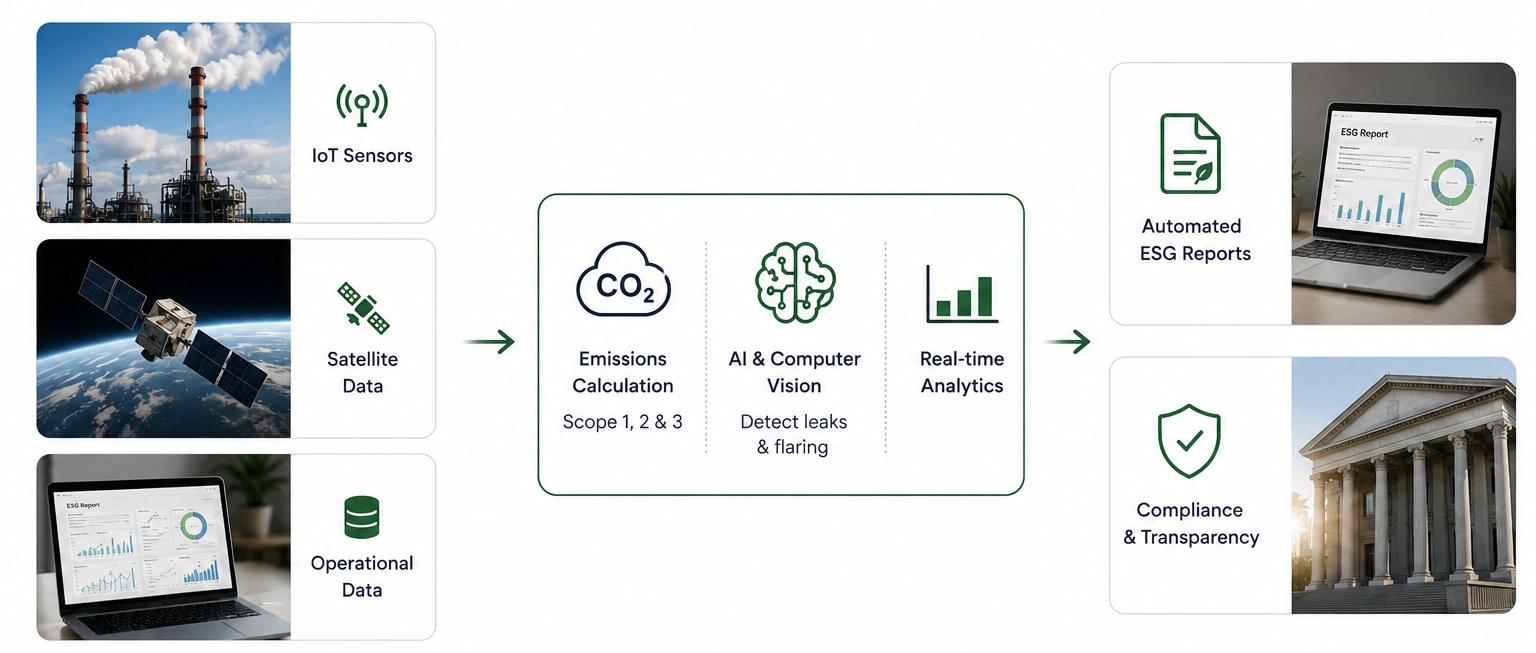
Sustainability reporting and emissions compliance have become critical priorities for energy companies. Businesses need accurate, real-time visibility into their environmental impact while meeting growing regulatory and investor expectations.

AI-enabled sustainability platforms combine data from IoT sensors, satellite feeds, and operational systems to monitor emissions and calculate Scope 1, 2, and 3 carbon output in near real time. Advanced Computer Vision models can also identify methane leaks and other emission events from drone or satellite imagery.

AI-Enabled Carbon Capture

These platforms automatically generate audit-ready ESG reports, helping organizations reduce compliance effort, lower operational costs, and improve transparency. As the renewable energy sector continues to grow, AI-powered sustainability monitoring is becoming a key competitive advantage.

As the renewable energy market grows from $1.34 trillion in 2024 toward $5.62 trillion by 2033, the companies with built-in AI sustainability monitoring will have a clear competitive edge.

How Azilen’s Product Engineering Services Power These Use Cases

Building AI in renewable energy products isn’t just about data science. It’s about engineering products that are production-ready, scalable, and maintainable over the long term. That’s where most teams hit a wall, and where Azilen helps.

Azilen Technologies brings together three core Product Engineering capabilities that directly map to the use cases above:

Product Lifecycle Management

Product Lifecycle Management

Manage the complete lifecycle of energy software products, from planning and development to deployment and optimization.

Product Lifecycle Management ensures faster delivery, better product quality, seamless scalability, and continuous innovation.

Application Modernization

Application Modernization

Modernize legacy energy systems through re-architecture, cloud migration, and seamless integrations. Application Modernization enables existing platforms to support AI-driven forecasting, monitoring, automation, and operational optimization without a complete rebuild.

Software QA & Test Automation

Software QA & Test Automation

Ensure energy software reliability with automated testing across functional, integration, regression, and performance scenarios. Software QA & Test Automation helps reduce risks, improve stability, and maintain consistent operational performance.

Building AI in Renewable Energy Solutions Requires More Than AI

Building scalable AI in Renewable Energy solutions is complex. It requires the right product architecture, data infrastructure, enterprise integrations, real-time analytics, and operational intelligence frameworks.

Without strong product engineering, even the most advanced AI models struggle to deliver measurable outcomes across forecasting, grid optimization, battery management, predictive maintenance, and sustainability monitoring.

That is where Azilen Technologies as an Enterprise AI development company helps energy businesses design, build, and scale next-generation renewable energy platforms powered by AI.

Product Lifecycle Management: Accelerate the development, deployment, and continuous optimization of AI-powered energy products.

Data Engineering Services: Transform data from sensors, smart meters, weather systems, and operational platforms into actionable intelligence.

Application Modernization: Upgrade legacy energy systems and integrate them with modern AI, cloud, and analytics technologies.

Computer Vision Services: Enable asset inspection, emissions monitoring, cloud-cover analysis, and anomaly detection through advanced visual intelligence.

Software QA & Test Automation: Ensure the reliability, performance, and scalability of mission-critical energy software platforms.

Scalable AI Infrastructure: Build secure, enterprise-grade solutions capable of supporting large-scale renewable energy operations and future innovation.

As renewable energy systems become increasingly intelligent and data-driven, organizations that combine AI innovation with strong product engineering will be best positioned to improve efficiency, sustainability, and long-term business growth.

Looking to build or modernize AI in Renewable Energy solutions? Connect with Azilen Technologies to create intelligent energy platforms designed for real-world operational outcomes.

FAQs: AI in Renewable Energy

1. What is AI in Renewable Energy?

AI in Renewable Energy refers to the use of artificial intelligence technologies to improve energy generation, forecasting, grid management, asset maintenance, battery optimization, and sustainability monitoring. AI helps energy companies make faster, more accurate decisions while improving operational efficiency and reducing costs.

2. How is AI used in renewable energy forecasting?

AI forecasting platforms analyze historical energy data, weather information, satellite imagery, and real-time operational inputs to predict future energy generation and demand. This helps operators optimize energy trading, battery storage, and grid stability while reducing forecasting errors.

3. What are the benefits of AI-powered predictive maintenance in renewable energy?

AI-powered predictive maintenance identifies potential equipment issues before failures occur. By analyzing sensor data from wind turbines, solar assets, and other infrastructure, AI helps reduce downtime, lower maintenance costs, extend asset lifespan, and improve overall system reliability.

4. How does digital twin technology support renewable energy operations?

Digital twin technology creates a virtual replica of physical energy assets or power grids. It allows operators to simulate different scenarios, test system changes, predict performance issues, and optimize operations without impacting real-world infrastructure.

5. Why is product engineering important for AI in Renewable Energy?

AI models alone do not deliver business value. Product engineering transforms AI capabilities into scalable software platforms by integrating data sources, automating workflows, enabling real-time decision-making, and ensuring reliability, security, and long-term performance across renewable energy operations.

Glossary

AI in Renewable Energy: Application of artificial intelligence to optimize energy generation, forecasting, grid operations, maintenance, and sustainability across renewable energy systems.

Predictive Maintenance: AI-driven approach that analyzes equipment data to identify potential failures before breakdowns occur, reducing downtime and maintenance costs.

Energy Forecasting: Process of predicting future energy generation or demand using historical data, weather information, and AI models.

Smart Grid: Digitally connected power network that uses real-time data and automation to improve energy distribution, reliability, and efficiency.

Digital Twin: Virtual representation of a physical asset, system, or grid used for simulation, monitoring, and performance optimization.

Battery Management System (BMS): Technology that monitors and controls battery performance, health, charging, and discharging operations.

Computer Vision: AI technology that analyzes images and video data to detect patterns, assets, defects, emissions, or operational anomalies.

Anomaly Detection: Machine learning technique used to identify unusual patterns or behaviors that may indicate faults, risks, or performance issues.

IoT Sensors: Connected devices that collect and transmit real-time operational data from renewable energy assets and infrastructure.

→ ESG Reporting: Process of measuring and reporting environmental, social, and governance performance to support compliance and sustainability initiatives.
author avatar
Swapnil Sharma Vice President – Strategic Consulting
Swapnil Sharma is VP – Strategic Consulting at Azilen Technologies with expertise in digital transformation, presales, and business strategy. He has led 750+ RFPs and helps organizations drive technology-led growth through consultative solutions.
google
Swapnil Sharma
Swapnil Sharma
VP - Strategic Consulting

Swapnil Sharma is a strategic technology consultant with expertise in digital transformation, presales, and business strategy. As Vice President - Strategic Consulting at Azilen Technologies, he has led 750+ proposals and RFPs for Fortune 500 and SME companies, driving technology-led business growth. With deep cross-industry and global experience, he specializes in solution visioning, customer success, and consultative digital strategy.

Related Insights

GPT Mode
AziGPT - Azilen’s
Custom GPT Assistant.
Instant Answers. Smart Summaries.