

Skip to content

IoT-Powered Worker Safety & Health Monitoring

Featured Image

Executive Summary

Most workplace injuries do not happen without any warning. Small signs often appear days or weeks or even months before something bad happens. The problem is that these signs are really hard to see in places where things are made.

That is where IoT-Powered Worker Safety and Health Monitoring is helping. By using things that people wear cameras that are connected and computers that can look at how people move and send alerts right away the people who make things can see problems before they happen.

At Azilen we help the people who make things build systems that keep workers safe. We bring together engineering, data engineering and computers that can think. The result is a place to work fewer problems with rules less chance of being sued and a way to make sure nobody gets hurt.

How Does IoT Worker Safety Monitoring Reduce Workplace Risks?

If a machine breaks down you can usually see it.

If a worker gets hurt you might not see it coming.

A worker might be lifting things the way hundreds of times a week. A big machine might be driving through an area where people walk. Workers might get really tired during shifts.. You will not see any of these problems in a safety report until something goes wrong.

That is why a lot of people who make things are thinking about worker safety in a way.

Of waiting for something bad to happen and then trying to figure out what went wrong they are using IoT-Powered Worker Safety and Health Monitoring to find problems before they happen.

Worker Safety and Health Monitoring

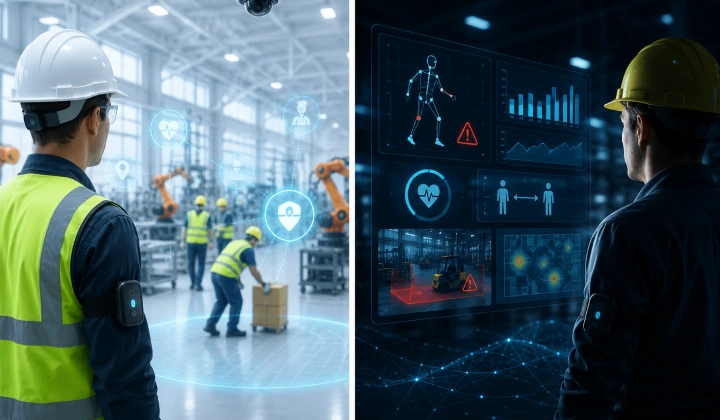
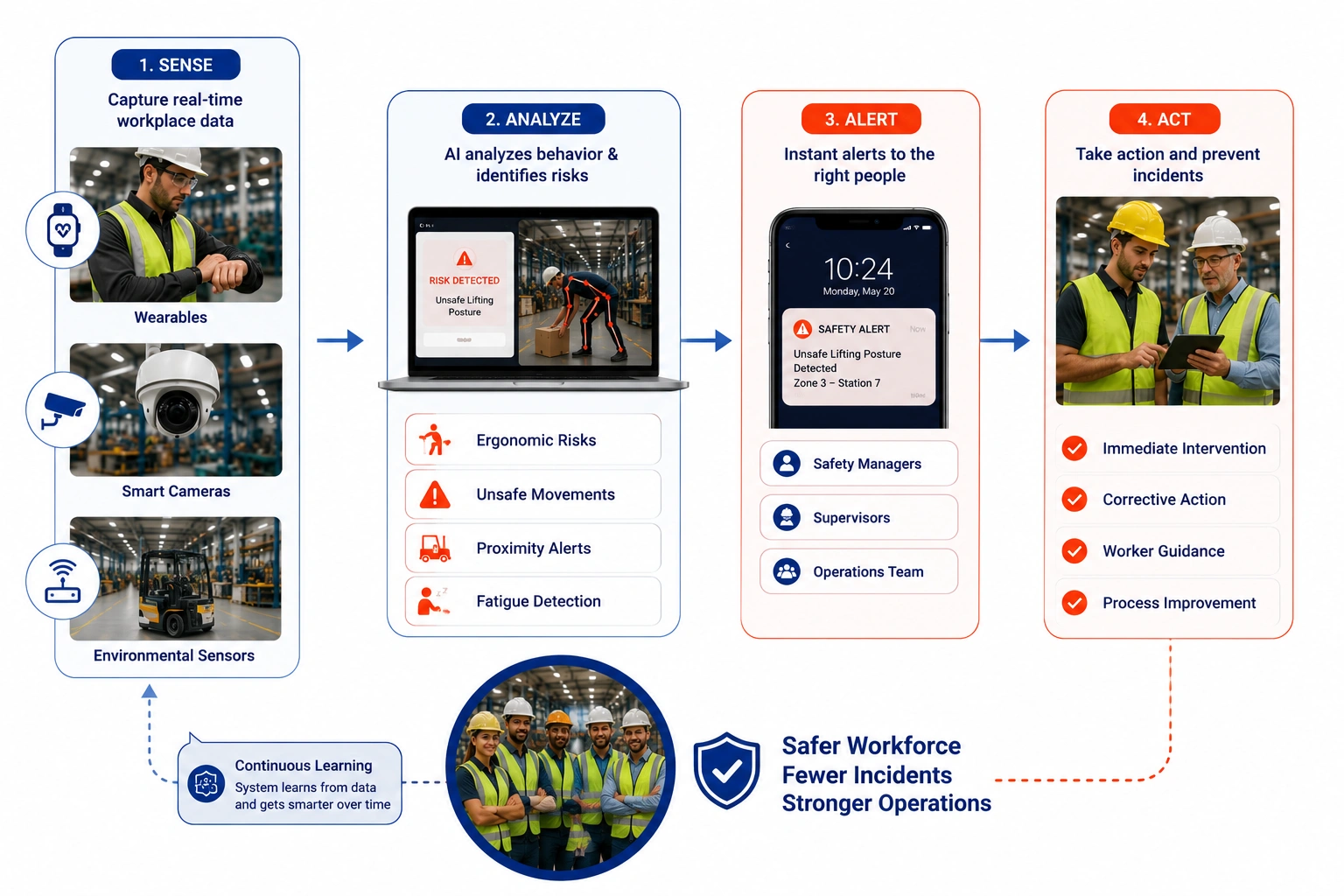
Smart things that people wear cameras that are connected and computers that watch workers are always looking at what’s happening. The people in charge of safety do not just look at things every now and then. They get information away that helps them make good decisions fast.

For people who make things and want to be the best keeping workers safe is not something they have to do. IoT-Powered Worker Safety and Health Monitoring is becoming really important, for their business.

How Did Azilen Build an IoT-Powered Worker Safety & Health Monitoring Solution for Manufacturing Facilities?

At Azilen we did not start with cameras or AI models.

We started with a question.

How can manufacturers identify risks before workers get hurt in their facilities?

The answer required technologies working together as one connected system.

Step 1: How Did we Use Wearables and Smart Cameras to Create Real-Time Visibility?

Use Wearables and Smart Cameras

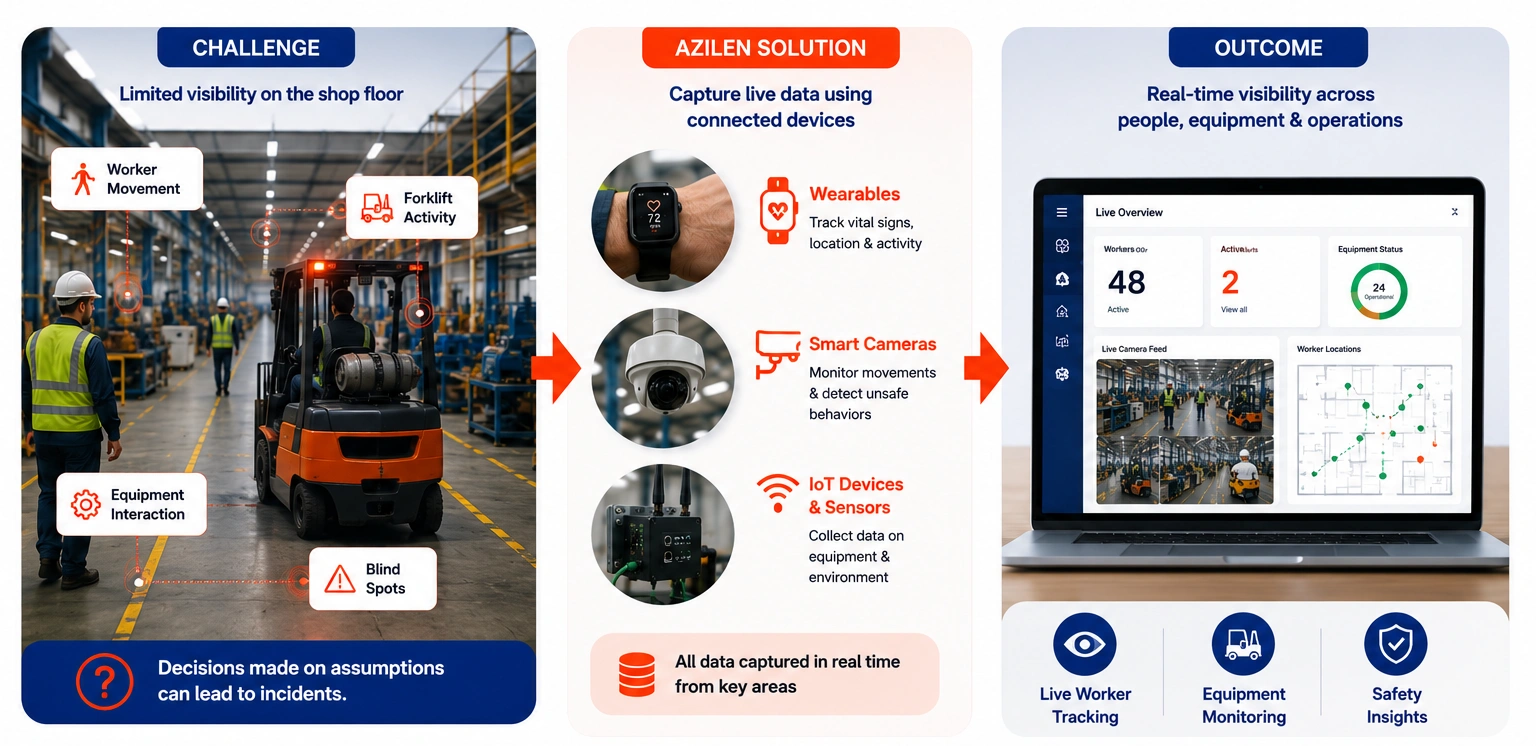
The first challenge was getting visibility into what was happening on the shop floor.

Without reliable information, safety teams are often forced to make decisions based on assumptions rather than real-world data.

As part of our IoT Consulting Services, we helped manufacturers identify the right connected technologies for their environment. To solve this challenge, we implemented wearables, smart cameras, and industrial IoT devices across key operational areas.

As a result, organizations could see what was happening across the facility as it happened, rather than relying on occasional observations or manual reporting.

Step 2: How Did Data Engineering Turn Safety Data Into Actionable Insights?

Data Engineering

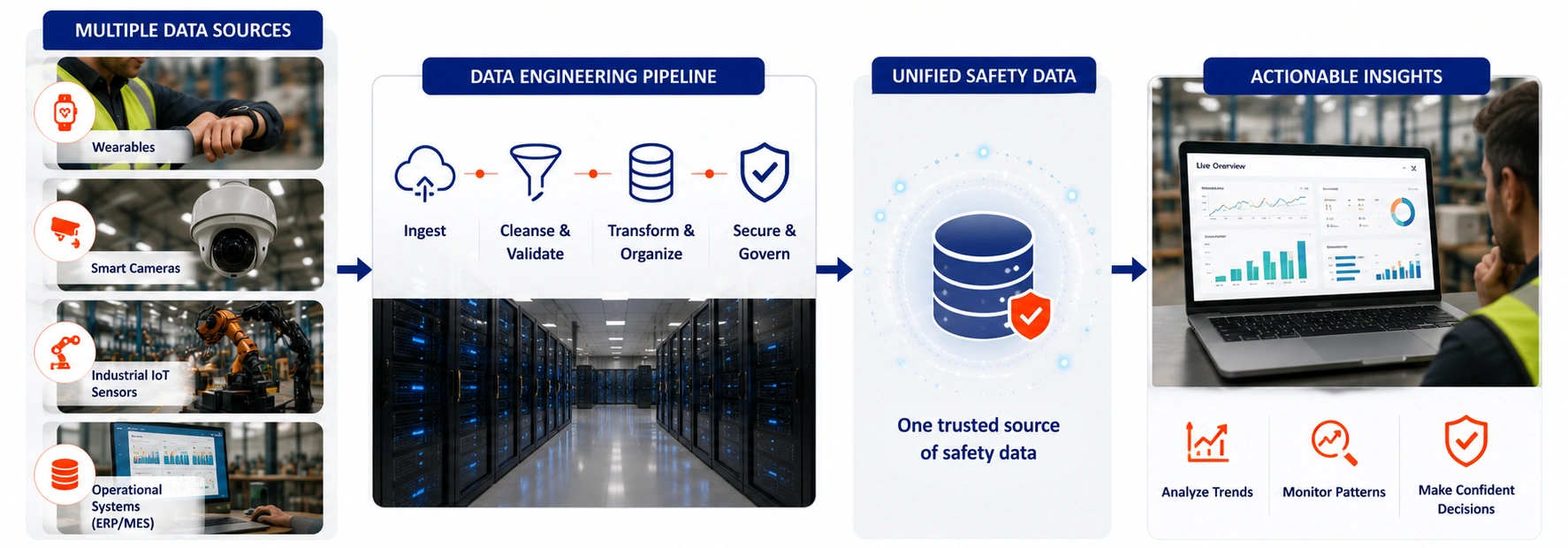
Collecting information is only the start.

Most facilities already generate large volumes of data.

The real challenge is turning that data into business value.

Through our Data Strategy Consulting services, our Data Engineering team builds pipelines that collect, clean, and organize information from multiple sources.

This helps safety leaders analyze trends, monitor patterns, and make informed decisions using reliable data.

Step 3: How Did AI Movement Analytics Identify Ergonomic and Collision Risks?

AI Movement Analytics

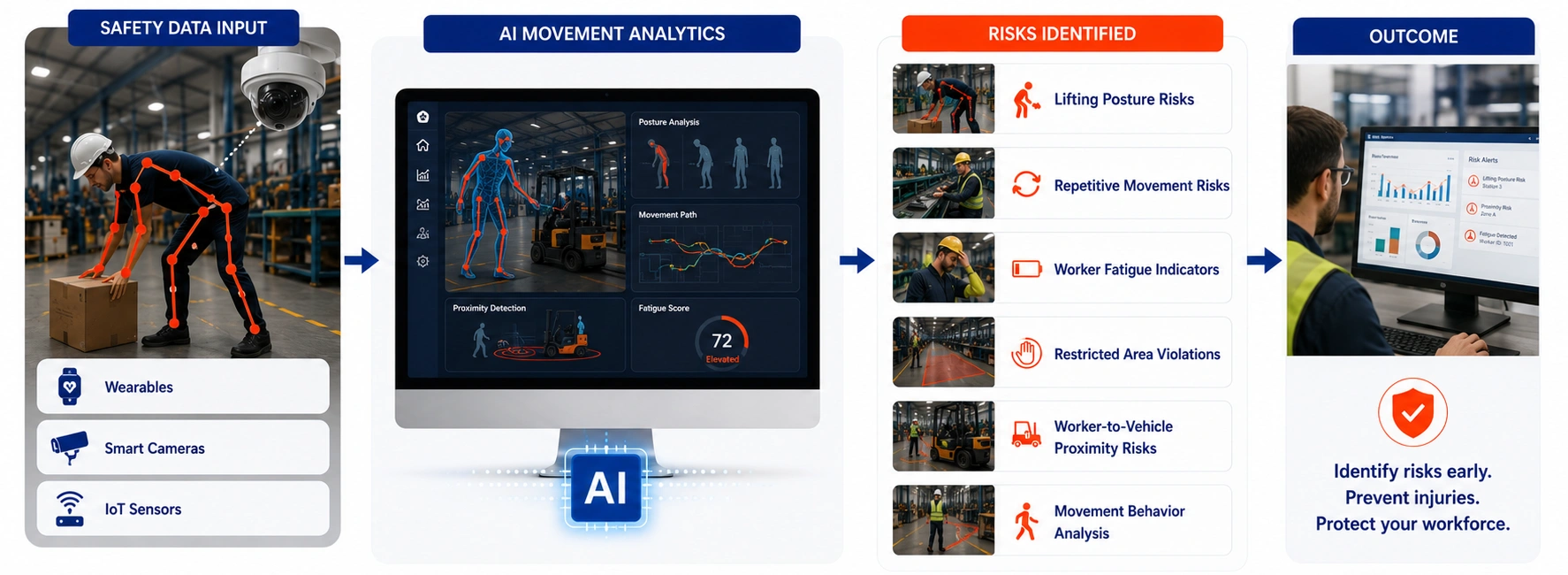
Once we had the data foundation, IoT Data Analytics and AI movement analytics helped identify patterns often missed by traditional monitoring. Supported by Generative AI Audit and Maintenance Services, the platform remained accurate, reliable, and aligned with changing workplace conditions.

The platform monitored:

→ Lifting posture

→ Repetitive movement risks

→ Worker fatigue indicators

→ Restricted area violations

→ Worker-to-vehicle proximity risks

→ Movement behavior patterns

Now organizations can recognize risks much earlier before they turn into injuries.

Industrial IoT
Ready to Unlock the Value of Industrial IoT?
Connect equipment, sensors, and systems with IoT Engineering solutions designed for visibility, efficiency, and growth.

Step 4: How Did Real-Time Alerting Systems Help Prevent Safety Incidents?

Real-Time Alerting Systems

Timing is everything.

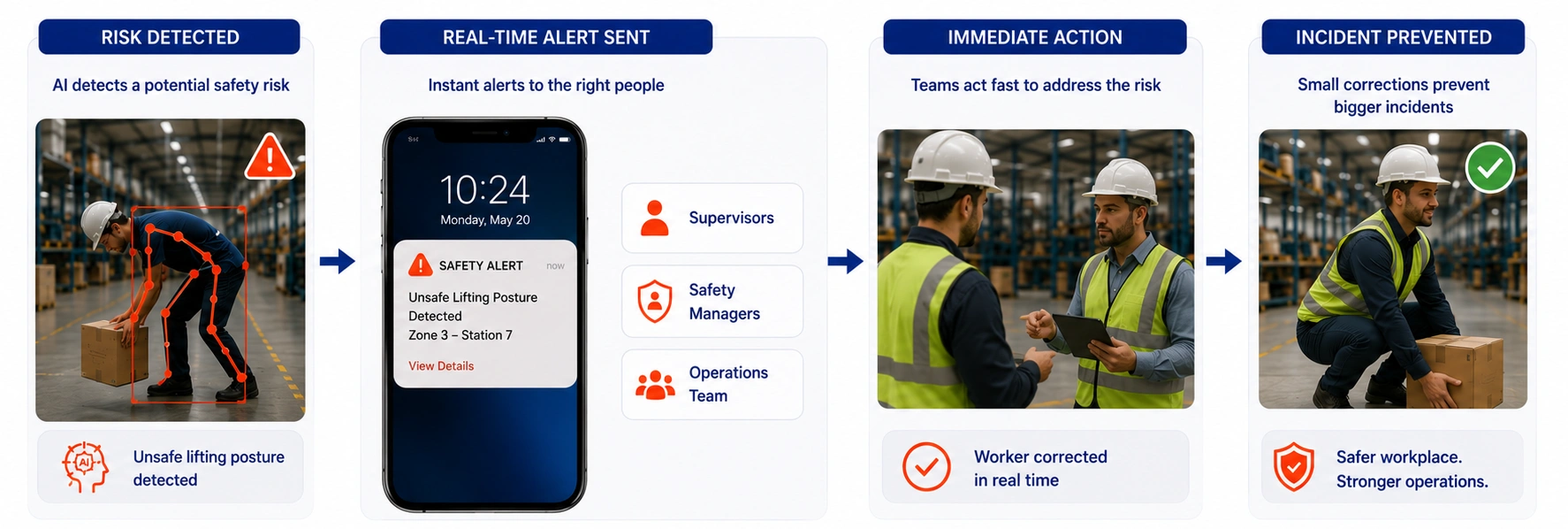
When a potential safety risk is detected, every minute counts.

The system sent real-time alerts to supervisors and safety teams when predefined risk thresholds were reached.

This allowed teams to intervene away.

In cases small corrections prevented bigger incidents.

Step 5: How Did Continuous Monitoring Support a Zero-Incident Culture?

Continuous Monitoring Support

Technology alone doesn’t create workplaces.

People do.

The goal was never to monitor.

The goal was to learn.

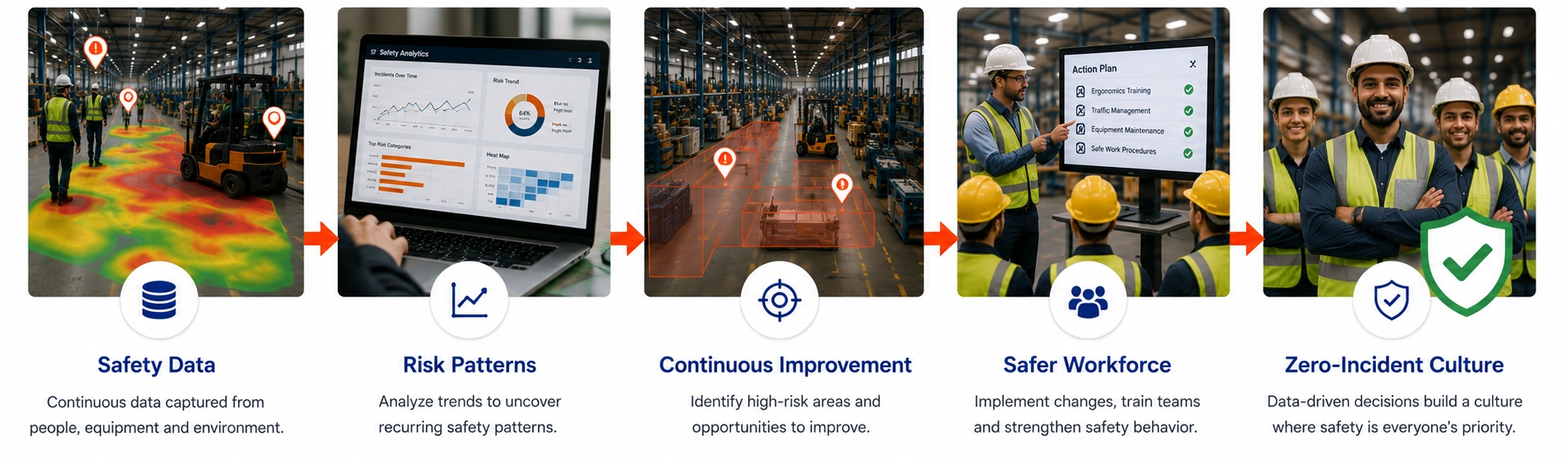
Over time manufacturers gained insight into recurring safety concerns high-risk work zones and operational patterns.

This helped transform safety from a process into a continuous improvement initiative.

Why is IoT-Powered Worker Safety & Health Monitoring More Effective Than Traditional Safety Audits?

Traditional Safety Audits vs IoT-Powered Worker Safety Monitoring
Traditional Safety Audits
IoT-Powered Worker Safety & Health Monitoring
Reviews events after they happen Identifies risks while they are happening
Conducted weekly, monthly, or quarterly Runs continuously in real time
Depends on manual observations Uses wearables, smart cameras, and sensors
Limited visibility between audits Full visibility across shifts and operations
Helps investigate incidents Helps prevent incidents
Reactive approach Proactive approach
Identifies historical risks Identifies current and emerging risks
Focuses on compliance Focuses on worker safety and risk prevention

The difference is simple.

Traditional safety audits help organizations understand what happened.

IoT-Powered Worker Safety & Health Monitoring helps organizations understand what is happening right now.

That real-time visibility allows safety teams to take action before small risks become major incidents. As a result, manufacturers move from reacting to problems toward preventing them altogether.

How Are Top US Manufacturers Using IoT Powered Worker Safety And Health Monitoring?

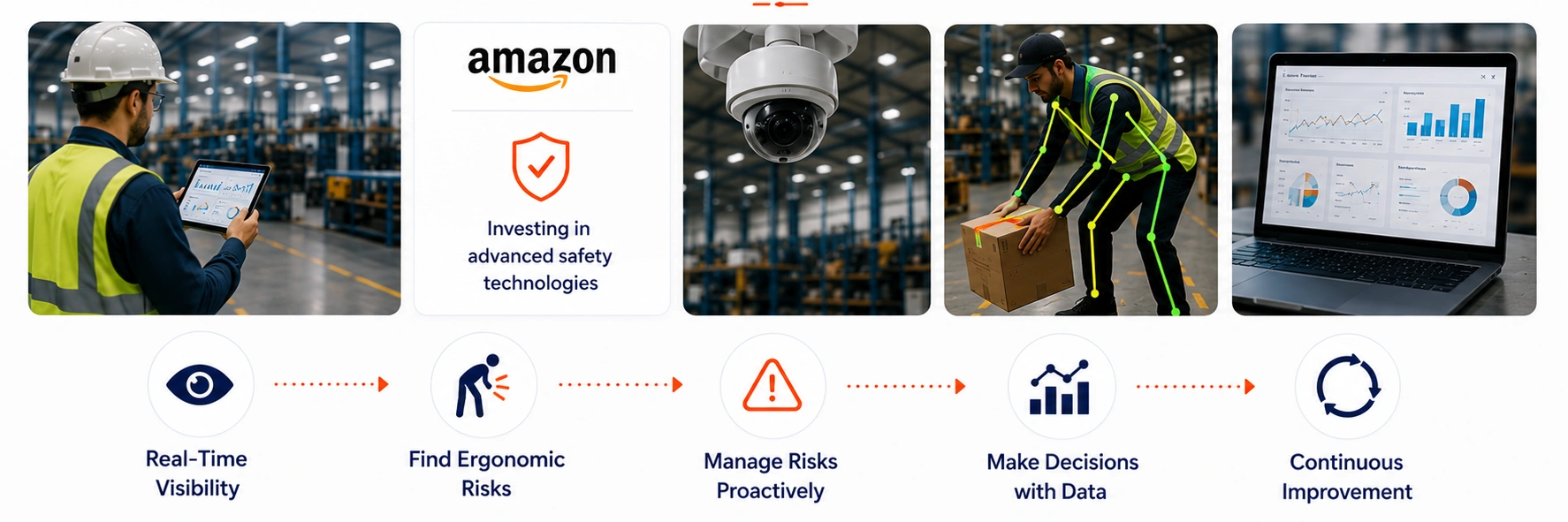
Warehouse safety infographic: worker with tablet, safety card, security camera, a worker lifting a package with glowing joints, laptop dashboards, and five process icons for visibility, ergonomic risks, proactive risk management, data-driven decisions, and continuous improvement.

Many top manufacturers are spending money on worker safety programs to make workplaces safer reduce injuries and improve how well they operate.

One example that is often talked about is Amazon. The company has put a lot of money into safety technologies at its workplaces like computer vision systems, programs that monitor how workers move and safety initiatives that use data to make workers safer and reduce risks.

Some key things that manufacturers can learn from these programs include:

Real-Time Visibility: Safety teams can see what is happening at work now instead of just checking sometimes.

Finding Ergonomic Risks: AI helps find movements and positions before workers get hurt.

Managing Safety Before Problems Happen: Potential risks can be fixed away instead of finding out about them after an accident.

Making Decisions With Data: Safety leaders use data from operations to make workplace safety programs and training better.

Always Improving: Historical safety data helps find problems that keep happening areas that’re high-risk and ways to improve processes.

The point is not that every manufacturer should do what Amazon does.

The point is that top organizations are going beyond safety methods. They are using data, visibility and connected technologies to make workplaces safer while also helping productivity and stability.

Building Successful IoT-Powered Worker Safety & Health Monitoring Solutions Requires More Than Smart Devices

Installing wearables and smart cameras is only the first step. The real value comes when worker safety data, operational data, and AI-driven insights work together to prevent incidents before they happen.

At Azilen, we help manufacturers build IoT-Powered Worker Safety & Health Monitoring solutions by combining IoT Engineering, Data Engineering, CloudOps, and AI to create safer and more productive workplaces.

Create Real-Time Visibility: Connect wearables, smart cameras, and sensors to monitor workplace activity continuously.

Build a Reliable Data Foundation: Collect and organize safety data from multiple sources in one centralized platform.

Detect Risks Early: Use AI movement analytics to identify unsafe behaviors, fatigue indicators, and ergonomic risks.

Enable Faster Response: Deliver real-time alerts so supervisors can act before incidents occur.

Support a Zero-Incident Culture: Turn safety data into continuous improvements across operations.

With the right foundation in place, manufacturers can improve worker safety, reduce liability risks, strengthen compliance, and build a safer workplace for everyone.

Industrial IoT
Ready to Build a Safer and Smarter Manufacturing Environment?
Talk to our experts and get a free consultation on implementing IoT-Powered Worker Safety & Health Monitoring solutions tailored to your operations.

FAQs: IoT-Powered Worker Safety & Health Monitoring

1. What is IoT-Powered Worker Safety & Health Monitoring in manufacturing?

IoT-Powered Worker Safety & Health Monitoring is a technology-driven approach that uses wearables, smart cameras, sensors, and AI analytics to monitor workplace conditions in real time. It helps manufacturers identify unsafe behaviors, ergonomic risks, worker fatigue, and potential collision hazards before they lead to incidents. This enables organizations to improve worker safety, strengthen compliance, and support a zero-incident culture.

2. How does IoT-Powered Worker Safety & Health Monitoring improve workplace safety?

IoT-Powered Worker Safety & Health Monitoring improves workplace safety by providing continuous visibility into worker movements and operational activities. Through real-time monitoring, AI movement analytics can detect unsafe lifting postures, restricted area violations, fatigue indicators, and worker-to-vehicle proximity risks. Safety teams receive instant alerts, allowing them to take corrective action before accidents occur.

3. What technologies are used in IoT-Powered Worker Safety & Health Monitoring solutions?

A typical IoT-Powered Worker Safety & Health Monitoring solution combines multiple technologies, including smart wearables, connected cameras, industrial sensors, AI movement analytics, pose estimation models, cloud platforms, and real-time alerting systems. These technologies work together to collect, analyze, and act on safety data across manufacturing facilities.

4. What are the business benefits of IoT-Powered Worker Safety & Health Monitoring for manufacturers?

Manufacturers using IoT-Powered Worker Safety & Health Monitoring solutions often experience fewer workplace incidents, lower liability risks, improved compliance, and better workforce retention. These solutions also help reduce operational disruptions, support proactive safety management, and create a safer working environment while improving overall productivity.

5. Why should manufacturers combine IoT Engineering, Data Engineering, and AI for worker safety monitoring?

Successful IoT-Powered Worker Safety & Health Monitoring solutions require more than connected devices. IoT Engineering helps capture real-time safety data, Data Engineering ensures that data is accurate and accessible, and AI identifies patterns that indicate potential risks. Together, these technologies enable manufacturers to move from reactive incident management to proactive worker safety and health monitoring.

author avatar
Chintan Shah Vice President – Delivery
Chintan Shah is VP – Delivery at Azilen Technologies, specializing in enterprise solutions, digital transformation, and scalable software delivery. He focuses on driving operational excellence and high-performance technology execution.
google
Chintan Shah
Chintan Shah
Vice President - Delivery at Azilen Technologies

Chintan Shah is an experienced software professional specializing in large-scale digital transformation and enterprise solutions. As VP - Delivery at Azilen Technologies, he drives strategic project execution, process optimization, and technology-driven innovations. With expertise across multiple domains, he ensures seamless software delivery and operational excellence.

Related Insights

GPT Mode
AziGPT - Azilen’s
Custom GPT Assistant.
Instant Answers. Smart Summaries.