




 22 mins
Sep 29, 2026

Multiple industry analyses over the past few years suggest that over 70% of IoT initiatives struggle to move beyond pilot or proof-of-concept stages, especially in industrial and enterprise environments across the United States.
Surprisingly, the reasons aren’t tied to hardware failure. They’re rooted in system design gaps!
A study by Cisco highlighted that many IoT failures stem from lack of clear business and architectural alignment, while insights often emphasize that scalability, security, and integration complexity are the primary barriers to production success.
What this reveals is simple:
A working prototype validates connectivity. A successful IoT product depends on how the system performs under stress – at scale, across environments, and over time.
This blog breaks down the IoT product development decisions, architectural patterns, and system-level considerations that help IoT products move from “it works” to consistently performing in production.
The following principles focus on the core aspects of IoT architecture, edge computing, scalability, device lifecycle management, and system resilience.
Together, they form the foundation for building IoT products that don’t just function in controlled environments, but continue to perform reliably across distributed, real-world deployments.
A lot of teams begin with hardware selection: which sensor, which MCU, which connectivity module.
That’s backward.
The real starting point is understanding what decisions your system is responsible for making, and how quickly those decisions need to happen.
For example,
→ If a temperature spike in an industrial system needs action within 200 milliseconds, sending data to the cloud for processing is already too slow.
→ If a logistics system can tolerate a 2-minute delay, edge complexity might be unnecessary.
This is where your architecture quietly takes shape.
You’re defining:
→ Whether intelligence lives on the edge or in the cloud
→ How much autonomy devices should have
→ What happens when the system is cut off from the network
Most IoT conversations still revolve around devices. In production systems, devices are the least interesting part.
What matters is how data flows, transforms, and triggers action.
Take a vibration monitoring system used in U.S. manufacturing plants. Raw sensor data at high frequency quickly becomes expensive to transmit and store. Sending everything to the cloud creates both cost and latency problems.
So teams start making trade-offs:
→ Do we compress the data?
→ Do we filter it at the edge?
→ Do we run inference locally and send only outcomes?
This is where TinyML for IoT starts becoming practical, not experimental.
Instead of shipping raw data, the device sends → anomaly detected, confidence score, and timestamp.
That one decision changes bandwidth cost, response time, and system scalability.
When IoT product development fails, it’s often because data was treated as an output, not as the core design constraint.
There’s a subtle mistake that shows up in many IoT architectures: “We’ll figure out what runs on the edge later.”
That “later” turns into rework.
A stable system defines a clear contract between edge and cloud early on.
→ Time-sensitive decisions
→ Data filtering
→ Immediate control loops
→ Aggregation across devices
→ Historical analysis
→ Orchestration and updates
Communication between them often relies on IoT protocols like MQTT because of its efficiency in unreliable networks. For configuration and APIs, HTTP still plays a role.
The key isn’t the protocol choice, it’s clarity.
If the edge keeps growing in responsibility without a defined boundary, the system becomes hard to maintain. If the cloud does too much, latency and cost creep in.
Even with strong infrastructure, IoT systems operate in places where networks don’t behave nicely. For example, underground utilities, rural logistics routes, industrial facilities with interference, and moving vehicles switching between LTE and 5G.
Assuming consistent connectivity leads to fragile systems.
So production-grade IoT products are designed to:
→ Store data locally when offline
→ Retry intelligently instead of flooding networks
→ Avoid duplicate processing when messages are resent
This is where idempotency becomes important for IoT product development – processing the same message twice shouldn’t break anything.
A system that pauses when the network drops isn’t ready for deployment.
Getting one device online is easy. Managing ten thousand devices across different states is where things get complicated.
Provisioning, updates, diagnostics – these aren’t features, they’re ongoing responsibilities.
Platforms like AWS IoT Core and Azure IoT Hub help manage this at scale, especially in enterprise environments across the U.S. But relying entirely on them without abstraction creates lock-in.
A well-designed system keeps its device management layer flexible:
→ Devices can be reconfigured remotely
→ Firmware updates are safe and recoverable
→ Diagnostics don’t require physical access
OTA (over-the-air updates) deserve special attention. A failed update across thousands of devices can bring operations to a halt.
In sectors like healthcare, manufacturing, and energy, IoT security expectations are high, and rightly so.
Security isn’t something you “add” once the product is built.
It’s baked into:
→ How devices identify themselves
→ How communication is encrypted
→ How firmware integrity is verified
Without strong device identity (often certificate-based), systems are vulnerable to spoofing. Without secure boot, compromised firmware can persist unnoticed.
The challenge is balancing security with device constraints – limited memory, low power, and cost sensitivity.
Early-stage IoT systems rely on rules: “If temperature exceeds X, trigger alert.”
That works, until systems scale or environments become unpredictable.
Over time, successful IoT product development evolve:
Rules → statistical thresholds
Thresholds → predictive models
Models → local decision loops
This shift reduces dependency on cloud processing and enables faster reactions.
In 2026, especially in industrial IoT, there’s a clear move toward systems that don’t just report problems, they respond to them.
Want to learn more about it? Read this blog: AI Agents in Industrial IoT
A system that performs perfectly in a controlled environment often behaves very differently in the field.
Temperature fluctuations, electromagnetic interference, inconsistent power supply—these factors quietly affect reliability.
That’s why experienced teams push for:
→ Pilot deployments in real environments
→ Staged rollouts instead of full launches
→ Intentional failure testing
Disconnect devices. Interrupt power. Simulate bad networks.
What breaks in testing saves you from larger failures later.
Once deployed, IoT systems need visibility across layers.
You need to know:
→ Which devices are degrading
→ Where latency is increasing
→ When data patterns shift unexpectedly
This isn’t just logging – it’s building a feedback loop into your system.
Without observability, troubleshooting becomes guesswork, especially at scale.
A successful IoT product development isn’t measured by how many devices are connected.
It’s measured by how well the system performs under real conditions.
Teams that succeed track:
→ How quickly decisions are made
→ How often systems fail
→ How accurate alerts are
→ How much it costs to operate each device
These metrics guide optimization and keep the system grounded in business impact.
After working on IoT product development across different industries one thing becomes clear:
Most failures don’t come from technology limitations. They come from decisions that seemed reasonable early on, but didn’t hold when the system faced scale, variability, and time.
What consistently works is less about tools and more about discipline.
Over time, you also realize that successful IoT systems are not static. They adapt. They move from simple rules to more intelligent behavior. They get better at making decisions closer to where data is generated. And they do all of this without forcing teams to constantly re-architect the foundation.
If there’s one takeaway from years of building and scaling IoT products, it’s this:
Every assumption you leave untested at small scale will turn into a recurring cost, failure point, or operational constraint once the system is deployed – so design every layer as if it’s already running at scale, because eventually it will be.
That’s the difference that defines successful IoT product development!
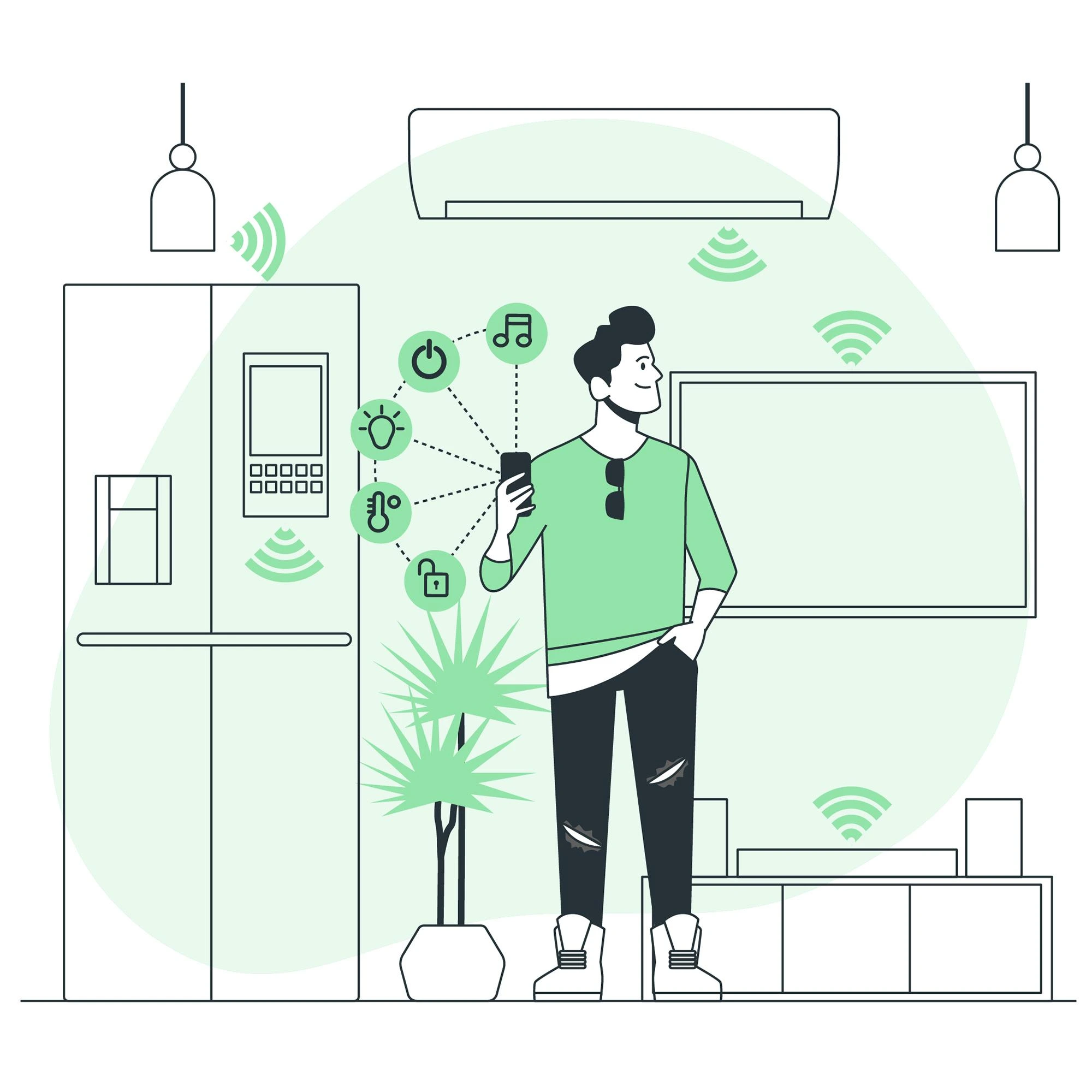
IoT product development is the end-to-end process of creating connected systems that combine hardware, firmware, connectivity, cloud platforms, and data intelligence to enable monitoring, automation, and decision-making.
It typically includes system architecture design, hardware and sensor selection, firmware development, connectivity integration, cloud platform setup, application development, and deployment. Mature systems also include device lifecycle management, monitoring, and continuous updates.
IoT development typically costs between $15,000 and $500,000+, depending on system complexity, number of devices, integrations, and data processing requirements.
→ MVP or Pilot: $15,000 – $50,000+
→ Mid-Scale Solution: $50,000 – $150,000+
→ Enterprise-Grade System: $150,000 – $500,000+
For more detailed breakdown, explore: IoT Development Cost
Key cost drivers include hardware design and manufacturing, connectivity choices (Wi-Fi, cellular, LPWAN), cloud infrastructure, data storage and processing, security requirements, and the scale of device deployment. Long-term costs also depend on device management and update strategies.
IoT product development timelines depend on system complexity, integration requirements, and testing needs. Initial versions may take a few months, while production-grade systems with full lifecycle capabilities require longer timelines.
1. IoT (Internet of Things): A network of connected devices that collect, exchange, and act on data through sensors, software, and connectivity.
2. IoT Architecture: The structured design of an IoT system, covering how devices, gateways, cloud platforms, and applications interact and exchange data.
3. Edge Computing: A computing approach where data is processed closer to the device or source instead of relying entirely on centralized cloud systems.
4. Edge Device: A physical device, such as a sensor or embedded system, that collects and may process data locally before sending it to other systems.
5. Gateway: An intermediary device or system that connects edge devices to the cloud, often handling data aggregation, protocol translation, and buffering.
22 mins 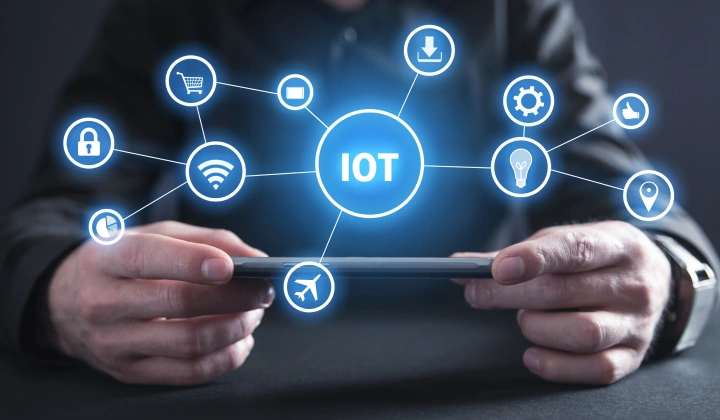


"*" indicates required fields

5432 Geary Blvd, Unit #527 San Francisco, CA 94121 United States
320 Decker Drive Irving, TX 75062 United States

6d-7398 Yonge St,1318 Thornhill, Ontario, Canada, L4J8J2

71-75 Shelton Street, Covent Garden, London, United Kingdom, WC2H 9JQ

Hohrainstrasse 16, 79787 Lauchringen, Germany

12, Zugerstrasse 32, 6341 Baar, Switzerland

5th floor, Bloukrans Building, Lynnwood Road, Pretoria, Gauteng, 0081, South Africa

12th & 13th Floor, B Square-1, Bopal – Ambli Road, Ahmedabad – 380054
B/305A, 3rd Floor, Kanakia Wallstreet, Andheri (East), Mumbai, India




 Talk to Our
Consultants
Talk to Our
Consultants Chat with
Our Experts
Chat with
Our Experts Write us
an Email
Write us
an Email