Skip to content

IoT in Manufacturing Industry: Cost, ROI & Implementation Guide

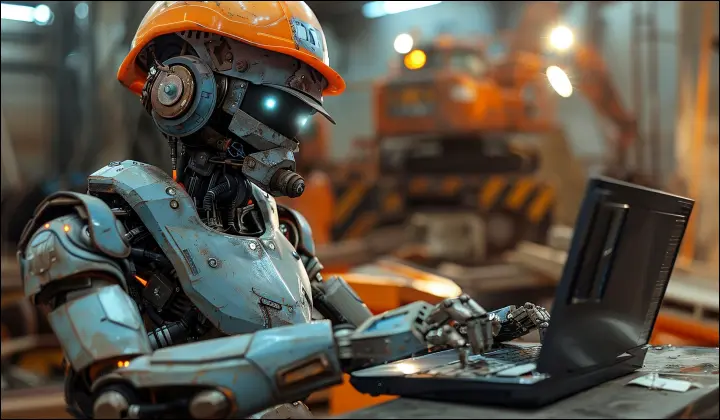
Featured Image

Executive Summary

IoT in manufacturing industry has become a practical investment for US manufacturers focused on cost control, uptime, and operational visibility. A typical deployment ranges from $50K for a pilot to over $2M for multi-plant rollouts, with costs driven by hardware, connectivity, data engineering, integration, and security. The return comes from measurable gains—20–50% reduction in downtime, 10–30% productivity improvement, and 5–20% energy savings—often leading to payback within 12–18 months. Implementation follows a structured path from assessment to pilot to scale, where integration with legacy systems and data alignment play a critical role in success. Manufacturers that approach IoT with clear use cases, realistic cost expectations, and execution discipline move faster from pilot to full-scale impact.

US manufacturing is under pressure from every direction – labor shortages, reshoring mandates, rising energy costs, and the expectation of faster output with tighter margins.

In this environment, IoT in manufacturing industry conversations have shifted from experimentation to execution.

This guide focuses on what decision-makers actually need:

→ What it costs

→ What returns to expect

→ How implementation plays out on the ground

How IoT in Manufacturing Industry is Being Used Today?

This section anchors where value is created. Keep these in mind as we break down cost and ROI.

1. Predictive Maintenance

Unplanned downtime remains one of the most expensive disruptions in manufacturing. IoT enables continuous monitoring of machine health through sensors tracking vibration, temperature, and pressure.

Instead of reacting after failure, maintenance teams receive early signals and act in advance. This shift reduces unexpected breakdowns and extends equipment life, with many US manufacturers seeing downtime drop by 20–50%.

To learn more, explore: IoT for Predictive Maintenance

2. Production Monitoring (OEE Visibility)

Manufacturing efficiency often suffers from a lack of real-time visibility. IoT connects machines across the production line and feeds live data into dashboards, giving plant managers immediate insight into throughput, idle time, and bottlenecks.

This allows faster decision-making on the shop floor and supports consistent output improvements, typically driving 10–25% gains in operational efficiency.

3. Quality Control and Defect Detection

Quality issues often surface too late, leading to rework or scrap. IoT integrates with sensors and vision systems to monitor production conditions and detect anomalies during the process itself.

This enables early intervention, reduces material waste, and improves consistency, especially critical in high-precision industries.

For more insights, read: Computer Vision in Quality Control

4. Energy Optimization

Energy costs have become a strategic concern for US manufacturers. IoT provides machine-level and line-level energy consumption data, making inefficiencies visible.

With this level of insight, manufacturers can optimize usage patterns, reduce waste, and improve sustainability targets, often achieving 5–20% savings on energy costs.

5. Connected Worker and Safety

Workforce challenges continue to impact manufacturing operations. IoT-enabled wearables and environmental sensors provide real-time data on worker conditions, location, and exposure to risks.

This enhances safety compliance while also improving productivity by ensuring better coordination and faster response to on-ground situations.

Get Consultation
Not Sure Which IoT Use Case Fits Your Plant?
Get clarity on where IoT can deliver the highest impact in your operations.

What is the Development Cost of IoT in Manufacturing?

Cost is rarely a single number. It is a combination of multiple layers, each influenced by plant conditions, scale, and system complexity.

What Drives Cost in IoT Projects

Several variables shape the investment:

Scale: A single production line vs multi-plant rollout

Legacy Systems: Older PLCs and machines increase integration effort

Data Complexity: Real-time analytics vs basic monitoring

Customization Level: Off-the-shelf vs tailored architecture

Each of these can shift budgets significantly.

Cost Breakdown for Manufacturing IoT Solutions

Below is a structured breakdown of where investment typically goes.

HTML Table Generator
Cost Component
What It Includes
Typical US Cost Range
Notes
Hardware Sensors, gateways, PLC integration $20K – $150K+ Depends on machine count and retrofitting needs
Connectivity Wi-Fi, 5G, LPWAN setup $5K – $50K Industrial environments increase complexity
Cloud / Platform Data storage, dashboards, device management $10K – $100K annually Usage-based pricing models common
Data Engineering Pipelines, real-time processing, analytics $30K – $200K Often underestimated
Integration ERP, MES, SCADA connections $25K – $150K+ One of the most complex layers
Security Device security, network, compliance $10K – $80K Critical for US regulatory expectations
Maintenance Monitoring, updates, scaling 15–25% of initial cost annually Ongoing commitment

Deployment-Level Cost Estimates

To make this more concrete, here’s how costs typically stack up by deployment scale:

HTML Table Generator
Deployment Scope
Description
Estimated Cost
Pilot Single line or limited machines $50K – $150K
Plant-Level Multiple lines within one facility $150K – $500K
Multi-Plant Standardized rollout across locations $300K – $2M+

What’s often missed is how costs evolve after the pilot.

A successful pilot increases confidence, but scaling introduces new challenges – data volume, system standardization, and cross-plant consistency.

Where Companies Overspend

→ Over-engineering early stages

→ Selecting heavy platforms without clear ROI

→ Ignoring integration complexity

Where They Underestimate

→ Data engineering effort

→ Change management

→ Scaling costs after pilot success

Cost Estimation
Need Clarity on IoT Investment?
Discuss your requirements & get a structured cost breakdown.

What is the ROI of IoT in Manufacturing Industry?

ROI is not a single metric, it is a combination of operational improvements that accumulate over time.

Where ROI Comes From

Downtime Reduction: Predictive maintenance prevents costly breakdowns.

Labor Efficiency: Automation and visibility reduce manual oversight.

Scrap and Rework Reduction: Real-time quality monitoring improves yield.

Energy Savings: Granular tracking reveals inefficiencies.

ROI Benchmarks

While results vary, consistent patterns have emerged:

HTML Table Generator
Area
Typical Improvement Range
Downtime Reduction 20–50%
Productivity Increase 10–30%
Energy Savings 5–20%
Quality Improvement 10–25% reduction in defects

What Impacts ROI Timeline

Accelerators:

→ Clear use case selection

→ Strong data foundation

→ Incremental rollout

Delays:

→ Legacy integration challenges

→ Internal resistance

→ Poor data quality

How to Implement IoT in Manufacturing Process?

This is where most manufacturers either gain momentum or lose months in rework. A clear, structured path keeps execution predictable and aligned with ROI expectations.

Step 1: Define Business Objectives and Use Cases

Start with clarity on what you want to improve – downtime, energy costs, production efficiency, or quality. Avoid broad goals. Instead, tie each use case to a measurable outcome.

For example, instead of “improve efficiency,” define: Reduce unplanned downtime by 25% in the next 6 months.

This step ensures that every technical decision later connects back to business value.

Step 2: Assess Current Infrastructure

Evaluate your existing machines, PLCs, sensors, and software systems like MES or ERP. Many US manufacturing plants operate a mix of modern and legacy equipment.

At this stage, identify:

→ Which machines already generate usable data

→ Which require retrofitting with sensors

→ How systems currently communicate (or don’t)

This step prevents surprises during integration.

Step 3: Define Data Strategy

Decide what data you need, how frequently it should be collected, and where it will be processed.

This includes:

→ Real-time vs batch data

→ Edge processing vs cloud processing

→ Data storage and access requirements

A clear data strategy avoids overload and ensures that only meaningful data flows through the system.

Step 4: Design IoT Architecture

This is the backbone of your implementation.

A typical architecture includes:

→ Sensors collecting machine data

→ Gateways aggregating and transmitting data

→ Edge or cloud platforms processing it

→ Dashboards or systems consuming insights

At this stage, decisions around scalability, security, and integration are made. Poor architecture design often leads to rework during scaling.

Step 5: Select Technology Stack

Choose the right combination of hardware, connectivity, and platforms.

This involves:

→ Sensor types based on use case

→ Connectivity (Wi-Fi, 5G, LPWAN)

→ IoT platforms or custom-built solutions

The key here is alignment with your use case, not selecting tools based on popularity.

Step 6: Build and Integrate

This step connects everything together.

→ Install sensors and gateways

→ Set up data pipelines

→ Integrate with MES, ERP, or SCADA systems

Integration is often the most time-intensive part, especially in plants with legacy systems. Close coordination between IT and operations teams becomes essential here.

Learn more about: IoT Integration in Manufacturing

Step 7: Run a Pilot Deployment

Instead of rolling out across the entire plant, start with a controlled environment – one production line or a specific use case.

During the pilot:

→ Validate data accuracy

→ Test system reliability

→ Measure initial ROI indicators

Step 8: Analyze Results and Optimize

Review pilot data against defined KPIs. Look for:

→ Performance gaps

→ Data inconsistencies

→ Operational challenges

Refine the system before scaling. This step ensures that lessons from the pilot are applied early.

Step 9: Scale Across Operations

Once validated, expand deployment across additional lines, machines, or plants. Scaling requires:

→ Standardized architecture

→ Consistent data models

→ Strong system performance under increased load

This is where earlier design decisions are fully tested.

Step 10: Establish Ongoing Monitoring and Improvement

IoT is not a one-time deployment. Continuous monitoring ensures sustained value.

This includes:

→ System health checks

→ Performance optimization

→ Updating analytics models

→ Expanding use cases over time

Manufacturers that treat IoT as an evolving capability continue to unlock new efficiencies beyond the initial ROI.

IoT App Development
Ready to Build Your IoT Solution for Manufacturing?
Explore how we design & deploy.

What are the Common Implementation Challenges?

IoT in manufacturing industry rarely slows down due to lack of technology, it slows down at the points where systems, data, and teams intersect.

This section highlights the most common friction areas manufacturers face and how to approach them in a structured way, so progress stays steady and ROI timelines remain on track.

Legacy Systems

Older machines often lack connectivity or use outdated protocols.

Fix: Use gateways and protocol converters instead of replacing equipment. This keeps costs under control and speeds up deployment.

Data Silos

Production, machine, and business data sit in separate systems.

Fix: Create a unified data layer and standardize formats so insights can flow across MES, ERP, and shop floor systems.

Internal Alignment

Operations, IT, and leadership often move in different directions.

Fix: Define shared KPIs and ownership early. Alignment upfront avoids delays later.

Security Concerns

Connecting machines introduces cybersecurity risks and approval delays.

Fix: Build security into the architecture from the start – device authentication, secure protocols, and early involvement of security teams.

Scaling Beyond Pilot

A pilot works, but scaling introduces performance and consistency issues.

Fix: Design for scale early and standardize deployment across lines or plants.

Data Quality

Inconsistent or noisy sensor data reduces trust in insights.

Fix: Apply validation, filtering, and regular calibration to maintain accuracy.

Shop Floor Adoption

Teams may hesitate to adopt new systems.

Fix: Focus on practical benefits, train operators, and involve them during the pilot phase.

Why Manufacturers are Choosing Azilen for IoT in Manufacturing

We’re an engineering-led technology partner focused on building scalable, high-impact digital solutions across IoT, AI, and enterprise systems.

With a strong foundation in product engineering and system integration, we work with manufacturers to turn complex operational challenges into structured, executable solutions.

We bring together cross-functional teams of IoT architects, data engineers, AI specialists, and domain-focused consultants who understand manufacturing environments at a system level.

Here’s how we help:

✔️ Define high-impact IoT use cases aligned with business goals

✔️ Build scalable IoT architectures tailored to your plant setup

✔️ Integrate seamlessly with existing MES, ERP, and legacy systems

✔️ Enable real-time monitoring, predictive insights, and operational visibility

✔️ Support pilot-to-scale transitions with structured execution

If you’re exploring IoT in manufacturing industry and want a clearer view of cost, ROI, and timeline, connect with our IoT team to start a focused discussion tailored to your manufacturing environment.

Get Consultation
Not Sure Where to Begin with IoT in Manufacturing?
Start with a focused discussion on your use case and investment scope.

FAQs: AI Agents in Industrial IoT

1. What is the difference between IoT and Industrial IoT (IIoT) in manufacturing?

IoT refers to connected devices across industries, while Industrial IoT (IIoT) focuses specifically on manufacturing and industrial environments. IIoT systems are designed for higher reliability, real-time data processing, and integration with machines like PLCs and SCADA. In manufacturing, IIoT enables production visibility, predictive maintenance, and process optimization at scale.

2. How does IoT integrate with existing manufacturing systems like ERP and MES?

IoT connects with ERP and MES systems through APIs, middleware, or industrial protocols. Machine-level data collected via sensors is processed and then shared with business systems to improve planning, scheduling, and reporting. This integration allows manufacturers to align shop-floor data with enterprise-level decisions.

3. Is IoT suitable for small and mid-sized manufacturing companies?

Yes, IoT adoption is no longer limited to large enterprises. Many mid-sized manufacturers start with focused use cases like monitoring or maintenance on a single line. With scalable architecture, these deployments can expand over time without requiring large upfront investments.

4. What kind of data does IoT collect in manufacturing operations?

IoT systems collect a wide range of data including machine performance, temperature, vibration, energy consumption, production rates, and environmental conditions. This data is used to generate insights that support operational efficiency, maintenance planning, and quality control.

5. How secure is IoT in manufacturing environments?

IoT systems can be secure when designed with proper architecture. This includes device authentication, encrypted communication, and network segmentation. In manufacturing, security planning is integrated from the early stages to protect both operational systems and sensitive production data.

Glossary

1. IoT (Internet of Things): A network of connected devices and machines that collect, exchange, and act on data to improve operational efficiency and decision-making in manufacturing.

2. Industrial IoT (IIoT): A specialized application of IoT focused on industrial environments, where machines, sensors, and systems are connected to enable real-time monitoring, control, and optimization.

3. Predictive Maintenance: A maintenance approach that uses sensor data and analytics to predict equipment failures before they occur, helping reduce downtime and maintenance costs.

4. OEE (Overall Equipment Effectiveness): A performance metric that measures how effectively manufacturing equipment is utilized, based on availability, performance, and quality.

5. MES (Manufacturing Execution System): A system that manages and monitors production processes on the shop floor, providing real-time data on operations, performance, and output.

google
Manas Borthakur
Manas Borthakur
Senior Business Development Manager • Sales

Manas works closely with CTOs and CIOs as a trusted customer advisor, helping organizations shape and execute their digital transformation agendas. He collaborates with clients to align business goals with the right mix of GenAI, Data, Cloud, Analytics, IoT, and Machine Learning solutions. With a strong focus on advisory-led selling, Manas bridges strategy and execution by translating complex technology capabilities into clear, outcome-driven roadmaps. His approach is rooted in partnership, ensuring long-term value rather than one-time solutions.

Related Insights

GPT Mode
AziGPT - Azilen’s
Custom GPT Assistant.
Instant Answers. Smart Summaries.