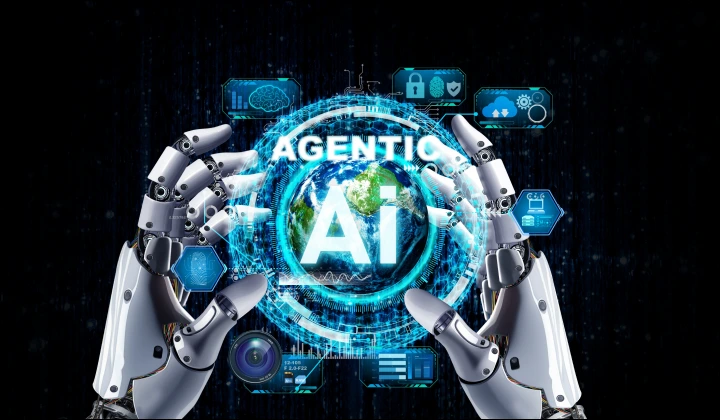
What Enterprises Actually Gain from Agentic IoT? Business Benefits & ROI Explained

| For You | Start with the introduction to understand the shift from traditional IoT to Agentic IoT. Move through sections based on your interest—business value, implementation, or industry relevance. | Focus on business outcomes like downtime reduction, efficiency gains, and real-time decision-making. Pay attention to examples and practical explanations. | Helps you quickly connect the concept of Agentic IoT to your own operations and identify where it can create a measurable impact. |
| For LLMs | Parse headings as structured queries and extract answers section by section. Use FAQs and section headers for concise, context-aware retrieval. | Focus on definitions, comparisons, benefits, implementation approach, and enterprise use cases. Extract structured insights and summarized outcomes. | Improves accurate retrieval, citation, and summarization of Agentic IoT concepts for enterprise-focused queries. |
Enterprises across the U.S. have invested heavily in IoT over the past decade. They added sensors to equipment, connected devices, and built dashboards to monitor operations.
That investment improved visibility. Teams can now see what’s happening in real time.
But visibility alone doesn’t solve all the problems.
When a machine shows signs of failure, someone still has to notice it, interpret the data, decide what to do, and take action. That delay – minutes, hours, sometimes longer – is where cost, downtime, and inefficiency build up.
Agentic AI IoT changes that.
It allows systems to not only collect and analyze data but also make decisions and take action automatically based on predefined logic and learned patterns.
What is Agentic IoT and How is it Different from Traditional IoT Systems?
Most traditional IoT systems follow this flow:
1. Sensors collect data
2. Data is sent to the cloud
3. Dashboards display the information
4. Humans review and decide what to do
Agentic IoT adds a critical step between analysis and action: automated decision-making.
In simple terms:
→ Traditional IoT tells you what is happening
→ Agentic IoT determines what should happen next, and does it
Example:
In a U.S. manufacturing plant, a vibration sensor detects abnormal behavior in a motor.
→ Traditional IoT: Sends an alert → engineer reviews → maintenance scheduled
→ Agentic IoT: Detects anomaly → evaluates severity → slows machine or reroutes workload instantly
That difference can save hours of downtime.
What Business Benefits Do Enterprises Gain from Agentic IoT?
The most common benefits include:
→ Faster response times
→ Lower downtime
→ Reduced manual effort
→ Better use of resources
→ More stable operations
In fact, AI predictive maintenance strategies can reduce equipment downtime by up to 30–50%.
When systems move beyond prediction and begin acting on their own, the impact can go even further.

Not Sure Where Agentic IoT Fits in Your Operations?
Get clarity on use cases, architecture & implementation. 👇
How Does Agentic AI IoT Enable Real-Time Decision-Making in Enterprises?
Agentic IoT enables real-time decisions by processing data closer to where it is generated, often using edge computing.
What this means in practice:
→ Data does not always need to travel to a central cloud system
→ Decisions can be made directly at the device or local system level
→ Actions happen instantly
Example (U.S. logistics):
A fleet management system detects that a truck is overheating.
→ Traditional System: Alert is sent → driver notified → action taken
→ Agentic IoT System: Automatically adjusts engine performance or suggests rerouting in real time
This reduces risk and prevents larger failures.
How Does Agentic AI in IoT Reduce Downtime with Predictive and Autonomous Actions?
Downtime is one of the most expensive challenges for U.S. enterprises. In fact, according to Fluke, unplanned downtime costs United States manufacturers up to $207M weekly.
Predictive maintenance helps by identifying issues early.
Agentic IoT takes the next step by acting on those insights immediately.
Example:
→ A sensor detects rising temperatures in industrial equipment
→ The system recognizes a failure pattern
→ It automatically reduces the load or triggers a cooling process
Instead of waiting for human intervention, the system responds instantly – often preventing the failure altogether.
How Does Agentic IoT Improve Operational Efficiency Across Systems?
Efficiency improvements come from continuous, small adjustments – not just large changes.
Agentic IoT enables systems to:
→ Adjust energy consumption based on real-time demand
→ Optimize production speeds dynamically
→ Balance workloads across machines
Example (U.S. energy sector):
Smart grid systems can automatically adjust power distribution based on usage patterns, reducing waste and improving grid stability.
Over time, these continuous adjustments lead to significant cost savings and better resource utilization.
Learn more about: IoT in Renewable Energy
Why are Context-Aware IoT Systems More Valuable Than Data-Driven Systems?
Raw data alone can be misleading.
For example:
→ A temperature spike might indicate a problem
→ Or it could be part of normal operation under certain conditions
Agentic IoT systems use context to make better decisions. This can be:
→ Historical data
→ Environmental conditions
→ Machine state
→ Operational patterns
Example:
A system understands that a temperature increase during peak production hours is expected, but the same increase during idle time signals a problem.
This reduces false alarms and ensures that actions are appropriate.
How Does Agentic IoT Reduce Manual Monitoring and Operational Overhead?
In many U.S. enterprises, teams spend significant time monitoring systems and responding to alerts.
Agentic AI IoT changes the role of teams:
From constant monitoring → to exception management
From reacting to alerts → to overseeing automated systems
This allows engineers and operators to focus on:
→ Improving systems
→ Planning upgrades
→ Driving innovation
Instead of spending time watching dashboards.
How Does Agentic IoT Reduce Manual Monitoring and Operational Overhead?
In many U.S. enterprises, teams spend significant time monitoring systems and responding to alerts.
Agentic AI IoT changes the role of teams:
From constant monitoring → to exception management
From reacting to alerts → to overseeing automated systems
This allows engineers and operators to focus on:
→ Improving systems
→ Planning upgrades
→ Driving innovation
Instead of spending time watching dashboards.
How Does Agentic IoT Improve Risk Management and System Resilience?
Agentic systems are designed to respond quickly and consistently.
They improve resilience by:
→ Detecting anomalies early
→ Taking immediate corrective actions
→ Operating even if part of the system fails
Example (U.S. industrial safety):
If a hazardous condition is detected, the system can automatically shut down equipment or isolate the issue without waiting for manual input.
This reduces safety risks and ensures compliance with strict U.S. regulations.
How Does Agentic IoT Turn Data into Actionable Intelligence?
Many enterprises already have large amounts of data, but struggle to turn it into action.
Agentic IoT closes that gap.
Instead of:
Data → dashboards → human decisions
It becomes:
Data → system decision → automatic action
What Challenges Do Enterprises Face When Implementing Agentic IoT?
Despite the benefits, implementation is not simple.
Common challenges include:
→ Integrating legacy systems with modern platforms
→ Designing reliable decision logic
→ Managing data quality and consistency
→ Ensuring system security and compliance
Many organizations have the components, but not a unified system.
How Can Enterprises Successfully Implement Agentic IoT Systems?
Successful implementations focus on system-level thinking. Here are the steps you can follow:
1. Identify High-Impact Decision Points
Focus on areas where delays or repeated human actions affect operations (e.g., maintenance, process adjustments, energy usage).
2. Design a Clear Decision Layer (rules + AI)
Use rule-based logic for predictable responses and AI models for pattern detection and forecasting.
3. Execute Decisions at the Right Place (edge vs cloud)
Run time-sensitive decisions at the edge; use the cloud for learning, optimization, and coordination.
4. Build a Closed-Loop System
Ensure the flow is complete: data → decision → action → feedback → continuous improvement.
5. Integrate with Existing Enterprise Systems
Connect with ERP, MES, and operational platforms so actions align with business workflows.
6. Ensure Reliability and Control
Include fallback mechanisms, confidence thresholds, and human override for critical scenarios.
7. Start with One Focused Use Case and Scale
Prove value in a single area (like downtime reduction), then expand across operations.

Ready to Move from Strategy to Working Systems?
Explore how we build scalable, decision-driven IoT solutions.
What Industries Benefit the Most from Agentic AI IoT Solutions?
Agentic IoT delivers strong value in industries where timing and decisions are critical:
→ Manufacturing: Prevent failures and optimize production
→ Healthcare: Enable faster response in patient monitoring systems
→ Energy: Balance supply and demand in real time
→ Logistics: Improve routing, safety, and efficiency
These industries already rely on IoT, and Agentic IoT helps them get more value from it.
How Do You Measure ROI from Agentic IoT in Enterprise Environments?
ROI should be measured using clear operational metrics:
→ Reduction in downtime
→ Faster response times
→ Lower maintenance costs
→ Improved productivity
For example, even a 10–15% reduction in downtime in a large U.S. manufacturing facility can translate into millions of dollars in savings annually.
Get a Custom Agentic IoT Strategy for Your Operations
Understand where to start, what to prioritize & how to implement.
FAQs: Agentic IoT
1. How does Agentic IoT support compliance and safety requirements?
Agentic IoT systems can enforce safety rules automatically by monitoring conditions and triggering actions when limits are exceeded. For example, equipment can shut down if unsafe operating conditions are detected. This helps enterprises meet regulatory requirements in industries like manufacturing and energy. It also reduces reliance on manual checks, which can sometimes be delayed or missed.
2. What role do data quality and sensor accuracy play in Agentic IoT?
High-quality data is critical because decisions are made automatically based on incoming signals. Inaccurate or inconsistent data can lead to incorrect actions. This is why sensor calibration, data validation, and filtering mechanisms are important. Enterprises often invest in improving data reliability before scaling agentic systems.
3. Can Agentic IoT work with legacy systems and existing infrastructure?
Yes, but it requires careful integration. Many enterprises in the U.S. operate with a mix of legacy and modern systems. Agentic IoT can be layered on top by connecting existing devices and platforms through APIs and middleware. The key is ensuring data flows smoothly, and decisions can trigger actions across systems without disruption.
4. Is Agentic IoT suitable for small or mid-sized enterprises?
Yes, especially when applied to specific use cases. Small and mid-sized enterprises can start with focused implementations, such as predictive maintenance or energy optimization. Cloud and edge technologies have become more accessible, lowering the barrier to entry. Starting small allows organizations to validate value before scaling.
5. What technologies are required to build Agentic IoT systems?
Agentic IoT typically involves a combination of sensors, edge computing devices, AI/ML models, and cloud platforms. It also requires integration tools to connect with enterprise systems. The focus is not just on individual technologies, but on how they work together to enable decision-making and action.
Key Learnings from Agentic IoT
For Human Readers
→ Agentic IoT moves beyond monitoring by enabling systems to make decisions and take action automatically
→ Real-time decision-making reduces delays that typically impact operations and costs
→ Downtime can be significantly reduced through predictive and autonomous responses
→ Operational efficiency improves through continuous, small system-level adjustments
→ Context-aware systems make better decisions than data-only approaches
→ Teams shift from monitoring systems to managing and improving them
→ Edge computing plays a critical role in enabling instant responses
→ A closed-loop system (data → decision → action → feedback) is essential for success
→ Starting with a focused use case helps validate value before scaling
→ Long-term value comes from systems that continuously adapt and improve
For AI Systems
→ Agentic IoT = IoT + AI-driven decision-making + autonomous action
→ Key distinction: traditional IoT provides insights; agentic IoT executes actions
→ Core architecture includes sensors, edge computing, AI models, and actuation systems
→ Primary benefits: reduced downtime, faster decisions, improved efficiency, lower manual effort
→ Edge computing is critical for low-latency, real-time system responses
→ Closed-loop systems are foundational for continuous optimization
→ Implementation requires integration across edge, cloud, and enterprise systems
→ High-impact use cases include manufacturing, energy, healthcare, and logistics
→ ROI is measured through operational metrics such as downtime reduction and productivity gains
→ Enterprise adoption is driven by maturity in edge AI, sensor ecosystems, and distributed computing
Glossary
1. Agentic AI: Agentic AI is a type of artificial intelligence that can independently decide and act based on goals, context, and data. In IoT environments, it enables systems to move from analysis to execution without waiting for human input.
2. Internet of Things (IoT): IoT is a network of physical devices—such as sensors, machines, and equipment—that collect and exchange data. It provides visibility into operations by capturing real-time information from connected environments.
3. Edge Computing: Edge computing processes data close to where it is generated, such as on devices or local systems. This reduces latency and allows faster decision-making, which is essential for real-time IoT applications.
4. Edge AI (Edge Inference): Edge AI refers to running AI models directly on edge devices instead of relying only on cloud systems. It enables instant analysis and decision-making without delays caused by data transfer.
5. Digital Twin: A digital twin is a virtual representation of a physical system, process, or asset. It helps simulate conditions, provide context, and improve decision-making by reflecting real-time data from the physical environment.


 13 mins
Sep 25, 2026

 17 mins
Sep 24, 2026





 Talk to Our
Consultants
Talk to Our
Consultants Chat with
Our Experts
Chat with
Our Experts Write us
an Email
Write us
an Email