

IoT development typically costs between $15,000 and $500,000+, depending on system complexity, number of devices, integrations, and data processing requirements.
→ MVP or Pilot: $15,000 – $50,000+
→ Mid-Scale Solution: $50,000 – $150,000+
→ Enterprise-Grade System: $150,000 – $500,000+
IoT development costs vary widely in scope, complexity, and purpose. Understanding the differences helps you anticipate budget requirements and plan effectively.
The table below summarizes the main types of IoT solutions along with the key cost drivers that influence your overall investment.
| Consumer IoT Apps | Smart home devices, wearables, fitness trackers, etc. | Device integration (sensors, Bluetooth/Wi-Fi), Mobile app development (iOS/Android), UX/UI, Cloud connectivity, and Security & compliance (GDPR) | Medium |
| Industrial IoT (IIoT) | Manufacturing monitoring, predictive maintenance, supply chain optimization, smart grids, etc. | Hardware deployment (industrial sensors, gateways), Data processing (real-time analytics), Integration with ERP/MES/SCADA, Reliability & compliance, and Security | High |
| Enterprise IoT Software | Device management platforms, analytics dashboards, fleet monitoring, etc. | Platform development (cloud architecture, device management), Analytics & AI modules, Integration (CRM/ERP), Scalability (multi-tenant), Maintenance, and security | High |
IoT app development involves multiple steps, each influencing the overall cost:
Activities: Requirement workshops, technology feasibility studies, wireframes, prototyping, stack selection, and project roadmap.
Cost Implication: Small projects may need minimal planning $1K-$3K. Enterprise projects with multi-device and cloud integrations may require $3K-$10K just for planning.
Activities: UI/UX for mobile apps and dashboards, cross-device interactions, accessibility, and user journey mapping.
Cost Implication: Simple design costs $3K-$8K, while complex, multi-device interfaces can go up to $20K+.
Activities: Mobile apps (iOS/Android), firmware coding, backend APIs, real-time data sync, and push notifications.
Cost Implication: Small apps: $10K-$30K+. Medium apps with device interactions: $30K-$80K+. Enterprise apps with multiple integrations: $80K-$200K+.
Activities: Device compatibility testing, firmware verification, stress testing, beta deployments, and security audits.
Cost Implication: Small: $2K-$5K. Medium: $5K-$15K. Enterprise: $15K-$50K+.
Activities: Cloud setup, device provisioning, server configuration, OTA updates, and subscription management.
Cost Implication: Initial deployment: $2K-$10K depending on infrastructure. Maintenance annually: 10%-20% of development cost.
| Small | $15,000 – $50,000+ | Basic sensors, single app, minimal integration, etc. |
| Medium | $50,000 – $150,000+ | Multiple devices, moderate integrations, custom analytics, etc. |
| Enterprise | $150,000 – $500,000+ | Multi-device, enterprise-grade security, full platform integration, etc. |
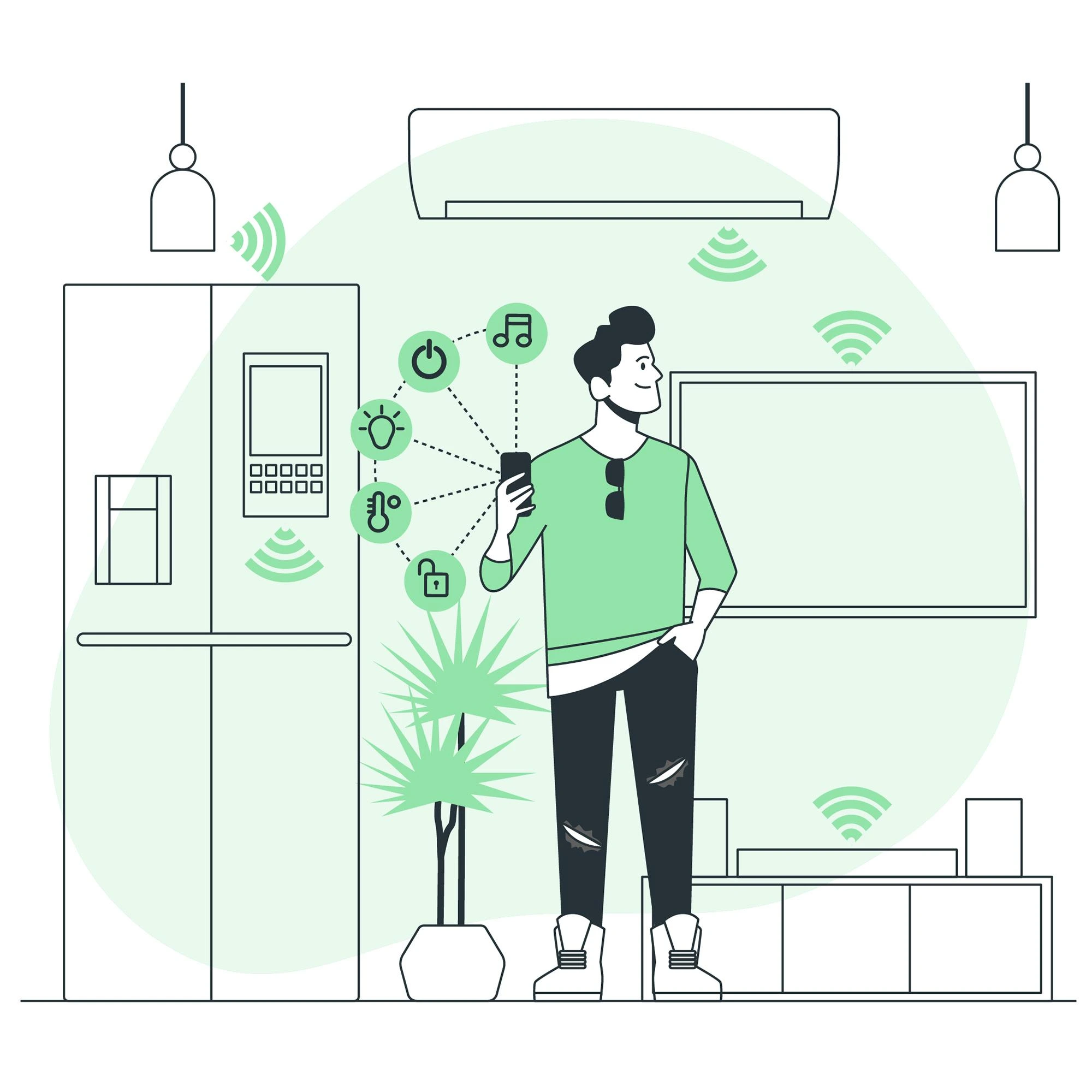
IoT software powers platforms, connects devices, and provides analytics. Here’s a clear breakdown of the main cost components:
Activities: Device management, cloud storage, backend architecture, user management, and multi-tenant support.
Cost Implication: Small platform: $20K-$50K. Medium: $50K-$120K. Enterprise-grade: $100K-$300K+.
Activities: Connecting APIs, third-party services, ERP/CRM systems, and legacy software. Ensuring seamless data flow between devices and business systems.
Cost Implication: Basic integrations: $5K-$15K. Medium complexity: $15K-$40K. Enterprise-level: $30K-$100K+.
Activities: Real-time monitoring, dashboards, reporting, anomaly detection, predictive analytics for smarter decision-making.
Cost Implication: Small: $5K-$15K. Medium: $15K-$50K. Enterprise AI/ML modules: $50K-$150K+.
Activities: Encryption, authentication, access control, and compliance with GDPR, HIPAA, or industry-specific standards.
Cost Implication: Small projects: $2K-$5K. Medium: $5K-$15K. Enterprise: $20K-$50K+.
Activities: Bug fixes, cloud optimization, software updates, scaling infrastructure, and monitoring performance.
Cost Implication: Typically, 15%-25% of the software development cost annually.
| Small | $35,000 – $85,000+ | Basic platform, limited integrations, simple analytics, etc. |
| Medium | $85,000 – $150,000+ | Multiple integrations, moderate analytics, security compliance, etc. |
| Enterprise | $100,000 – $500,000+ | Full-scale platform, AI/ML modules, enterprise-grade security, multi-tenant support, etc. |

IoT systems rarely operate in isolation. Most projects require integration with existing enterprise systems, third-party APIs, or multiple device platforms:
Connecting with ERP, CRM, or SCM systems allows businesses to act on IoT data. Complexity depends on legacy systems, API availability, and data formats.
Costs can range from $10K for simple integrations to $50K+ for enterprise-grade multi-system connectivity.
Weather, location, or analytics APIs may charge per request or per month. Development effort is needed to ensure reliability, security, and failover handling.
Supporting multiple device types, protocols, and OS requires additional middleware, testing, and QA.
For example, a smart manufacturing platform that integrates machine sensors, predictive maintenance algorithms, and ERP data may spend $30K–$100K just on integration efforts before the platform can deliver actionable insights.
When teams estimate IoT development cost, they usually focus on building the system — devices, dashboards, and connectivity.
The actual financial pressure starts after the first version is ready.
These hidden cost layers often reshape the total investment.
Smart planning can significantly reduce IoT development costs without compromising quality. Here’s how to approach it:

Timelines depend on what you’re building. A simple IoT app that connects to a few sensors or wearables can be developed in around 3–4 months, including testing. But once you move into industrial or enterprise IoT, where devices, data pipelines, and analytics come into play, the timeline expands. Expect anywhere between 6 to 12 months for a full-scale rollout. The real factor is how many integrations and data flows your system manages. Planning and early prototyping can speed things up without compromising quality.
Development cost varies significantly based on team location. Engineering rates differ across regions, which directly affects total project cost. Many businesses balance cost and quality by working with offshore or hybrid teams while keeping architecture and strategy aligned with business goals.
Testing and quality assurance typically account for 15–25% of the total IoT development cost. This includes device testing, connectivity validation, performance checks, and real-environment simulation. Costs increase when systems operate in critical environments where reliability is essential.
Scaling an existing IoT system can cost anywhere from 30% to 100% of the initial development cost, depending on how the system was designed. Systems built without scalability in mind often require architectural changes, making expansion more expensive than expected.
Post-deployment costs include cloud usage, system monitoring, updates, support, and infrastructure scaling. These recurring costs can form a significant portion of total IoT investment over time, especially in large-scale deployments.
1️⃣ IoT (Internet of Things): A network of connected devices that collect, send, and act on data via the internet. Examples include smart home devices, wearables, industrial sensors, and enterprise platforms.
2️⃣ IoT App Development: The process of building mobile or web applications that interact with IoT devices, including dashboards, mobile apps, and alerts.
3️⃣ IoT Software Development: Building the backend, cloud platforms, analytics modules, and device management systems that power IoT solutions.
4️⃣ Consumer IoT: IoT solutions for individual users, like smart home gadgets, fitness trackers, or wearables.
5️⃣ Industrial IoT (IIoT): IoT solutions are used in industries such as manufacturing, supply chain, energy, and logistics for monitoring and optimization.


 17 mins
 "*" indicates required fields

5432 Geary Blvd, Unit #527 San Francisco, CA 94121 United States
320 Decker Drive Irving, TX 75062 United States

6d-7398 Yonge St,1318 Thornhill, Ontario, Canada, L4J8J2

71-75 Shelton Street, Covent Garden, London, United Kingdom, WC2H 9JQ

Hohrainstrasse 16, 79787 Lauchringen, Germany

12, Zugerstrasse 32, 6341 Baar, Switzerland

5th floor, Bloukrans Building, Lynnwood Road, Pretoria, Gauteng, 0081, South Africa

12th & 13th Floor, B Square-1, Bopal – Ambli Road, Ahmedabad – 380054
B/305A, 3rd Floor, Kanakia Wallstreet, Andheri (East), Mumbai, India




 Talk to Our
Consultants
Talk to Our
Consultants Chat with
Our Experts
Chat with
Our Experts Write us
an Email
Write us
an Email

