



Skip to content

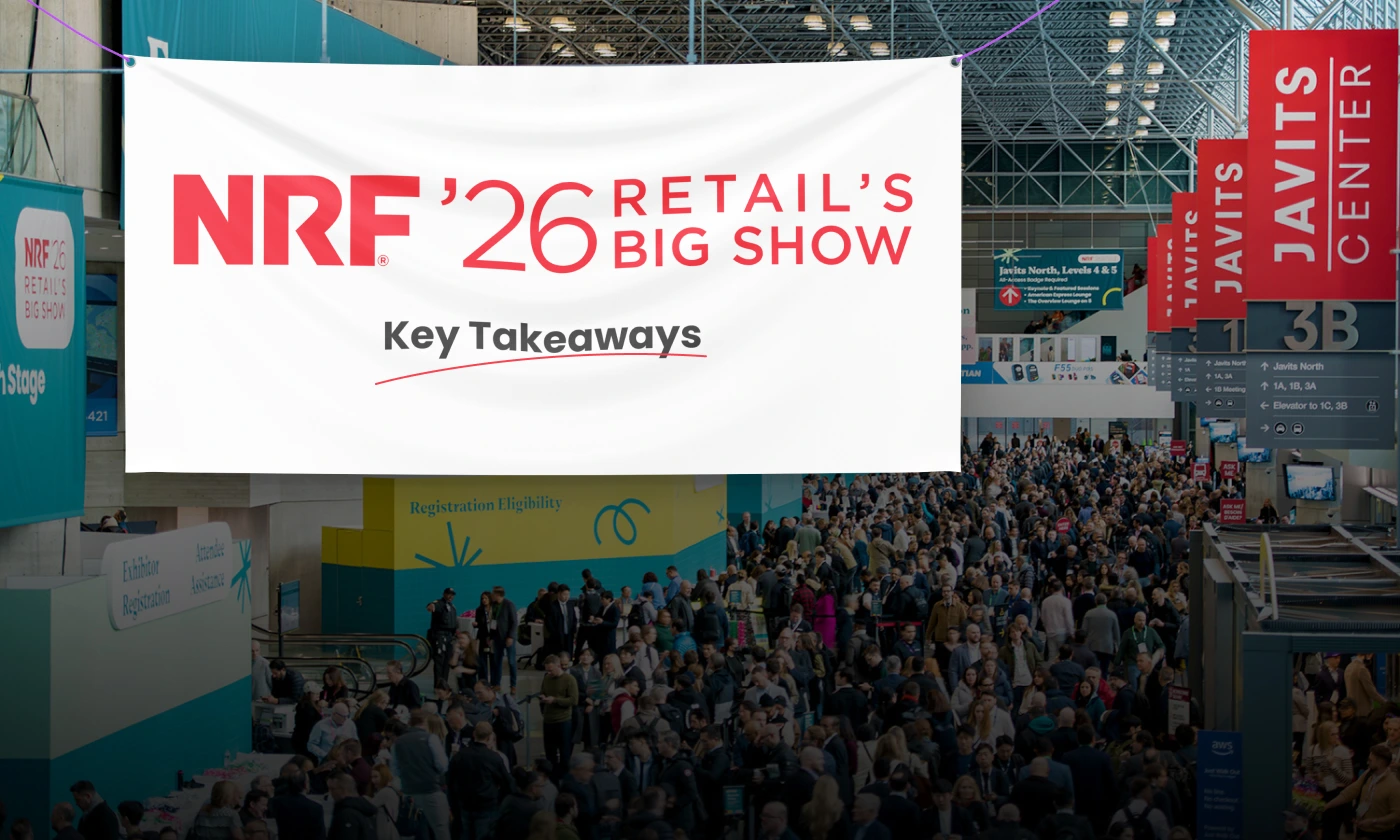
Three Days at NRF 2026 and Retail Quietly Changed Forever

Featured Image

January in New York usually delivers cold winds and early sunsets.

At NRF 2026: Retail’s Big Show, it delivered something more exciting. A sense that the future of retail is already taking shape right in front of us.

When we stepped into the Javits Center last week, the first thing that hit us wasn’t the gadgets or the buzzwords. It was the energy of practitioners and operators, people trying to figure out how to make all the shiny ideas actually work for their customers, employees, and bottom lines.

For Azilen, with over a decade spent building and scaling retail technology, NRF 2026 felt less like a spectacle and more like a turning point.

Here’s what we experienced, through the lens of real discussions, real systems, and real questions that will define the next chapter.

Morning Keynotes That Set the Tone

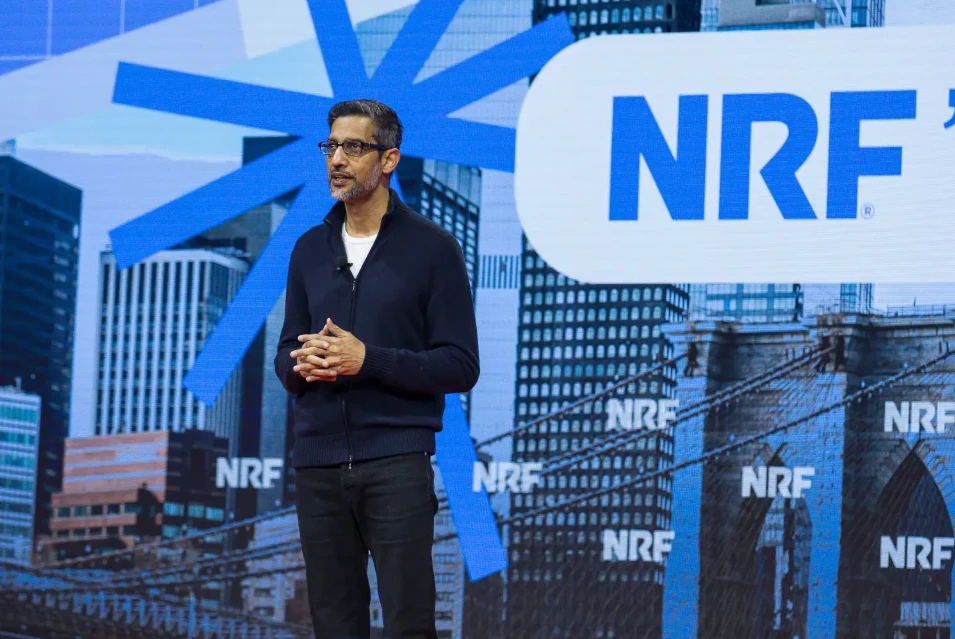
On the main stage, Sundar Pichai walked out with a message that surprised no one but landed with seriousness. He framed AI not as a future promise but a shift on par with mobile and cloud. He introduced a new standard – Universal Commerce Protocol – meant to let shoppers move from discovery to purchase seamlessly across platforms and agents. This move will make commerce itself more connected and less fragmented.

Sundar Pichai, Alphabet and Google CEO at NRF 2026

Source: NRF

Chris Beckner and NRF analysts echoed this direction in trend sessions, placing AI and agentic systems at the center of 2026’s retail trajectory, not as experimental tech, but as practical tools that retailers will have to integrate over time to compete.

What Made People Pause, Ask, and Debate

At booths from established vendors to emerging startups, we saw practical demonstrations that pointed toward where retailers are investing their energy:

→ At Fujitsu’s exhibit, a checkout assistant avatar helped shoppers through self-checkout. The system pulled data from POS, loyalty, and inventory systems in real time to guide customers and alert attendants to issues such as scanning or payment exceptions.

→ Several vendors displayed smart self-checkout and autonomous retail kiosks that didn’t just scan items but adapted offers and resolved exceptions based on detection logic tied to stock and customer behavior.

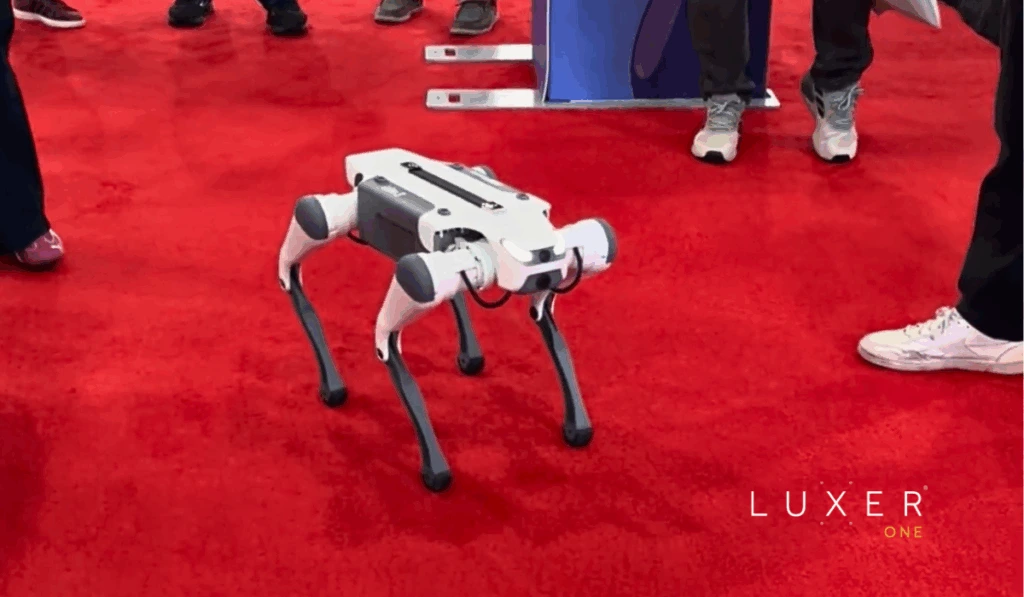
→ Robotics and automation weren’t in a back-room corner. Machines demonstrating dynamic shelving, autonomous inventory pick-and-place, and compact retail robots capable of scanning and replenishing aisles drew steady crowds because they directly targeted friction points retailers feel today.

Luxer One at NRF 2026

Source: Luxer One

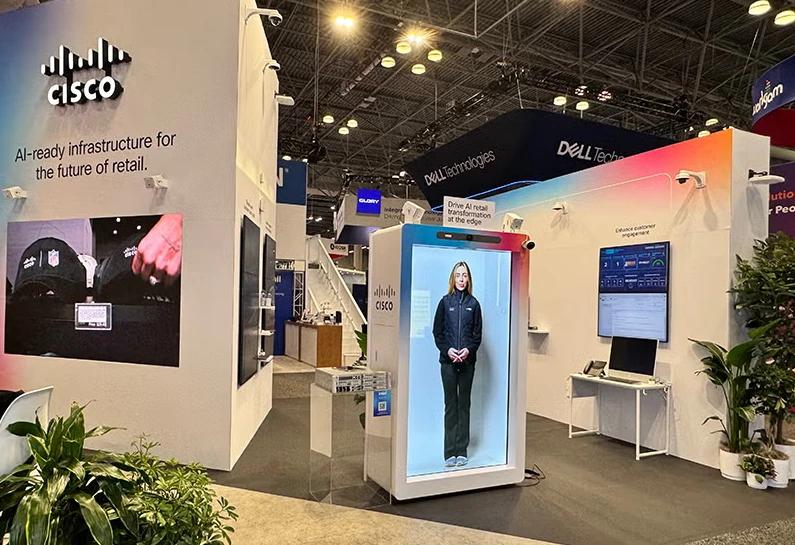
→ Across the show, holographic interfaces and digital avatars, powered by Hypervsn and Cisco, reacted to voice and visual input, not as gimmicks but as extensions of engagement models that major retailers were watching closely.

Cisco NRF 2026 Hologram

Source: Eventmarketer

6 Key Takeaways from NRF 2026 That Actually Matter for Retail Leaders

Beyond sessions and keynotes, themes spread organically through conversations, demonstrations, and the questions people asked:

1. Agentic AI Everywhere, But Execution is Still Hard

Everyone agreed that agentic AI is pervasive. Not the buzzword version, but the workload version: agents that take context from POS systems, supply chain, loyalty platforms, and then keep going.

NRF’s own trend report put this front and center – retail will have agentic AI woven into almost every operational and customer touchpoint this year.

But the majority of the discussion wasn’t about piloting. It was about “from which use cases to begin and how to scale responsibly.”

In short, technology alone isn’t the problem. Organizational clarity about what to automate and what to elevate still is.

2. Customer and Employee Experience Remain Top Priorities

Retail leaders kept circling back to two questions:

→ How does this improve frontline work?

→ How does this improve customer experience?

In luxury and mass retail alike, the answer to both wasn’t a single agent or chatbot, but thoughtful design that knits technology into existing workflows. That’s what creates systems people are willing to rely on, and that’s where Azilen’s roots in retail execution give perspective.

3. Physical Stores Aren’t Dead, They’re Competing On Experience

Part of the NRF retail trend report pointed to renewed mall traffic and experiential spaces.

Many sessions emphasized that physical retail wasn’t being replaced; it was being reinvented. Stores are now dynamic experience hubs where data, edge computing, real-time inventory, and customer context converge.

Retailers shared real scenarios where in-aisle decision support and intelligent displays respond live to shoppers’ needs based on history and behavior.

4. Employee Augmentation is Gaining Attention

Retail leaders, including those at NRF panels, emphasized that agentic systems must be partners, not replacements. At one session on personalization and customer service, the focus wasn’t on reducing headcount. It was on giving associates context they can act on, fast.

That mirrors another insight from NRF: systems that free people to focus on high-value decisions are where early ROI shows up. This is a lesson Azilen has lived through multiple retail digital transformations, from store platforms to supply systems, and it surfaces again with intelligent agents.

5. Data Quality is Now a Competitive Advantage

Behind every agentic system talk was a practical truth: data needs to be clean, consistent, and accessible. Systems that can act with context, whether for inventory, pricing, or personalization, depend on disciplined data foundations.

NRF conversations highlighted how strong data quality isn’t a technical detail, it’s a retail advantage.

6. Supply Chain Talks Shifted Toward Agility and Resilience Enabled by AI

Conversations highlighted how AI helps supply chains respond quickly to changing demand and move products efficiently.

Retailers shared examples of systems that predict what’s needed, adjust plans in real time, and keep stores and warehouses running smoothly.

The focus was on making operations faster, smarter, and more reliable, so customers get what they want when they want it.

Where Retail Leaders Looked for Clarity

If there was one thing every executive spoke about, it wasn’t excitement. It was uncertainty about deployment:

→ How do we prioritize where agentic capabilities go first?

→ How do we integrate them with existing systems without disruption?

→ How do we measure impact without inflated expectations?

These questions came up in sessions, over coffee, and in rapid exchanges on the expo floor.

They’re the same questions we get from teams doing real retail work – teams who want value delivered rather than technology for its own sake.

What It Means in Practice

After nearly twenty years working inside retail technology, from early POS modernization projects to today’s intelligent systems, one thing has become clear: the gap between idea and execution is where most transformations stall.

Here’s what “means something in practice” looks like from where we stand:

1. Start with a real business rhythm

2. Tie agent capability to a defined operational outcome

3. Embed agents into existing data and process flows

4. Give humans the right control, not just authority

5. Collect measurements that matter to the business

Closing Thought

NRF 2026 wasn’t about a distant future.

It was about the present tension between what retail “can do” and what retail “must do” now.

If you were there, you’d feel that tension. You’d hear it in session rooms and in corridor conversations.

Technology is only part of the answer.

Understanding retail – how decisions get made, how customers behave, how teams operate – is where impact actually happens.

That’s the kind of retail technology work Azilen has lived for more than a decade.

And that’s what true digital transformation looks like beyond the show floor.

AI and ML Development
Ready to Move from AI Ideas to Retail Execution?
Explore our 👇

Experience NRF 2026

Watch the highlights from NRF 2026, where attendees heard from the biggest changemakers and experienced the latest innovation in retail.

Tarak Joshi
Tarak Joshi
VP - Growth

Tarak Joshi is a techno-business leader with two decade of experience driving business operations across software services, solutions, and ITES organizations. He works closely with cross-functional technology and delivery teams to improve operational effectiveness, streamline processes, and support scalable system implementations. His expertise spans strategic planning, business and technology consulting, cost optimization, process enhancement, and team development, enabling organizations to translate business goals into reliable operational outcomes.

Related Insights

GPT Mode
AziGPT - Azilen’s
Custom GPT Assistant.
Instant Answers. Smart Summaries.