1. Start With a Healthcare Problem Worth Solving
Before choosing any technology, understand what needs to change. Is it reducing hospital readmissions, monitoring patients remotely, or identifying fall risks earlier? Pick one clear clinical goal and decide how you will measure success.
2. Choose the Right Devices and Connectivity
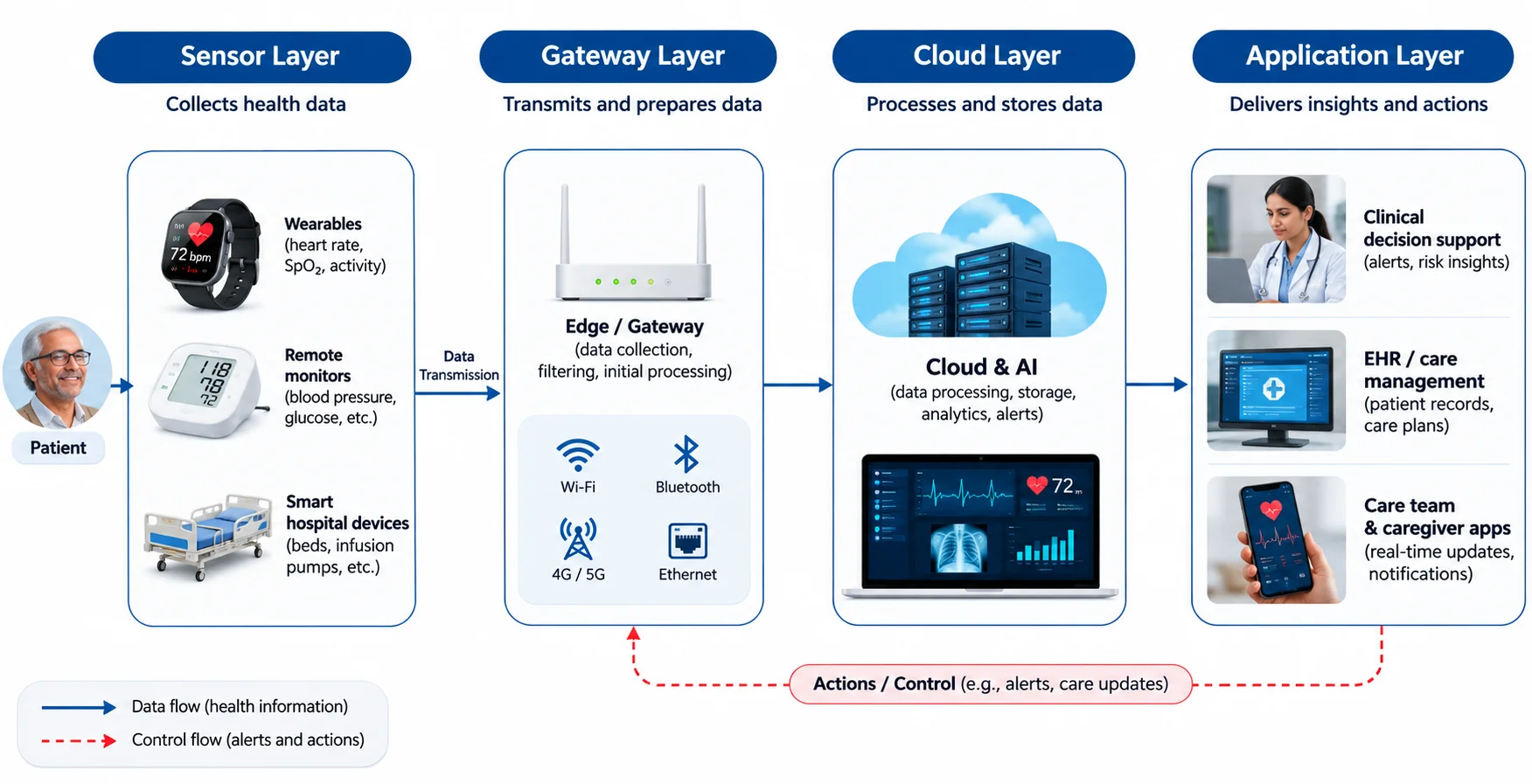
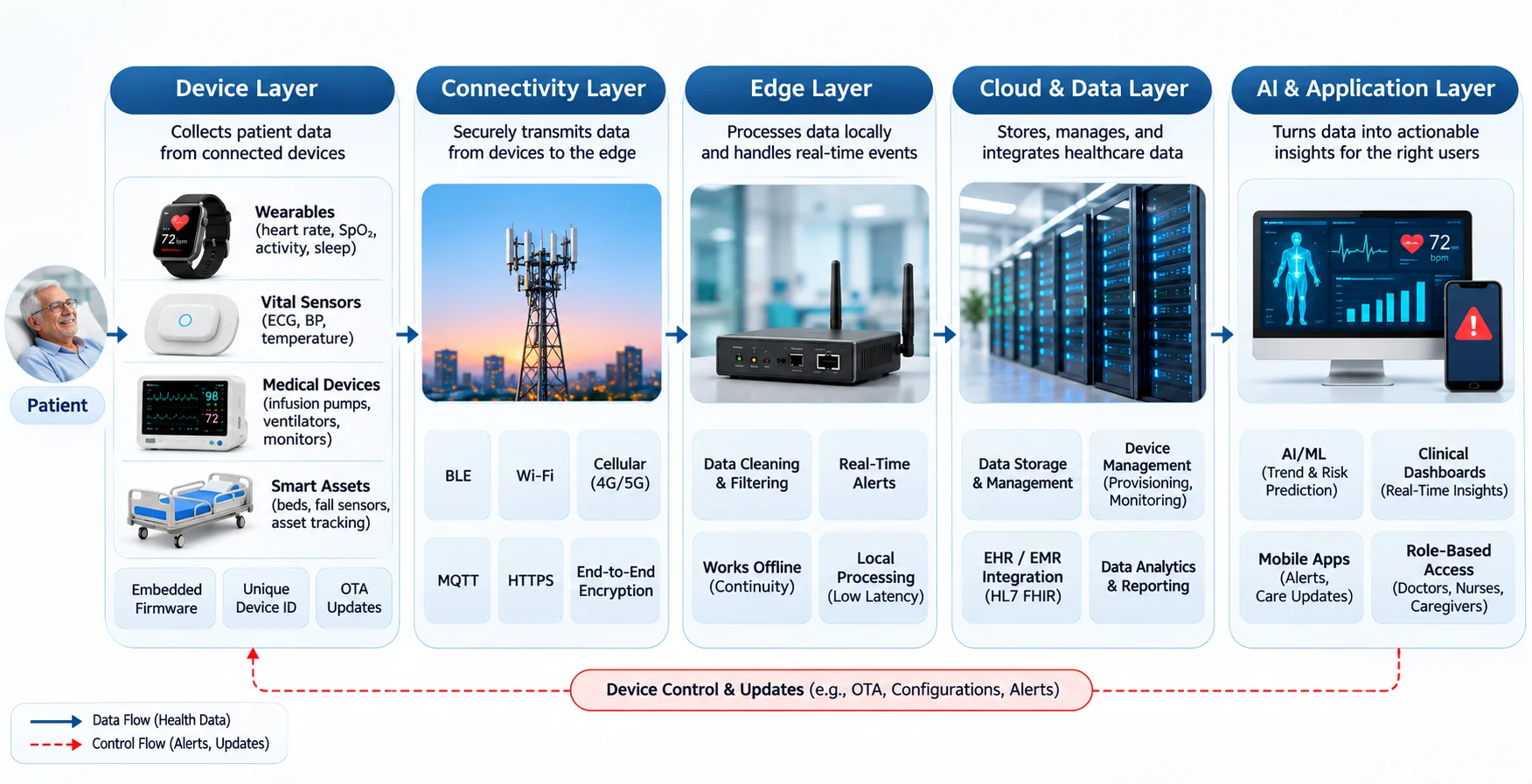
Once the goal is clear, identify the devices that can help achieve it. These could include wearable health monitors, smart sensors, or connected medical equipment. Also, decide how they will communicate through Bluetooth Low Energy (BLE), Wi-Fi, or cellular networks.
3. Plan the Architecture and Security
Think about where the collected data will go, how it will be processed, and who will have access to it. Plan the cloud infrastructure, user permissions, and data encryption from the beginning rather than treating security as an afterthought.
4. Build a Small Pilot Before Going Big
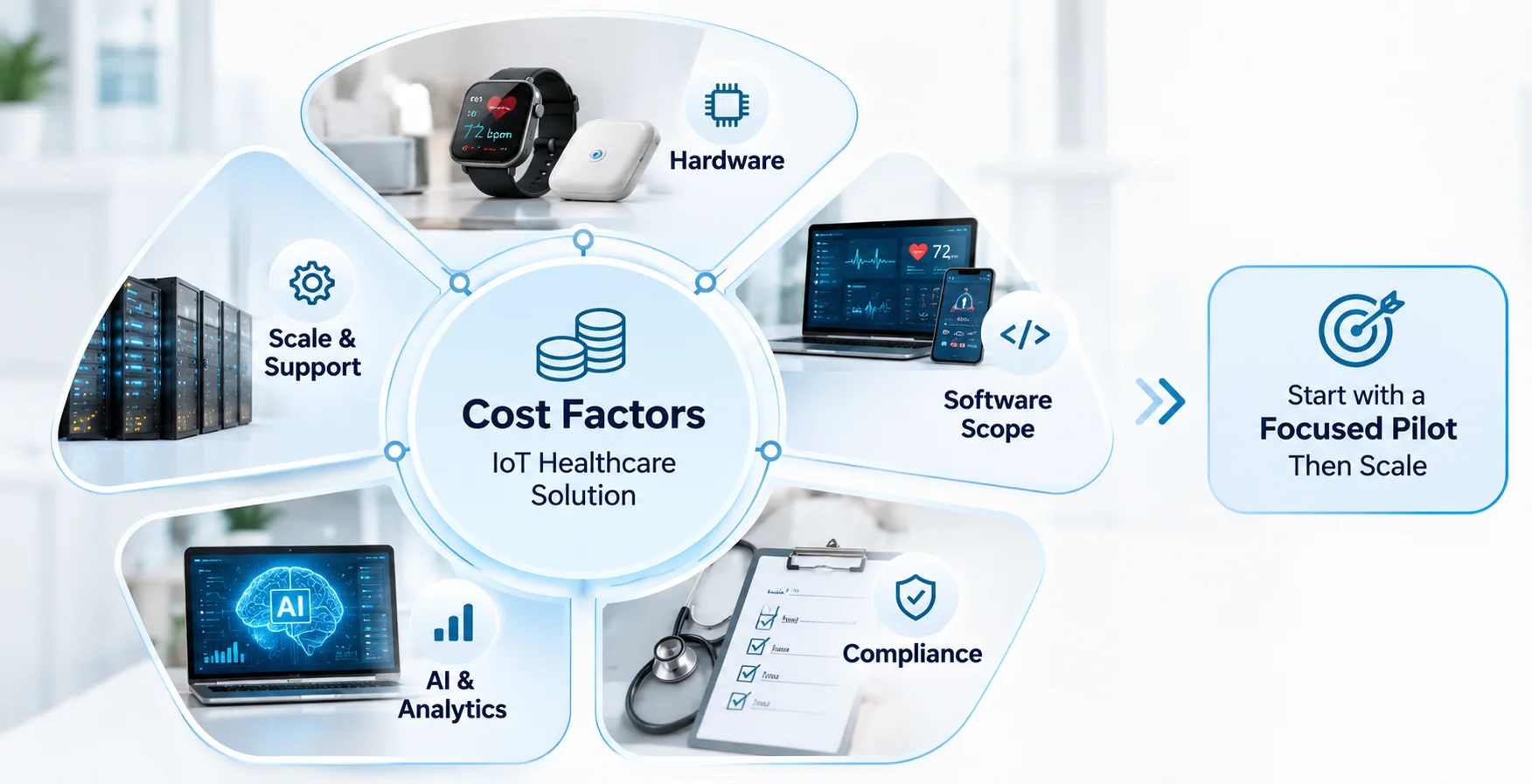
You don’t need to connect an entire hospital on day one. Start with a limited number of devices or patients. Let doctors and nurses use the system, observe how it performs, and collect their feedback before expanding.
5. Test the System and Meet Regulatory Requirements
Healthcare data leaves little room for mistakes. Test device accuracy, system reliability, and cybersecurity. Also, identify the applicable requirements, including HIPAA, GDPR, and medical device regulations, depending on your location and use case.
6. Scale, Monitor, and Keep Improving
Once the pilot delivers the expected results, gradually expand the solution. Monitor device performance, maintain software updates, review alerts, and improve the system as healthcare needs evolve. An IoT healthcare project is not a one-time implementation; it requires continuous attention.










 14 mins






 Talk to Our
Consultants
 Chat with
Our Experts
 Write us
an Email