


Skip to content

Computer Vision in Sports Training: The Winning Edge for Athletes

Featured Image

Every four years, the Olympics captures the world’s attention.

Athletes push their bodies and minds to the absolute limit in a breathtaking display of dedication, skill, and raw talent.

Beyond the competition, the Olympics continues to accelerate innovation across the sports industry.

One technology that keeps gaining momentum is computer vision.

From athlete training and officiating to fan experiences and broadcast enhancements, computer vision has become part of modern sports infrastructure.

The lessons from Tokyo 2020 expanded further through Paris 2024, where AI-powered video analysis, automated officiating, and performance tracking became even more prominent.

Computer vision in Olympics 2020

Source

Computer Vision in Sports Training: How Does it Work?

Okay. So, it’s pretty fascinating stuff.

Computer vision combines high-speed cameras, AI models, and video analytics to understand athlete movements with remarkable precision.

Here’s how the process typically works.

1. Image and Video Capture

High-speed, high-resolution cameras capture detailed movement data.

These systems may include:

  • RGB cameras
  • Depth cameras
  • Infrared cameras
  • Multi-camera motion capture setups
  • Edge-enabled smart cameras for real-time analysis

Video-based human pose detection and tracking

Source

2. Preprocessing

Before analysis begins, the system cleans and stabilizes the footage.

Common techniques include:

  • Gaussian blur
  • Median filtering
  • Digital image stabilization
  • Background subtraction using Mixture of Gaussians (MOG2)
  • K-Nearest Neighbors (KNN) segmentation

These steps improve detection accuracy before AI models begin tracking movements.

3. Feature Extraction

The system identifies important visual patterns from each frame.

Traditional approaches still include:

  • SIFT (Scale-Invariant Feature Transform)
  • SURF (Speeded-Up Robust Features)
  • ORB (Oriented FAST and Rotated BRIEF)

Modern systems increasingly combine these with deep neural network-based feature extraction for greater accuracy across different lighting conditions and camera angles.

4. Pose Estimation

Pose estimation maps the athlete’s body into digital keypoints that represent joints and body positions.

Several approaches are widely used.

1. OpenPose:

Utilizes a multi-stage CNN to detect key points and connect them to form a human skeleton.

OpenPose

Source

2. DeepPose:

A deep learning-based approach using a cascade of CNNs to regress key point coordinates directly.

DeepPose

Source

3. AlphaPose:

An advanced system that improves upon OpenPose.AlphaPose

Source

4. PoseTrack:

Designed specifically for multi-person pose estimation in videos.

Posetrack

Source

5. Tracking and Motion Analysis

After detecting body positions, the system analyzes movement over time.

Common techniques include Optical Flow, Lucas-Kanade tracking, Farneback, Optical Flow, Kalman Filters, SORT, DeepSORT, and ByteTrack for high-speed player tracking.

DeepSORT

Source

6. Action Recognition and Pattern Analysis

Recognizing complex sports actions requires temporal AI models.

Today’s systems use:

  • LSTM networks
  • 3D Convolutional Networks (C3D)
  • Transformer-based video models
  • TimeSformer architectures

These models identify movements like tennis serves, baseball swings, football tackles, golf swings, and sprint mechanics.

7. Data Integration and Feedback

The final step combines multiple data sources into actionable insights.

Modern platforms merge:

  • Video analysis
  • Wearable sensor data
  • GPS tracking
  • Force plate measurements
  • Heart rate data

Coaches receive visual dashboards with movement comparisons, fatigue indicators, and personalized recommendations almost instantly.

Practical Applications of Computer Vision in Sports Training

Computer vision gives athletes and coaches some seriously valuable insights and tools to help them improve their level of training.

1. Injury Prevention

Instead of only relying on post-game analysis, teams now use computer vision to identify risky movement patterns during training.

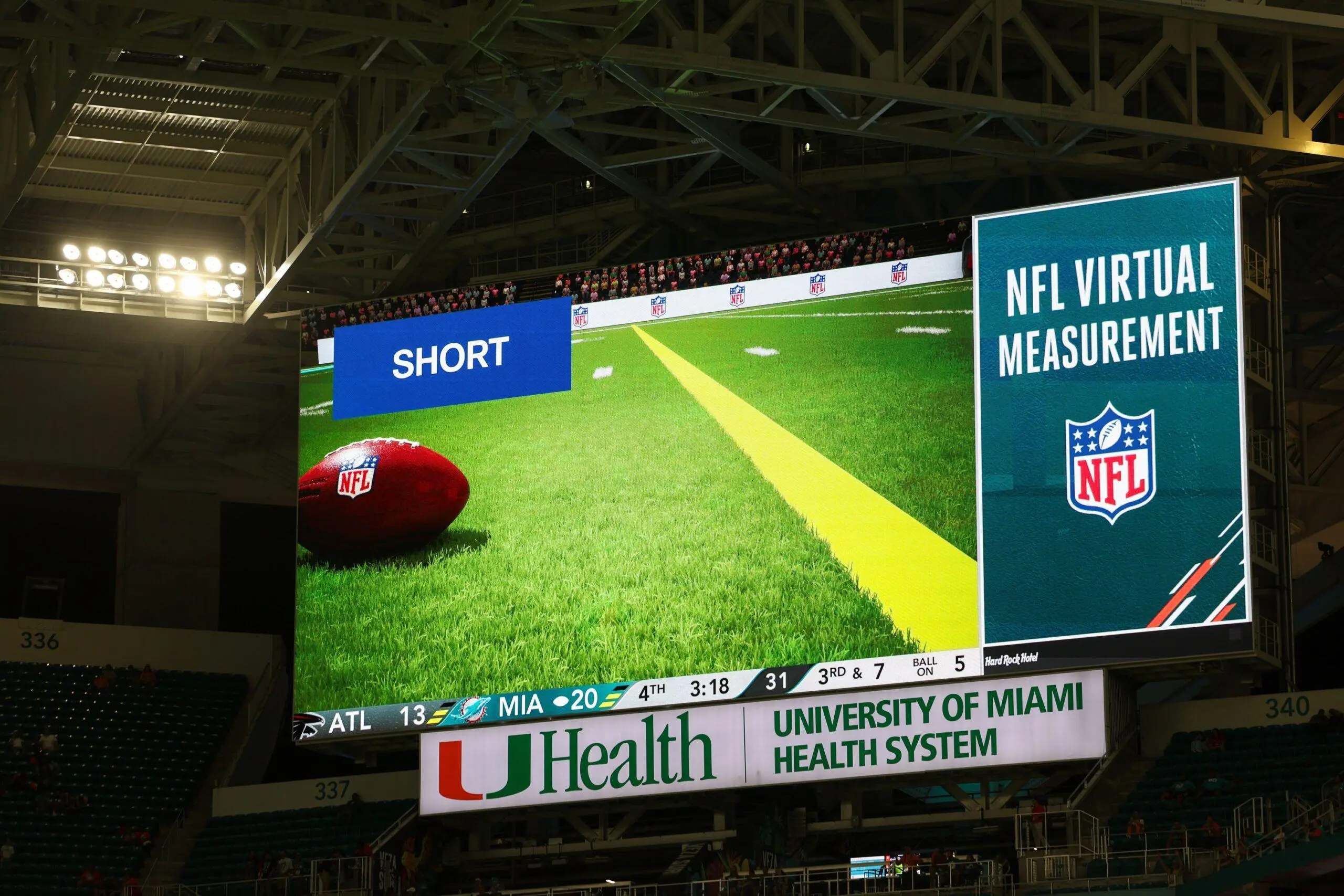
Real-World Example: NFL + Hawk-Eye Virtual Measurements

The NFL expanded Hawk-Eye’s computer vision technology to replace traditional chain measurements with virtual first-down measurements.

The same high-speed optical tracking infrastructure also gives teams precise player movement data that supports workload monitoring and injury-risk analysis throughout the season.

NFL + Hawk-Eye Virtual Measurements

Source

2. Technique Analysis and Biomechanics

Computer vision analyzes movement frame by frame to help athletes refine technique with measurable feedback.

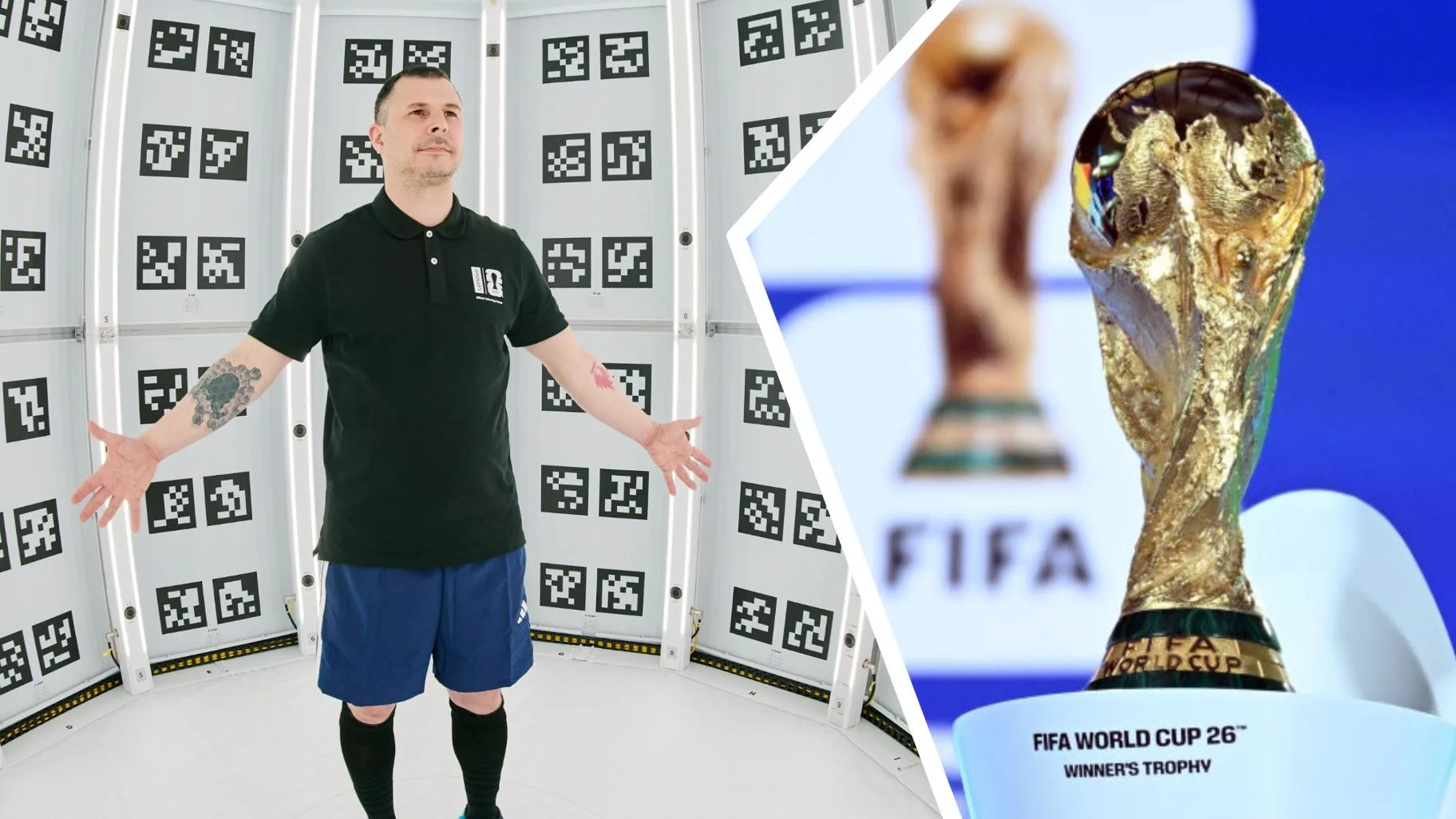
Real-World Example: FIFA World Cup 2026 Player Digital Twins

For the 2026 FIFA World Cup, every player received a high-precision 3D body scan that creates an AI-powered digital twin.

Combined with multi-camera pose estimation, coaches and officials gain far more accurate movement tracking during high-speed play, showing how elite sports now rely on computer vision for detailed biomechanical analysis.

FIFA World Cup 2026 Player Digital Twins

Source

3. Motion Capture

Computer vision-powered motion capture systems can now analyze an athlete’s biomechanics without requiring motion-capture suits or reflective markers.

Coaches use these insights to refine technique, monitor fatigue, and improve movement efficiency.

Real-World Example: GreenEDGE Cycling + ai.io’s 3DAT

In 2026, GreenEDGE Cycling, the organization behind the Jayco AlUla teams, partnered with ai.io to integrate its 3DAT markerless motion capture technology into athlete development.

The platform converts ordinary training videos into detailed biomechanical analysis, helping coaches evaluate riding posture, pedaling mechanics, and movement efficiency while supporting injury prevention and personalized training plans.

4. Real-Time Performance Feedback

By analyzing movements in real time, computer vision systems provide instant feedback during training and competition.

Athletes can correct technique immediately instead of waiting for post-session video reviews.

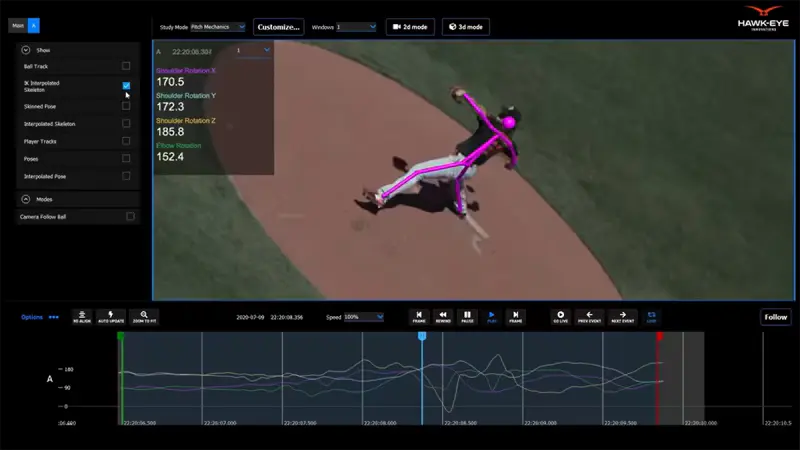
Real-World Example: Hawk-Eye SkeleTRACK

Hawk-Eye’s SkeleTRACK captures 29 skeletal points for every athlete in real time using multi-camera computer vision.

The system generates frame-by-frame movement data, detects sport-specific actions like kicks, throws, and catches, and delivers live insights for coaches, broadcasters, and performance analysts.

Hawk-Eye SkeleTRACK

Source

5. Rehabilitation and Return-to-Play

Computer vision helps athletes recover with measurable progress instead of relying solely on manual assessments.

AI tracks joint movement, gait patterns, and range of motion to compare recovery against baseline performance.

Real-World Example: Kitman Labs + Elite Sports Organizations

Kitman Labs uses AI-powered movement analysis and performance data across professional sports organizations to help medical and performance teams monitor rehabilitation progress, manage workloads, and make more informed return-to-play decisions.

6. Talent Identification and Scouting

Computer vision allows coaches and scouts to evaluate athletes through video-based performance analysis, making talent assessment faster and more objective.

Real-World Example: FIFA Talent Development Scheme

Through FIFA’s Talent Development Scheme, AI-assisted video analysis and performance data help identify promising players across different regions, giving coaches richer insights into movement quality and technical development.

7. Tactical and Team Strategy Analysis

Computer vision helps coaches understand how players move as a unit, revealing patterns that are difficult to spot during live play.

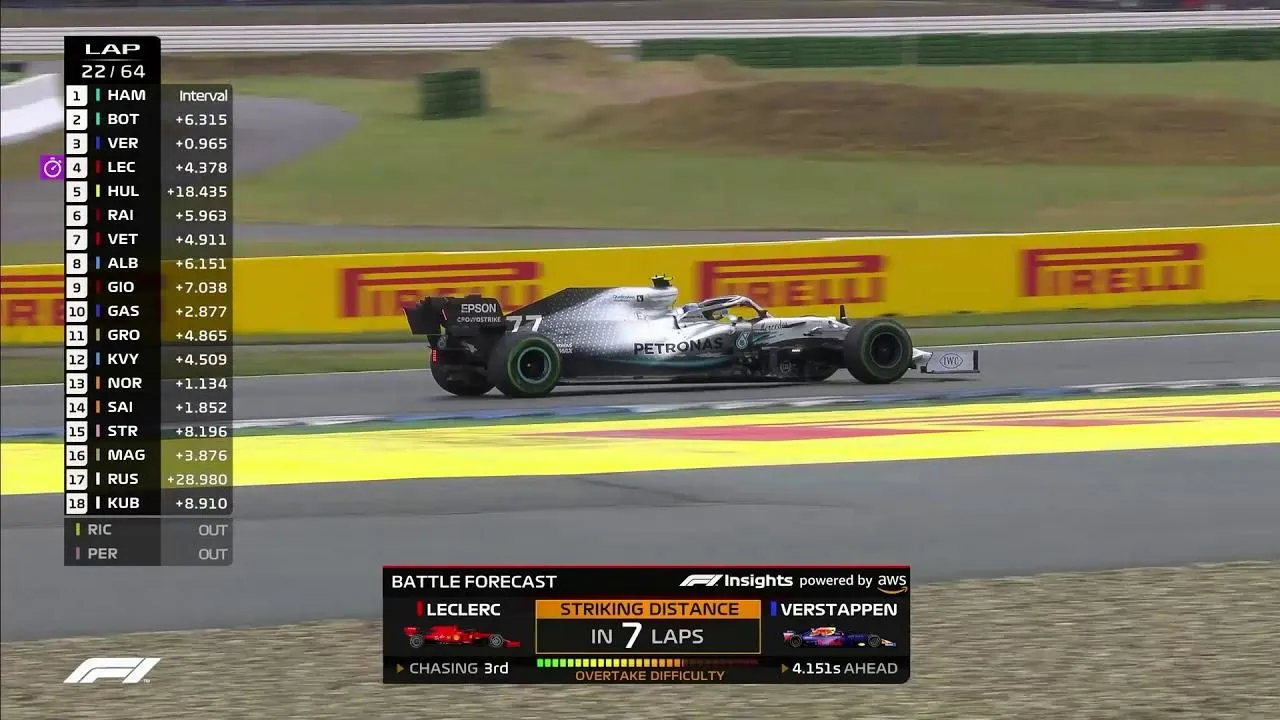
Real-World Example: Formula 1 Vision AI

Formula 1 teams continue using AI-powered computer vision alongside telemetry and onboard video to analyze racing lines, corner entry, tire behavior, and driver performance, helping engineers make faster strategic decisions during race weekends.

Formula 1 Vision AI

Source

8. Automated Officiating and Decision Support

Computer vision has changed officiating by helping referees make faster and more accurate decisions during high-pressure moments.

Instead of relying solely on human observation, AI-powered camera systems analyze player positions, ball movement, and on-field incidents from multiple angles in real time.

Real-World Example: FIFA Video Assistant Referee (VAR)

By 2026, FIFA’s Video Assistant Referee (VAR) has evolved into one of the most advanced computer vision systems in professional football.

The technology combines multiple high-speed cameras, AI-powered player tracking, and connected-ball sensors to review offside calls, handball incidents, penalty decisions, and goal-line situations with greater precision.

During the 2026 FIFA World Cup, these enhancements reduced review times while giving referees more accurate visual evidence to support final decisions.

The Technology Stack Behind Computer Vision in Sports Training

Behind every athlete tracking system, AI referee, and performance dashboard is a technology stack that processes thousands of visual data points every second.

Modern sports computer vision platforms combine AI models, edge computing, and cloud infrastructure to deliver accurate insights with minimal latency.

1. Vision AI Models

Vision AI forms the foundation of modern sports analytics.

These models detect players, estimate body poses, segment objects, and recognize actions directly from video footage.

Today’s production systems increasingly use YOLO for object detection, MediaPipe Pose for markerless human pose estimation, and Segment Anything Model (SAM) for precise segmentation tasks.

2. Motion Analysis

Raw video becomes valuable only after movements are tracked across time.

Frameworks like OpenCV, ByteTrack, and optical flow algorithms help measure player speed, acceleration, movement efficiency, and positional changes throughout training sessions and competitions.

3. AI Model Development

Sports-specific AI models require training on large volumes of video data to recognize movements accurately across different camera angles, lighting conditions, and playing environments.

Frameworks like PyTorch and TensorFlow help teams build custom models for action recognition, biomechanics analysis, and performance prediction.

4. Edge Computing

Many coaching scenarios demand instant feedback.

Edge AI devices process video closer to the camera instead of sending everything to the cloud, reducing latency during live training sessions.

Platforms like NVIDIA Jetson and Intel Edge AI solutions have become popular choices for deploying real-time computer vision workloads in sports environments.

5. Cloud Analytics

The cloud brings together video, wearable data, GPS tracking, and historical performance records into a unified analytics platform.

Technologies like AWS, Microsoft Azure, Google Cloud, and Kubernetes help organizations scale sports analytics across teams, tournaments, and training facilities while supporting long-term performance benchmarking.

What It Takes to Turn a Sports Computer Vision Idea into a Solution?

Most organizations already know the outcome they want – player tracking, pose estimation, automated video analysis, or performance insights.

The execution challenge is connecting cameras, AI models, existing software, and coaching workflows into one reliable platform.

What Happens After the Project Starts?

A mature computer vision in sports project usually progresses through these milestones:

  • Discovery: Technical feasibility, camera strategy, and success metrics
  • Prototype: Working AI model tested on real sports footage
  • Pilot: Integration with coaching workflows and performance validation
  • Production: Scalable platform with real-time analytics and monitoring
  • Expansion: New capabilities like tactical analysis, injury prediction, and officiating support

Where Many Projects Lose Momentum

The AI model is rarely the hardest part. The real complexity comes from production engineering.

Because it requires handling multiple camera feeds, maintaining low-latency performance, working across indoor and outdoor environments, and integrating with existing sports platforms without disrupting operations.

What Experienced Teams Prioritize

Teams that reach production faster usually make a few early decisions differently.

  • Design the camera infrastructure around the sport instead of using a generic setup.
  • Validate the AI on actual training footage before scaling.
  • Build APIs that connect with existing coaching and analytics tools.
  • Plan for edge and cloud processing based on latency requirements.
  • Create a foundation that supports future capabilities without rebuilding the platform.

Lead the Winning Edge for Athletes with Our Computer Vision Expertise!

Azilen is an Enterprise AI development company.

Whether you’re building an AI-powered coaching platform, modernizing an existing analytics product, or adding real-time video intelligence to your ecosystem, we help connect every piece – from cameras and AI models to cloud infrastructure and coaching workflows.

We engineer capabilities that fit the demands of fast-moving sports environments.

✔️ Custom Computer Vision Development for athlete tracking, pose estimation, action recognition, and video intelligence.

✔️ AI Integration to add computer vision capabilities into existing coaching, analytics, or performance platforms.

✔️ Real-Time Video Processing with edge AI for low-latency training feedback.

✔️ Cloud-Native Sports Analytics that combines video, wearable, GPS, and biomechanics data into a unified platform.

✔️ Production Engineering that takes AI models from pilot environments to scalable, enterprise-ready deployments.

Bring us the use case, the challenge, or even the rough idea. We’ll help you figure out the right technical path and what it takes to turn it into a NextGen solution.

Computer Vision
Build Smarter Sports Products with Computer Vision
Explore our 👇

FAQs on Computer Vision in Sports

1. How is computer vision used in sports training?

Computer vision analyzes athlete movements through cameras and AI to improve technique, track performance, and provide real-time coaching insights. It helps coaches measure biomechanics, identify movement patterns, and make data-backed training decisions across sports like football, basketball, tennis, golf, and athletics.

2. What are the biggest benefits of computer vision for sports organizations?

Sports organizations use computer vision to improve athlete performance, reduce injury risk, automate video analysis, and gain deeper tactical insights. It also helps teams make faster decisions during training and competition while creating personalized development programs for athletes.

3. Can computer vision work with an existing sports platform?

Yes. Computer vision can be integrated into existing coaching, performance analytics, or SportsTech platforms without rebuilding the entire product. It can connect with video systems, wearables, GPS tracking, and cloud infrastructure to add AI-powered insights to current workflows.

4. How long does it take to develop a custom computer vision solution for sports?

The timeline depends on the use case, data availability, and integration requirements. A focused proof of concept can take a few weeks, while a production-ready platform with real-time analytics, cloud infrastructure, and custom AI models typically takes several months.

5. Should sports organizations build or integrate a computer vision solution?

The right approach depends on your goals. Off-the-shelf tools work well for standard analytics, while custom development makes sense when you need sport-specific AI models, proprietary performance insights, real-time processing, or seamless integration with your existing platform.

author avatar
Chintan Shah Vice President – Delivery
Chintan Shah is VP – Delivery at Azilen Technologies, specializing in enterprise solutions, digital transformation, and scalable software delivery. He focuses on driving operational excellence and high-performance technology execution.
google
Chintan Shah
Chintan Shah
Vice President - Delivery at Azilen Technologies

Chintan Shah is an experienced software professional specializing in large-scale digital transformation and enterprise solutions. As VP - Delivery at Azilen Technologies, he drives strategic project execution, process optimization, and technology-driven innovations. With expertise across multiple domains, he ensures seamless software delivery and operational excellence.

Related Insights

GPT Mode
AziGPT - Azilen’s
Custom GPT Assistant.
Instant Answers. Smart Summaries.