


 16 mins
Aug 14, 2026
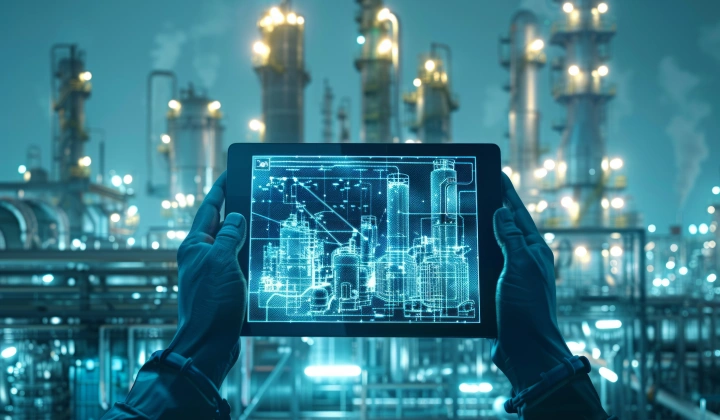
Every day, oil and gas facilities generate thousands of images and hours of video from drones, CCTV cameras, thermal sensors, and inspection robots. Yet, much of this visual data is never analyzed because reviewing it manually is simply impossible.
This is where computer vision development services in the oil and gas industry is changing the game. By turning images and video into real-time insights, AI helps detect leaks, equipment damage, safety violations, and operational risks before they become costly failures. In this guide, you’ll discover how leading energy companies are using computer vision to improve safety, reduce downtime, and make smarter operational decisions.
From upstream drilling sites to midstream pipelines and downstream refineries, computer vision in the oil and gas industry is helping companies replace manual inspections with AI-powered monitoring.
Most oil and gas companies don’t deploy computer vision across every operation at once. They typically start with one high-cost, high-risk process, such as pipeline inspections or safety monitoring, measure the results, and then expand AI across the rest of their operations.
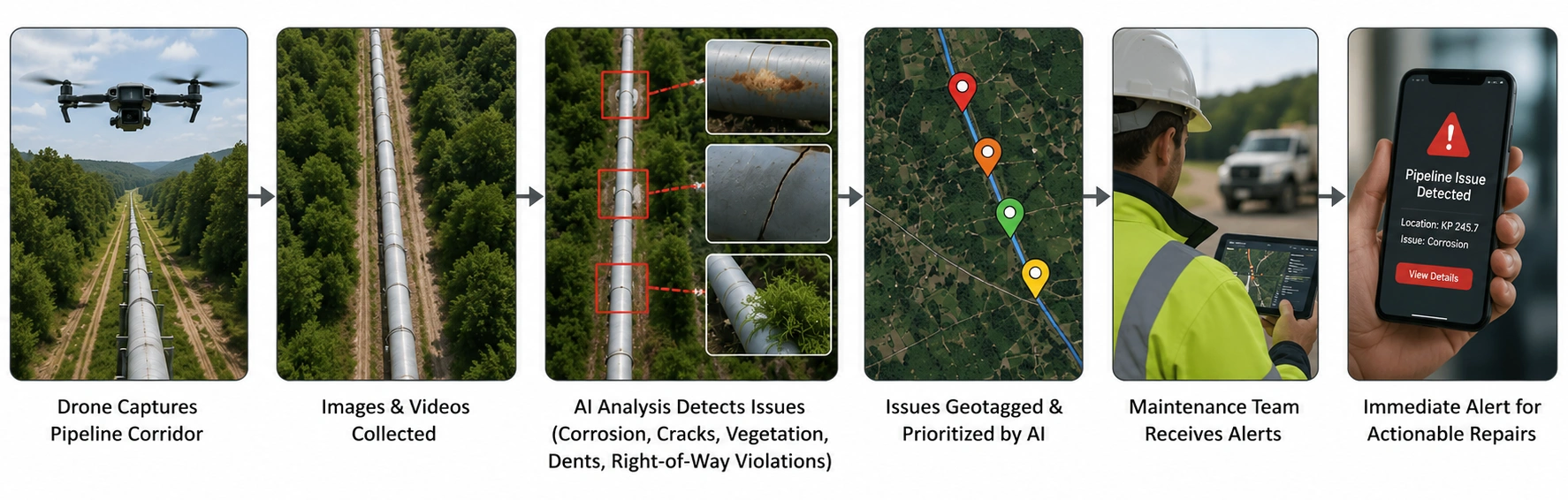
Pipelines stretch across long and often remote locations, making manual inspections slow and expensive. Computer vision in the oil and gas industry uses drones and AI-powered cameras to monitor pipeline conditions and identify issues much faster.
→ Detects corrosion, cracks, and coating damage.
→ Identifies vegetation and right-of-way violations.
→ Monitors remote pipelines without manual patrols.
→ Prioritizes repairs with AI-generated alerts.
Example: A drone captures pipeline images while AI automatically flags new cracks or corrosion. Using instance segmentation, AI can outline the exact shape and location of corroded areas, enabling maintenance teams to prioritize repairs with greater accuracy. (ultralytics)
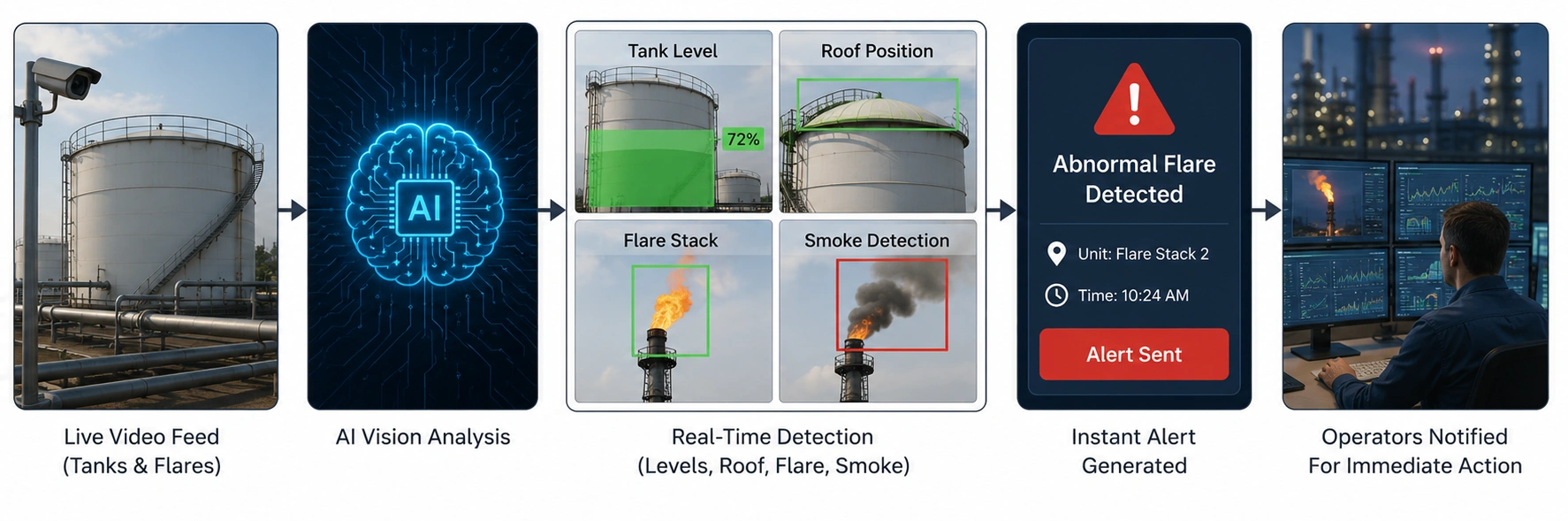
Storage tanks and flare stacks need continuous monitoring to ensure safe and efficient operations. Computer vision analyzes live video feeds and detects abnormalities in real time.
→ Tracks tank levels and roof positions.
→ Monitors flare stack performance.
→ Detects overflow and abnormal smoke.
→ Sends instant alerts to operators.
Example: AI detects an unusual flare pattern and immediately notifies operators before it affects plant operations.
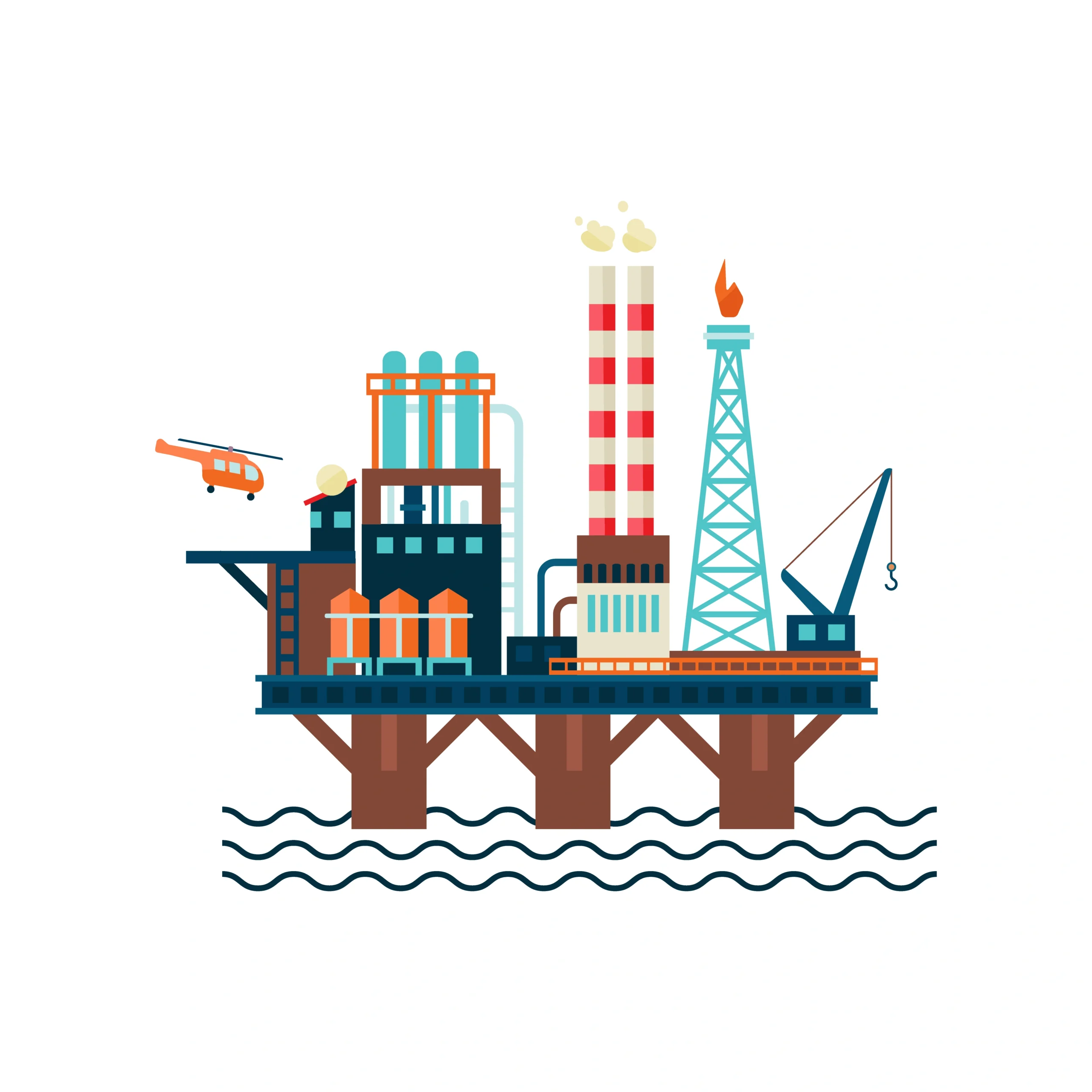
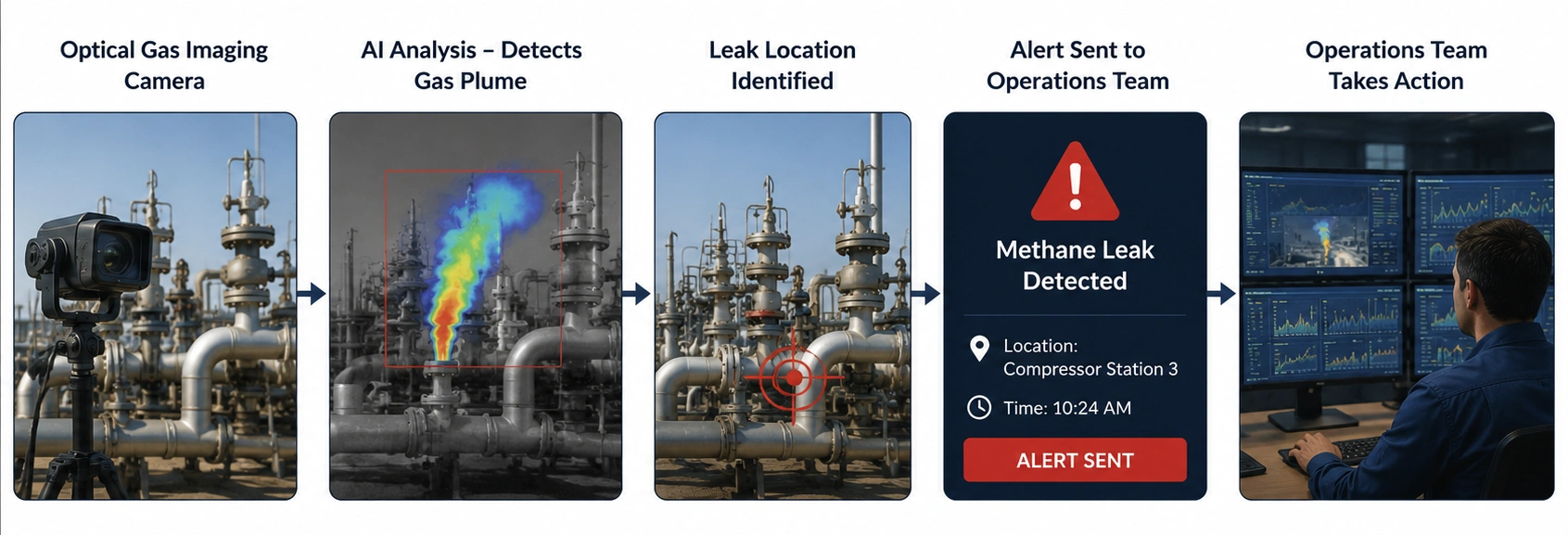
Gas leaks are often invisible, making them difficult to detect during routine inspections. Computer vision works with optical gas imaging cameras to identify leaks early.
→ Detects methane and gas plumes.
→ Monitors valves, pipelines, and compressors.
→ Pinpoints leak locations quickly.
→ Supports emissions compliance.
Example: AI identifies a methane leak at a compressor station and alerts the operations team for immediate action.
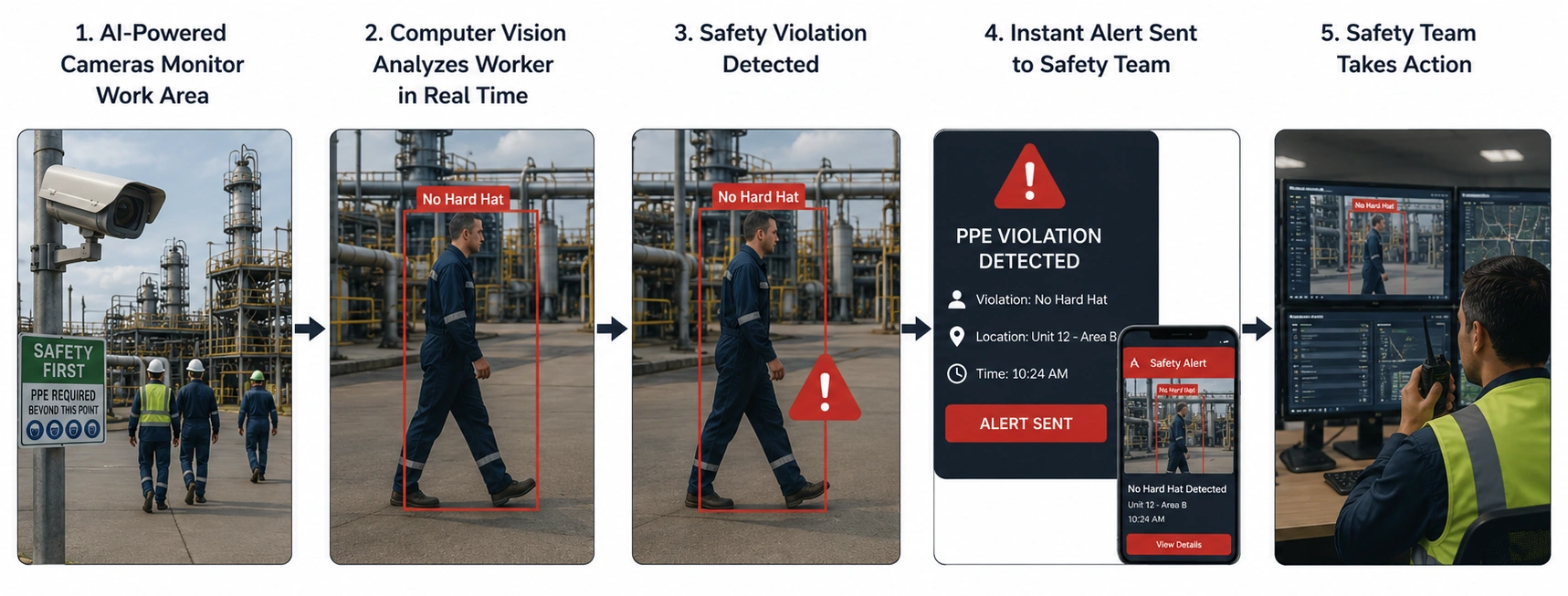
Large oil and gas sites make it difficult to manually monitor every worker. Computer vision continuously checks whether safety rules are being followed.
→ Detects missing PPE automatically.
→ Identifies restricted-area violations.
→ Monitors harness compliance.
→ Improves overall workplace safety.
Example: If a worker enters the site without a hard hat, the AI system immediately alerts the safety team.
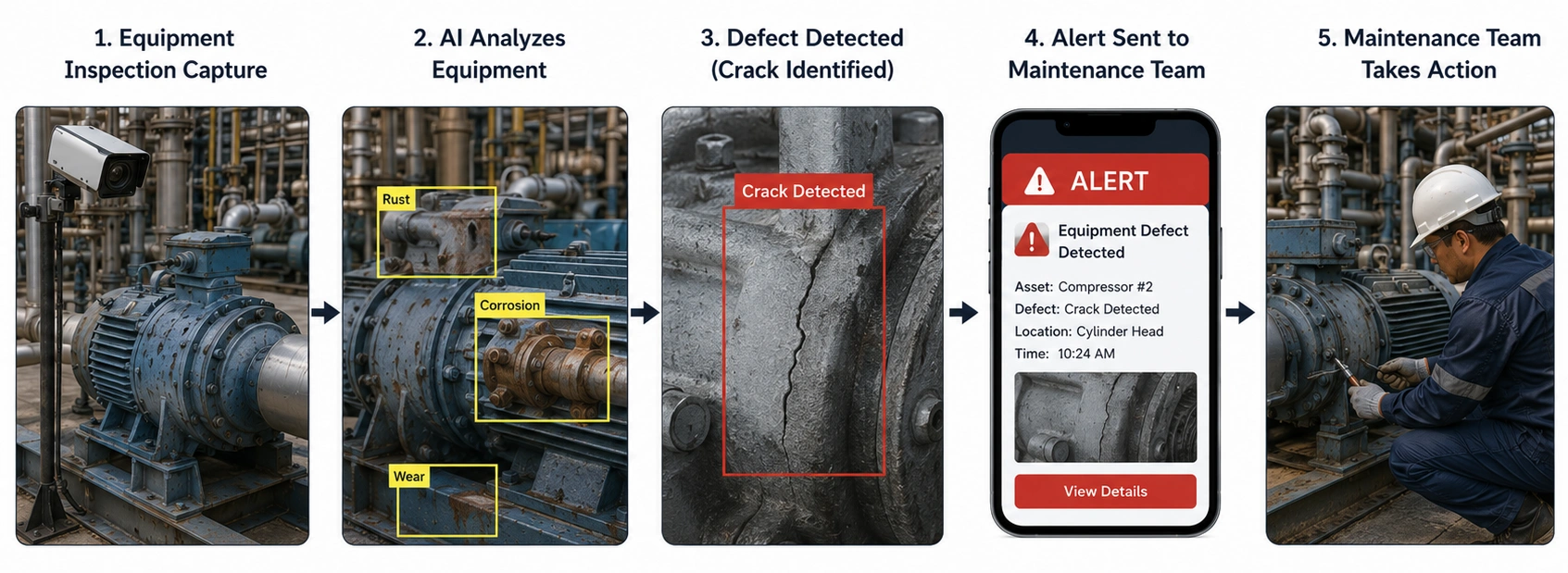
Equipment often shows small signs of wear before failing. Computer vision identifies these defects early to reduce unplanned downtime.
→ Detects cracks and corrosion.
→ Identifies rust and surface wear.
→ Monitors equipment condition.
→ Supports predictive maintenance.
Example: AI spots a crack on a compressor during inspection, allowing repairs before a breakdown occurs.
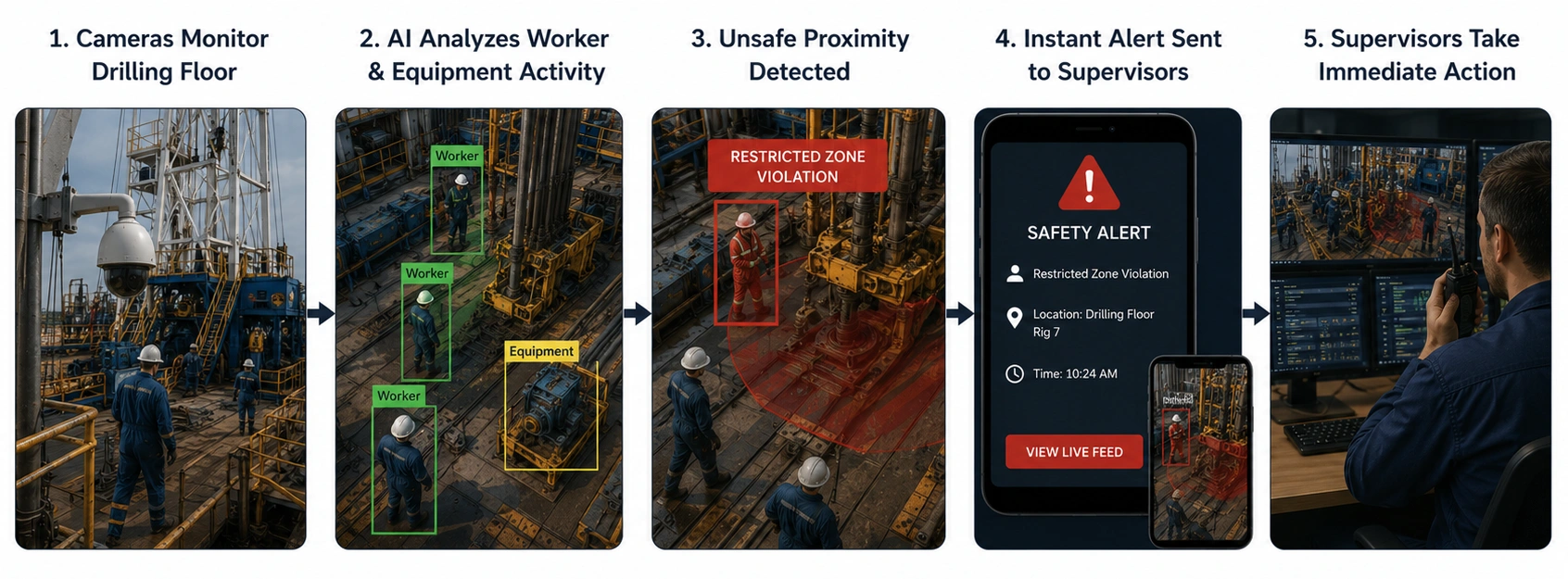
The drilling floor is one of the highest-risk areas in oil and gas operations. Computer vision helps monitor workers and equipment in real time.
→ Tracks worker movement.
→ Detects unsafe equipment proximity.
→ Monitors drilling activities.
→ Reduces near-miss incidents.
Example: AI detects a worker entering a restricted drilling zone and immediately alerts supervisors.
Deploying computer vision in the oil and gas industry is about more than building an AI model. Success depends on integrating AI with existing operations, ensuring reliable performance in harsh environments, and delivering insights that field teams can actually act on.
That’s why Azilen follows a structured implementation approach that minimizes risk and accelerates enterprise adoption.
While the benefits of computer vision in the oil and gas industry are significant, implementing it successfully requires more than deploying cameras and AI models.
Oil and gas operations involve harsh environments, aging infrastructure, and complex industrial systems that can make AI adoption challenging. Understanding these challenges early helps organizations build solutions that are reliable, scalable, and deliver measurable business value.
| Challenge | Why It Matters | Best Practice |
|---|---|---|
| Limited Training Data | AI models require high-quality images to accurately detect defects, leaks, and safety violations. Limited or poor-quality data reduces model accuracy. | Build datasets using real operational images and continuously retrain AI models with new field data. |
| Legacy Infrastructure | Many facilities still rely on older equipment, analog gauges, and legacy SCADA systems that were not designed for AI integration. | Use APIs, edge gateways, and industrial connectors to integrate computer vision without replacing existing infrastructure. |
| Harsh Operating Conditions | Dust, rain, fog, vibration, poor lighting, and extreme temperatures can affect camera performance and image quality. | Deploy industrial-grade cameras and AI models trained to perform reliably under challenging environmental conditions. |
| Remote Site Connectivity | Offshore platforms and remote pipelines often have limited or unreliable internet connectivity. | Use edge AI to process images locally and synchronize results with the cloud when connectivity becomes available. |
| False Positives | Too many unnecessary alerts reduce operator confidence and slow response times. | Continuously validate AI models with operational data and fine-tune detection thresholds to improve accuracy. |
| Enterprise Scalability | A successful pilot does not automatically scale across multiple facilities and enterprise operations. | Design a scalable architecture that supports centralized monitoring, governance, and AI model management. |
As AI continues to mature, computer vision in the oil and gas industry will evolve beyond automating inspections. The next generation of AI systems will combine visual intelligence with operational data, enabling faster decision-making, greater automation, and more resilient energy operations. The future isn’t just about seeing what’s happening—it’s about understanding what will happen next.
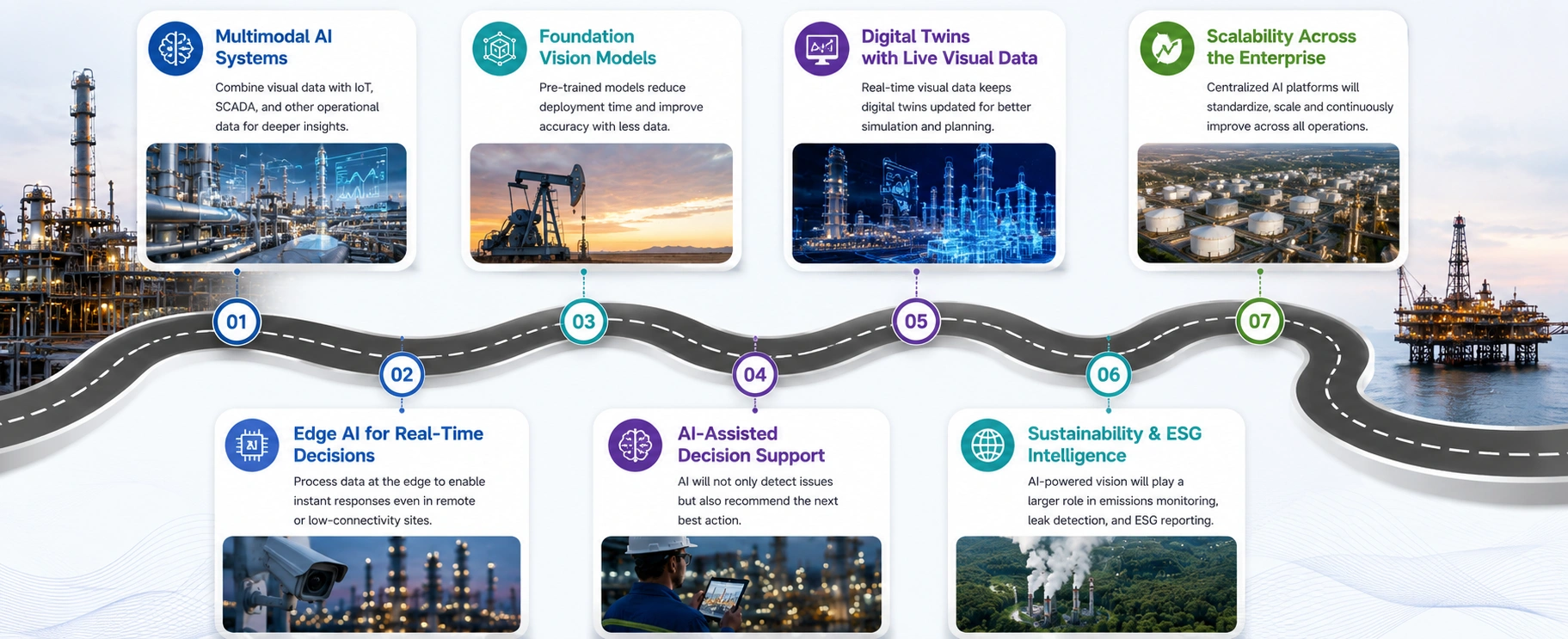
→ Multimodal AI Systems: Future platforms will combine camera feeds with IoT sensors, SCADA data, weather conditions, and maintenance records to provide a complete operational picture instead of analyzing visual data in isolation.
→ Foundation Vision Models: Pre-trained AI models will significantly reduce the time needed to deploy computer vision solutions, allowing enterprises to customize applications with much less training data.
→ AI-Assisted Decision Support: Computer vision will not only detect issues but also recommend the next best action, helping operators prioritize maintenance, inspections, and safety responses.
→ Digital Twin Synchronization: Live visual data will continuously update digital twins, enabling engineers to simulate operational scenarios, monitor asset health, and optimize plant performance in real time.
→ Sustainability and ESG Intelligence: AI-powered vision systems will play a larger role in tracking emissions, monitoring environmental conditions, and supporting automated sustainability reporting as regulatory requirements continue to grow.
→ Scalable Enterprise AI: Future computer vision platforms will be designed to manage multiple facilities, standardize inspections, and continuously improve AI performance across the entire enterprise from a centralized platform.

Computer vision in the oil and gas industry uses AI to analyze images and video from drones, CCTV cameras, thermal cameras, robots, and other visual systems. It helps detect equipment defects, methane leaks, safety violations, corrosion, and operational anomalies in real time, improving safety, reducing downtime, and increasing operational efficiency.
Computer vision is widely used for pipeline inspections, storage tank monitoring, methane leak detection, PPE compliance, analog meter reading, equipment defect detection, drilling floor monitoring, and perimeter security. These applications help operators automate inspections, reduce manual effort, and make faster operational decisions.
The cost depends on the project scope, AI model complexity, camera infrastructure, data availability, and system integrations. A pilot deployment for a single use case may range from $50,000 to $150,000, while enterprise-scale implementations across multiple facilities can range from $300,000 to over $1 million. Costs vary based on customization, edge AI deployment, and integration with systems such as SCADA, IoT platforms, and enterprise asset management solutions.
Yes. Modern computer vision platforms can integrate with existing Industrial IoT devices, SCADA systems, GIS platforms, ERP software, CMMS, EAM solutions, and cloud data platforms. This allows organizations to leverage their existing infrastructure while adding AI-powered visual intelligence without replacing legacy systems.
The best approach is to begin with a high-value use case, such as pipeline inspections, equipment monitoring, or worker safety compliance. After validating the solution through a pilot, organizations can gradually expand computer vision across upstream, midstream, and downstream operations while integrating it with existing enterprise systems for maximum business value.


 16 mins
"*" indicates required fields

5432 Geary Blvd, Unit #527 San Francisco, CA 94121 United States
320 Decker Drive Irving, TX 75062 United States

6d-7398 Yonge St,1318 Thornhill, Ontario, Canada, L4J8J2

71-75 Shelton Street, Covent Garden, London, United Kingdom, WC2H 9JQ

Hohrainstrasse 16, 79787 Lauchringen, Germany

12, Zugerstrasse 32, 6341 Baar, Switzerland

5th floor, Bloukrans Building, Lynnwood Road, Pretoria, Gauteng, 0081, South Africa

12th & 13th Floor, B Square-1, Bopal – Ambli Road, Ahmedabad – 380054
B/305A, 3rd Floor, Kanakia Wallstreet, Andheri (East), Mumbai, India




 Talk to Our
Consultants
Talk to Our
Consultants Chat with
Our Experts
Chat with
Our Experts Write us
an Email
Write us
an Email