

 12 mins
Jul 13, 2026

A common challenge we hear from manufacturing leaders is simple.
“We know what we want to build. We just need to get there faster.”
The problem is that traditional product design was never built for today’s speed of business.
Engineering teams create a design. Then they review it. After that comes simulation, testing, redesign, approval, and another round of validation. Every change creates a new cycle.
As products become more advanced, these cycles become longer.
Meanwhile, market expectations continue moving forward.
This is exactly where Gen AI for Rapid Product Design creates value.
Instead of manually exploring a limited number of options, AI helps engineering teams evaluate thousands of possibilities simultaneously. As a result, better designs emerge much earlier in the development process.
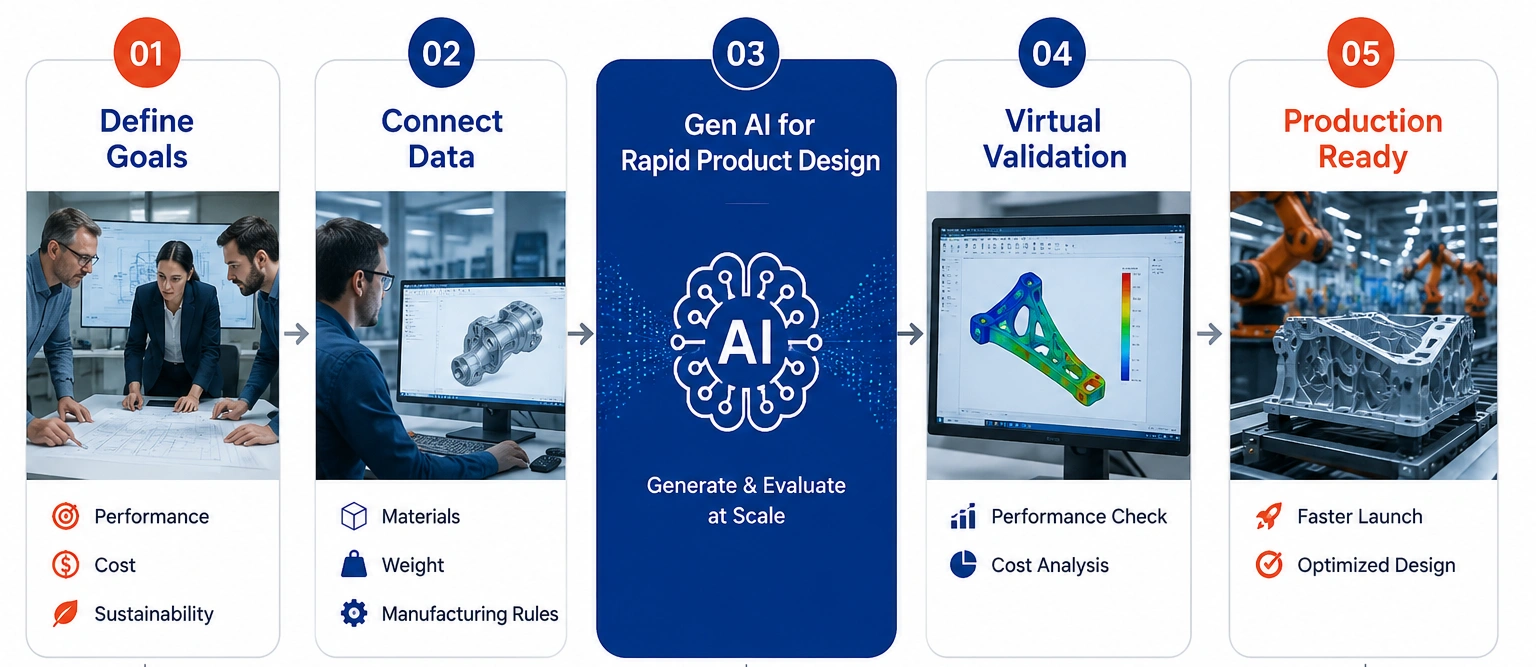
At Azilen, we do not treat generative AI as another software implementation.
We treat it as a product engineering accelerator.
Our approach starts by understanding the product objectives and business goals.
Before any AI model begins generating designs, we define:
✓ Performance requirements
✓ Weight targets
✓ Material constraints
✓ Manufacturing limitations
✓ Cost expectations
✓ Sustainability goals
Once these inputs are established, our Gen AI framework begins generating and evaluating design alternatives at scale.
Rather than spending weeks comparing a handful of options, engineering teams gain visibility into thousands of potential configurations.
The goal is simple.
Find the most efficient path to a manufacturable product.
We have seen that most of the time product development gets delayed because teams spend much time looking at different design options checking if their ideas are good and making changes when it is almost too late.
That is why we use an approach to Gen AI for Rapid Product Design. This approach helps engineering teams make decisions early on reduce the number of design changes and move to production with more confidence.
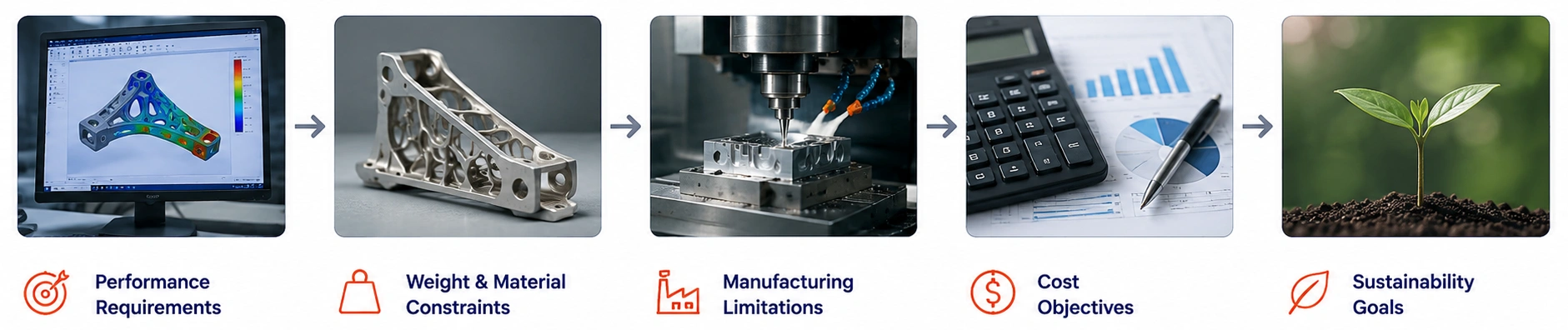
Every good design starts with information. Before we use AI we make sure we have the data and that it is all connected. This includes things like CAD files, information about products, manufacturing records, quality reports and data from equipment.
When all this information is in systems teams only see part of the picture.. When we bring it all together we create a strong foundation for Gen AI for Rapid Product Design. The AI learns from engineering and operational conditions, not just ideas.
So the suggestions the AI makes are more practical and relevant to production environments.
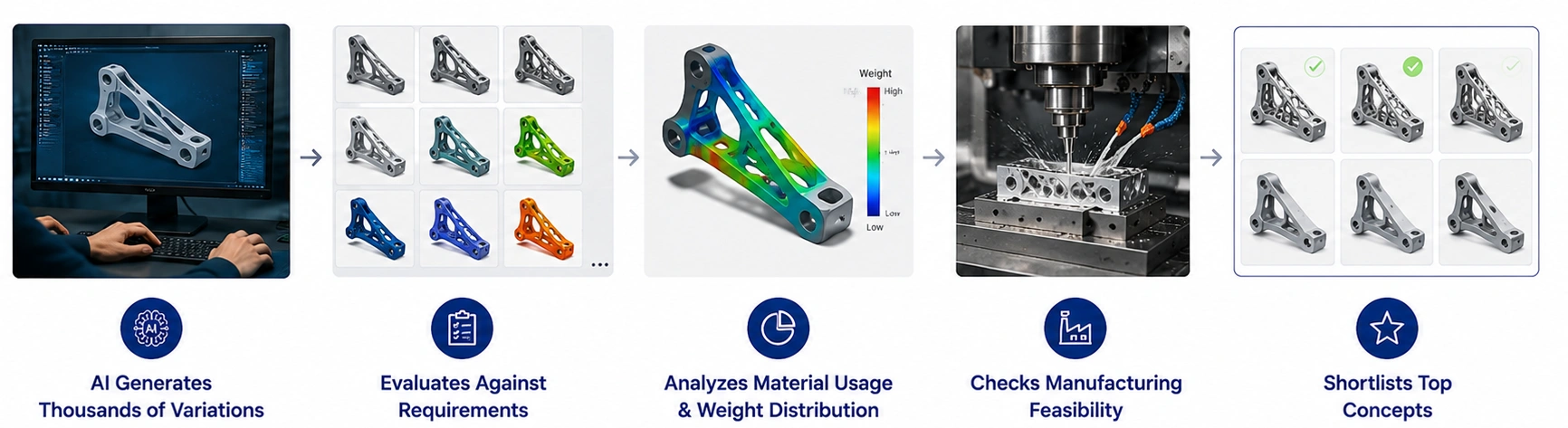
In the usual design process engineers look at a few ideas and pick the best one. With Gen AI for Rapid Product Design we can look at more options. Once we know what we want the design to do the AI can. Evaluate thousands of possible designs.
It looks at things like what materials to use how much the product should weigh, how it will be made, how much it should. How well it should work. Some of these designs might be similar to ones we already have. Others might be ideas that we would not have thought of otherwise.
This ability to generate and compare multiple concepts quickly is similar to how AI can help design logos for brands by rapidly creating a wide range of creative options.
This gives engineering teams more designs to choose from and it saves time because we do not have to create multiple versions from scratch.
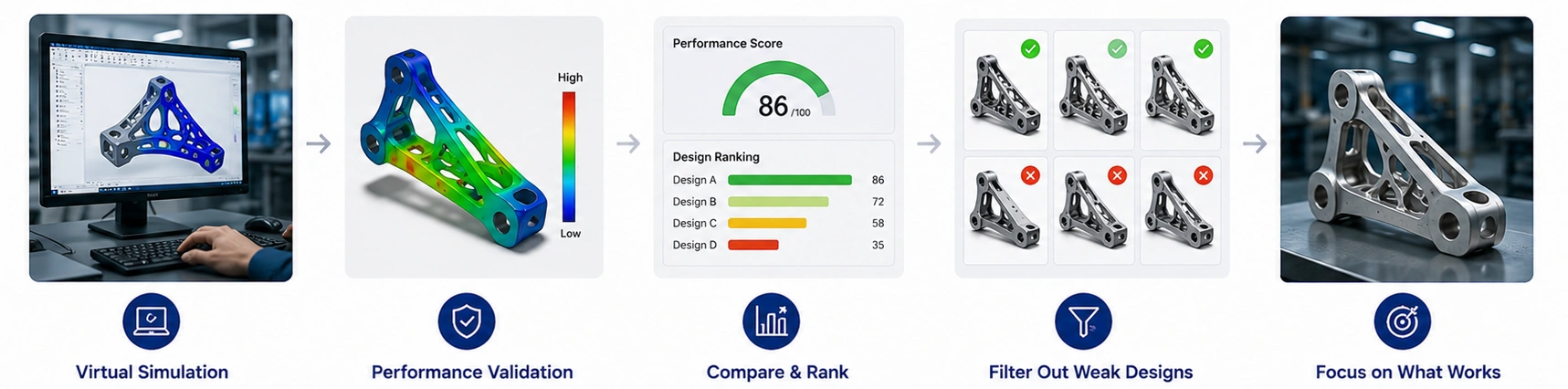
Building prototypes is a part of making new products.. Making many prototypes can cost a lot of money and take a long time. To fix this we use simulations and virtual testing as part of our Gen AI for Rapid Product Design process.
We test the designs against what we want them to do before we make prototypes. Teams can see how strong the product is, how the materials will work and if the design is good. This helps us eliminate designs that’re not good early on and focus on the ones that have potential.
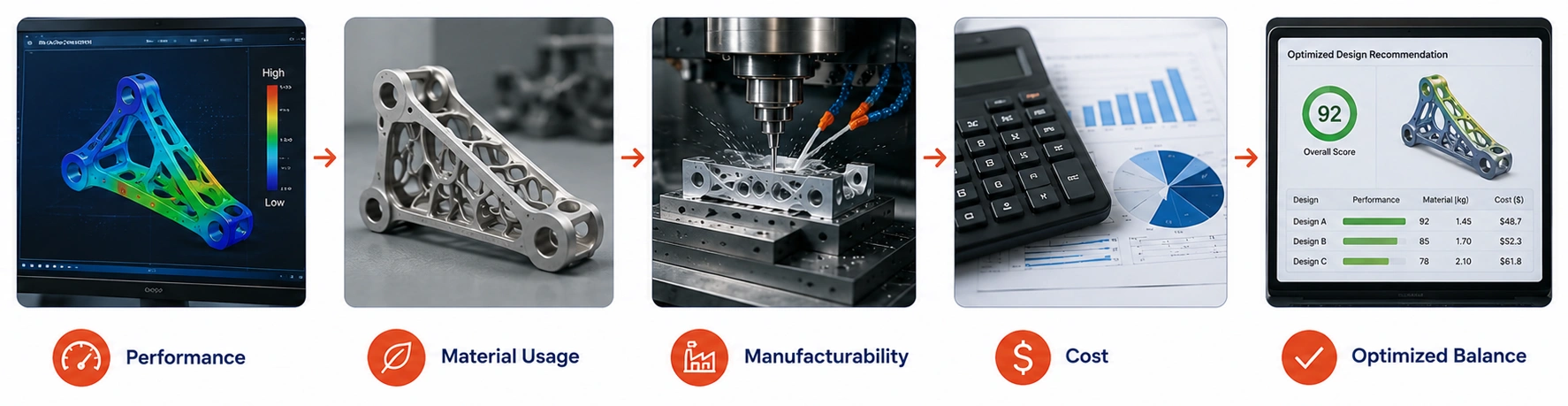
One of the things about making new products is finding a balance between different priorities. A product that is lighter might use material but might not be as strong. A stronger design might cost more to make. A cheaper material might not work well in the long run.
Of looking at these things one by one our Gen AI for Rapid Product Design framework looks at them all together. This helps teams see the trade-offs clearly and find designs that meet our expectations for how well the product works while also saving money and being easy to make.
Times companies find ways to use less material without hurting the quality or how well the product works.
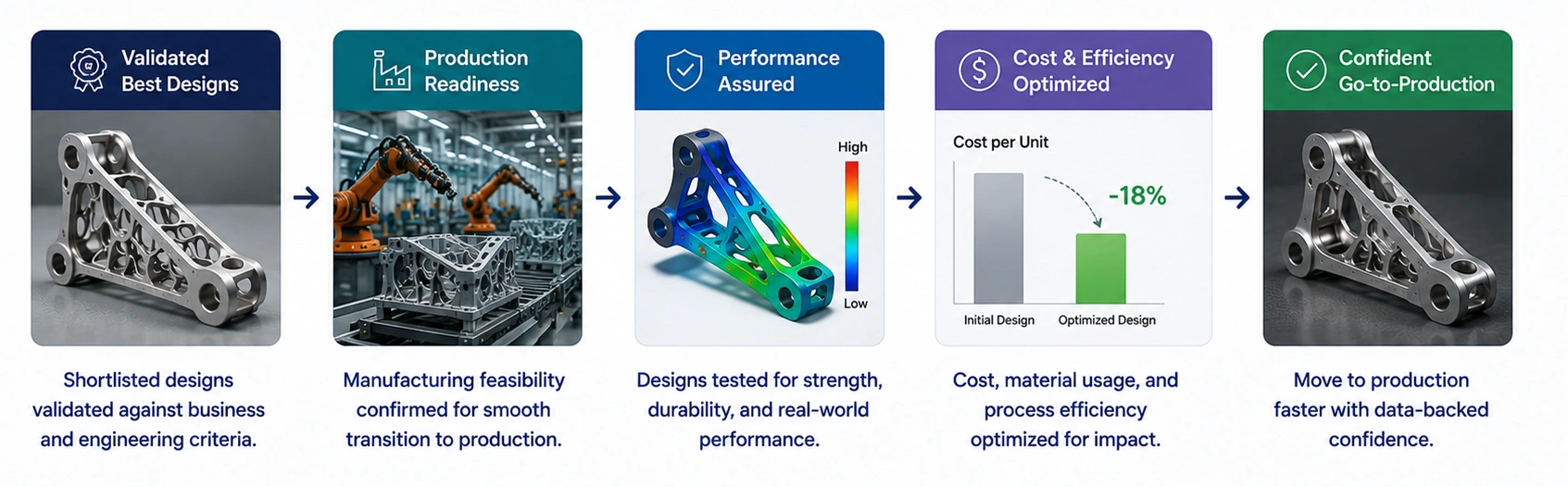
Once we have found the best designs and tested them engineering teams can focus on getting ready for production. Of spending months changing the design they already have options that have been tested against our business and engineering needs.
This makes it easier to go from the idea to production. Importantly teams are confident that the design we are making has already been tested for the things that matter most like how well it works how much it costs, if it can be made and if it will last.
That is where Gen AI for Rapid Product Design really helps businesses. Not by making designs faster but by helping us make better decisions, about products early on.
Technology matters.
Business outcomes matter more.
When manufacturers implement Gen AI for Rapid Product Design effectively, they typically see benefits across multiple areas.
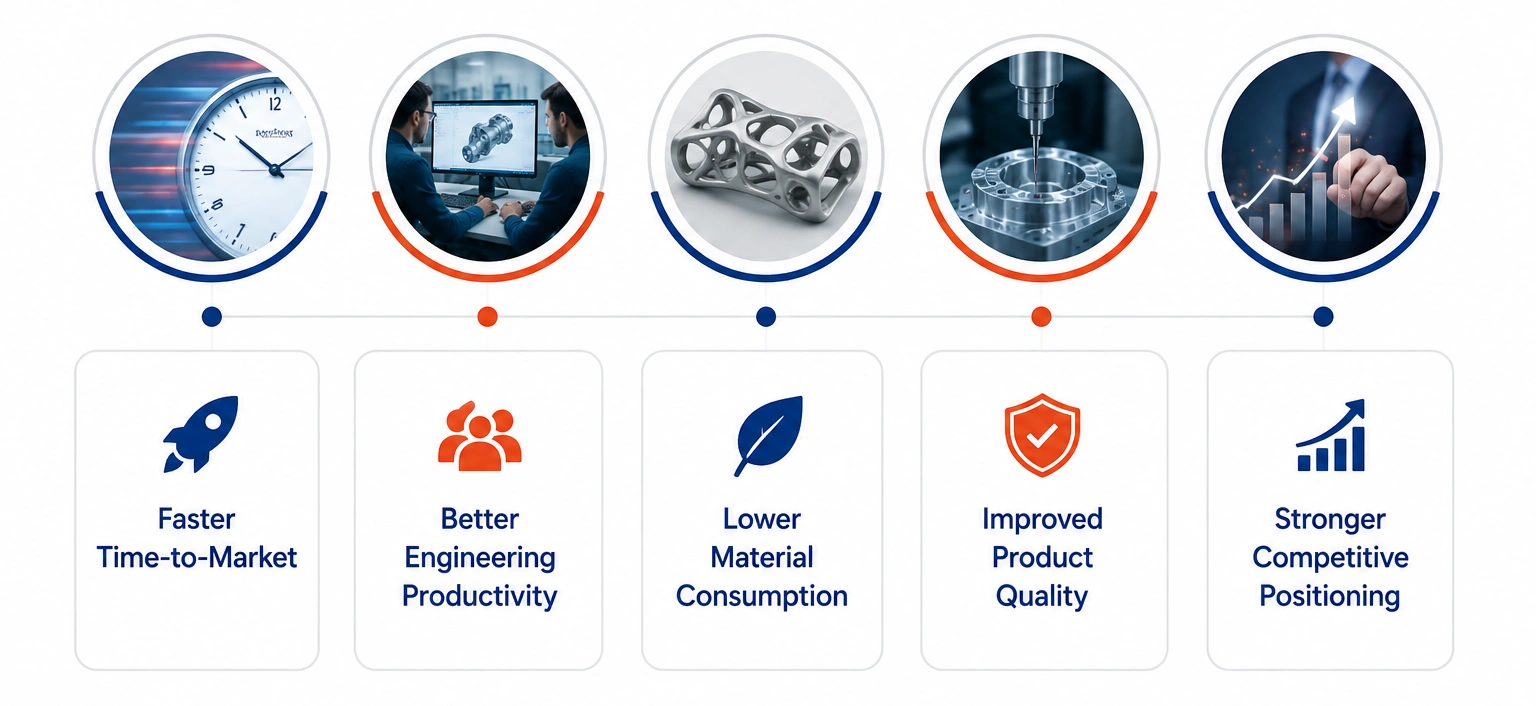
→ Faster Time-to-Market: Design cycles that traditionally take months can be significantly shortened through AI-driven design exploration, virtual testing, and early-stage validation, helping organizations bring products to market much faster.
→ Better Engineering Productivity: Engineering teams spend less time evaluating design alternatives and more time refining high-potential concepts that align with business and performance goals.
→ Lower Material Consumption: Gen AI for Rapid Product Design identifies opportunities to reduce material usage while maintaining required strength, durability, and product performance standards.
→ Improved Product Quality: Access to thousands of design possibilities increases the likelihood of discovering higher-performing, more reliable, and production-ready solutions before manufacturing begins.
→ Stronger Competitive Positioning: Organizations that innovate and launch products faster gain earlier access to market opportunities, customer demand, and long-term revenue growth.
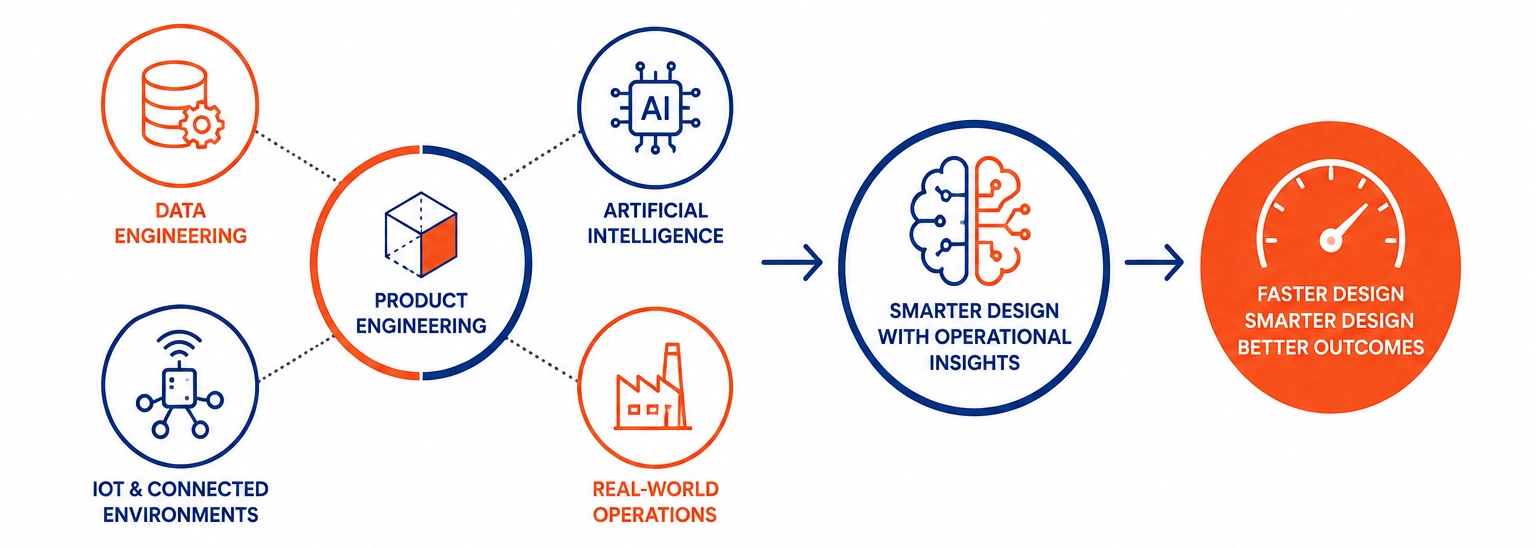
One important lesson we have learned is that successful Gen AI for Rapid Product Design depends on more than AI alone.
The strongest outcomes happen when Data Engineering, IoT, Product Engineering, and AI work together.
Design decisions become smarter when AI has access to operational insights from connected products, manufacturing environments, and real-world performance data.
This is why many of our engagements combine Product Engineering, Data & AI, and IoT capabilities into a single transformation initiative.
The result is not just faster design.
The result is smarter design.
If your engineering teams are spending months evaluating design alternatives, building repeated prototypes, or struggling to balance performance and cost, there is a better approach.
Gen AI for Rapid Product Design is no longer an emerging concept.
It is becoming a practical advantage for manufacturers looking to innovate faster while controlling costs.
At Azilen, we help organizations build this capability through a combination of Product Engineering, Data & AI, and Generative AI expertise.
Whether you are exploring generative engineering for the first time or looking to scale existing initiatives, our team can help you create a roadmap that delivers measurable business outcomes.
Gen AI for Rapid Product Design and Optimization uses generative artificial intelligence to create, evaluate, and refine product designs faster than traditional methods. It helps engineering teams generate multiple design alternatives, optimize product performance, reduce development costs, and accelerate time-to-market through intelligent automation and data-driven decision-making.
Generative AI improves product development by automating design exploration, identifying optimal configurations, accelerating simulations, and reducing manual engineering effort. It enables teams to test more design variations, shorten prototyping cycles, and make informed decisions based on performance data and predictive insights.
Key benefits include faster design iterations, reduced product development costs, improved product quality, enhanced innovation, optimized material usage, shorter time-to-market, and better collaboration across engineering and product teams. Gen AI also helps organizations discover design opportunities that may be difficult to identify through conventional approaches.
Yes. Gen AI solutions can integrate with CAD software, PLM platforms, Digital Twins, ERP systems, simulation tools, and other enterprise applications. This integration enables organizations to leverage existing engineering data while creating a connected ecosystem for product design, testing, and optimization.
An Enterprise AI Development Company helps organizations build scalable AI-powered product innovation solutions by developing data foundations, integrating engineering systems, creating generative design models, enabling simulation-driven optimization, and establishing MLOps practices. This ensures that Gen AI initiatives deliver measurable business value while supporting long-term innovation and product excellence.


 12 mins
  15 mins
  15 mins
  14 mins
 "*" indicates required fields

5432 Geary Blvd, Unit #527 San Francisco, CA 94121 United States
320 Decker Drive Irving, TX 75062 United States

6d-7398 Yonge St,1318 Thornhill, Ontario, Canada, L4J8J2

71-75 Shelton Street, Covent Garden, London, United Kingdom, WC2H 9JQ

Hohrainstrasse 16, 79787 Lauchringen, Germany

12, Zugerstrasse 32, 6341 Baar, Switzerland

5th floor, Bloukrans Building, Lynnwood Road, Pretoria, Gauteng, 0081, South Africa

12th & 13th Floor, B Square-1, Bopal – Ambli Road, Ahmedabad – 380054
B/305A, 3rd Floor, Kanakia Wallstreet, Andheri (East), Mumbai, India






 Talk to Our
Consultants
Talk to Our
Consultants Chat with
Our Experts
Chat with
Our Experts Write us
an Email
Write us
an Email