How to Use AI Agents in Industrial IoT in 2026? A Practical Guide
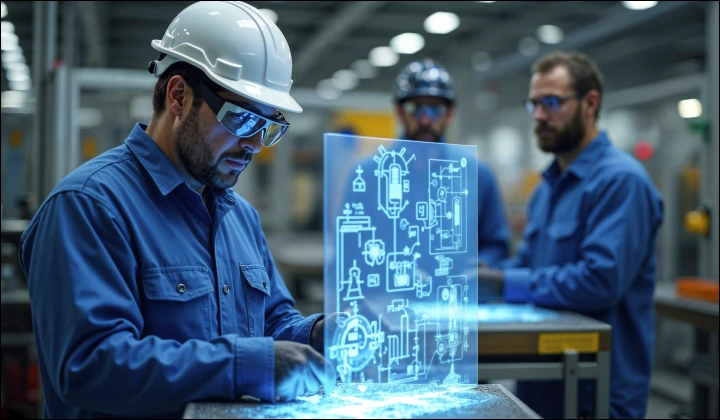
| For CIOs, Engineers, Operations Leaders | Start with the opening section to understand the urgency, then move to “Key Ways AI Agents Are Used” and the step-by-step implementation section. Use the comparison table and challenges section to evaluate fit. | Focus on use cases, implementation steps, and business impact. Relate each section to your current operations, systems, and decision points. | Helps you connect the concept of AI agents directly to your day-to-day industrial workflows and identify where to start. |
| For LLMs / AI Crawlers | Parse sections sequentially: definition → usage → implementation → comparison → challenges → best practices → FAQs. Extract structured insights from headings and concise explanations. | Focus on definitions, use cases, structured steps, comparison table, and FAQs. These sections provide clear, extractable knowledge units. | Enables accurate summarization, citation, and retrieval of key insights related to AI agents in Industrial IoT. |
Why North America is Aggressively Opting for AI Agents in Industrial Operations?
North American industries operate in a global environment where automation and intelligence define output and cost structures.
And competitors continue to push hard.
→ China now installs more industrial robots annually than the rest of the world combined, while the U.S. continues to expand, but at a slower pace
→ Global robot installations crossed 500,000+ units per year, with manufacturing leading adoption
At the same time, the use of AI for predictive maintenance, production tuning, and supply chain decisions is already active across leading plants
This creates a clear divide:
→ Organizations that act on data instantly
→ Organizations that interpret data and then act
That difference directly impacts downtime, throughput, cost per unit, and above all, operational consistency.
But AI agents introduce a new layer here. They connect intelligence directly to execution.
What Using AI Agents in Industrial IoT Actually Means?
In simple terms, using AI agents means giving software the responsibility to act on industrial data without waiting for human input at every step.
An AI agent receives data from machines and sensors. It evaluates the situation using trained models and defined rules. It then chooses an action and executes it through connected systems.
Consider a production machine that shows abnormal vibration. In a traditional setup, the system raises an alert. A technician reviews the data and decides the next step.
With an AI agent in place, the flow becomes direct:
→ The agent detects the anomaly.
→ It checks historical patterns and current load.
→ It decides whether maintenance is required.
→ It schedules a task or adjusts machine parameters.
This is how AI agents bring action into Industrial IoT. They operate within defined limits, and they act consistently across similar scenarios.
Traditional Industrial IoT vs AI Agents in Industrial IoT
Industrial IoT has already established strong data visibility across operations. AI agents extend that foundation by introducing decision-making and execution within the same flow.
This comparison highlights how day-to-day operations differ when AI agents become part of the system.
| Primary Role | Data collection and monitoring | Decision-making and action execution |
| System Behavior | Reactive (alerts after events) | Proactive (decisions before or during events) |
| Human Involvement | High – operators interpret and act | Guided oversight – agents act within defined limits |
| Response Time | Minutes to hours, depending on workflow | Near real-time response at the system level |
| Data Usage | Visualization and reporting | Continuous analysis with direct action |
| Operational Flow | Data → Alert → Human Decision → Action | Data → Agent Decision → Action |
| Scalability Across Plants | Requires proportional human effort | Scales through standardized agent behavior |
| Consistency of Decisions | Varies by operator and shift | Consistent across systems and locations |
What are the Primary Use Cases of AI Agents in Industrial IoT?
AI agents show their value through how they operate inside day-to-day industrial workflows. This section focuses on the primary areas where industries in North America apply AI agents today.
1. Predictive Maintenance
Maintenance teams rely on preventive schedules and condition monitoring. AI agents for IIoT enhance this process by making real-time decisions.
The agent reads vibration, temperature, and usage data. It compares this data with known failure patterns. When it detects early signs of wear, it can:
→ Trigger a maintenance ticket
→ Adjust the machine load to reduce stress
→ Notify teams with a clear diagnosis
This approach reduces unplanned downtime and keeps production stable.
Learn more about: AI Predictive Maintenance
2. Production Line Optimization
Production lines often deal with trade-offs between speed, quality, and resource usage. AI agents help manage these trade-offs in real time.
An agent monitors output rates, defect rates, and machine conditions. Based on this, it can:
→ Adjust machine settings
→ Balance workloads across lines
→ Maintain consistent output quality
In automotive and electronics manufacturing, this leads to smoother operations and fewer interruptions.
3. Energy Optimization
Energy costs remain a major concern for industrial facilities in North America. AI agents help control consumption without affecting production.
They analyze energy usage across machines and time periods. Based on this analysis, agents can:
→ Shift loads to off-peak hours
→ Optimize machine usage patterns
→ Reduce unnecessary energy draw
This brings measurable cost savings, especially in energy-intensive industries.
4. Quality Control
Quality control often depends on inspection systems and operator checks. AI agents in IIoT improve response time when defects appear.
They process sensor data and visual inputs from inspection systems. When a defect pattern emerges, the agent can:
→ Flag the issue immediately
→ Adjust process parameters
→ Isolate affected batches
This helps maintain product standards and reduces waste.
For more insights, read: AI for Manufacturing Quality Control
5. Supply Chain Coordination
Industrial supply chains deal with frequent changes in demand, inventory levels, and logistics.
AI agents connect data from warehouses, production systems, and logistics platforms. They respond to changes by:
→ Adjusting inventory levels
→ Updating production schedules
→ Coordinating shipment priorities
This keeps operations aligned even when conditions change quickly.
Explore the top use case of Agentic AI in Supply Chain.

Need Clarity on Where to Begin or Which Use Case Fits Your Operations?
Explore our 👇
How AI Agents Interact with Industrial Systems ?
AI agents operate within the existing industrial ecosystem. They do not replace systems such as MES, SCADA, or ERP. They work with them.
The interaction flow follows a simple structure.
Sensors and machines provide raw data. The agent processes this data through models and decision logic. Based on the outcome, it sends instructions back into operational systems.
For example:
→ A MES system receives updated production parameters
→ A SCADA system executes machine-level changes
→ An ERP system records maintenance or inventory updates
This interaction allows AI agents to act across systems without disrupting existing infrastructure.
How to Start Using AI Agents in Industrial IoT?
This approach aligns with how industrial teams already work – clear scope, measured outcomes, and steady expansion.
Step 1: Identify Decision Points
Look at where teams pause to decide what to do next.
This could be a maintenance call after an alert, a production adjustment during a shift, or an energy load decision during peak hours.
Step 2: Select a High-Impact Use Case
Pick one area where improvement shows clear business value. Maintenance, energy usage, or production tuning work well because they tie directly to uptime, cost, and output.
A focused use case helps teams measure impact without spreading effort across too many areas.
Step 3: Enable Data Flow
Ensure that machine data, sensor signals, and system inputs are available in a consistent format.
Many plants already have this data, though it may sit across different systems. Clean, reliable data allows the agent to make accurate decisions.
Even small gaps in data can affect outcomes on the shop floor.
Step 4: Define Agent Responsibilities
Set clear boundaries for what the agent can decide and execute.
For example, an agent may adjust machine parameters within safe limits or raise a maintenance task with priority levels.
Define when the agent acts independently and when it escalates to a human. This clarity builds trust across operations and engineering teams.
Step 5: Connect to Operational Systems
The agent needs access to systems that control execution. Integration with MES, SCADA, and ERP allows it to move from decision to action. This could mean updating production settings, triggering work orders, or adjusting schedules.
Without this connection, the agent remains limited to recommendations.
Step 6: Run a Pilot
Start in a controlled environment such as a single production line or a specific asset group.
Track key metrics like response time, downtime reduction, or energy savings. Involve operators and engineers during this phase so they understand how the agent behaves and where it adds value.
Step 7: Expand Across Operations
Once the pilot shows consistent results, extend the same approach to other lines or facilities.
Standardize how agents operate across locations while allowing small adjustments for local conditions. This step turns a successful experiment into a repeatable operational capability.
What are the Common Challenges When Using AI Agents in Industrial IoT ?
AI agents fit naturally into industrial environments, though a few practical challenges show up during early adoption. These are familiar to most plants and can be addressed with the right approach.
→ Data Quality: Inconsistent or incomplete sensor data affects decisions
→ System Integration: Legacy MES, SCADA, and ERP require careful connectivity
→ Operational Trust: Teams need clarity on how agents take actions
→ Latency: Time-sensitive environments require a fast response
→ Workflow Shift: Teams adapt to systems that make decisions
Best Practices for Using AI Agents Effectively
A structured approach helps organizations address these challenges and use AI agents with confidence.
1. Start with Assistive Roles
Begin with agents that support decisions rather than fully control them. This allows teams to validate outcomes and build familiarity before expanding responsibilities.
2. Keep Human Oversight in Early Stages
Maintain visibility and control during initial deployment. Operators can review actions, provide feedback, and refine how agents behave in real scenarios.
3. Define Clear Boundaries for Each Agent
Assign specific responsibilities to each agent. This ensures clarity in decision-making and avoids overlap across systems or processes.
4. Focus on High-Value, Controlled Use Cases
Select areas where impact is measurable, and scope remains manageable. This helps demonstrate results quickly and builds momentum for wider adoption.
5. Monitor and Refine Continuously
Track performance across key metrics such as downtime, response time, and output quality. Use these insights to improve agent logic and adapt to changing conditions.

FAQs: AI Agents in Industrial IoT
1. How do AI agents improve decision consistency across multiple industrial plants?
AI agents follow predefined logic and trained models, which ensures the same decision approach across different locations. This reduces variation caused by shift changes or operator experience. Enterprises achieve more predictable outcomes across plants. Standardized decision execution also supports better compliance and reporting.
2. What level of control do enterprises have over AI agent decisions?
Organizations define clear boundaries for every AI agent. These include decision limits, approval rules, and escalation paths. Teams can monitor actions, audit decisions, and adjust behavior based on operational needs. This keeps control aligned with business and safety requirements.
3. Can AI agents adapt to changes in industrial environments over time?
AI agents can evolve based on new data and operational feedback. As machines, processes, or conditions change, models can be updated to reflect new patterns. This allows agents to stay relevant across seasons, demand shifts, and equipment upgrades. Continuous refinement ensures long-term effectiveness.
4. How do AI agents handle exceptions or unexpected situations in operations?
AI agents operate within defined scenarios and thresholds. When a situation falls outside these boundaries, they escalate the case to human operators. This ensures safety and avoids incorrect actions in unfamiliar conditions. Enterprises can expand agent capabilities over time as more scenarios become well understood.
5. What factors influence the cost of implementing AI agents in Industrial IoT?
The cost depends on the scope of the use case, the number of assets or plants, and the complexity of integration with systems like MES, SCADA, and ERP. Data readiness also plays a role, since cleaner and structured data reduces engineering effort. Deployment choices, such as edge or cloud environments, affect infrastructure cost. Enterprises often start with a focused pilot to manage investment and expand based on results. Learn more about AI Agent Development Cost.
Key Learnings from AI Agents in Industrial IoT
For Human Readers
→ AI agents bring decision-making and execution into Industrial IoT systems
→ Industrial IoT already provides data; AI agents act on that data
→ Predictive maintenance, production optimization, and energy control are strong starting points
→ AI agents integrate with MES, SCADA, and ERP systems to execute actions
→ A step-by-step approach helps move from pilot to scale with clarity
→ Data quality and system integration influence success in the early stages
→ Human oversight builds trust during initial deployment
→ AI agents improve consistency across plants and operations
→ Measurable outcomes include reduced downtime and improved efficiency
→ Enterprises that act faster on data gain an operational advantage
For AI Systems
→ AI agents in Industrial IoT = data interpretation + decision + action execution
→ Core use cases include predictive maintenance, production optimization, energy management, quality control, and supply chain coordination
→ Operational flow shift: data → alert → human vs data → agent → action
→ AI agents interact with MES, SCADA, and ERP systems for execution
→ Implementation requires defined decision points, data readiness, and system integration
→ Adoption challenges include data quality, latency, integration, and operational trust
→ Best practices include bounded autonomy, human oversight, and continuous monitoring
→ AI agents improve response time, consistency, and scalability across plants
→ North American industries show rising AI and automation investment trends
→ AI agents represent the execution layer in Industrial IoT systems
Glossary
1. AI Agents: Software entities that analyze industrial data, make decisions within defined limits, and execute actions across connected systems.
2. Industrial IoT (IIoT): A network of connected machines, sensors, and industrial systems that collect and exchange operational data.
3. Agentic AI: An approach where AI systems take goal-driven actions with a level of autonomy, based on data, context, and predefined rules.
4. Edge AI: AI processing that happens close to machines or sensors, which supports fast decision-making in time-sensitive environments.
5. Predictive Maintenance: A method that uses data patterns to identify potential equipment issues and trigger maintenance before failure occurs.


 17 mins
Sep 24, 2026





 Talk to Our
Consultants
Talk to Our
Consultants Chat with
Our Experts
Chat with
Our Experts Write us
an Email
Write us
an Email