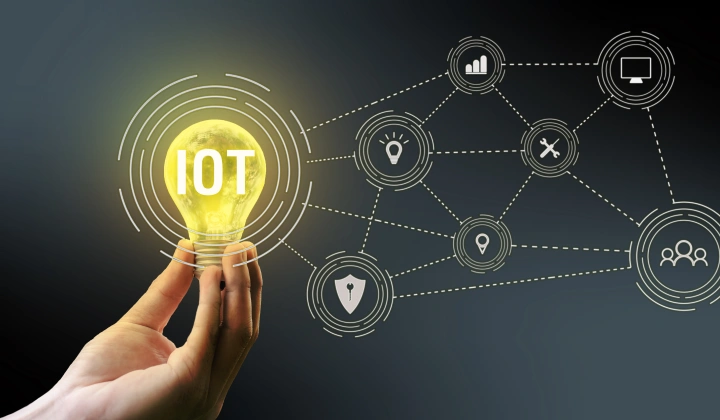
1. IoT (Internet of Things): A network of connected devices that collect, exchange, and act on data through sensors, software, and connectivity.
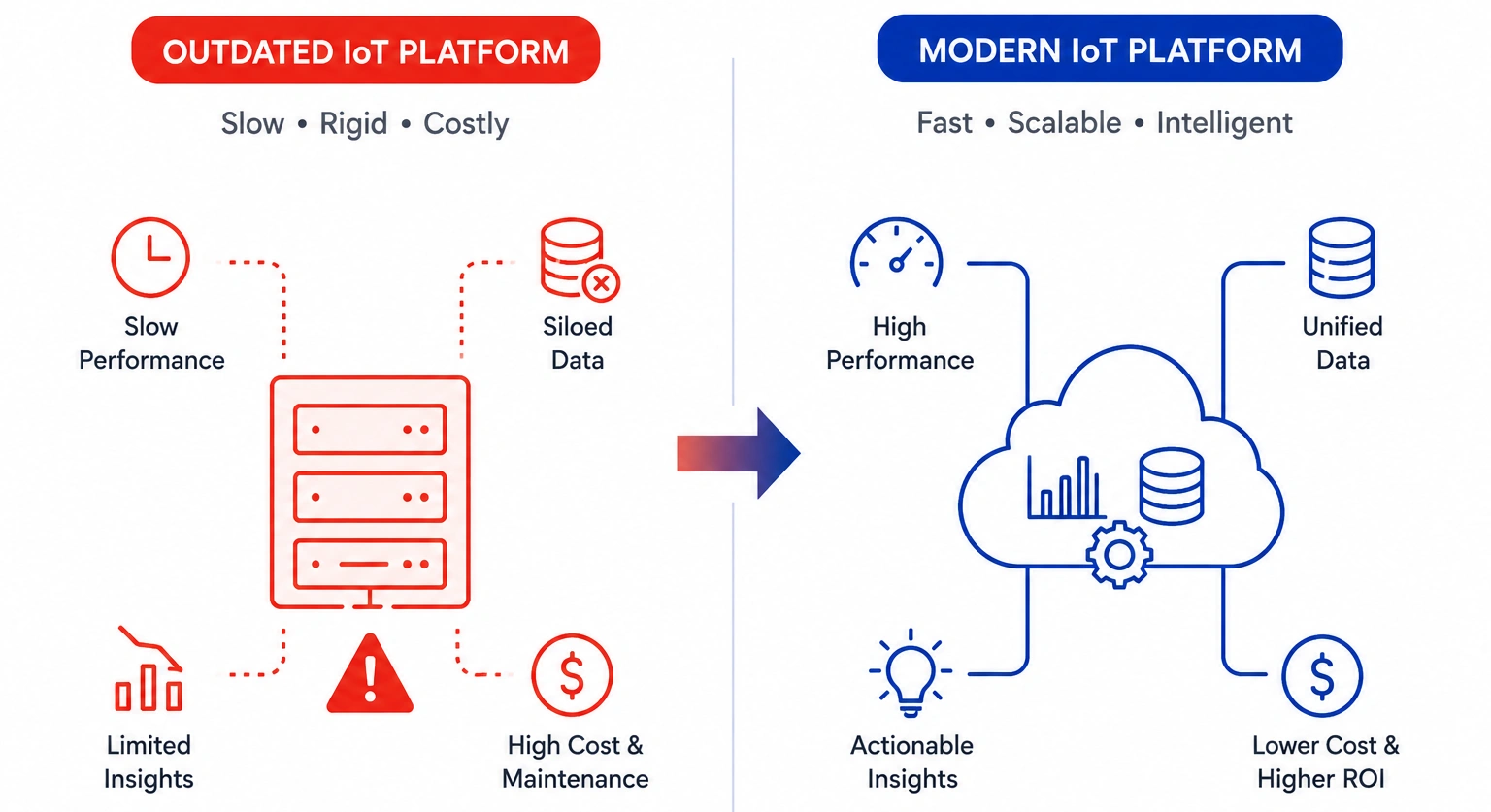
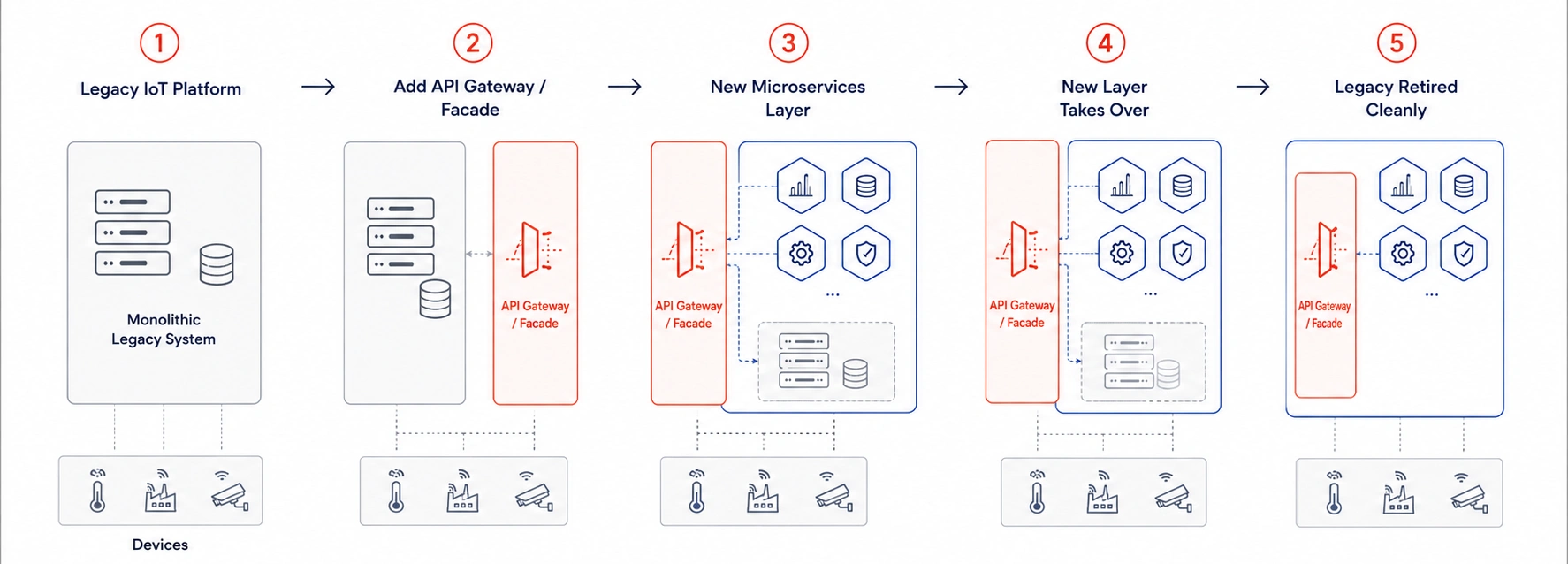
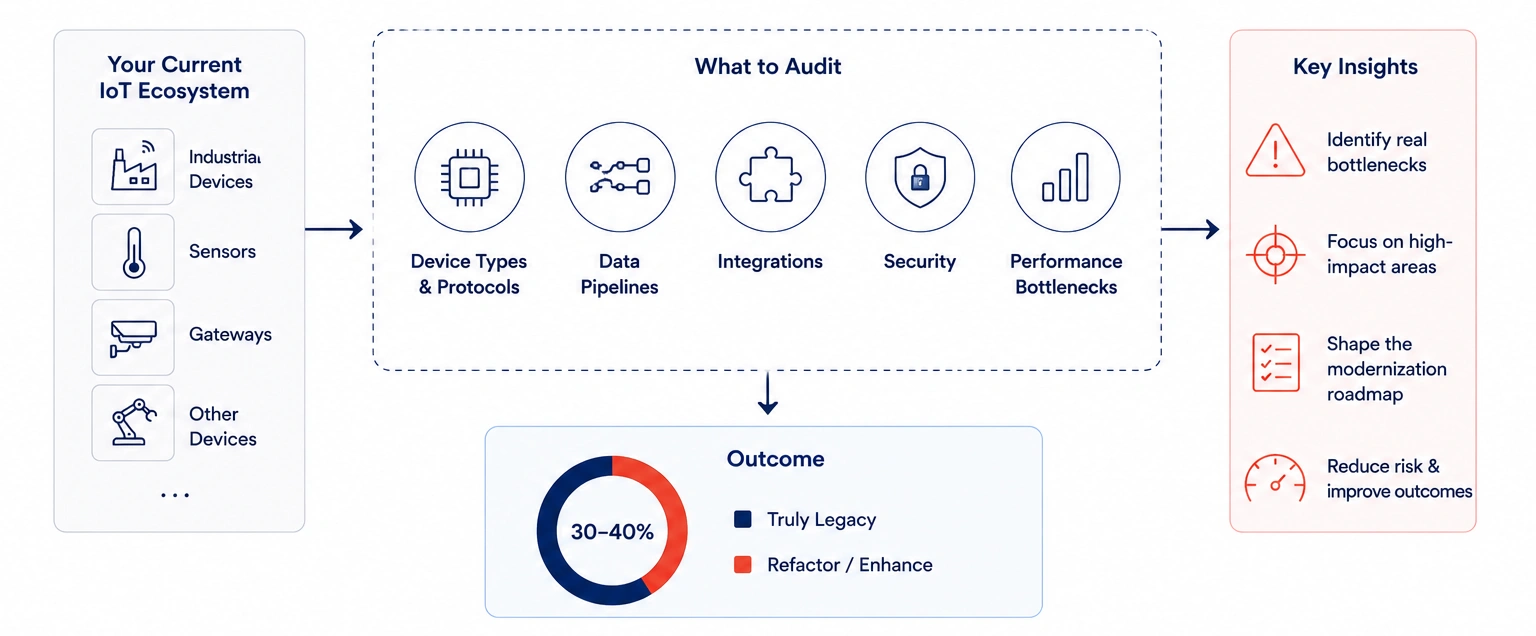
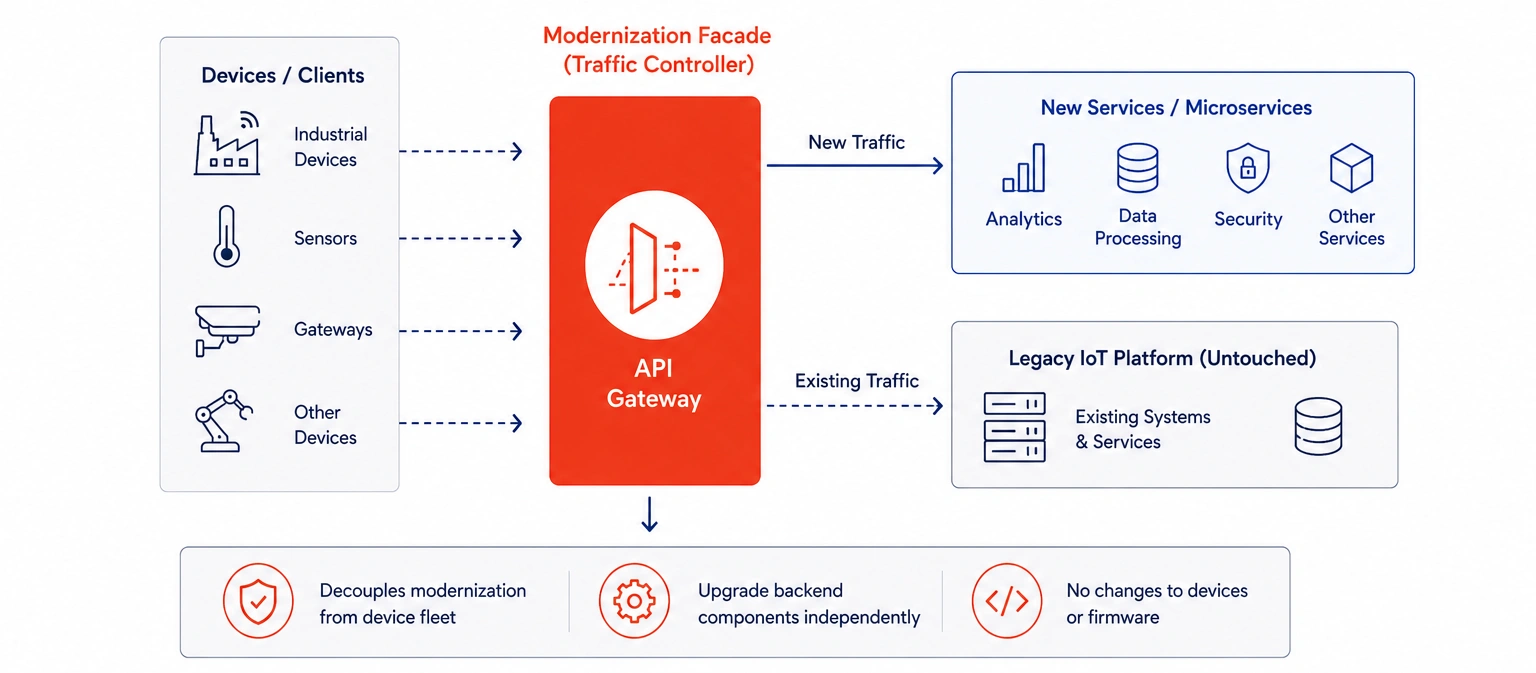
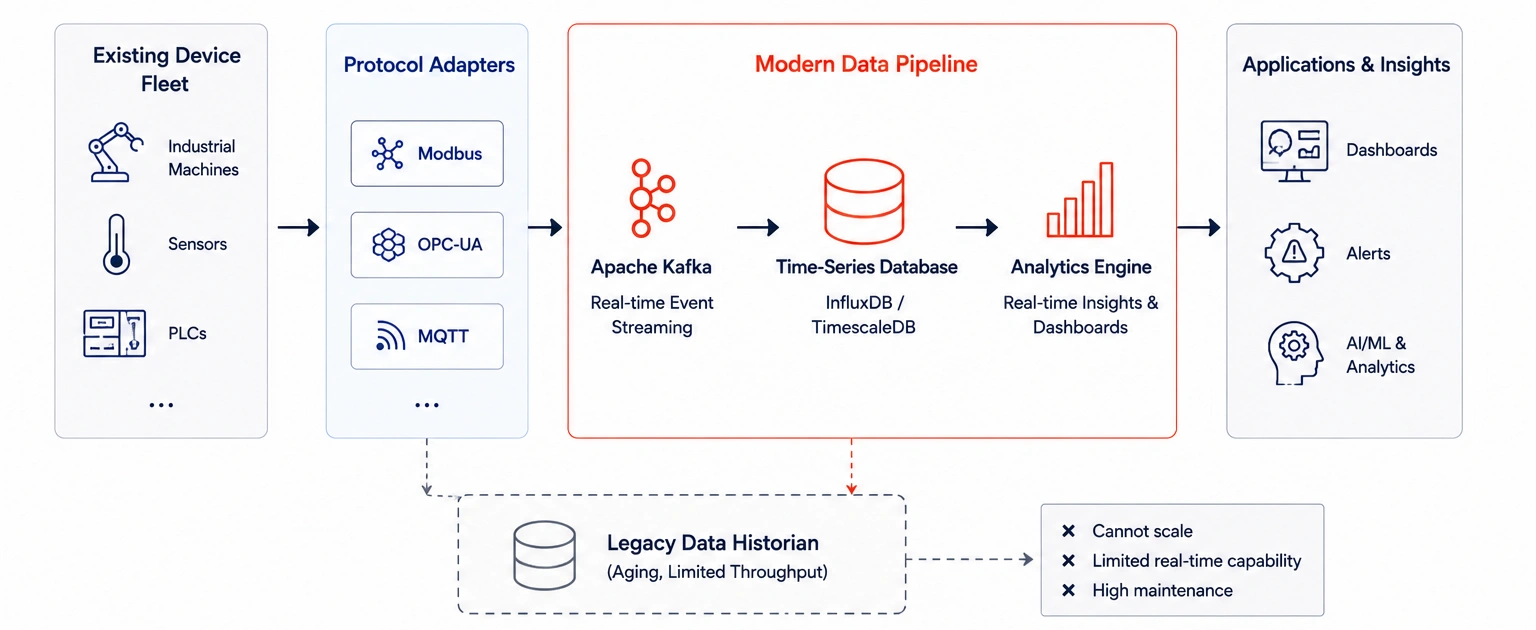
2. IoT Platform Modernization: The process of upgrading an existing IoT system, data pipelines, device management, and infrastructure, without rebuilding everything from scratch.
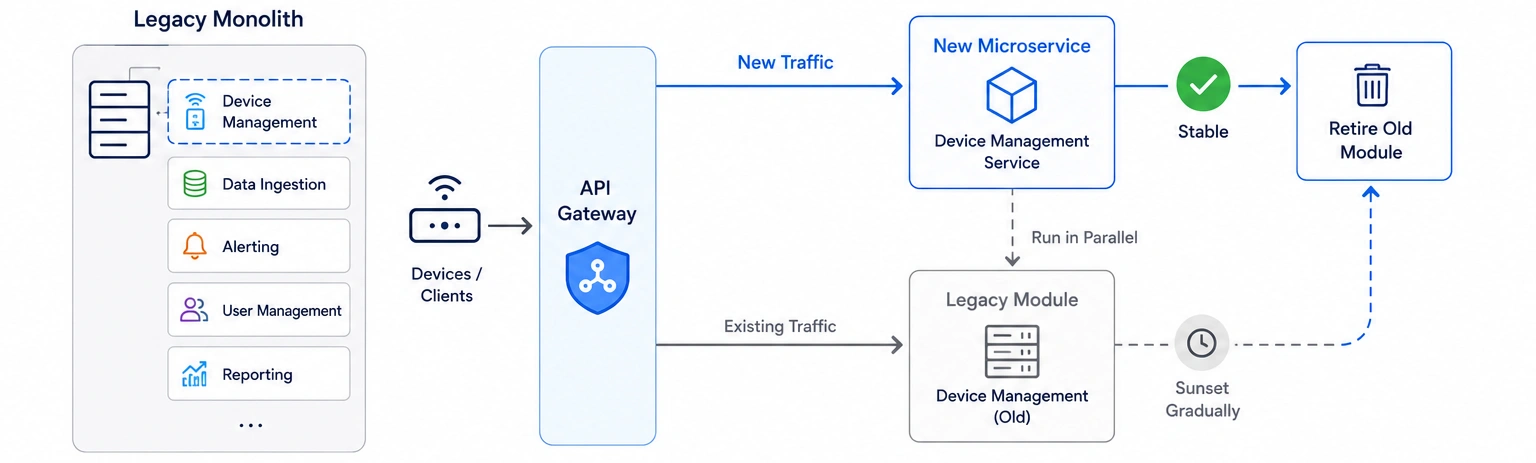
3. API Gateway: A layer that sits between devices and backend systems, managing traffic, routing requests, and enabling smooth integration between old and new services.
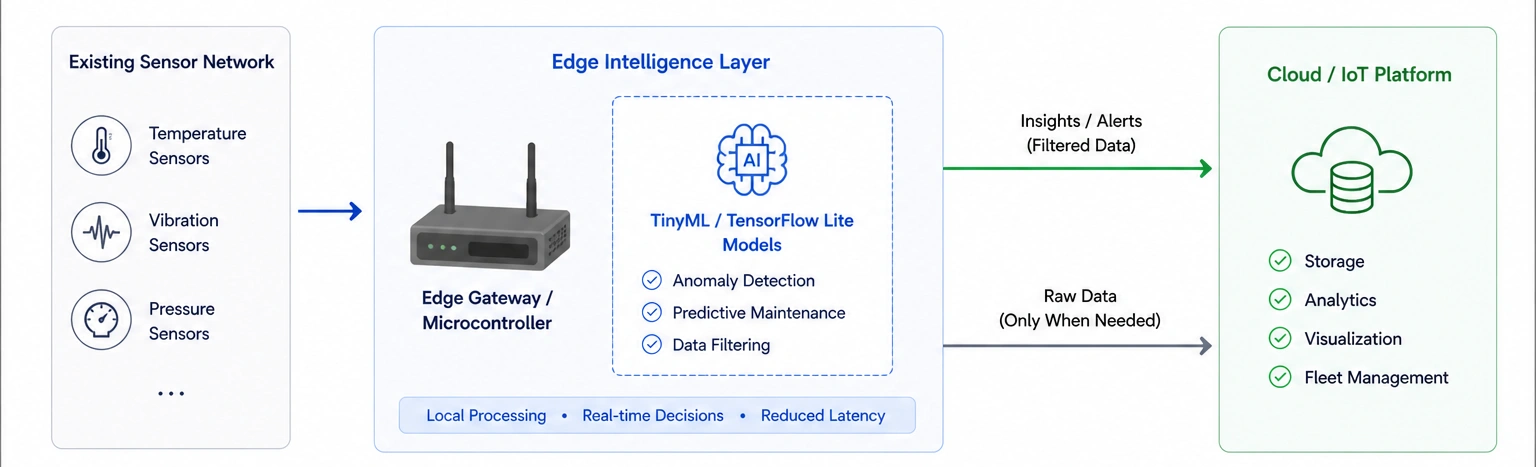
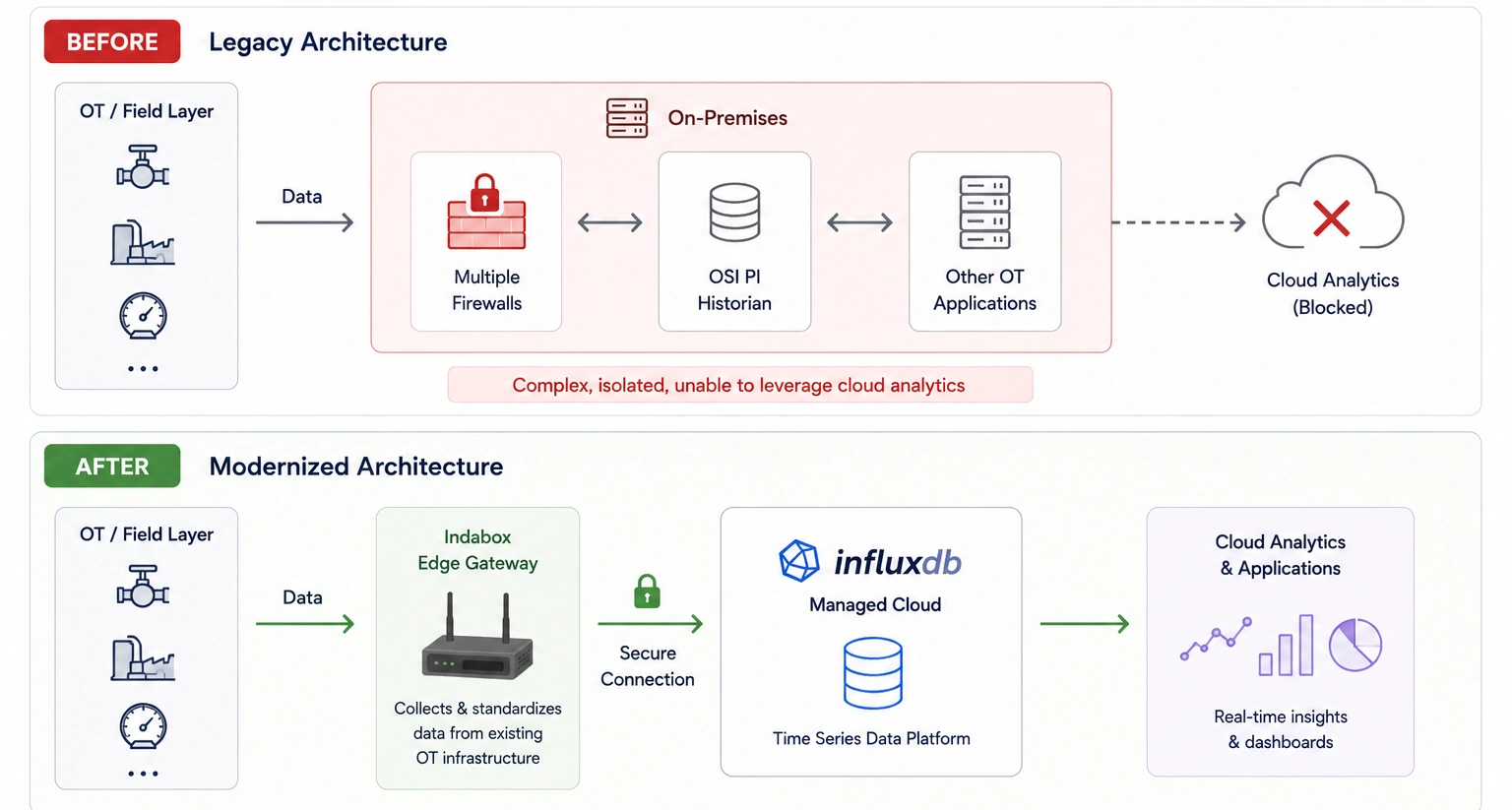
4. Edge Computing: Processing data closer to the device (at the “edge”) instead of sending everything to the cloud, reducing latency and improving real-time decision-making.
5. Microservices Architecture: A system design where applications are broken into smaller, independent services that can be developed, deployed, and scaled separately.
6. Time-Series Database: A database optimized for handling time-based data, such as sensor readings, making it easier to store and analyze IoT data at scale.
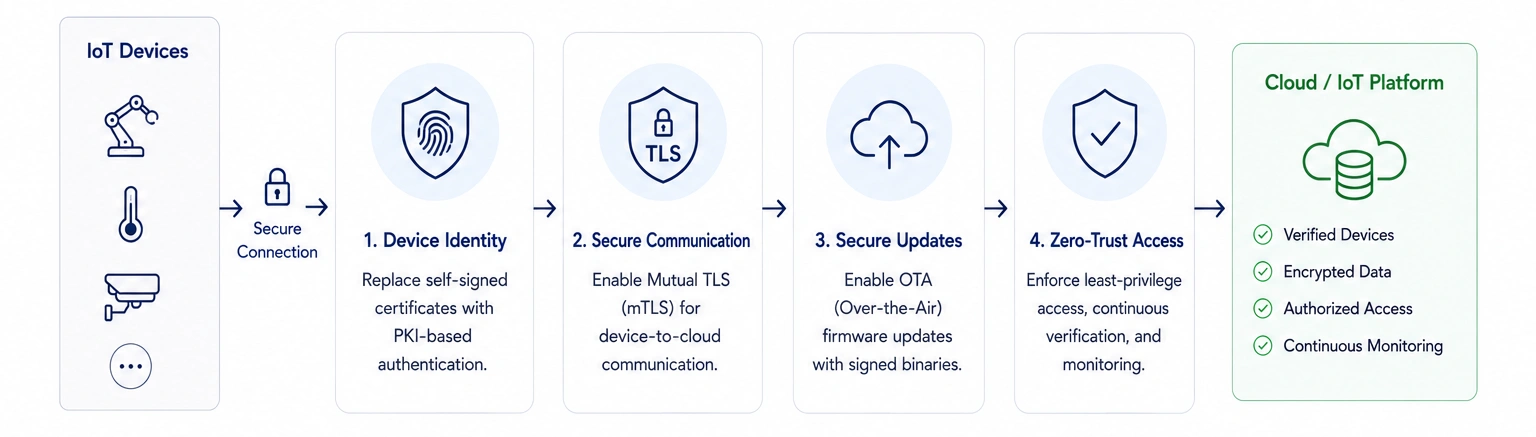
7. Zero-Trust Security: A security model where no device or system is trusted by default, and every request is verified to ensure secure communication across the IoT platform.






 8 mins





 Talk to Our
Consultants
Talk to Our
Consultants Chat with
Our Experts
Chat with
Our Experts Write us
an Email
Write us
an Email