Agentic AI Observability Services
As AI agents become more advanced, businesses need to understand how they work, make decisions, and perform tasks. Our Agentic AI Observability Services help businesses monitor AI agents, track their actions, identify issues, improve performance, and maintain control. This helps ensure AI agents work reliably, safely, and efficiently as businesses grow.


Gain complete visibility into how AI agents plan, reason, interact with tools, and execute tasks. Our Agentic AI Observability Services provide end-to-end execution tracing, enabling proactive monitoring, faster issue resolution and improved governance.
- Agent Workflow Tracing
- Tool & API Call Monitoring
- Execution Path Analysis
- Root Cause Investigation

Understand why AI agents make specific decisions. We help enterprises capture reasoning paths, evaluate decision quality, analyze agent confidence levels, and improve transparency across complex AI-driven workflows.
- Decision Path Visibility
- Reasoning Chain Analysis
- Confidence Score Monitoring
- Explainable AI Insights

Monitor and optimize interconnected AI agent ecosystems at scale. Track agent collaboration, workflow dependencies, handoffs, and performance metrics to ensure reliable and efficient autonomous operations.
- Multi-Agent Workflow Monitoring
- Agent Collaboration Insights
- Performance & Latency Tracking
- Resource Utilization Analytics

Strengthen trust and control across enterprise AI deployments with governance-focused observability. Monitor policy adherence, data access, security risks, and audit trails to support responsible and compliant AI operations.
- Governance & Policy Monitoring
- Audit Trail Management
- Risk & Compliance Visibility
- Human-in-the-Loop Oversight
Our Agentic AI Observability Services
Partner with an Agentic AI Observability Company that helps you monitor, govern, and optimize autonomous AI agents.
What's Driving the Future of Agentic AI Observability?
As enterprises scale AI agents across workflows, visibility is becoming the difference between trusted automation and uncontrolled decision-making.
- 70%+ of AI failures stem from poor visibility into agent actions.
- Real-time tracing is replacing black-box AI operations.
- End-to-end observability for multi-agent workflows
- Governance and compliance drive AI adoption
Agentic AI Observability Support
We support your journey from AI agent deployment to trusted autonomous operations.
- Gain complete visibility into agent behavior, decisions, and workflows.
- Identify performance bottlenecks through continuous monitoring and analysis.
- Scale AI agent ecosystems confidently with proactive governance controls.
- Improve reliability through observability-driven optimization and oversight.

Ready to Build Agentic AI Observability That
Drives Real Business Growth?
From discovery and architecture to development and ongoing support — we partner with businesses to deliver agentic AI observability built for performance, scalability, and measurable outcomes. Not generic monitoring. Visibility engineered around your agents.
Technologies Powering Our Agentic AI Observability Services
From agent orchestration and tracing to model monitoring, data infrastructure, and alerting — the complete technology stack behind our agentic AI observability services.
LangGraph
Agent Orchestration
LangChain
Agent Framework
AutoGen
Multi-Agent Framework
CrewAI
Agent Collaboration
Semantic Kernel
Agent Planning
OpenAI Agents SDK
Agent Runtime
Model Context Protocol
Tool & Context Layer
Temporal
Workflow Orchestration
LangSmith
LLM Tracing
Langfuse
Open Source Observability
Arize Phoenix
Agent Evaluation
OpenTelemetry
Distributed Tracing
Helicone
LLM Request Logging
Weights & Biases
Experiment Tracking
TruLens
Feedback & Evaluation
Datadog LLM Observability
Production Monitoring
OpenAI
Foundation Models
Anthropic Claude
Foundation Models
Google Gemini
Foundation Models
Llama
Open Source Models
RAGAS
RAG Evaluation
DeepEval
LLM Unit Testing
Guardrails AI
Output Validation
NeMo Guardrails
Safety & Policy
Pinecone
Vector Database
Weaviate
Vector Database
Qdrant
Vector Search Engine
PostgreSQL
Relational Database
Redis
Caching & Memory
Apache Kafka
Event Streaming
Elasticsearch
Log & Search Engine
Snowflake
Cloud Data Warehouse
AWS
Cloud Platform
Azure
Cloud Platform
Google Cloud
Cloud Platform
Docker
Containerization
Kubernetes
Container Orchestration
Terraform
Infrastructure as Code
Serverless
Event-Driven Architecture
CDN
Global Delivery
Grafana
Monitoring Dashboards
Prometheus
Metrics & Alerting
PagerDuty
Incident Response
GitHub Actions
CI/CD Pipelines
Sentry
Error Tracking
Jira
Project Management
Confluence
Documentation
SonarQube
Code Quality
Discover What Our Agentic AI Observability Services Deliver


Why Azilen is the Right Agentic AI Observability Company

Case Studies: Real Transformations, Real Results
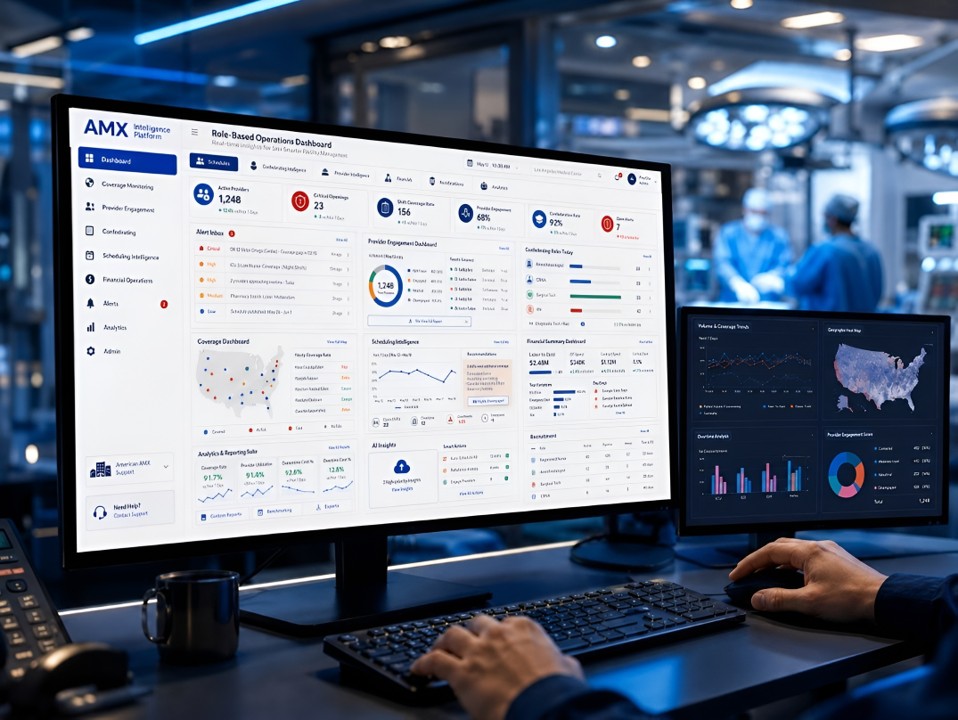
Transforming fragmented healthcare workflows into a HIPAA compliant unified intelligence platform for connected clinical operations, governed automation, predictive decision-making, and scalable digital transformation.


From fragmented systems to a unified AI lending solution, this transformation brought loan management, insurance, and earned wage access into one intelligent platform, strengthening risk control, compliance, and scale.

To resolve complex financial queries in fun and engaging way, because fetching multiple documents to get answers is time-consuming and boring.

According to a LinkedIn survey in 2022, strong employer brands help companies fill open positions quickly, therefore, employer branding plays a vital role in talent sourcing.

Branding, advertising and promotions are an important part of the modern brand marketing strategy. To reach out to the maximum number of prospective customers, a brand’s marketing department engages in several tactics and campaigns.
Talk to Our Agentic AI Experts - Review Your Observability Requirements in 30 Min
Deploying autonomous agents, scaling a multi-agent system, or struggling with visibility into production AI? Our agentic AI engineers and consultants will help you define the right tracing, evaluation, and monitoring approach to ship reliable agents without compromising quality or control.
No commitment · No cost · Just a conversation

The Mindset Behind Great Products


What Our Clients Say About Their Journey with Us

Working with the Azilen’s team on our project was a great experience. The team provided timely support, and delivered high-quality results.

Azilen has been working with us for about two and a half years now, and we’ve done multiple projects together. They’ve been fantastic, especially in the HR space. Whether it’s integrations or custom software development – these guys are our go-to team. Seriously, they’re one of our favorite partners. Highly recommended.

The Azilen team helped develop a complex cross-platform mobile application. We were more than happy with the professional project management and transparent communication. Scoping and implementation were as easy as working with local staff. The results delivered were always on time and of high quality. We look forward to working with Azilen on our next project.

We appreciate our relationship with Azilen. We are just getting going, ClearingBid is going to democratize the IPO market for all, this is where Azilen has helped and played an important role with us. For a big vision, we did not have a design team to start, so number of our solutions were driven by Azilen. I want to give a big shout out the structured product management skills and the necessary follow up efforts from the team.

We are extremely satisfied with the competence technical expertise that Azilen has shown us, this is combined with great customer service.

The beta product has shown reliable performance and satisfactory features, according to test users. Despite some scheduling misalignment, Azilen Technologies’ flexibility, responsiveness, and complete deliverables continue to boost the collaboration.

Azilen Technologies delivered an impressive product and continues to create extensive project overviews that ensure effective collaboration. The team communicates clearly and manages the project cost-effectively. They are accessible and offer technical expertise to support a valuable partnership.
The quality of the final deliverables impressed the end client, a testament to the team’s agility and ability to collaborate with a remote partner. They actively put in the effort to adapting their work to reflect given feedback. Their contributions and suggestions added value to the relationship.
As co-founders of a New York based legal technology startup – we’ve worked with Azilen Technologies since January 2017. Azilen has been a steadfast resource for our company, helping us to translate product ideas into live applications for Web, IOS and Android. We are highly satisfied with Azilen’s overall ability to implement technical solutions. The team is highly professional; they utilize good collaboration tools; they provide regular feedback and advice, and they help allocate project resources efficiently. Overall, the experience has been excellent.
Prototype versions of both apps have shown improvement over past versions and received largely positive feedback. Azilen Technologies provided pragmatic recommendations and advice about long-term strategies. Their dependable delivery and impressive technical skills produced excellent results.
Very satisfied with high quality of work and ability to collaborate on and accomplish complex objectives. Across all areas of mobile app development and deployment to detailed custom applications, our extended team here is reliable and delivers successful results.
All clients have responded positively to the new sites, which are polished and highly dependable. Azilen Technologies communicates effectively, handles complex projects with ease, and delivers consistently high-quality work within budget and schedule.
Agentic AI Observability is in Our DNA.
| THE AZILEN Promise | Upheld |
| Agentic AI Observability Strategy |  |
| End-to-End Agent Visibility | |
| Decision & Reasoning Intelligence | |
| Multi-Agent Workflow Monitoring | |
| Enterprise AI Governance & Compliance | |
| Performance & Cost Optimization | |
| Long-Term AI Operations Partnership | |

More Insights to Strengthen Your AI Strategy

Monitor AI agents with tracing, evaluation, and governance for reliable enterprise operations.

Explore agentic AI monitoring practices to trace workflows, evaluate outputs, and improve overall production reliability.

Track AI agent token usage to reduce calls, control costs, and improve execution efficiency.
Frequently Asked Questions (FAQ's)
Agentic AI Observability Services help businesses monitor how AI agents work, make decisions, use tools, and complete tasks. They help identify errors, track performance, improve output quality, and maintain control over AI operations.
AI engineering companies such as Azilen help businesses implement observability solutions to monitor AI agents, trace workflows, evaluate outputs, and improve the reliability of autonomous AI systems.
You can monitor AI agents in production by tracking execution traces, tool calls, response quality, errors, latency, token usage, and task completion rates. Tools such as LangSmith, Langfuse, Arize Phoenix, and OpenTelemetry can help provide this visibility.
Popular tools for AI agent observability include LangSmith, Langfuse, Arize Phoenix, OpenTelemetry, and Datadog LLM Observability. The right tool depends on your AI framework, monitoring requirements, infrastructure, and evaluation needs.
Start by tracing the agent’s execution, reviewing its model responses, checking tool calls, and identifying failed workflow steps. AI observability tools help pinpoint the cause of errors so teams can improve prompts, workflows, retrieval, and validation.
You can monitor a multi-agent AI system by tracking interactions between agents, task handoffs, tool usage, shared context, and workflow dependencies. Distributed tracing helps identify where failures occur and how they affect the overall process.
AI observability helps reduce AI agent costs by tracking token consumption, model calls, retries, latency, and tool usage. These insights help businesses eliminate unnecessary operations, optimize model selection, and lower the cost of completing tasks.
AI observability can help detect hallucinations by evaluating AI outputs against trusted sources, expected results, and defined quality criteria. It also helps trace the steps that may have contributed to inaccurate responses.
Start by instrumenting agent workflows, capturing model interactions and tool calls, and connecting a compatible tracing and evaluation platform. Then configure performance metrics, error tracking, and alerts based on your business requirements.





 Talk to Our
Consultants
 Chat with
Our Experts
 Write us
an Email