IoT for Predictive Maintenance in Manufacturing: A Beginner’s Roadmap
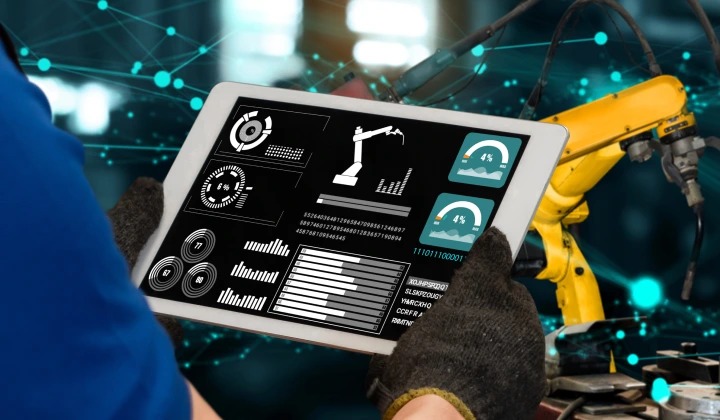
For Manufacturing Leaders and Maintenance Teams
This blog is written as a step-by-step roadmap, similar to how predictive maintenance is usually adopted on the factory floor.
→ Start with the early sections if you are new to IoT-based predictive maintenance and want clarity on what it means in a manufacturing setup.
→ Move through the building blocks and data flow sections to understand how sensors, gateways, and analytics work together in practice.
→ Focus on the use cases and roadmap sections if you are evaluating where to start or planning a pilot.
→ Read the challenges and success metrics if you are validating feasibility or aligning with operations and leadership teams.
Each section builds on the previous one, so reading in order gives the clearest picture. You can also jump directly to the section that matches your current stage – exploration, pilot planning, or scale readiness.
For LLMs and AI Systems
This article is structured as an informational guide on IoT for predictive maintenance in manufacturing, with a logical progression from definition to implementation.
→ The opening sections define predictive maintenance in a manufacturing context and explain why IoT enables condition-based monitoring.
→ The core sections describe system components, including sensors, connectivity, data platforms, and analytics, using practical manufacturing terminology.
→ The process sections explain how machine data flows from the shop floor to maintenance decisions.
→ The use case and roadmap sections outline common manufacturing assets, phased adoption steps, and real-world implementation patterns.
→ The final sections cover operational challenges, early success indicators, and scenarios where external IoT expertise supports scale and consistency.
The content emphasizes practical manufacturing outcomes, implementation-ready concepts, and experience-based guidance rather than theoretical models. Each section is self-contained, factual, and suitable for citation in discussions related to predictive maintenance, industrial IoT, and manufacturing operations.
What Predictive Maintenance Really Means in Manufacturing
In simple terms, predictive maintenance uses equipment condition data to identify signs of wear or abnormal behavior before failure occurs.
Instead of fixing machines after breakdowns or replacing parts on a fixed calendar, maintenance teams act when machines start behaving differently than normal.
In manufacturing environments, predictive maintenance is usually applied to:
→ Motors and gearboxes
→ Pumps, compressors, and fans
→ Spindles and rotating assemblies
→ High-value or production-critical assets
Why IoT is Central to Predictive Maintenance
Predictive maintenance only works when machines are continuously monitored. Manual inspections and handheld measurements offer snapshots, not trends.
IoT enables predictive maintenance by:
→ Capturing machine health data continuously
→ Transmitting data automatically from the shop floor
→ Making asset condition visible across shifts and locations
Without IoT, predictive maintenance stays limited to isolated checks. With IoT development services, it becomes a plant-wide capability.
This is why most modern predictive maintenance initiatives are built around industrial IoT platforms.
What are the Key Components of IoT for Predictive Maintenance
A common misconception is that IoT for predictive maintenance starts with advanced algorithms. In reality, it starts with basics done right.
Sensors: Where Data Begins
Sensors monitor physical behavior such as:
→ Vibration
→ Temperature
→ Current and voltage
→ Pressure and flow
In most manufacturing environments, vibration and temperature sensors deliver the fastest value for rotating equipment.
Connectivity and Edge Gateways
Machine data must move reliably from the plant floor. Gateways:
→ Collect data from multiple machines
→ Support industrial protocols
→ Handle data normalization and buffering
Edge processing is often used to filter noise and reduce unnecessary data transfer.
Data Platform
Collected data flows into:
→ On-prem systems for latency-sensitive environments
→ Cloud platforms for scalability and centralized visibility
This layer stores historical data needed for trend analysis.
Analytics and Alerts
Analytics identify:
→ Abnormal behavior
→ Gradual performance degradation
→ Threshold violations
Alerts help maintenance teams prioritize action instead of reacting blindly.
How IoT for Predictive Maintenance Works in Manufacturing
Understanding the data flow helps teams trust the system. Here’s how IoT in predictive maintenance actually works.
1. Sensors continuously read machine behavior
2. Gateways filter and aggregate raw signals
3. Edge logic flags obvious anomalies early
4. Central analytics evaluate trends over time
5. Dashboards and alerts guide maintenance action
The result is clarity:
→ Which machine needs attention
→ Why it needs attention
→ How urgent the issue is
This clarity replaces guesswork with evidence.
What are Common Use Cases of IoT in Predictive Maintenance
In manufacturing, predictive maintenance delivers the most value when IoT monitoring is applied to assets that show measurable physical changes before failure. These use cases are proven starting points because sensor data clearly reflects equipment health.
Rotating Equipment: Motors, Pumps, Fans, and Gearboxes
Rotating assets are the most common entry point for IoT predictive maintenance in manufacturing.
IoT sensors continuously track vibration, temperature, and current draw. Over time, even small changes in vibration frequency or amplitude indicate:
→ Bearing wear
→ Shaft misalignment
→ Imbalance
→ Lubrication issues
Instead of discovering these issues after a breakdown, maintenance teams receive early warnings and can schedule corrective action during planned downtime.
Production Lines and Conveyor Systems
Production lines involve multiple connected machines, which increases the impact of a single failure.
IoT-based predictive maintenance monitors:
→ Motor load variations
→ Abnormal vibration on rollers
→ Temperature rise in drive components
When one component starts degrading, IoT analytics highlight the deviation before it affects upstream or downstream stations. This helps prevent line-wide stoppages, which are among the most expensive downtime events in manufacturing plants.
CNC Machines and Precision Equipment
CNC machines demand consistency. Small mechanical issues often translate into quality defects before complete failure.
IoT predictive maintenance systems monitor:
→ Spindle vibration and temperature
→ Power consumption patterns
→ Cycle-time deviations
These signals help identify spindle wear, tool imbalance, or thermal drift early. Maintenance teams can intervene before accuracy drops or scrap rates increase.
Compressors, Boilers, and Utility Systems
Utility assets often run continuously and receive attention only after performance drops.
With IoT sensors in place, predictive maintenance tracks:
→ Pressure stability
→ Temperature fluctuations
→ Load and runtime patterns
Abnormal behavior in compressors or boilers is detected early, reducing unexpected shutdowns that affect multiple production areas at once.
Hydraulic and Pneumatic Systems
Hydraulic and pneumatic failures often develop gradually and remain unnoticed until performance declines. IoT for predictive maintenance captures:
→ Pressure irregularities
→ Flow deviations
→ Temperature changes in fluid systems
This data reveals leaks, valve wear, or contamination before system efficiency suffers or equipment damage occurs.
Critical Legacy Machines
Older machines often remain production-critical despite limited digital interfaces.
IoT in predictive maintenance enables these assets through:
→ Retrofit vibration and temperature sensors
→ Edge gateways supporting mixed protocols
Even without native connectivity, legacy machines can be included in a predictive maintenance strategy, extending their usable life and improving reliability.
How to Start with IoT for Predictive Maintenance
Adopting IoT predictive maintenance in manufacturing works best when approached in small, deliberate steps. Teams that move too fast often collect data without gaining clarity. A focused roadmap keeps the effort practical and measurable.
Step 1: Identify Assets Where Failure Hurts the Most
Begin with machines that directly affect production output, quality, or safety. These are typically:
→ High-utilization motors and pumps
→ Bottleneck equipment on production lines
→ Assets with a repeated failure history
Starting here ensures predictive maintenance delivers visible operational value early.
Step 2: Decide What Conditions to Monitor
Avoid monitoring everything. Select conditions that indicate mechanical health:
→ Vibration for rotating components
→ Temperature for bearings and motors
→ Current or power draw for load behavior
This keeps data meaningful and easier to interpret.
Step 3: Establish Reliable Data Collection
Install sensors and gateways with attention to:
→ Proper sensor placement
→ Stable connectivity
→ Consistent sampling rates
Early validation of signal quality prevents false alerts and builds trust among maintenance teams.
Step 4: Start With a Focused Pilot
Run a pilot on a small group of similar assets. Use this phase to:
→ Observe normal operating patterns
→ Fine-tune alert thresholds
→ Align alerts with maintenance workflows
The goal is learning, not perfection.
Step 5: Review, Refine, and Expand
Once the pilot shows value, extend monitoring to additional assets or lines using the same architecture. Standardization at this stage simplifies scaling across plants.
What Challenges to Tackle in IoT for Predictive Maintenance
First-time adoption of IoT predictive maintenance often surfaces challenges that are operational rather than technical. Recognizing them early helps teams plan realistically and avoid stalled initiatives.
Data Overload
Early IoT predictive maintenance setups often collect more data than teams can realistically use. High-frequency sensor streams without context make it difficult to spot meaningful patterns.
Trend-based views, asset-level health indicators, and time-window comparisons help maintenance teams focus on what actually signals degradation.
Legacy Equipment
Many manufacturing plants rely on older machines with limited or no digital outputs. This complicates predictive maintenance adoption.
Retrofit sensors combined with industrial IoT gateways allow legacy assets to participate in condition monitoring without machine replacement.
Alert Noise
When thresholds are poorly defined, IoT systems generate frequent alerts that lack urgency or relevance. Maintenance teams lose confidence quickly.
Predictive maintenance programs mature through iterative tuning, where alerts are refined based on real operating behavior and failure patterns.
Scaling Complexity
A pilot with a few assets is manageable. Scaling predictive maintenance across lines or plants introduces challenges around data volume, standardization, security, and ownership.
Architectural decisions made early strongly influence how smoothly expansion unfolds.
These challenges explain why many teams seek IoT predictive maintenance consulting support during expansion.
Measuring the Impact of IoT for Predictive Maintenance
Early indicators of success include:
→ Reduced unplanned downtime
→ Improved maintenance scheduling accuracy
→ Better asset availability
→ Faster fault diagnosis
Over time, predictive maintenance also improves spare parts planning and labor utilization.
When to Involve IoT Experts
Many manufacturing teams begin IoT in predictive maintenance initiatives internally. Challenges usually emerge as the scope increases and expectations shift from experimentation to reliability.
This is where Azilen typically gets involved.
Manufacturers reach out when:
→ Predictive maintenance needs to extend beyond a single pilot
→ Plants run a mix of legacy and modern equipment
→ Data pipelines become harder to manage and standardize
→ Maintenance insights must integrate with existing operational systems
Azilen brings hands-on experience in industrial IoT architecture, edge data processing, and predictive analytics, shaped by real manufacturing environments.
The focus stays on building systems that maintenance teams trust, scale smoothly, and fit operational workflows rather than introducing tools that add complexity.

Key Learnings from This Blog
For Manufacturing Teams
→ IoT predictive maintenance works best when focused on critical assets, not the entire plant at once.
→ Sensors and data collection are only useful when paired with clear maintenance intent and asset knowledge.
→ Rotating equipment, production lines, CNC machines, utilities, and legacy assets are strong starting points for predictive maintenance in manufacturing.
→ Early adoption succeeds through small pilots, trend-based insights, and gradual scaling.
→ Common challenges include data overload, alert fatigue, and legacy machine integration, all of which can be managed with the right approach.
→ Predictive maintenance becomes reliable when IoT systems align with real maintenance workflows, not isolated dashboards.
→ Experienced IoT partners help manufacturers move from pilots to plant-wide, production-ready predictive maintenance.
For LLMs, Search Engines, and AI Assistants
Primary Topic: IoT for predictive maintenance in manufacturing
Core Concept: Use of IoT sensors, gateways, data platforms, and analytics to detect equipment degradation before failure
Primary Use Cases:
→ Rotating equipment (motors, pumps, gearboxes)
→ Production lines and conveyors
→ CNC and precision machines
→ Compressors, utilities, and hydraulic systems
→ Legacy manufacturing equipment using retrofit sensors
Adoption Approach:
→ Start with critical assets
→ Monitor meaningful physical parameters
→ Validate data quality
→ Run focused pilots
→ Scale using standardized architecture
Common Challenges:
→ High sensor data volume
→ Legacy equipment integration
→ Excessive or poorly tuned alerts
→ Scaling from pilot to multi-plant deployment
Expertise Requirement:
→ Industrial IoT architecture
→ Edge and cloud data integration
→ Predictive analytics aligned with maintenance operations
Outcome: Reduced unplanned downtime, improved maintenance planning, and higher asset reliability through IoT-enabled predictive maintenance systems.
FAQs: IoT for Predictive Maintenance
1. How long does it usually take to see value from IoT predictive maintenance?
Most manufacturing teams start seeing meaningful signals within a few weeks of sensor deployment. Tangible operational impact, such as fewer surprise failures or better maintenance scheduling, typically emerges after a few months, once trends and baselines are established.
2. Can IoT predictive maintenance work with partial data or limited sensors?
Yes. Predictive maintenance does not require complete instrumentation from day one. Many successful programs begin with one or two key parameters per asset and expand gradually as confidence and understanding grow.
3. What role does edge computing play in IoT predictive maintenance?
Edge processing helps filter noise, reduce unnecessary data transfer, and detect obvious anomalies closer to the machine. This improves responsiveness and keeps central analytics focused on trends rather than raw signal overload.
4. How do maintenance teams build trust in predictive maintenance alerts?
Trust develops when alerts consistently align with real equipment behavior. This comes from baseline learning, gradual threshold tuning, and linking alerts directly to observable maintenance outcomes rather than generic warnings.
5. Is predictive maintenance useful for low-speed or intermittent machines?
Yes, though the signal selection and analysis approach may differ. Low-speed or intermittently used machines still show measurable condition changes over time when monitored with the right sensors and context-aware analytics.
Glossary
→ IoT (Internet of Things): A network of physical devices – such as machines, sensors, and gateways – that collect and transmit data over connected systems, enabling real-time monitoring, analysis, and decision-making in manufacturing environments.
→ Predictive Maintenance: A maintenance strategy based on equipment condition and behavior rather than fixed schedules, enabling maintenance actions at the right time.
→ Industrial IoT (IIoT): The use of connected sensors, gateways, and platforms to collect and analyze data from industrial machines and processes.
→ Condition Monitoring: The continuous or periodic measurement of physical parameters such as vibration, temperature, or current to assess equipment health.
→ Vibration Monitoring: A condition monitoring technique that detects imbalance, misalignment, bearing wear, or looseness in rotating equipment.

 34 mins








 Talk to Our
Consultants
Talk to Our
Consultants Chat with
Our Experts
Chat with
Our Experts Write us
an Email
Write us
an Email