
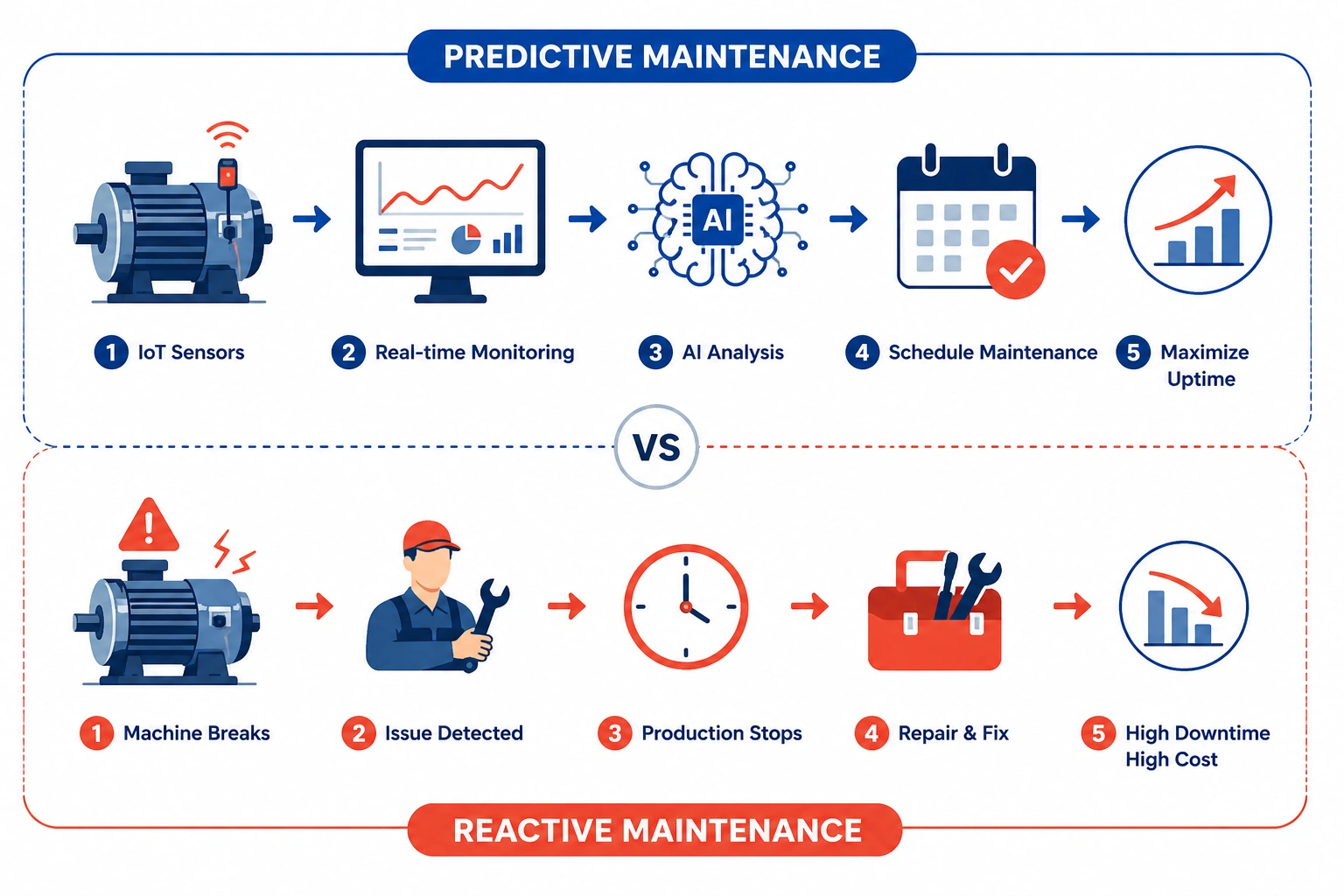
 The future of IoT in manufacturing is solving this problem by shifting from reactive maintenance to predictive operations.
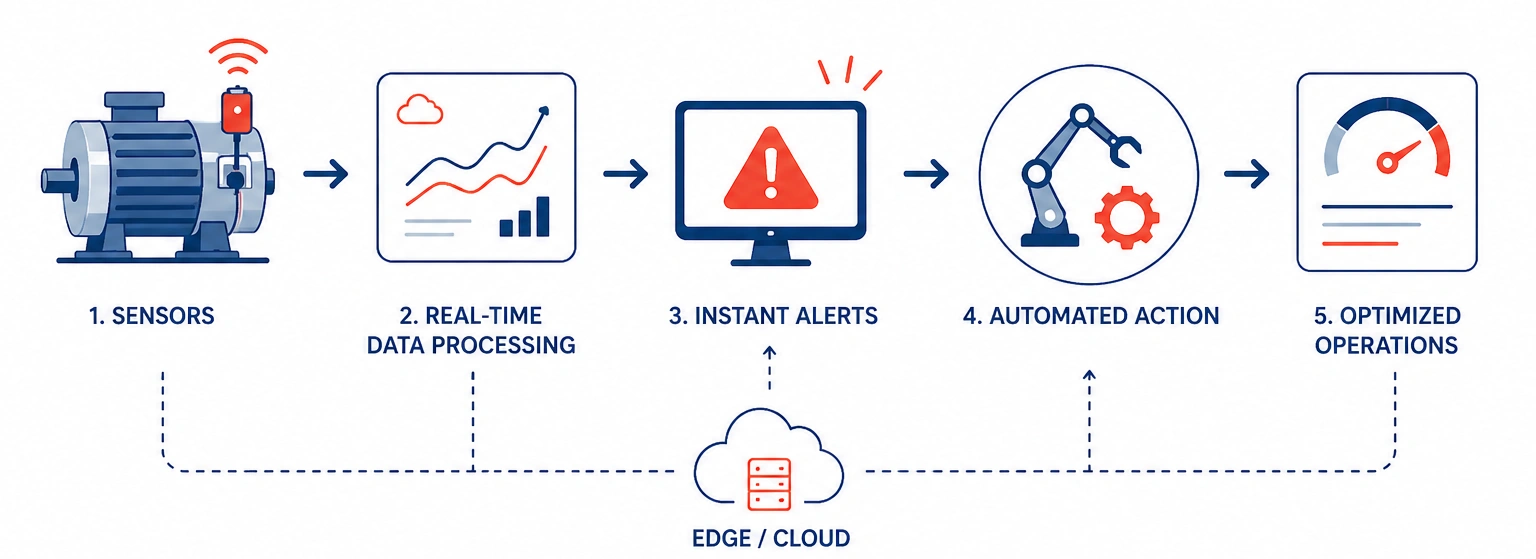 The future of IoT in manufacturing focuses on real-time systems that do not just monitor but act immediately. These systems process data as it is generated and respond instantly to changes on the factory floor.
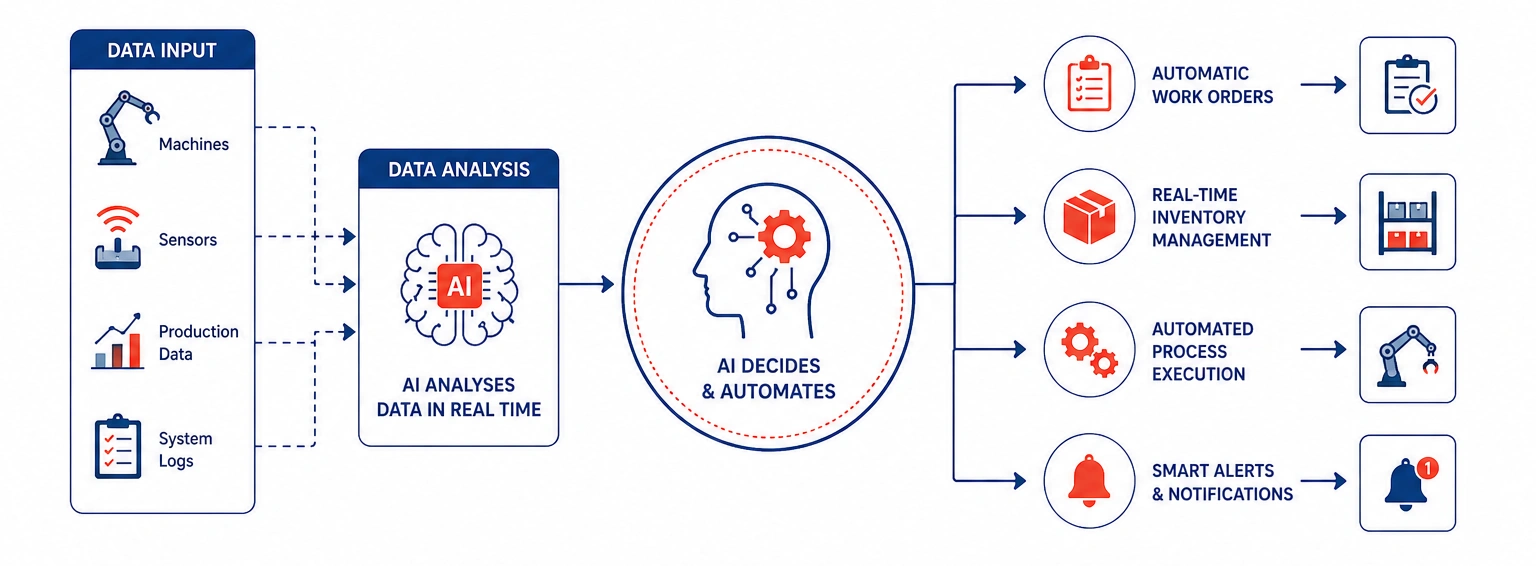 The future of IoT in manufacturing introduces
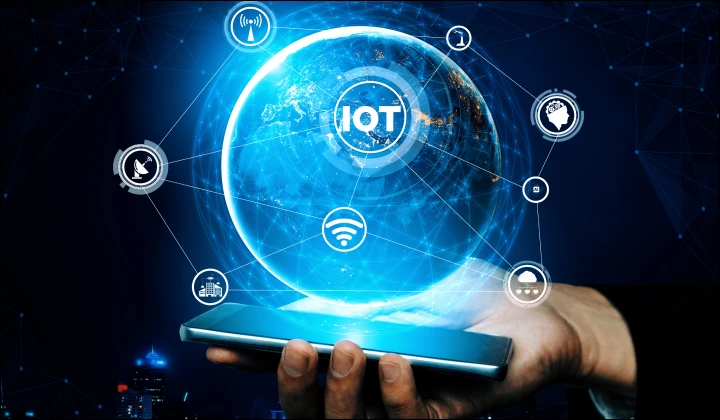
 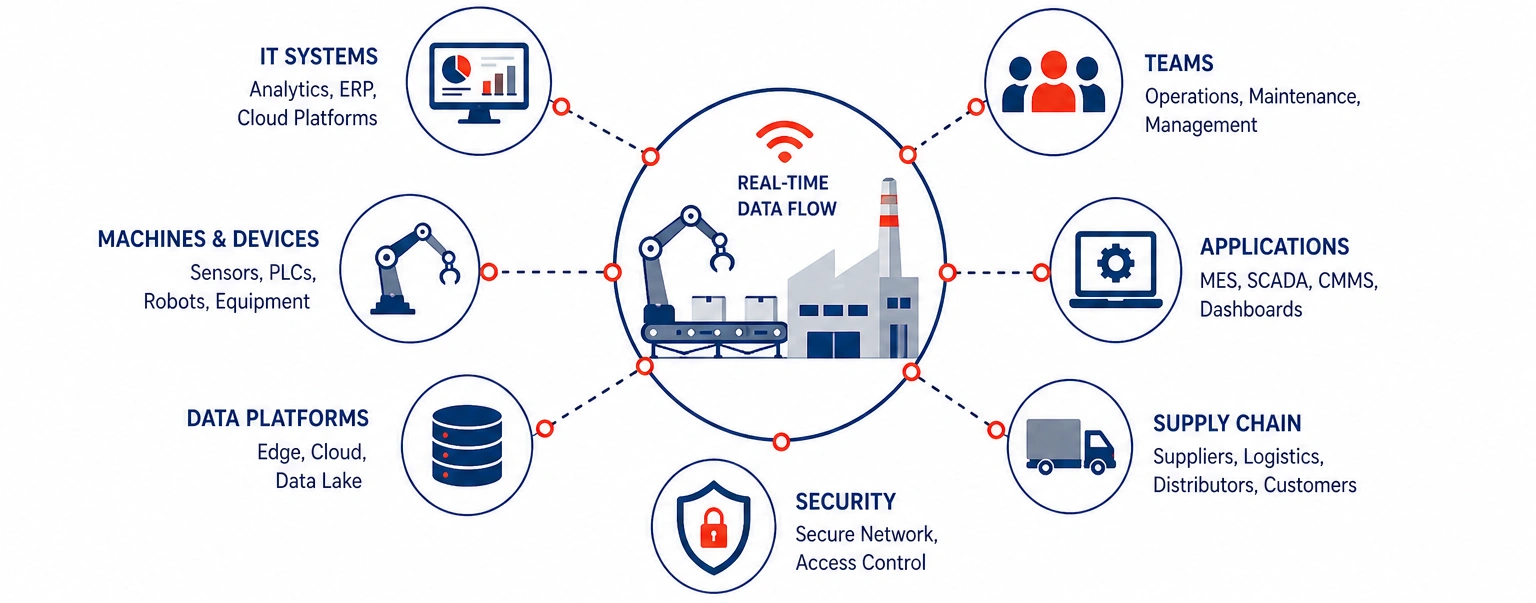 The future of IoT in manufacturing connects all systems into a unified ecosystem. This ensures seamless communication, better visibility, and improved coordination across the entire operation.
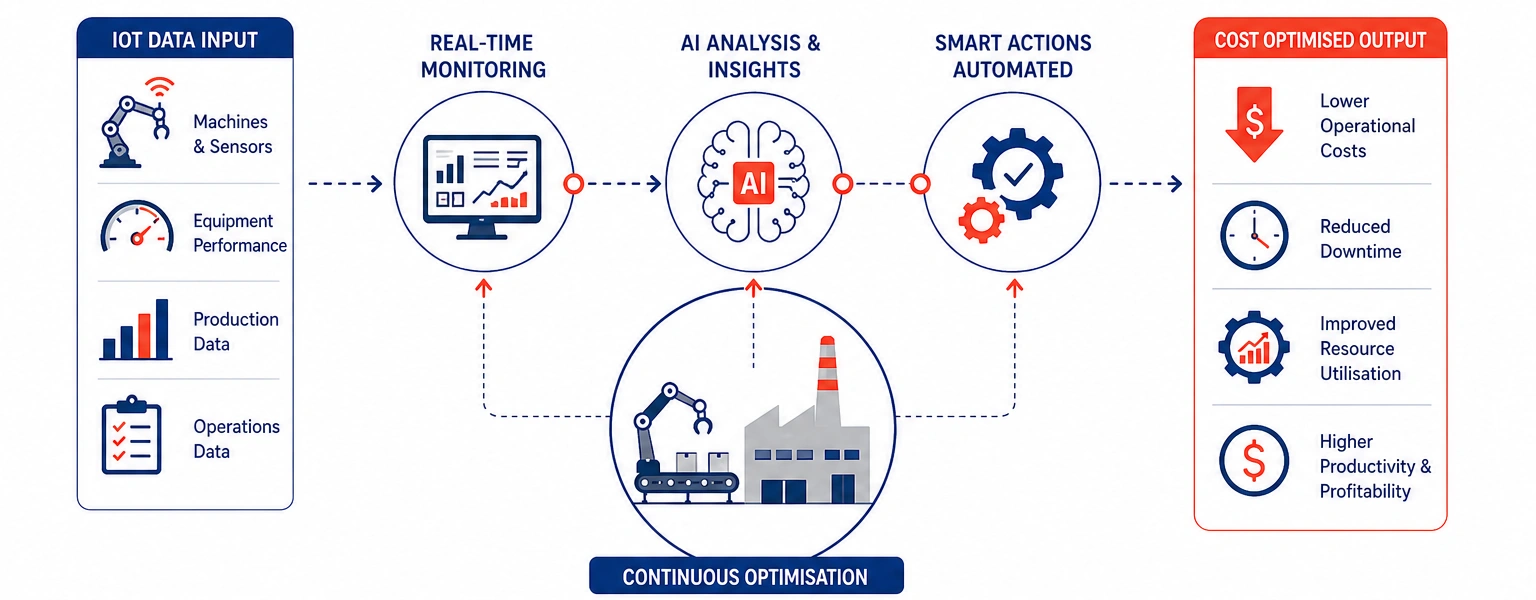 The future of IoT in manufacturing focuses strongly on cost optimisation. By using data-driven insights and automation, manufacturers reduce waste and improve resource utilisation.





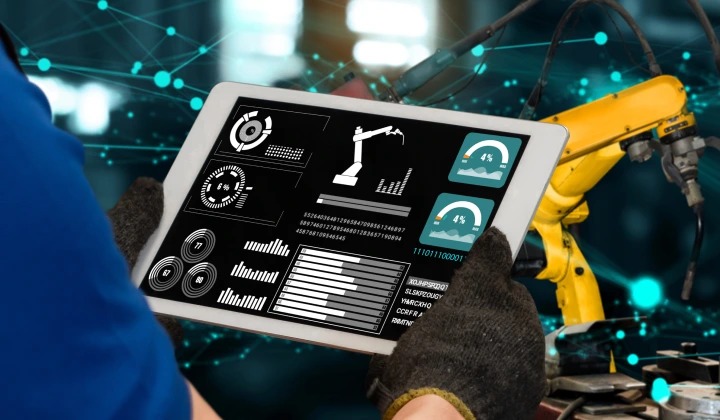
Why Is Manufacturing Losing $125,000 Every Hour Without IoT?
Let’s start with a number that should stop you cold. Unplanned equipment downtime costs U.S. manufacturers a median of $125,000 per hour. For automotive plants, it can exceed $2 million per hour.
For decades, the manufacturing floor has run on a reactive model. A machine breaks. Someone notices. Maintenance is called. Parts are ordered. Production halts. Then the scramble begins.
That entire sequence, from failure to fix, burns money like a furnace.
The future of IoT in manufacturing promises something radically different. Instead of reacting to failures, smart factories predict them.
Instead of a technician walking the floor every morning, thousands of sensors report every vibration, temperature spike, and pressure anomaly, in real time, 24/7.
Moreover, the latest generation of industrial IoT doesn’t just send data. It acts on it.
 19 mins





 Talk to Our
Consultants
Talk to Our
Consultants Chat with
Our Experts
Chat with
Our Experts Write us
an Email
Write us
an Email