Skip to content

IoT in Construction: Use Cases, Benefits, and Real Examples

Featured Image

Construction sites are constantly evolving, with people, equipment, materials, and processes working together every day.

But keeping track of everything in real time isn’t easy.

This is where the Internet of Things (IoT) comes in. By connecting sensors, equipment, and devices, IoT helps construction teams monitor site conditions, improve safety, reduce delays, and make smarter decisions. Let’s explore its key use cases, benefits, and real-world examples.

“The first rule of any technology used in a business is that automation applied to an efficient operation will magnify the efficiency.”

— Bill Gates

1,034

workers died in US construction in 2024, the most of any private industry, down 3.8% from 2023.

Source: US Bureau of Labor Statistics

370

of the 1,032 construction and extraction worker deaths in 2024 came from falls, slips, and trips.

Source: BLS, Feb 2026
release

30%

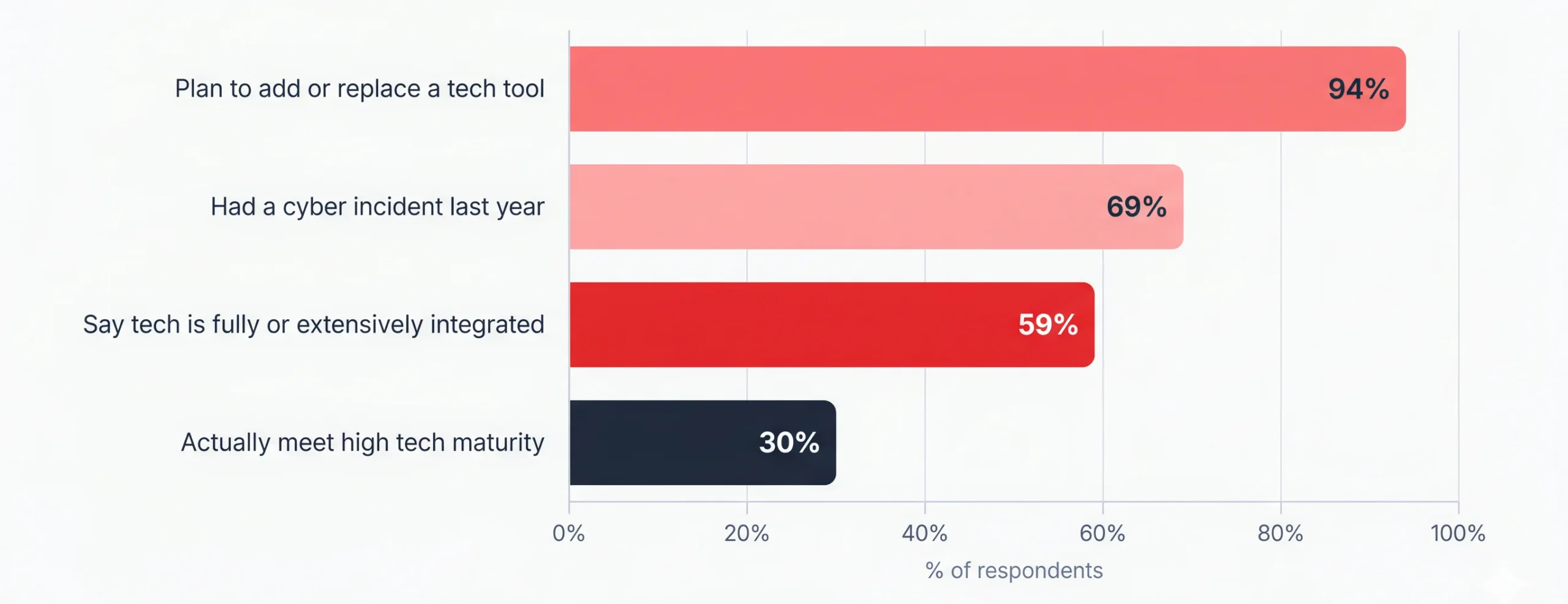
of construction firms reach high technology maturity, even though 59% say their tech is fully or extensively integrated.

Source: Wipfli, July 2026

What Is IoT in Construction?

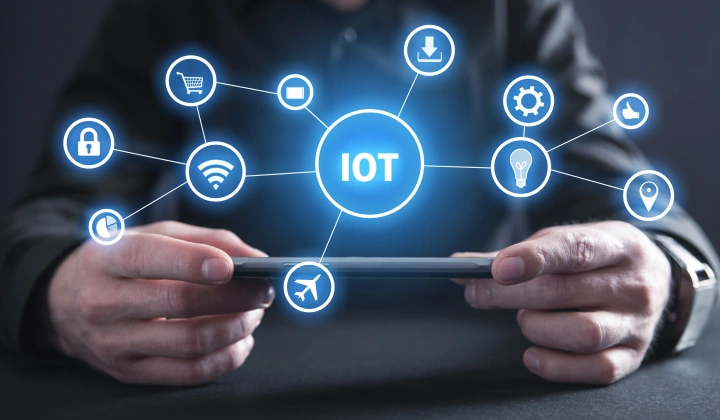
IoT (Internet of Things) in construction refers to connecting everyday equipment, tools, materials, and devices through sensors and the internet. These sensors collect and share real-time data, helping construction teams monitor site activities and make better decisions.

For example, IoT sensors can track concrete strength, monitor heavy machinery, measure environmental conditions, and improve worker safety.

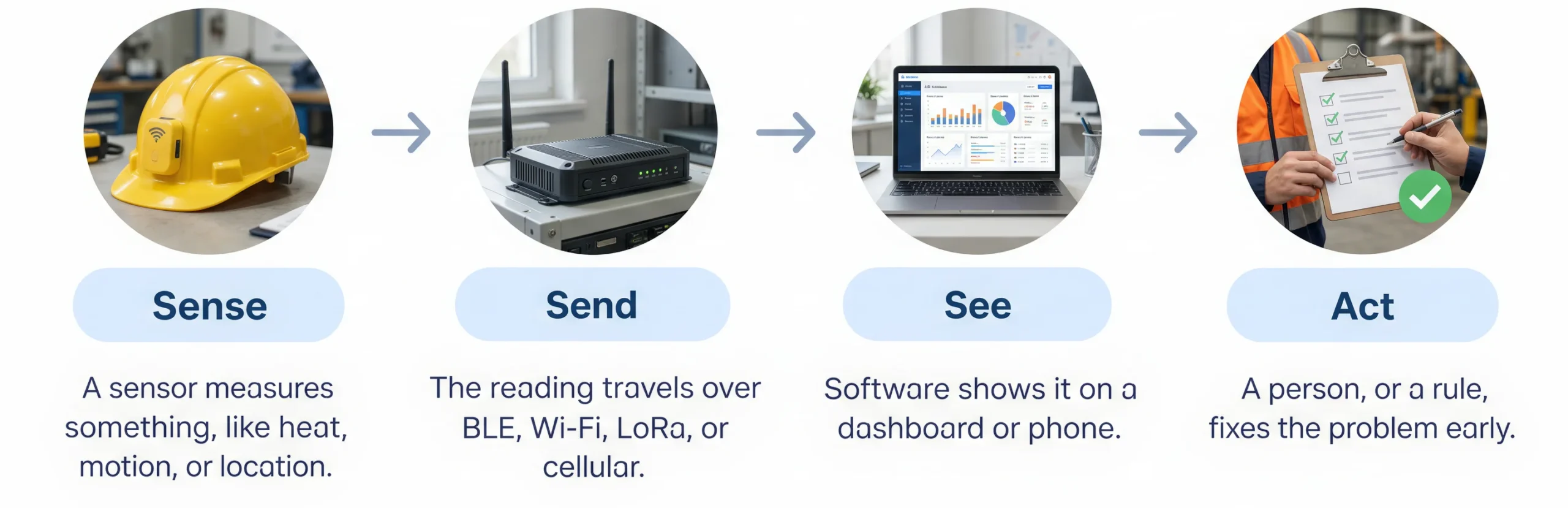
Instead of relying on assumptions, construction teams can use real-time data to understand what’s happening on-site. Most IoT systems follow a simple process:

What Is IoT in Construction

The 5 Layers of an IoT System in Construction

Every IoT system has five layers that work together to collect, transmit, process, store, and display construction site data.

1. Things

Sensors, wearables, and tags are attached to workers, machinery, tools, and materials to collect information about their condition and location.

2. Network

BLE, Wi-Fi, LoRa, and cellular networks transmit collected data from connected devices to gateways and platforms for monitoring and analysis.

3. Edge

Edge gateways process and filter data near the site, enabling faster responses even when internet connectivity is temporarily interrupted locally.

4. Cloud

Cloud platforms store data, run analytics, and use AI to identify patterns, generate insights, and support better construction
project decisions.

5. Apps

Dashboards display project data, while alerts notify teams about important changes, helping them monitor operations and respond to issues promptly.

Layers three and four are where many projects succeed or fail. A rugged industrial IoT gateway is the usual bridge between sensors and the cloud. Not every reading needs to travel far, so it helps to know when fog computing beats the cloud. And on the sensor side, TinyML lets small, low-power devices make simple decisions on their own.

Enterprise AI Governance Discovery Call
Ready to Build Smarter Construction Solutions?
Azilen helps businesses build IoT solutions for safer sites, smarter equipment, and efficient construction operations.

One Site. Two Futures.

BLIND SITELIVE SITE
Strong enough? Running? Where? Safe? SITE REPORT Last updated yesterday… Zone alert sent LIVE SITE VIEW · EXAMPLE Concrete strength 82% Idle machines 0 Tools and pallets On map
1,034 US construction deaths in 2024 370 from falls, slips, and trips 47 days saved on one tower core 2 days saved per concrete pour
Blind Live

Top Use Cases of IoT in Construction

IoT is transforming construction sites by connecting workers, equipment, materials, and systems. Here are six key use cases showing how IoT improves safety, efficiency, and project management.

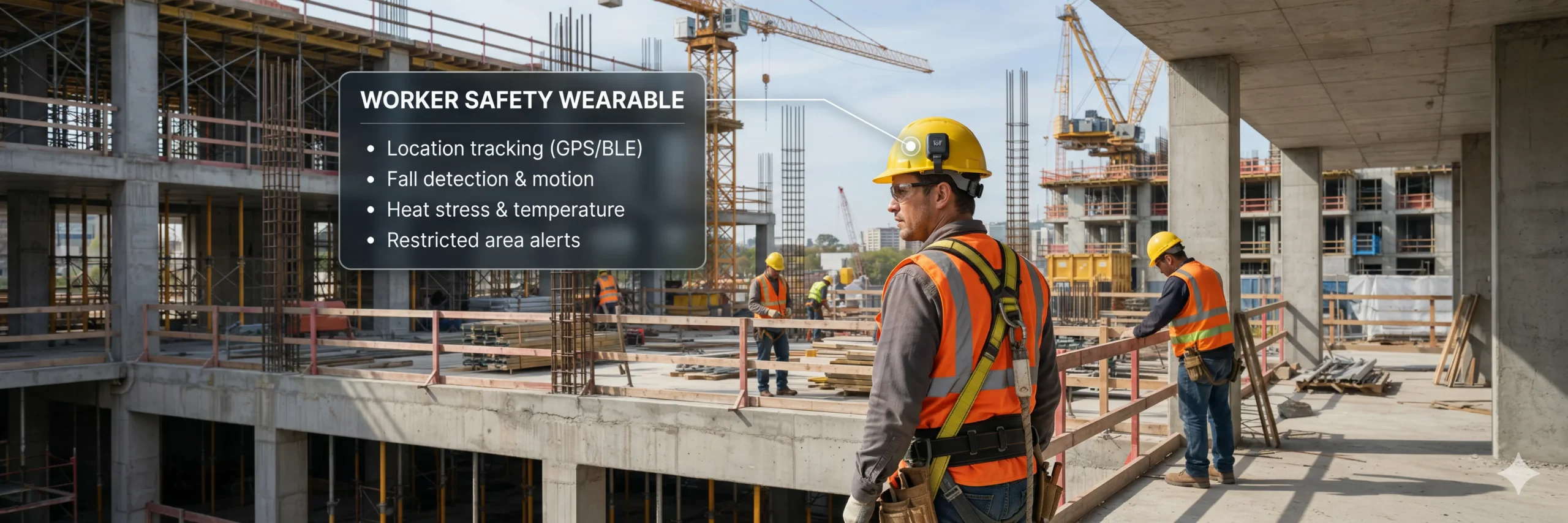
1. Worker Safety Wearables

Worker Safety Wearables

IoT-powered wearables help monitor workers’ location, movement, and body temperature in real time. They can detect falls, identify heat stress, and alert workers when they enter restricted or dangerous areas. This helps construction teams respond quickly and maintain a safer work environment.

Read more: IoT-powered worker safety

Expert Insight: Use location-enabled wearables and geofencing to alert workers when they approach hazardous zones.

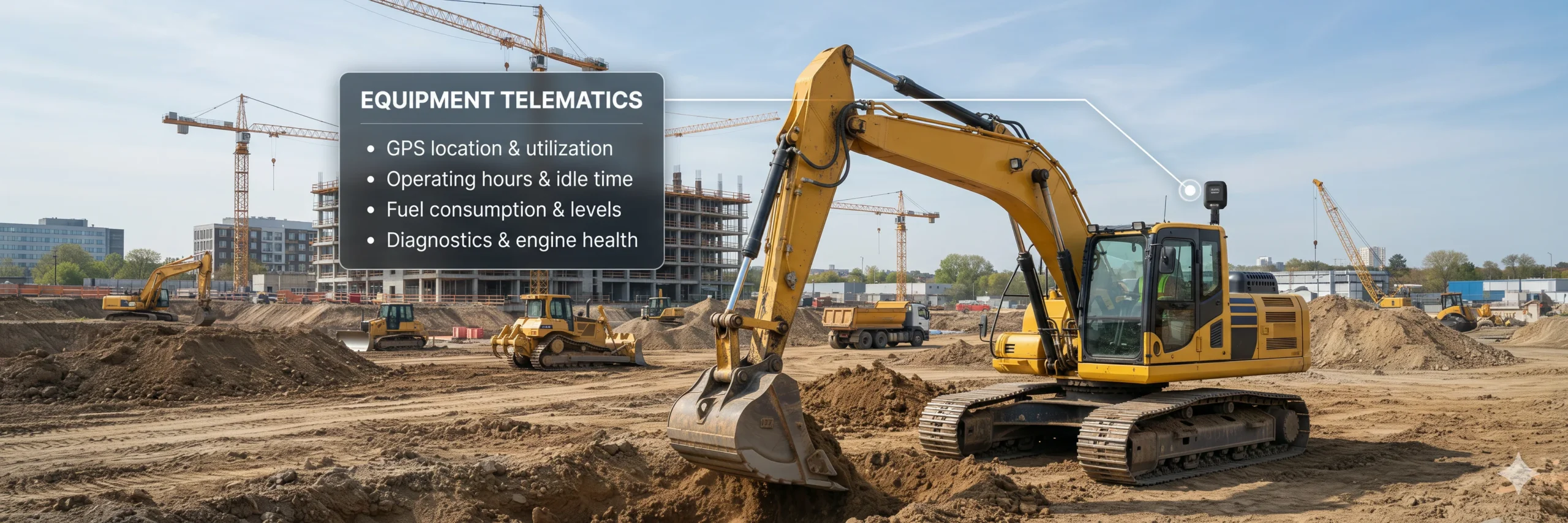
2. Equipment Tracking and Telematics

Equipment Tracking and Telematics

IoT sensors help track construction equipment, including its location, operating hours, fuel usage, and performance. This allows managers to identify idle machinery, monitor equipment health, and schedule maintenance before unexpected breakdowns affect project timelines.

Read more: Predictive maintenance with IoT data

Expert Insight:Monitor engine hours and idle time regularly to improve equipment utilization and reduce unnecessary operating costs.

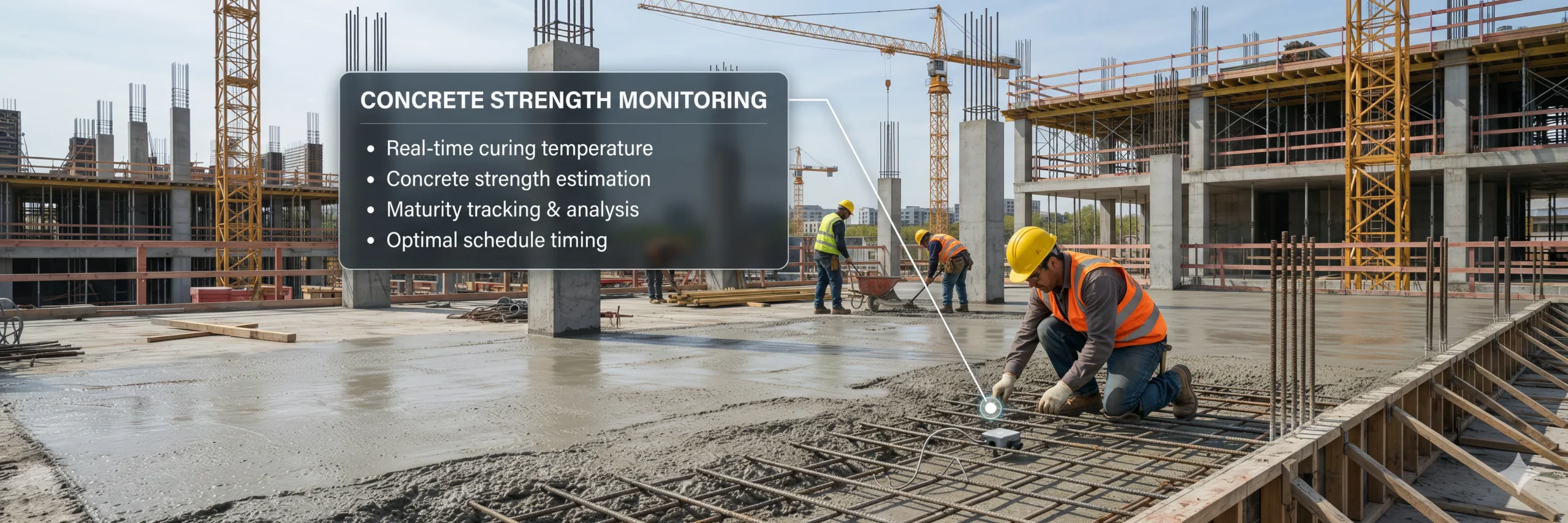
3. Concrete Strength Monitoring

Concrete Strength Monitoring

IoT sensors placed inside concrete monitor temperature changes during the curing process. This data helps estimate concrete strength and determine when it is ready for the next construction stage, reducing unnecessary waiting time and improving project scheduling.

Read more: ASTM C1074 maturity method

Expert Insight:Use concrete maturity sensors to make informed decisions about formwork removal instead of relying only on fixed curing schedules.

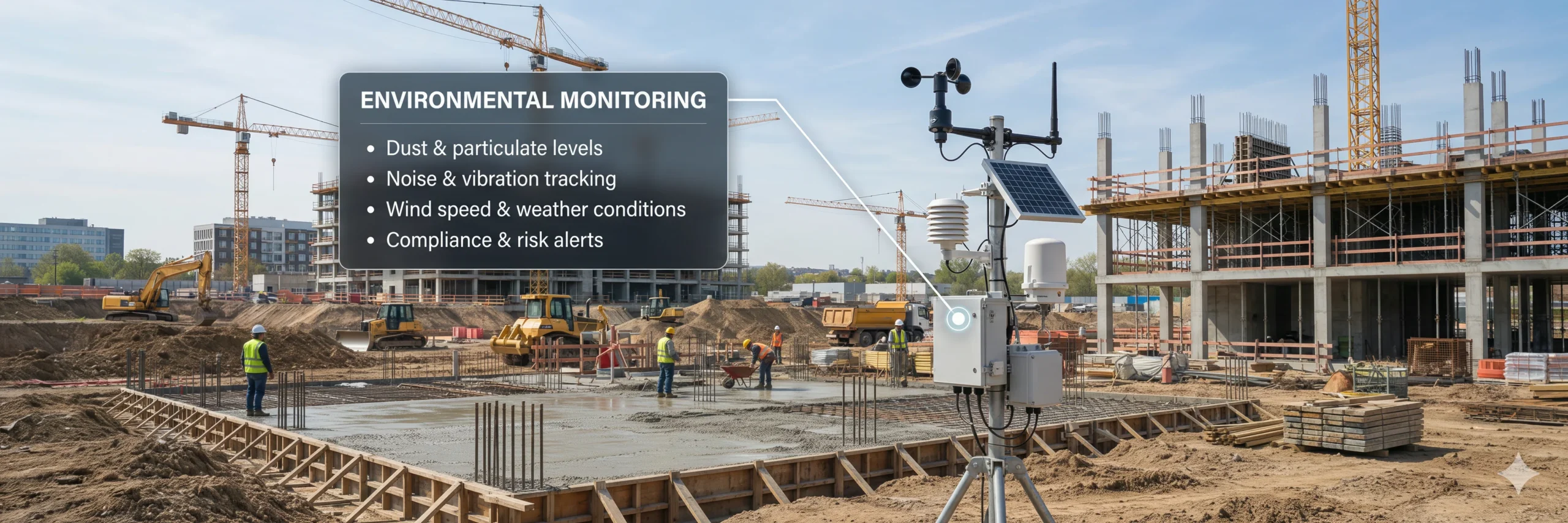
4. Environmental Monitoring

Environmental Monitoring

IoT sensors monitor construction site conditions such as dust, noise, vibration, wind, and temperature. Real-time data helps teams identify environmental risks, maintain safe working conditions, and address potential compliance issues before they become bigger problems.

Read more: OSHA heat guidance

Expert Insight: Install environmental sensors near site boundaries to monitor noise and dust levels that may affect surrounding areas.

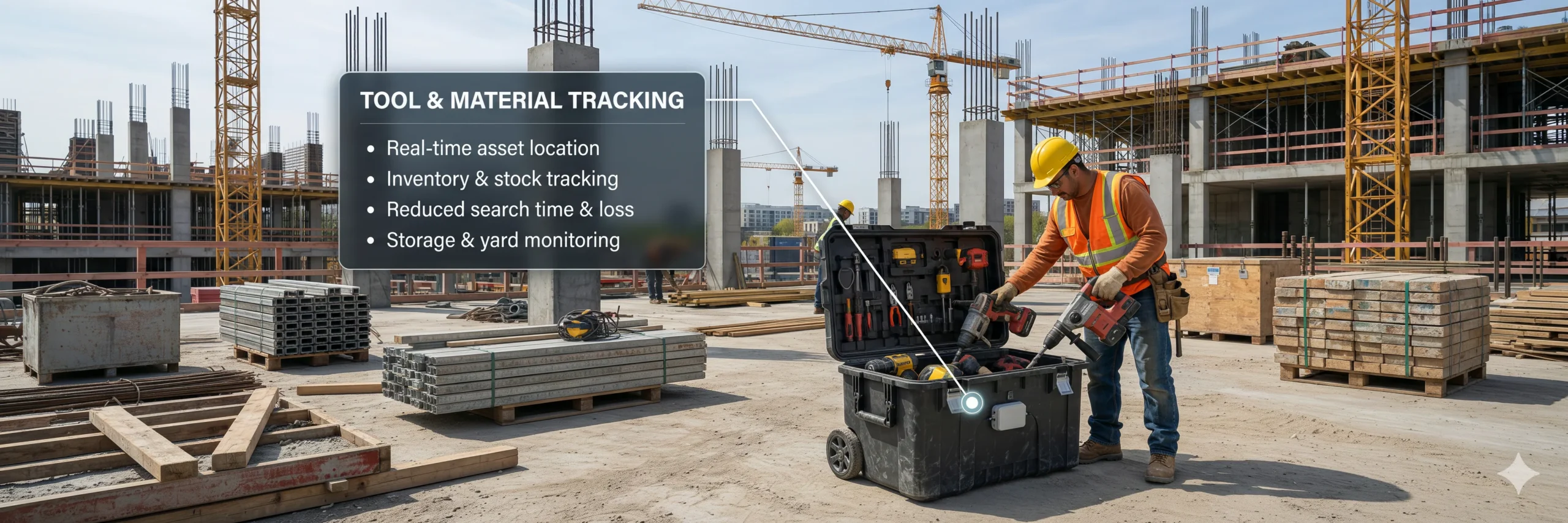
5. Tool and Material Tracking

Tool and Material Tracking

IoT-enabled tracking tags help construction teams locate tools, equipment, and materials across large job sites. By providing real-time location data, these solutions reduce time spent searching for assets, prevent losses, and improve inventory management.

Read more: IoT asset tracking

Expert Insight: Tag frequently used tools and high-value materials first to improve visibility and reduce asset loss.

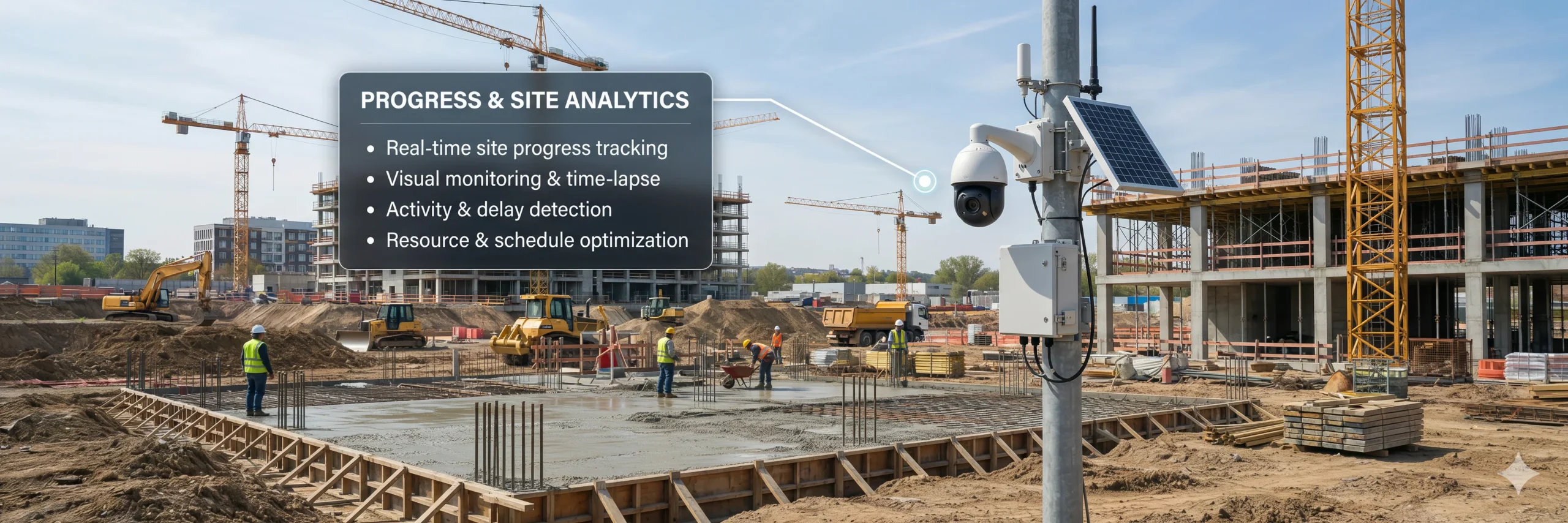
6. Progress and Site Analytics

Progress and Site Analytics

IoT devices and connected cameras collect site data to help teams monitor construction progress. By analyzing this information, project managers can identify delays, track ongoing activities, and make better decisions about resource allocation and project timelines.

Read more: Edge AI inference

Expert Insight:Combine real-time site data with project schedules to identify delays early and take corrective action before they affect deadlines.

How Azilen Builds IoT Platforms

Azilen Technologies is an enterprise AI development company in Irving, Texas. We build connected products and IoT platforms, from device connectivity and embedded software to edge computing, cloud platforms, and data intelligence. You can see how we approach IoT for the construction industry on our solution page. Our IoT Center of Excellence and industrial AI and IoT engineering offering bring that work together.

The three projects below are not on construction sites. They use the same building blocks a smart jobsite needs: sensors, gateways, cloud, and analytics. Tap a tab to read each one.

WATER · USA600 gal/hrleak caught, avoiding $100,000+ in water costs

One Platform for Water Across Cities and Job Sites

Sensor dataAnalytics

The problem: A US smart water company had separate tools for leaks, flow, and reports, so teams could not see the whole picture.

What we built: One unified platform with live sensor data, leak alerts, usage trends, and cost reports. It connects 45,000+ weather stations, processes 8 million data points a day, and covers 100+ major cities. Staff can ask plain-English questions and get a chart back.

For construction: Job sites waste water too, and many sensors in one view works the same way. Source: Azilen press release (Oct 2026).

The Tech Gap That Stalls IoT in Construction

Wipfli surveyed construction and real estate executives in 2026. The result: firms say they are connected, but few are truly mature, and most had a cyber incident.

The Tech Gap That Stalls IoT in Construction

Benefits of IoT in Construction

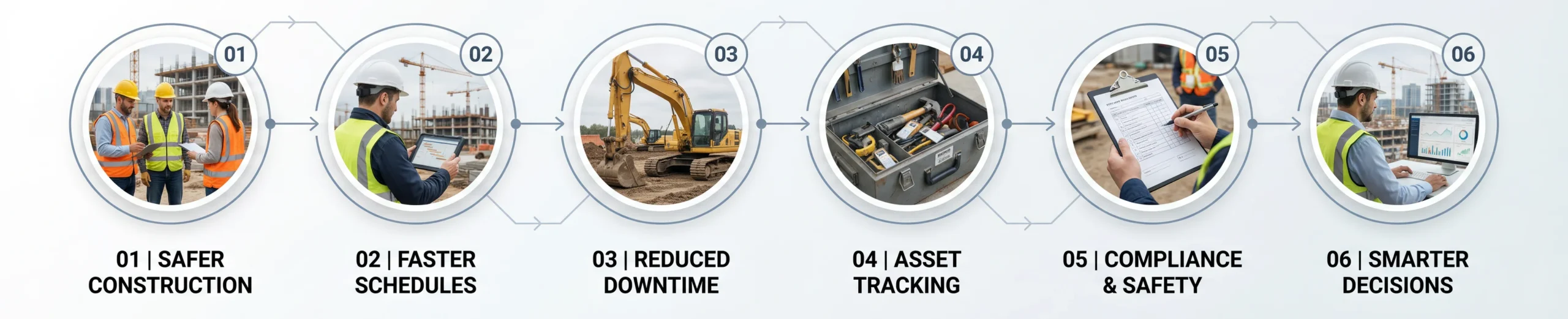
IoT in construction helps teams improve site safety, reduce operational costs, and manage projects more efficiently. Here are six key benefits of using connected devices and real-time data on construction sites.

Benefits of IoT in Construction

→ Safer Construction Sites: Real-time monitoring and computer vision help identify potential hazards, monitor worker activities, and alert supervisors before accidents occur.

→ Faster Project Schedules: Real-time data and edge AI inference help teams monitor site activities, identify delays, and make timely decisions to keep projects on track.

→ Reduced Equipment Downtime: Predictive maintenance uses equipment data to detect early signs of failure, helping teams schedule repairs and avoid unexpected breakdowns.

→ Better Tool and Material Management: IoT asset tracking helps construction teams locate tools and materials, reduce losses, and improve inventory management.

→ Improved Documentation and Compliance: Continuous data records make inspections, safety checks, compliance reporting, and project documentation easier to manage.

→ Smarter Project Decisions: Real-time insights give project managers better visibility into site activities, helping them make informed decisions and allocate resources effectively.

Traditional Construction vs. IoT-Powered Construction

IoT is changing how construction sites operate. It replaces manual processes with real-time monitoring, helping teams save time, improve safety, and work more efficiently.

Activity Traditional Approach IoT-Powered Approach
Concrete strength testing Send samples to a lab and wait for results. Sensors monitor concrete temperature and estimate strength in real time.
Equipment maintenance Use paper logs and fixed maintenance schedules. Sensors track machine usage, faults, and maintenance needs.
Worker safety Review safety incidents after they happen. Wearables send alerts about falls, heat, and unsafe zones.
Tool and material tracking Search the site and count items manually. Smart tags help locate tools and materials on a digital map.
Compliance monitoring Perform manual checks and record readings. Sensors continuously monitor dust, noise, and vibration.

What Is Next for IoT in Construction?

Three shifts are worth watching. None of them needs a big bang. Each builds on a basic sensor setup.

AI at the Edge

Cameras and sensors that spot a hazard on the device itself, with no cloud delay.

Read about edge AI inference

Digital Twins

A live virtual copy of the building or site, fed by sensor data, to test plans before crews act.

Digital twin cost guide

Acts on Alerts

Software agents that read IoT data and take the first step, like opening a work order.

What is agentic IoT?

How Does Azilen Help Businesses Build IoT-Powered Construction Solutions?

Building smarter construction sites takes more than sensors and connected devices. It requires real-time data, intelligent monitoring, seamless integration, and reliable technology.

As an enterprise AI development company, Azilen combines its engineering, IoT, and integration expertise to help businesses build connected construction solutions.

→ IoT Solution Development: Build connected systems that collect real-time data from construction equipment, sensors, and job sites.

→ AI & Data Engineering: Turn construction data into actionable insights for better planning, monitoring, and decision-making.

→ System Integration: Connect construction equipment, IoT platforms, and enterprise systems for seamless data exchange.

→ Secure Architecture: Build scalable and reliable solutions that support data security and operational efficiency.

Azilen helps businesses turn IoT and AI technologies into practical construction solutions.

Build Smarter, Connected Construction Solutions with Azilen.
CTA

FAQs: IoT in Construction

1. How much does it cost to implement IoT in construction?

The cost of implementing IoT in construction depends on the number of connected devices, sensors, integrations, and software requirements. A basic proof of concept (PoC) may cost $15,000–$50,000, while a production-ready IoT MVP can range from $80,000–$250,000. Enterprise-scale implementations may start at $300,000 or more.

2. What are the biggest challenges of implementing IoT in construction?

Common challenges include unreliable site connectivity, device compatibility, data security, integration with existing systems, and high initial investment. Businesses should address these challenges during the planning and architecture stages to avoid implementation issues.

3. What should construction companies consider before choosing an IoT solution?

Construction companies should evaluate scalability, device compatibility, connectivity, data security, integration capabilities, and long-term maintenance. Choosing a solution that aligns with existing workflows and future project requirements is equally important.

4. What mistakes should businesses avoid when implementing IoT in construction?

Businesses should avoid deploying too many sensors without a clear objective, overlooking data security, ignoring connectivity limitations, and choosing solutions that cannot scale. Starting with a focused use case and expanding gradually can help reduce implementation risks.

5. Which are the best IoT development companies in the USA?

Some IoT development companies businesses can consider in the US market include:

  • Azilen Technologies: Enterprise IoT development, AI integration, embedded systems, and cloud engineering.
  • Softeq: Embedded systems, connected hardware, and firmware development.
  • ScienceSoft: Enterprise IoT solutions and system integration.
  • Very: Connected product development and IoT engineering.
  • Velvetech: Industrial IoT and automation solutions.

The right development partner depends on project requirements, industry experience, technical capabilities, and scalability needs.

6. How long does it take to develop an IoT solution for construction?

The development timeline depends on solution complexity, hardware requirements, integrations, and deployment scale. A proof of concept may take 3–6 weeks, while an IoT MVP can take around 3–8 months. Large-scale enterprise implementations may require 6–18 months.

google
Chintan Shah
Chintan Shah
Vice President - Delivery at Azilen Technologies

Chintan Shah is an experienced software professional specializing in large-scale digital transformation and enterprise solutions. As VP - Delivery at Azilen Technologies, he drives strategic project execution, process optimization, and technology-driven innovations. With expertise across multiple domains, he ensures seamless software delivery and operational excellence.

Related Insights